
Few assets reward patience quite like fine wine. For high net worth Australians, a carefully constructed wine portfolio offers something rare in the investment landscape: genuine diversification, measurable capital growth, and the profound pleasure of drinking what you own. Yet the challenge lies in balancing these two ambitions without sacrificing one for the other. Get the research wrong and you overpay for trend-driven bottles with little resale depth. Neglect storage and your investment literally deteriorates. This guide walks through the four pillars of building a fine wine portfolio that serves both your wealth and your table: research, allocation, storage, and ongoing management.
Table of Contents
- Research and select investment-grade wines
- Allocate and structure your portfolio
- Store and protect your collection
- Manage and track your wine assets
- A fresh perspective: enjoyment versus investment, the real edge for HNW collectors
- Take your wine portfolio further with expert management
- Frequently asked questions
Key Takeaways
| Point | Details |
|---|---|
| Benchmark with Langton's | Langton’s Classification guides Australian HNW wine investors to select top investment-grade wines. |
| Portfolio balance matters | Smart allocation between investment and enjoyment supports both wealth creation and lifestyle. |
| Professional storage is essential | Expert, climate-controlled storage protects value and enables tax efficiency for wine assets. |
| Track and manage digitally | Apps like CellarTracker empower collectors to monitor maturity and optimise sell/drink decisions. |
| Enjoyment supports insight | Tasting and enjoying your wines deepens your understanding and enhances portfolio management. |
Research and select investment-grade wines
Every exceptional portfolio begins with disciplined selection. In the Australian market, the most reliable starting point is Langton's Classification, which ranks domestic wines by auction performance and collector demand. Langton's Classification is the most authoritative guide for investment-grade Australian wines, with Penfolds Grange leading the 'First Classified' group. This matters enormously: auction-backed rankings remove the noise of marketing and reflect genuine secondary market demand, which is the truest measure of investment quality.
Beyond domestic classics, Australian collectors have strong access to global benchmarks. Bordeaux's First Growths, Burgundy's Grand Crus, and cult Californian producers all carry proven track records. Understanding Bordeaux investment trends is particularly valuable, as Bordeaux remains one of the most liquid segments of the global fine wine market, offering relatively predictable price trajectories for key châteaux and vintages.
When researching wines for inclusion, consider these critical selection criteria:
- Provenance: A bottle's documented history, from producer to cellar to sale, is foundational. Poor provenance destroys value and creates legal risk.
- Auction performance: Consistent sale results across multiple auction houses signal genuine collector demand rather than speculative hype.
- Ageing potential: Investment wines must have the structural integrity to develop over time. High tannin, acidity, and concentration are hallmarks of cellaring candidates.
- Producer reputation: Established producers with decades of consistent quality command premiums and retain buyer confidence during market downturns.
- Regional strengths: South Australia's Barossa and Coonawarra, alongside McLaren Vale, produce wines with proven international recognition and domestic auction depth.
The table below illustrates how different wine categories compare as portfolio assets:
| Category | Liquidity | Ageing potential | Entry price (AUD) | Risk level |
|---|---|---|---|---|
| Penfolds Grange | High | 30+ years | $900+ | Medium |
| Bordeaux First Growths | High | 20-50 years | $700+ | Medium |
| Burgundy Grand Cru | Medium | 15-30 years | $500+ | Medium-High |
| Cult Australian reds | Low-Medium | 10-25 years | $200+ | High |
| Entry-level classified | Low | 8-15 years | $80+ | Medium |
One critical caution: avoid overpaying for wines riding short-term trend waves. Natural wine, orange wine, and certain new-world producers attract intense media coverage but often lack the auction depth to sustain elevated prices. Discipline in selection, grounded in historical performance rather than current enthusiasm, is what separates a portfolio from a collection of expensive bottles.
Allocate and structure your portfolio
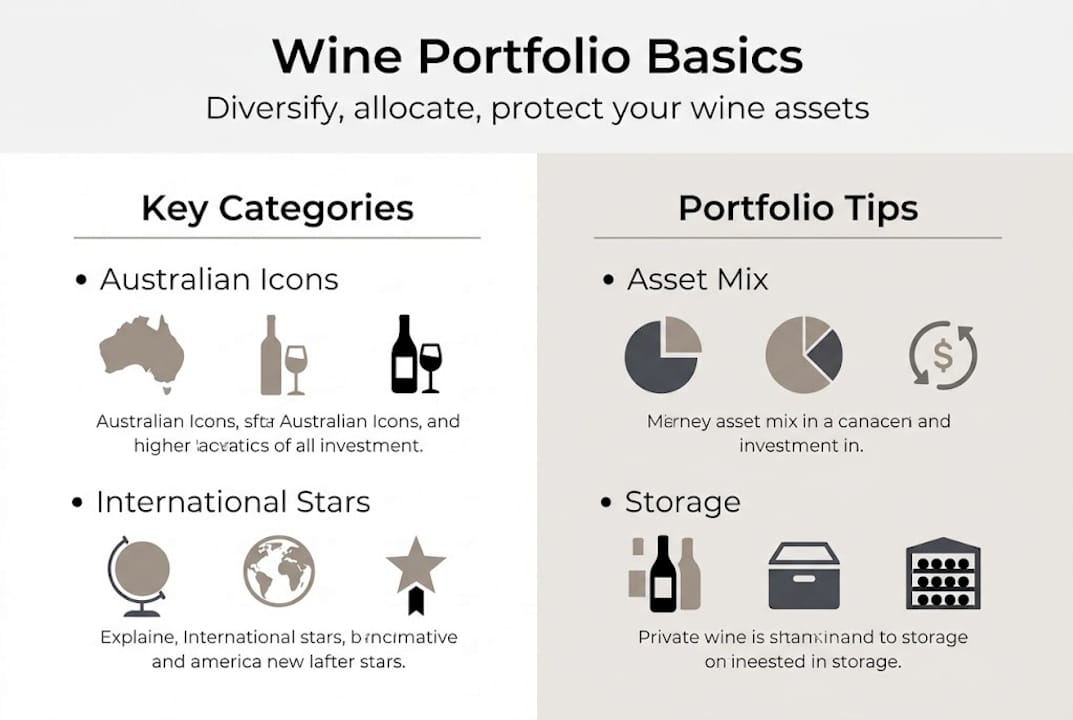
With your selection framework established, the next step is designing a portfolio structure that supports both wealth creation and lifestyle enjoyment. Wine allocation strategies suggest that 10-15% in alternatives including wine is appropriate for HNW Australians, rising to 25% for ultra-high net worth individuals, integrated carefully with broader wealth planning.
Structuring your portfolio requires deliberate thinking across four dimensions:
- Regions: Spread holdings across Bordeaux, Burgundy, Barossa, and Napa to reduce exposure to any single market's volatility.
- Varietals: Combine Cabernet Sauvignon-dominant wines with Pinot Noir, Shiraz, and Chardonnay to capture different collector demand cycles.
- Vintages: Hold across multiple years rather than concentrating in a single celebrated vintage. This protects against the price correction that often follows initial release enthusiasm.
- Investment versus enjoyment split: A common approach is allocating 70% of holdings to pure investment bottles and 30% to wines intended for drinking at maturity.
The tax dimension is equally important for Australian collectors. Capital Gains Tax applies when you sell wine held as an investment asset, though the 50% CGT discount applies to assets held longer than 12 months. Wine held for personal enjoyment rather than investment may be treated differently, making clear record-keeping of intent essential from acquisition. Consulting a tax adviser familiar with wealth planning integration across alternative assets is strongly recommended before committing significant capital.
Pro Tip: Resist the temptation to concentrate your portfolio in a single celebrated producer or region, no matter how compelling the short-term narrative. Diversification across regions, styles, and price points is what creates resilience when individual markets soften.
The table below outlines a suggested allocation framework:
| Portfolio tier | Wine allocation | Focus areas |
|---|---|---|
| HNW (AUD $500K-$2M) | 10-15% | Australian classics, Bordeaux, entry Burgundy |
| UHNW (AUD $2M+) | Up to 25% | Full global diversification, rare releases |
Store and protect your collection
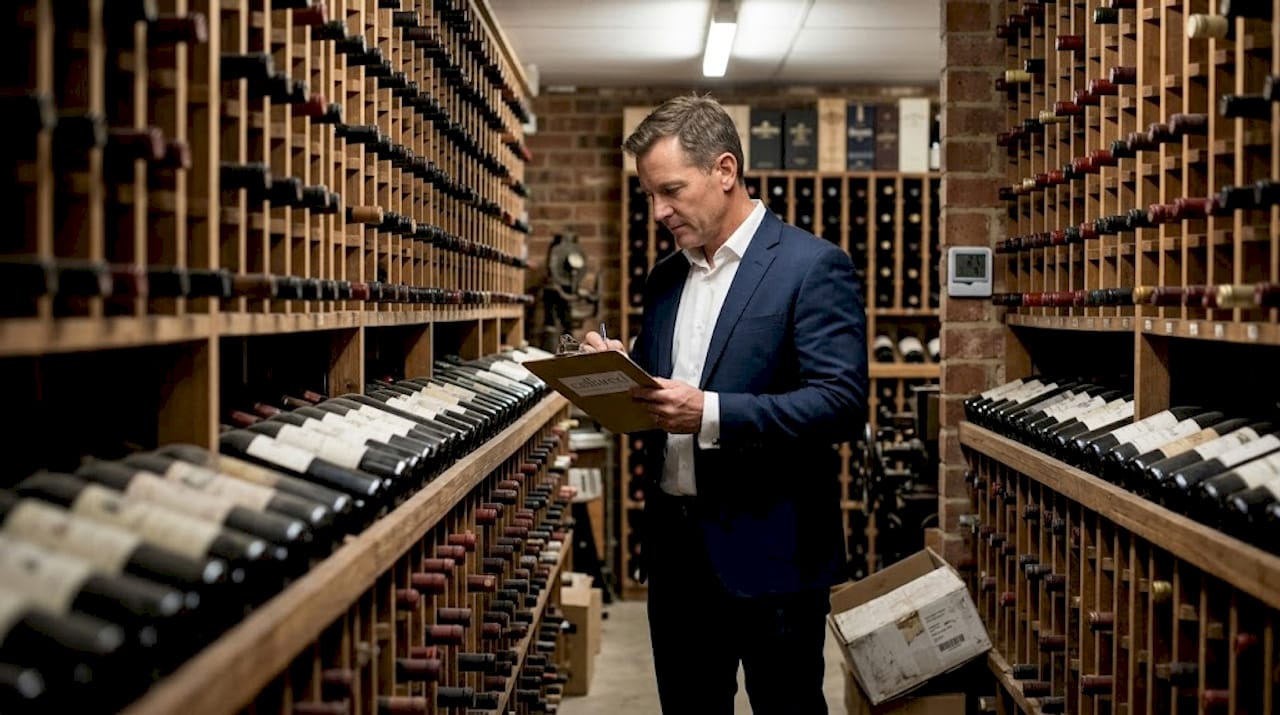
With your portfolio structure in place, the next test is safeguarding your investment through expert storage practices. Wine is uniquely perishable among investment assets. A single season of poor storage can render a $5,000 bottle undrinkable and worthless at auction. This is not a risk worth taking lightly.
Optimal storage conditions are precise:
- Temperature: 12-14°C, maintained consistently without fluctuation. Heat accelerates ageing; cold slows it; variation causes both.
- Humidity: 60-75% to prevent cork desiccation and label deterioration, both of which affect resale value.
- Light: UV light degrades wine rapidly. Dark storage is non-negotiable.
- Vibration: Minimal movement preserves the slow chemical processes that develop complexity over time.
- Orientation: Bottles sealed with natural cork must be stored horizontally to keep the cork moist and airtight.
Professional storage guidance confirms that 12-14°C and 60-75% humidity are essential to preserve investment value and enable tax efficiency.
"The cellar is not merely a room; it is a promise to the wine that time will be honoured with patience and care."
For serious collectors, climate-controlled storage managed by specialists offers the most reliable protection. Bonded warehouse storage carries an additional advantage: wine held in bond may defer certain tax obligations, offering a meaningful benefit for large holdings. Understanding bonded storage tax efficiency is an often-overlooked element of portfolio planning.
Pro Tip: Maintain two physically separate cellars or storage allocations: one for investment bottles that will never be opened, and one for drinking wines at various stages of maturity. Mixing the two leads to the heartbreaking mistake of drinking a bottle intended for sale, or worse, holding a drinking wine past its peak.
Insurance is the final layer of protection. Fine wine insurance policies cover breakage, theft, and temperature failure. Ensure your policy reflects current market values, not purchase prices, as significant appreciation can leave collections dangerously underinsured.
Manage and track your wine assets
Once your wine is safely stored, ongoing management is vital to ensure you make smart decisions as your portfolio matures. A fine wine portfolio is not a passive investment. Vintages evolve, markets shift, and the window to sell at peak value is often narrower than collectors expect.
Effective management follows a structured approach:
- Adopt digital tracking tools: Tracking wine maturity with apps like CellarTracker allows you to monitor individual bottle development, record tasting notes, and flag approaching drinking windows.
- Schedule regular appraisals: Annual or biennial professional valuations ensure your records reflect current market values, which is essential for insurance, estate planning, and sale decisions.
- Monitor auction results: Following results from Langton's, Christie's, and Sotheby's provides real-time price intelligence on your holdings.
- Set sell and drink targets: Define in advance the price or maturity point at which you will sell investment bottles. Emotional attachment is the enemy of disciplined portfolio management.
Portfolio performance tools offered by specialist advisers can complement digital apps, providing professional context that raw data alone cannot supply. For organising collections of significant scale, specialist support ensures nothing slips through the gaps.
A particularly elegant strategy is the two-bottle rule: buy two bottles of each wine, one to drink at maturity and one to cellar for sale. This approach lets you develop genuine sensory knowledge of your investments while maintaining a clean separation between enjoyment and return.
Pro Tip: Resist selling too early. Many collectors exit positions during the initial post-release price surge, missing the deeper appreciation that comes as wines approach peak maturity. Patience, as with the wines themselves, is the defining virtue of a skilled collector.
Speculation on new releases from cult producers can generate strong returns, but carries higher risk and lower liquidity than established classified wines. Balance your portfolio between proven performers and selective speculative positions, keeping the latter to no more than 20% of total wine holdings.
A fresh perspective: enjoyment versus investment, the real edge for HNW collectors
Conventional wisdom in wine investment circles tends to treat personal enjoyment as a distraction from returns. We disagree, and experience in the Australian fine wine market bears this out. Collectors who drink their wines, who taste across vintages and understand the evolution of what they own, consistently make better buying and selling decisions than those who treat bottles purely as financial instruments.
There is a practical reason for this. Understanding how a wine develops, how Penfolds Grange opens across decades or how a Burgundy Grand Cru shifts from austere to transcendent, gives you an intuitive sense of when a bottle is approaching its peak. That knowledge is worth more than any app or auction report.
Chasing trends, by contrast, is a reliable path to overpaying. The wines that deliver the strongest long-term returns are rarely the ones generating the most social media excitement in a given season. Start with Australian classics, build genuine familiarity with what you own, and let selling your wine assets be driven by maturity and market intelligence rather than enthusiasm. Tasting multiples and separating drinking from investment cellars is a practical tactic that sharpens both your palate and your portfolio discipline simultaneously.
Take your wine portfolio further with expert management
Building and managing a fine wine portfolio of genuine quality demands more than enthusiasm. It requires market knowledge, storage infrastructure, valuation expertise, and the discipline to act on data rather than impulse.
Cellared Fine Wine works with collectors, investors, and private clients across Australia to provide exactly this. From expert cellar management and bespoke acquisition strategies to independent professional wine valuations for insurance, estate, and advisory purposes, we bring deep market knowledge and a highly personal approach to every engagement. Whether you are establishing your first serious collection or refining an existing portfolio, we help you buy well, value accurately, and manage with confidence.
Frequently asked questions
How do I know which wines will appreciate in value in Australia?
Langton's Classification lists investment-grade Australian wines based on auction results, making it the most reliable starting point for identifying wines with genuine appreciation potential.
Is professional storage necessary for wine portfolios?
Yes. Professional storage ensures preservation and can provide tax efficiency, particularly for wines held in bonded warehouses, making it a non-negotiable element of serious portfolio management.
What is the best way to track my wine holdings and maturity?
Tracking apps help monitor wine maturity and portfolio value, with CellarTracker being the most widely used platform among serious collectors for managing bottle-level data.
Should I balance drinking and investment bottles in my portfolio?
Absolutely. Buy two bottles, one to drink and one to cellar, is a proven approach that supports both personal enjoyment and disciplined investment management.
What common mistakes do wine investors in Australia make?
Risks include market volatility, provenance issues, and tax impacts, with overpaying for trend-driven wines and neglecting professional storage being the most frequent and costly errors.
Recommended
- Wine Cellar Management | Cellared | Bespoke Wine Buying, Valuation & Cellar Management
- Sell Your Wine Collection | Cellared | Bespoke Wine Buying, Valuation & Cellar Management
- Bespoke Fine Wine Buying | Cellared | Bespoke Wine Buying, Valuation & Cellar Management
- Wine Appraisals & Valuations | Cellared | Bespoke Wine Buying, Valuation & Cellar Management
- Why learn wine basics for confident wine choices