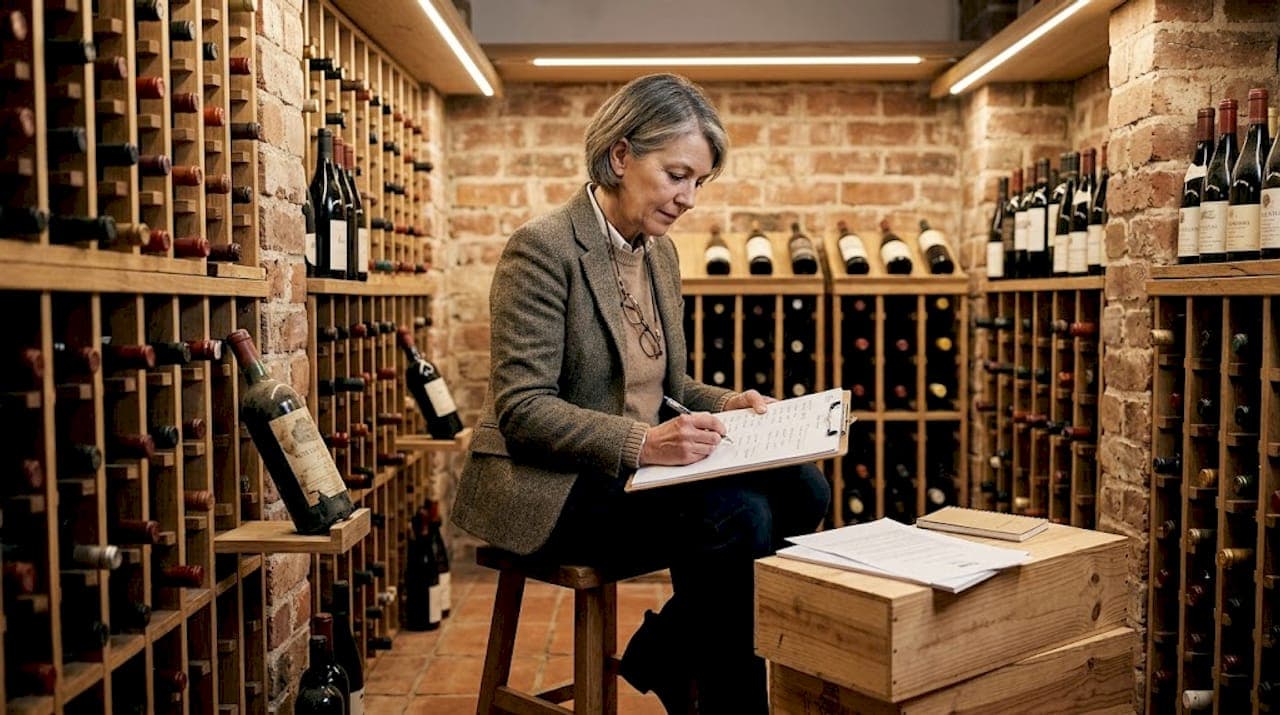
Estate wine sales are frequently misunderstood as little more than a mechanism for offloading unwanted bottles from an ageing cellar. In reality, they represent one of the most sophisticated tools available to collectors and investors seeking liquidity, succession planning, and premium value realisation from their fine wine portfolios. The APAC fine wine market is projected to reach USD 65 billion in 2026, growing at a 5.62% CAGR, a figure that underscores just how much is at stake for those who approach estate wine sales with the rigour and expertise they deserve.
Table of Contents
- Understanding estate wine sales and their importance
- Market trends and demand: APAC growth and auction benchmarks
- Expert nuances: Condition, provenance, and portfolio risk
- Costs and logistics: Storage, commissions, and tax impacts
- Fresh perspective: What most articles miss about estate wine sales
- Next steps: Expert support for valuation and management
- Frequently asked questions
Key Takeaways
| Point | Details |
|---|---|
| Estate wine sales drive liquidity | Selling wines via estate channels empowers collectors to realise value and manage their cellar with expertise. |
| APAC market outpaces global growth | Asia-Pacific’s booming fine wine market means auctions and estate sales command premium prices. |
| Condition and provenance are vital | Ullage level, provenance, and ratings can dramatically influence sale outcomes and investment success. |
| Costs and commission impact net returns | Account for storage, insurance, commissions, and taxes to accurately calculate your collection’s value. |
| Diversification and technology reduce risk | Diversifying portfolios and leveraging authenticity tech protect against volatility and counterfeiting. |
Understanding estate wine sales and their importance
An estate wine sale refers to the structured disposal or realisation of wines held within a private collection, typically driven by succession, asset consolidation, divorce proceedings, or deliberate portfolio management. Unlike purchasing a bottle from a retailer or bidding at a public auction, estate sales involve a curated body of wine, often assembled over decades, where provenance, condition, and collection history are central to the transaction.
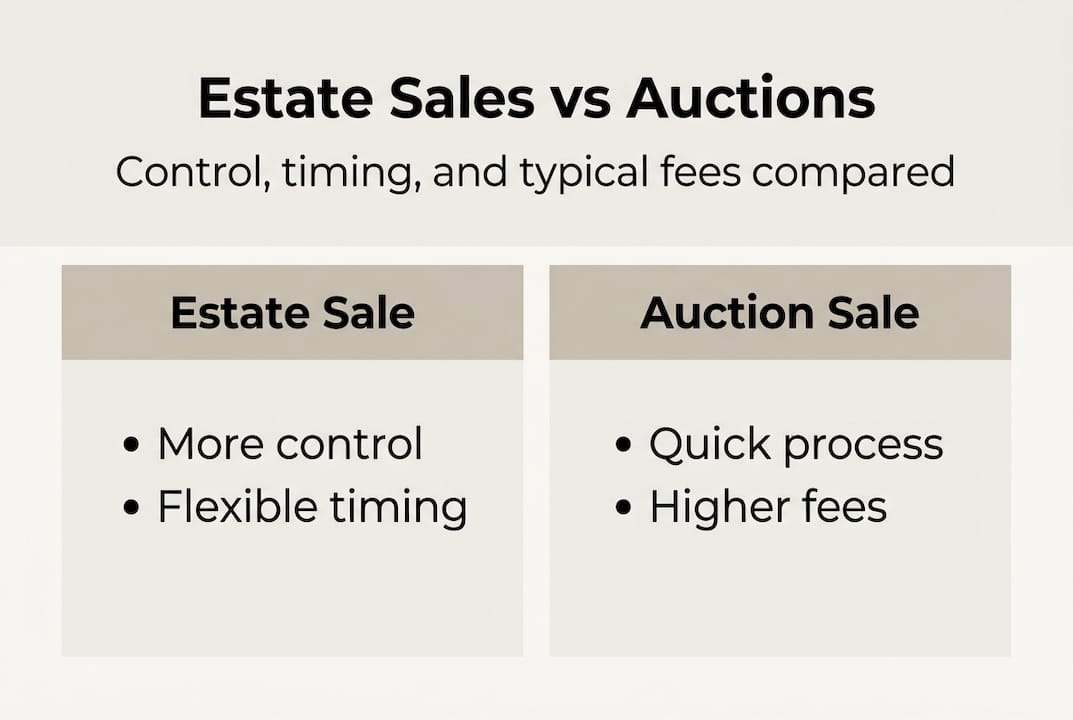
The distinction between estate sales, auction sales, and private sales matters considerably. Each channel carries different cost structures, timescales, and degrees of control over pricing and buyer selection.
| Channel | Control over price | Timescale | Typical fees | Best suited for |
|---|---|---|---|---|
| Estate sale | High | Flexible | Negotiated | Curated collections, succession |
| Auction house | Low to moderate | Fixed schedule | 15–25% buyer's premium | High-profile lots, blue-chip wines |
| Private sale | High | Variable | Lower, negotiated | Rare bottles, discreet transactions |
For high net worth individuals, estate wine sales offer something auctions rarely can: the ability to shape the narrative around a collection. Provenance documentation, cellar history, and personal context add measurable value when presented correctly.
The role of estate sales extends well beyond simple liquidation. They serve as a vehicle for:
- Liquidity generation from illiquid assets tied up in fine wine portfolios
- Succession planning for families navigating estates that include significant wine holdings
- Premium extraction by timing sales to align with peak market demand
- Portfolio rebalancing to shift from older vintages into emerging high-value regions
As Bloomberg's fine wine investment guide notes, estate sales require expertise to navigate effectively, particularly when collections span multiple regions, vintages, and valuation complexities. Achieving 98 to 100% sell-through rates with premiums ranging from 113% to 200% over estimates is possible, but only when the right expertise, timing, and market positioning align.
Market trends and demand: APAC growth and auction benchmarks
The data emerging from APAC fine wine markets in recent years is striking. Generational wealth transfer, rising affluence across Southeast Asia, and a sophisticated new cohort of collectors are reshaping demand in ways that directly affect estate wine sale outcomes.
Consider the landmark Christie's sale of Joseph Lau's collection, where HK$72.8 million was achieved with 70% of lots exceeding their high estimates. Individual highlights included a Penfolds Grange magnum fetching $1,527 and a DRC La Tâche reaching $7,875 per bottle. These results are not outliers. They reflect a market where informed sellers, exceptional provenance, and strategic timing converge to produce extraordinary outcomes.

| Wine | Result | Benchmark significance |
|---|---|---|
| DRC La Tâche | $7,875/bottle | Burgundy demand at peak |
| Penfolds Grange magnum | $1,527 | Australian icon wine strength |
| Joseph Lau Part III total | HK$72.8M | APAC collector appetite |
Several forces are fuelling this demand:
- Generational turnover as established collectors divest and younger buyers enter the market
- Millennial buyers, who now represent 55% of new fine wine purchasers globally, bringing digital fluency and appetite for rare bottles
- Online and mobile bidding, which has dramatically expanded the buyer pool beyond traditional auction rooms
For collectors tracking Bordeaux demand in Australia, the appetite for First Growths and Right Bank icons remains robust, even as wine regions across APAC diversify into Burgundy, Champagne, and premium Italian appellations.
Market volatility remains a genuine consideration. Fine wine indices have experienced cyclical corrections, and not every estate sale benefits from a rising tide. Risk management approaches include staggered releases, reserve pricing, and selective channel allocation to protect against timing risk. Staying connected to live market intelligence, whether through specialist advisers or Sydney wine tasting events that surface collector sentiment, provides a meaningful edge.
Expert nuances: Condition, provenance, and portfolio risk
Market benchmarks set the stage, but the real value lies in mastering the nuanced challenges and opportunities of estate wine sales. A bottle's physical condition is not merely an aesthetic concern. It is a primary determinant of price.
Ullage, the space between the wine and the cork, is one of the most closely scrutinised indicators of a bottle's integrity. Base of neck is considered ideal for aged wines. Mid-shoulder levels introduce uncertainty and typically attract significant price discounts. Condition and ullage levels are critical factors in determining resale outcomes, alongside storage history and label condition.
Beyond the physical, the following factors shape estate wine sale success:
- Provenance documentation: A clear, unbroken chain of custody from producer to present owner commands a measurable premium and reassures buyers.
- Critic scores and market recognition: Wines scoring 95 points or above from recognised critics such as Robert Parker or Jancis Robinson consistently outperform at estate sales.
- Global distribution and scarcity: Limited-production wines with strong international collector demand attract competitive bidding regardless of market cycles.
- Counterfeiting risk: High-value bottles, particularly from Burgundy and Bordeaux, remain targets for sophisticated fraud. Independent authentication is non-negotiable.
The risks inherent in fine wine as an asset class are real. Illiquidity, storage and insurance costs, and the impact of market cycles on resale values all require careful management. When selling your wine collection, engaging specialists who understand both the physical and financial dimensions of a collection is essential.
Pro Tip: Rather than concentrating estate sale proceeds into a single speculative lot, diversify across blue-chip wines from multiple regions. Consistency of quality and global demand depth protect against the volatility that single-producer or single-vintage concentration can introduce.
"Authenticity and value preservation are inseparable in estate wine sales. Without rigorous provenance verification and condition assessment, even the finest bottles can fail to realise their true market potential." Independent wine appraisals provide the foundation upon which confident sale decisions are made.
Costs and logistics: Storage, commissions, and tax impacts
Having explored the subtleties of risk and value, let's move to the practical details that shape estate wine sale outcomes. The economics of estate wine sales extend well beyond the hammer price, and understanding the full cost structure is essential for accurate return modelling.
Key costs to account for include:
- Storage fees: Professional cellar storage typically runs from several hundred to several thousand dollars per month depending on volume and facility quality. These costs accumulate significantly over multi-year holding periods.
- Insurance: Replacement value coverage for fine wine collections is a non-negotiable expense, particularly for bottles valued above $500 each.
- Auction commissions: Major auction houses charge up to 25% commission on the buyer's side, with seller's commissions negotiated separately. These fees can materially erode net proceeds.
- Transport and documentation: Temperature-controlled logistics, import/export documentation, and customs compliance add cost and complexity, particularly for cross-border APAC transactions.
The Australian Wine Equalisation Tax (WET) is a further consideration for estate sales involving imported wines or domestic producers. WET is levied at 29% of the wholesale value of wine and can deter certain import-heavy estate compositions from achieving optimal returns through domestic channels.
Pro Tip: Plan for illiquidity well in advance. Fine wine is not a liquid asset, and estate sales often take three to six months from valuation to settlement. Building this timeline into succession or portfolio planning avoids forced sales at suboptimal prices.
Professional wine cellar management services mitigate many of these logistical risks by maintaining condition records, insurance schedules, and provenance documentation in a format ready for sale. For estate contexts, probate wine valuations provide court-ready assessments that satisfy legal and financial requirements, while professional wine valuations underpin insurance and advisory decisions throughout the holding period.
Fresh perspective: What most articles miss about estate wine sales
Most guides on estate wine sales focus heavily on auction strategy, bidding psychology, and timing the market. What they consistently overlook is the foundational work that determines whether a collection is sale-ready in the first place.
Provenance gaps, inconsistent storage records, and absent documentation are the silent destroyers of estate wine value. A collection assembled with passion but managed without rigour will almost always underperform at sale, regardless of the quality of the wines themselves.
The emergence of blockchain for authenticity verification and e-commerce bidding platforms, including WeChat-based channels driving APAC growth, is reshaping how collections are evaluated and sold. These technologies reward collectors who have maintained meticulous records and penalise those who have not.
Diversification and hands-on management are not passive activities. They require active engagement with market intelligence, valuation expertise, and a willingness to adapt strategy as conditions evolve. Engaging wine valuation expertise early, rather than at the point of sale, is the single most impactful decision a serious collector can make.
Next steps: Expert support for valuation and management
If you are ready to maximise your collection's value or navigate estate wine sales with confidence, the right expertise makes all the difference.
Cellared Fine Wine provides expert wine appraisals that are court-ready, market-led, and tailored to the specific needs of collectors, estates, and private clients across Australia and APAC. From independent valuations for insurance, probate, and family law, to bespoke wine management services that keep your collection in peak condition and sale-ready at any moment, Cellared brings deep market knowledge and a highly personal approach to every engagement. Reach out today to discuss how we can help you buy well, value accurately, and sell with confidence.
Frequently asked questions
What exactly is an estate wine sale?
An estate wine sale is the structured sale of wines from a private collection, typically driven by succession, asset liquidation, or deliberate portfolio management. These sales require specialist expertise to navigate provenance, condition, and market timing effectively.
How do estate wine sales differ from auctions?
Estate wine sales offer curated lots, private negotiation, and greater control over provenance presentation and pricing, whereas public auctions are competitive and less controllable. Auction results can achieve premiums of 113 to 200% over estimates, but only when the collection is positioned correctly.
What fees and costs should I expect?
Expect storage fees, insurance premiums, auction commissions up to 25%, and applicable taxes including the Australian WET tax, which is levied at 29% of wholesale value on eligible wine transactions.
How do I ensure authenticity and protect my investment?
Focus on maintaining rigorous provenance documentation, seek wines with strong critic scores, and leverage emerging blockchain authentication tools alongside independent valuation experts to safeguard your collection's integrity and market value.
Recommended
- Sell Your Wine Collection | Cellared | Bespoke Wine Buying, Valuation & Cellar Management
- Wine Cellar Management | Cellared | Bespoke Wine Buying, Valuation & Cellar Management
- Probate Wine Valuations | Deceased Estate & Date of Death Reports | Cellared | Bespoke Wine Buying, Valuation & Cellar Management
- Test Conversion | Cellared | Bespoke Wine Buying, Valuation & Cellar Management