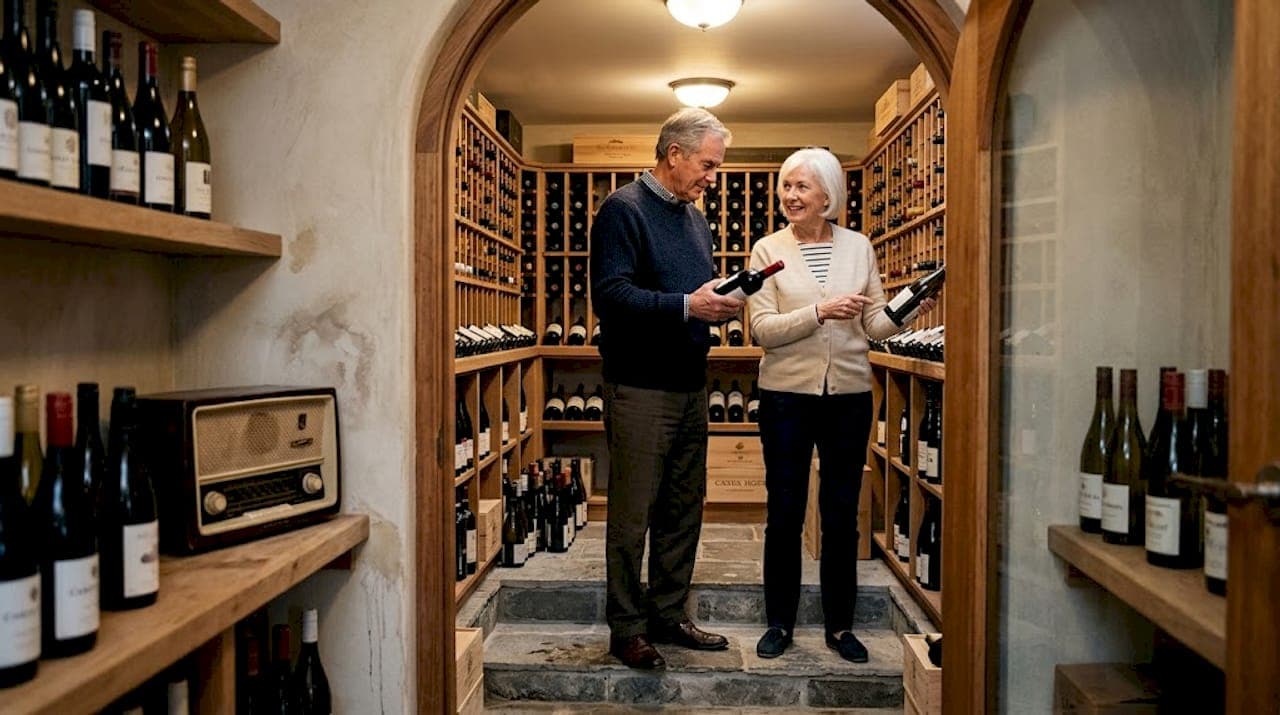
For high net worth collectors and investors across Australia and APAC, the fine wine market presents one of the most rewarding yet demanding arenas in which to operate. The challenge is rarely about access to capital; it is about navigating a labyrinth of auctions, provenance claims, counterfeit risks, and shifting market cycles with confidence and precision. Average annual returns of 8–12% and a remarkably low correlation to equities make fine wine a compelling portfolio diversifier, but only when approached with discipline and expertise. This guide delivers structured, practical advice for acquiring rare and exceptional bottles, from setting clear objectives through to managing your cellar and planning a profitable exit.
Table of Contents
- Setting your investment goals and prerequisites
- Navigating the fine wine market: sourcing and selection
- Ensuring authenticity, certification and safe storage
- Maximising value: portfolio management and market exit strategies
- Why balancing passion and profit is the real key to rare wine buying
- Premium assistance for investment-grade wine buying and cellar management
- Frequently asked questions
Key Takeaways
| Point | Details |
|---|---|
| Prioritise blue chips | Choosing iconic wines like Penfolds Grange and DRC ensures liquidity, easier resale, and market appeal. |
| Authenticate and appraise | Always verify provenance and seek professional appraisals to avoid fakes and safeguard your investment. |
| Diversify regions | Build your portfolio across renowned regions like Bordeaux, Burgundy, and Champagne for balanced returns. |
| Preserve with correct storage | Maintain wines at 12–14°C and controlled humidity to protect value over long holding periods. |
| Balance emotion and profit | Great collections blend passionate enjoyment with disciplined investment strategy for sustained results. |
Setting your investment goals and prerequisites
Before a single bottle changes hands, clarity of purpose is everything. Fine wine acquisition sits at the intersection of two distinct motivations: the financial and the emotional. Some collectors build cellars with the precision of a fund manager, targeting liquidity, benchmark performance, and capital appreciation. Others are driven by the profound pleasure of owning extraordinary bottles, with financial return a welcome but secondary consideration. Most serious collectors operate somewhere between these poles, and understanding where you sit shapes every decision that follows.
The prerequisites for a successful acquisition strategy are straightforward but non-negotiable.
- Budget: Define your total allocation and per-bottle ceiling before approaching any market. Fine wine rewards patience, and illiquid positions can tie up capital for eight to twelve years.
- Research: Understand the producers, regions, and vintages that align with your goals. Investing in Bordeaux wines remains a cornerstone strategy for many, while Australian investment wines offer compelling local options with growing international recognition.
- Storage: Arrange professional, temperature-controlled storage before you buy, not after. Wine purchased without a storage plan is capital at risk from the moment of acquisition.
- Auction readiness: Register with reputable auction platforms, understand buyer's premiums, and review recent hammer prices to calibrate your expectations.
| Goal type | Recommended strategy | Example wines |
|---|---|---|
| Capital appreciation | Blue-chip, long-hold | Penfolds Grange, DRC, Petrus |
| Portfolio diversification | Mixed regional spread | Bordeaux, Burgundy, Barolo |
| Passion collecting | Terroir-driven, personal | Grower Champagne, Barolo crus |
| Hybrid (financial + pleasure) | Balanced, tiered cellar | Henschke, Leroy, Giacomo Conterno |
For Australian buyers, blue-chip icons like Penfolds Grange and Henschke Hill of Grace, with 2022 vintages scoring 98 to 99 points, represent exceptional entry points via reputable auction houses such as Langtons.
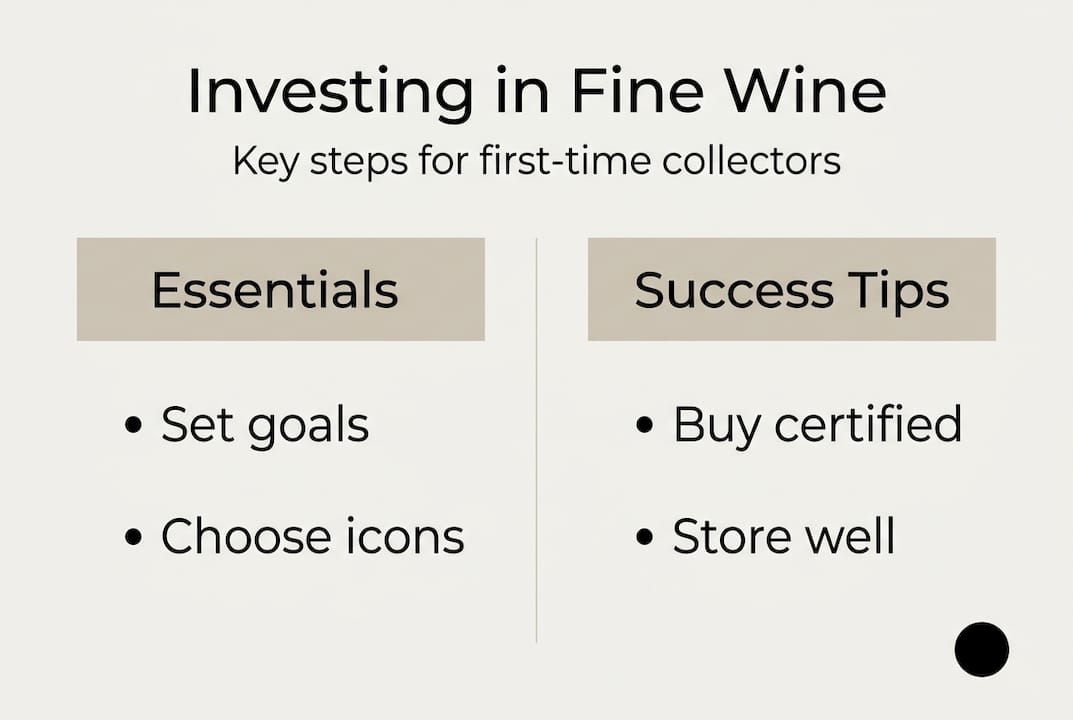
Pro Tip: Prioritise blue-chip wines when building your first investment cellar. Their deeper secondary markets mean greater liquidity and more predictable resale outcomes compared to emerging or niche producers.
Navigating the fine wine market: sourcing and selection
With your goals and prerequisites defined, it is vital to understand the sourcing options and selection process that underpin successful acquisitions. The fine wine market offers three primary channels, each with distinct advantages and risks.
Auction houses provide transparent pricing, competitive bidding, and access to mature, single-owner cellars. They are ideal for sourcing aged vintages with documented provenance. Reputable merchants offer curated selections, expert guidance, and the reassurance of established relationships with producers. Private sales can yield exceptional bottles at negotiated prices but demand rigorous due diligence, as provenance documentation may be less formalised.

| Sourcing channel | Advantages | Key risks |
|---|---|---|
| Auction houses | Price transparency, mature stock | Buyer's premiums, competitive bidding |
| Reputable merchants | Curated, expert-backed | Premium pricing |
| Private sales | Negotiated price, rare finds | Provenance gaps, counterfeit exposure |
A structured approach to evaluating any bottle should follow these steps:
- Request full provenance documentation, including purchase receipts, storage records, and any prior auction history.
- Inspect the physical condition of the bottle: fill level, label integrity, capsule condition, and cork appearance where visible.
- Cross-reference with independent benchmarks such as Liv-ex to assess fair market value and trading history.
- Verify regional credentials and vintage reputation through trusted critic scores and producer track records.
- Confirm storage continuity from producer to current owner, ideally at 12 to 14°C throughout.
For APAC-focused collectors, diversification across global and local markets is prudent. Champagne blend investments have delivered outstanding benchmark returns, while grower Champagne offers terroir-driven complexity at comparatively accessible price points. Attending wine tasting events is an underrated way to develop palate knowledge and build direct relationships with importers and producers.
As provenance and storage conditions, maturity horizons of 8 to 12 years, and liquidity through deeper markets like Liv-ex underpin every sound acquisition decision, these factors must be assessed before any commitment is made.
Ensuring authenticity, certification and safe storage
Once you have selected your bottles, due diligence is crucial to safeguard your investment from counterfeits and deterioration. The fine wine market, for all its refinement, is not immune to fraud. High-value bottles attract sophisticated forgeries, and even experienced collectors have been caught out by convincing replicas.
A rigorous authentication checklist should include:
- Provenance paperwork: Original purchase receipts, cellar records, and auction catalogues form the documentary backbone of authenticity.
- Label and capsule inspection: Authentic labels carry specific printing characteristics, font details, and ageing patterns consistent with the vintage. Capsules should show appropriate oxidation and fit.
- Cork condition: Where inspection is possible, the cork should bear the producer's branding and show consistent ageing.
- Digital verification tools: Several producers now issue digital certificates or use laser-etched identifiers. Utilise these where available.
- Third-party appraisal: For high-value acquisitions, an independent professional appraisal is not optional; it is essential.
Avoiding fakes through certification, with storage maintained at 12 to 14°C and maturity horizons of 8 to 12 years, are the mechanical foundations of a sound investment. Beyond authentication, storage conditions are the single greatest determinant of long-term value preservation.
Optimal storage requires consistent temperature between 12 and 14°C, humidity levels of 60 to 80 per cent, minimal vibration, and protection from UV light. A deviation of even a few degrees sustained over months can accelerate ageing unpredictably, diminishing both quality and resale value.
Investment wine appraisals provide independent, market-led valuations for insurance, estate planning, and private advisory purposes. Professional cellar management ensures your collection is maintained under optimal conditions with meticulous records.
Pro Tip: Commission a professional appraisal for any bottle valued above $500. The cost is negligible relative to the protection it affords, and the documentation strengthens your position at resale or for insurance purposes.
Maximising value: portfolio management and market exit strategies
With your purchases secured and protected, it is time to optimise your portfolio and plan ahead for market opportunities and profitable exits. Fine wine portfolio management is not passive; it rewards active attention to benchmark performance, market cycles, and evolving demand.
Recent benchmark performance illustrates the breadth of opportunity across regions:
| Benchmark | 5-year performance |
|---|---|
| Liv-ex Champagne 50 | +39.5% |
| Liv-ex Italy 100 | +28.1% |
| Liv-ex Burgundy 150 | +18.5% |
The APAC wine market is valued at USD 65 billion in 2026, growing at a 5.62% CAGR to 2031, making regional demand a powerful tailwind for collectors positioned in premium and ultra-premium tiers.
A structured approach to portfolio management and exit planning:
- Track your portfolio against Liv-ex benchmarks quarterly to identify outperformers and underperformers relative to the broader market.
- Set exit price targets at acquisition, based on comparable sales data and your required holding period return.
- Monitor vintage release cycles and critic re-evaluations, as scores can shift materially over time and trigger price movements.
- Identify your preferred liquidity channel early: auction houses, private sales, or direct listing through specialist brokers.
- Rebalance periodically, rotating out of fully matured or peak-valued positions and reinvesting in younger vintages with strong ageing potential.
For APAC investors, selling your wine collection through established channels with transparent fee structures protects value and ensures legitimacy. Active cellar management supports this process by maintaining accurate, up-to-date records of every bottle's condition and market value.
Balancing emotional and financial objectives remains the art at the heart of fine wine collecting. The finest cellars are built by those who know which bottles to drink, which to hold, and which to sell.
Why balancing passion and profit is the real key to rare wine buying
The mechanics of fine wine investment are learnable. The harder lesson, one that separates exceptional collectors from merely wealthy ones, is understanding that over-optimising for financial return can quietly erode the very thing that makes this asset class remarkable.
We have observed collectors who approach their cellars with the cold logic of a trading desk, rotating positions at peak value with admirable discipline, yet finding themselves holding bottles they feel nothing for. The irony is that emotional connection to wine, an appreciation for terroir, producer philosophy, and the story behind each vintage, actually supports market resilience. Collectors who love what they own tend to hold through corrections rather than panic-selling, which is precisely the behaviour that generates superior long-term returns.
The APAC market's shift toward premium 'drink less, better' consumption reflects a broader cultural maturation, one that rewards collectors who have built cellars with genuine conviction rather than purely speculative intent. With early 2026 representing an optimal entry point post-correction, the opportunity to build a cellar that is both financially sound and personally meaningful is as strong as it has been in years. Australian fine wine investment sits at the centre of this shift, with local icons earning the global recognition they have long deserved.
Premium assistance for investment-grade wine buying and cellar management
Building a cellar that performs financially and brings genuine pleasure requires more than market knowledge; it demands access to the right bottles, rigorous appraisal, and expert ongoing management.
Cellared Fine Wine offers bespoke fine wine buying services that connect you with rare and hard-to-find bottles sourced through deep producer and market relationships. Our independent wine appraisals and valuations are court-ready and market-led, providing the documentation you need for insurance, estate, and advisory purposes. From acquisition through to exit, our cellar management services ensure your collection is maintained, tracked, and positioned for optimal outcomes. Speak with our team to discover how a more structured, expert-guided approach can transform your collection.
Frequently asked questions
How do I verify a fine wine's authenticity before purchasing?
Request full provenance documentation, inspect label and cork condition, and commission an independent professional appraisal. Certification and provenance checks are the most reliable defences against counterfeits in the fine wine market.
What is the optimal storage temperature for investment-grade wine?
Fine wines should be stored at a consistent 12 to 14°C in a humidity-controlled environment, away from UV light and vibration, to preserve quality and long-term value.
Which Australian wines are considered blue-chip for investment?
Penfolds Grange and Henschke Hill of Grace are the pre-eminent blue-chip choices, with 2022 vintages scoring 98 to 99 points and strong secondary market liquidity through established auction houses.
What are the expected annual returns from fine wine investment?
Fine wine has historically delivered average annual returns of 8 to 12%, with a low correlation to equities, making it an effective portfolio diversifier and inflation hedge.
How do I sell my wine collection in Australia and APAC?
Engage reputable auction houses, specialist brokers, or private sale channels with transparent fee structures. Deeper markets like Liv-ex provide the liquidity benchmarks needed to price and time your exit with confidence.
Recommended
- Wine Cellar Management | Cellared | Bespoke Wine Buying, Valuation & Cellar Management
- Sell Your Wine Collection | Cellared | Bespoke Wine Buying, Valuation & Cellar Management
- Wine Appraisals & Valuations | Cellared | Bespoke Wine Buying, Valuation & Cellar Management
- Bespoke Fine Wine Buying | Cellared | Bespoke Wine Buying, Valuation & Cellar Management