
Fine wine collections represent far more than aesthetic pleasure or personal indulgence. For high-net-worth collectors and investors across Australia and the broader APAC region, a carefully assembled cellar is a serious financial asset, often worth hundreds of thousands of dollars, and exposed to risks that standard home contents insurance simply cannot address. Temperature fluctuations, natural disasters, theft, and provenance disputes can erode value in ways that remain invisible until a claim is lodged. This guide walks through everything you need to know, from establishing insurability to optimising storage and navigating the appraisal process, with precision and clarity.
Table of Contents
- What makes fine wine collections insurable?
- Premiums, discounts and region-specific factors
- Optimising storage for insurance and value protection
- The appraisal process and ongoing valuation
- A fresh perspective: Common mistakes and what most guides miss
- Connect with expert solutions for your wine collection
- Frequently asked questions
Key Takeaways
| Point | Details |
|---|---|
| Valuation is vital | Certified appraisals and regular revaluation ensure your collection is accurately covered. |
| Storage impacts premiums | Upgraded climate control or bonded storage can reduce insurance costs substantially. |
| Regional differences matter | Australian and APAC regulations and risks affect premiums and discount eligibility. |
| Documentation prevents disputes | Complete provenance, photos, and invoices protect against claim problems. |
What makes fine wine collections insurable?
The world of fine wine insurance is governed by nuance, and not every bottle qualifies for the specialist cover that serious collections demand. Understanding what transforms a private cellar into an insurable asset is the essential first step for any collector who wishes to protect their investment with confidence.
At the heart of insurability lies provenance. A wine's documented history, tracing ownership from producer through to the collector's cellar, is the single most critical factor in establishing accurate valuation and securing robust cover. Insurers and appraisers are far more receptive to collections supported by original purchase invoices, certificates of authenticity, auction records, and detailed cellar photographs. Without this documentation, even the most exceptional bottles may be valued conservatively, or worse, disputed entirely when a claim is made.
Valuations are critical; certified experts consistently advise collectors to document provenance with invoices and photographs, and to reappraise regularly as wine appreciates over time, which is the most reliable way to avoid costly disputes. This is not merely administrative caution. It reflects the reality that fine wine is a living asset, one that can appreciate dramatically with age, shifting market sentiment, or a critic's singular review.
Key factors that determine insurability include:
- Certified appraisals conducted by independent, market-informed professionals who understand wine vintage basics and can speak to a bottle's trajectory as well as its current value.
- Provenance documentation including purchase receipts, cellar records, auction catalogues, and photographs of labels, capsules, and fill levels.
- Professional storage conditions, meaning temperature-controlled environments, appropriate humidity, UV protection, and ideally a dedicated bonded facility, all of which signal to insurers that the collection is being actively stewarded.
- Regular reappraisal, ideally every twelve to eighteen months, to reflect market appreciation and protect against underinsurance.
Professional wine valuations must be grounded in current secondary market data, auction results, and regional demand patterns, not simply original purchase prices or wine list retail figures. This distinction matters enormously. A case of 2010 Penfolds Grange purchased for $4,500 a decade ago may now command multiples of that figure. Failing to reappraise means carrying a policy that chronically undervalues the collection, leaving the collector exposed.
Wine appraisals conducted by specialist firms are the gold standard, offering documentation that holds weight with insurers and, should it ever be necessary, in legal proceedings. Courts, probate processes, and family law matters all require valuations that are independent, defensible, and rooted in demonstrable market evidence.
Pro Tip: When photographing your collection for insurance purposes, capture not only the label but also the fill level, the capsule condition, and the bin number in your storage facility. These details provide appraisers with the context they need to value accurately.
Premiums, discounts and region-specific factors
Once the foundations of insurability are in place, the next consideration is understanding how premiums are calculated and where the greatest opportunities for cost efficiency lie. For collectors across Australia and APAC, geography plays a surprisingly decisive role in what you pay.
Premium benchmarks in the specialist wine insurance market typically sit between 0.4% and 0.8% of the insured value annually. To frame this practically, a collection valued at $25,000 attracts annual premiums of roughly $100 to $200. A $50,000 collection costs approximately $200 to $400 per year to insure. These figures vary significantly based on location risk, storage quality, and the provenance documentation available.
| Collection value | Estimated annual premium (0.4%) | Estimated annual premium (0.8%) |
|---|---|---|
| $25,000 | $100 | $200 |
| $50,000 | $200 | $400 |
| $100,000 | $400 | $800 |
| $250,000 | $1,000 | $2,000 |
| $500,000 | $2,000 | $4,000 |
"Location risk is not uniform across APAC. Collectors in Singapore and Hong Kong benefit from political stability and the availability of world-class freeport storage, which attracts lower premiums. In contrast, collectors in parts of China holding appreciating Burgundies may face premiums 30 to 50 per cent higher, while Japan's seismic risk profile creates its own specific considerations." Wine Collection Insurance Market
For Australian collectors, bushfire risk is a material factor. Properties in high-risk zones, particularly in Victoria, South Australia, and parts of Western Australia, attract higher premiums regardless of on-site storage quality. This reflects the catastrophic potential for loss from fire events that are largely outside a collector's control.
APAC-specific risk and discount factors include:
- Singapore and Hong Kong freeports offer temperature-stable, high-security environments that insurers regard as best-in-class, reducing premium rates meaningfully.
- Blockchain provenance verification for bottles valued above $10,000 is increasingly recognised by insurers in China and emerging APAC markets as a risk-mitigating factor.
- Seismic storage compliance in Japan, where specialist wine storage facilities built to absorb ground movement, qualifies for meaningful premium reductions.
- Bonded storage in any jurisdiction signals to insurers that the collection is professionally managed and not exposed to domestic hazards such as kitchen heat, vibration, or light exposure.
Cellar management insights from specialist firms confirm that collectors who invest in professional storage consistently pay lower premiums over time, often recouping the cost of storage upgrades within two to three policy cycles. Regional regulations also differ, and understanding the specific requirements of your jurisdiction ensures that your policy is structured appropriately from the outset.
Optimising storage for insurance and value protection
Storage is not simply a practical matter of keeping wine in good condition. It is a direct lever on insurance cost and, in many jurisdictions, a regulatory requirement with specific technical standards attached.
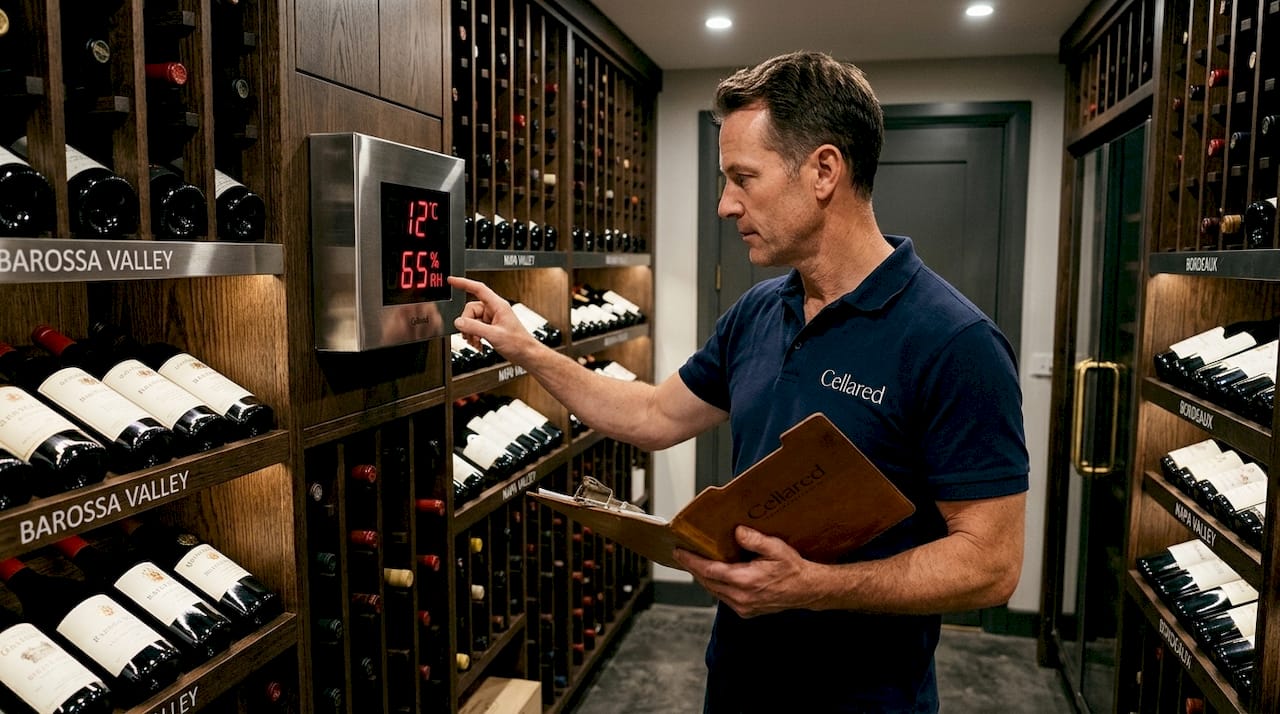
Optimal storage conditions, meaning bonded facilities, climate-controlled environments with consistent temperature and humidity, seismic protection, and fire suppression systems, can lower premiums by 10 to 20 per cent compared to standard domestic storage. Australian and APAC regulatory frameworks increasingly mandate IoT-enabled monitoring devices for collections above certain threshold values, providing real-time data on temperature, humidity, and security events.
| Storage type | Temperature control | Regulatory compliance | Premium impact | Best suited for |
|---|---|---|---|---|
| Home cellar (basic) | Variable | Minimal | Baseline rate | Collections under $20k |
| Dedicated home cellar (climate-controlled) | Consistent | Moderate | Up to 10% reduction | Collections $20k-$100k |
| Bonded commercial facility | Precise | High | Up to 20% reduction | Collections over $100k |
| Freeport (Singapore, HK) | Best-in-class | Fully compliant | Maximum reduction | International portfolios |
Key storage standards that insurers look for include:
- Temperature maintained between 12°C and 14°C year-round, without fluctuation greater than 2°C.
- Relative humidity held between 60% and 75% to protect corks and labels from deterioration.
- UV-filtered lighting or complete darkness, eliminating light-induced wine degradation.
- Vibration-free environments, particularly relevant for collections held in urban properties near construction or heavy traffic.
- IoT-connected sensors providing continuous monitoring and automated alerts.
Proper wine storage is the foundation upon which everything else, valuation, insurance, and long-term appreciation, rests. The benefits of cellaring extend well beyond flavour development. Wines stored correctly maintain their provenance integrity and market value in ways that poorly stored examples simply cannot.
Ideal cellar practices developed over years of working with serious collectors demonstrate clearly that the transition from a domestic refrigeration unit to a purpose-built climate-controlled cellar, or ideally a bonded commercial facility, is almost always financially justified for collections exceeding $50,000 in value.
Pro Tip: Request a formal storage compliance report from your facility annually. This document, confirming temperature logs, humidity records, and security protocols, is invaluable during policy renewal negotiations and demonstrates to your insurer that the collection is actively protected.
The appraisal process and ongoing valuation
Securing appropriate storage is only half the equation. A wine collection's true financial protection depends on the rigour and regularity of its professional appraisal. Many collectors invest considerable time and resources in assembling exceptional cellars, yet leave the documentation side largely unattended, and this is precisely where insurance disputes arise.
The appraisal process, conducted to the standard required by insurers and legal authorities alike, follows a clear sequence:
- Engage a certified specialist. Select an appraiser with demonstrable expertise in fine and rare wine, independent of any retail or brokerage interest in your collection. Independence is essential.
- Compile full documentation. Gather purchase invoices, auction records, cellar photographs, producer certificates, and any previous appraisal reports before the appraiser visits.
- Physical inspection. The appraiser examines each bottle, assessing fill levels, label condition, capsule integrity, and storage environment, all factors that affect market value.
- Market benchmarking. Current secondary market data, drawn from recent auction results across Australia and internationally, is applied to establish a defensible value for each wine.
- Formal written report. The appraiser produces a comprehensive, court-ready document suitable for insurance, probate, family law, or private advisory purposes.
- Update at regular intervals. The process should be repeated every twelve to eighteen months, or sooner if the market moves dramatically or significant purchases are made.
"Valuations are critical to the integrity of any wine insurance policy. Certified experts must document provenance with full supporting evidence, and collections should be reappraised regularly as fine wine appreciates, protecting the collector from underinsurance and minimising the risk of claim disputes." How to Insure Fine Wine
The stakes are considerable. Fine art and valuables insurance is projected to reach between $3.2 billion and $5.1 billion globally by 2033, with 59% of premiums generated by high-net-worth individuals. APAC wealth concentration is a primary driver of this growth, reflecting the extraordinary expansion of private wine collections across the region.
For smaller collections, the calculus differs. Self-insurance is often the more practical approach for collections valued under $15,000, where specialist policy costs may outweigh the financial benefit. However, professional advice remains essential even at this level, ensuring that home contents policies extend appropriately to wine holdings and that documentation is in place should values rise.
Wine appraisals and valuations from independent specialists provide the documentary foundation for all subsequent decisions, including when and how to sell your wine collection to maximise return.
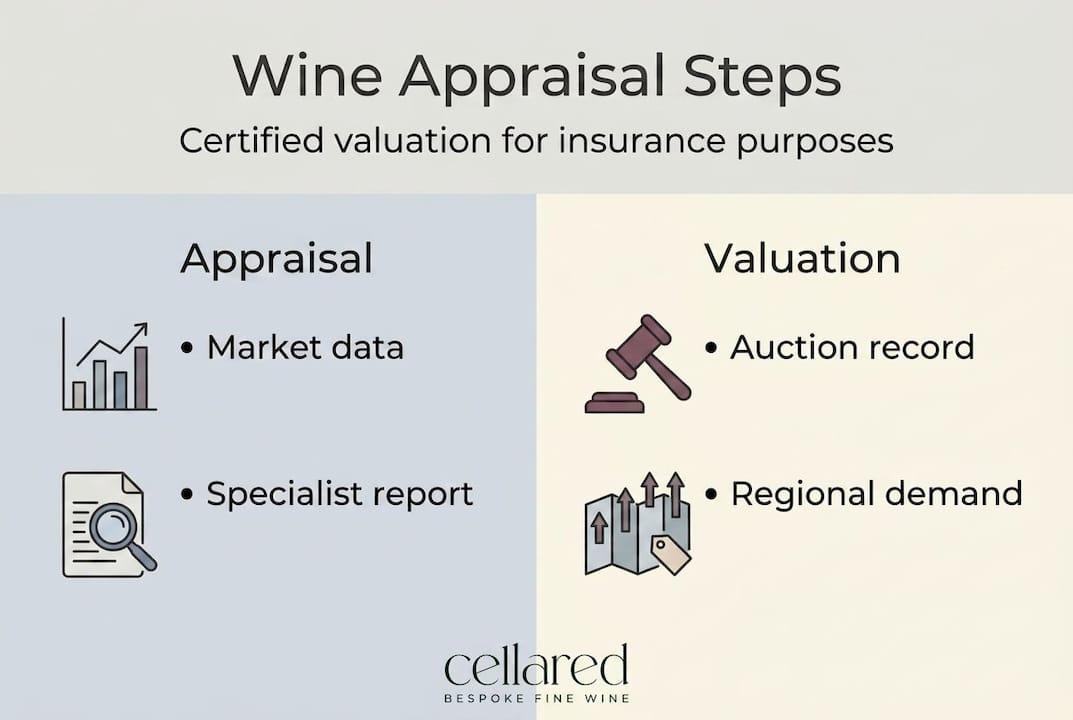
Pro Tip: Do not rely on wine merchant valuations or retail replacement estimates for insurance purposes. Secondary market auction data, current and jurisdiction-specific, is the only reliable basis for an appraisal that will withstand insurer scrutiny.
A fresh perspective: Common mistakes and what most guides miss
From years of working with collectors, investors, and estates across Australia and APAC, one observation stands clearly above all others: the most costly mistakes are rarely made at the point of purchase. They accumulate quietly over time, in missed reappraisals, inadequate documentation, and a misplaced trust in generic insurance products that were never designed for fine wine.
Standard home and contents policies almost universally fail serious collectors. They typically apply blanket limits to valuables, fail to account for secondary market appreciation, and exclude specific perils such as temperature-related spoilage or cork failure, losses that are entirely foreseeable in an improperly managed cellar.
Most insurance disputes, in our experience, stem not from catastrophic events but from documentation gaps. A bottle cannot be valued accurately if its provenance is incomplete or its storage history is undocumented. Insurers will default to conservative estimates, and collectors bear the financial consequence.
The APAC dimension is genuinely underserved by mainstream guidance. The regulatory requirements in Singapore, Japan, and Hong Kong differ materially from those in Australia, and a policy structured for a Sydney cellar may provide entirely inadequate cover for a collection stored in a Singaporean freeport. Cellar management expertise that spans these jurisdictions is not a luxury. For serious collectors, it is a necessity.
Connect with expert solutions for your wine collection
Managing the intersection of fine wine, insurance, and valuation demands precisely the kind of specialist knowledge that generalist advisers simply cannot provide.

Cellared Fine Wine works with collectors, investors, estates, and private clients across Australia and APAC to deliver expert wine appraisals that are independent, market-led, and court-ready. Whether you are seeking insurance cover for the first time, updating an existing policy, navigating a probate matter, or simply ensuring your collection is properly documented, our team brings the depth of knowledge and the personal attention your collection deserves. From professional cellar management to bespoke sourcing and independent valuation, Cellared is your trusted partner in protecting what you have built.
Frequently asked questions
How often should I reappraise my wine collection for insurance?
Most experts recommend reappraisal every twelve to eighteen months to capture ongoing market appreciation and ensure your insurance cover accurately reflects the current value of your collection.
Are climate-controlled cellars required for wine insurance in Australia?
Climate-controlled storage is not strictly mandatory in all cases, but optimal storage conditions can reduce premiums by 10 to 20 per cent and are strongly recommended by specialist wine insurers.
Can I get coverage for a collection under $15,000?
Some specialist insurers will cover smaller collections, but self-insurance is often practical for collections valued below $15,000, where policy costs may not justify the outlay. Professional advice helps determine the right approach.
What happens if my wine's provenance is incomplete?
Incomplete provenance can significantly reduce the insurable value of individual bottles and creates meaningful risk of claim disputes. Working with a certified appraiser to reconstruct and document available evidence is always worthwhile.
Recommended
- Wine & Spirits Valuations | Family Law, Probate & SMSF | Cellared | Bespoke Wine Buying, Valuation & Cellar Management
- Wine Appraisals & Valuations | Cellared | Bespoke Wine Buying, Valuation & Cellar Management
- Test Conversion | Cellared | Bespoke Wine Buying, Valuation & Cellar Management
- Wine Cellar Management | Cellared | Bespoke Wine Buying, Valuation & Cellar Management