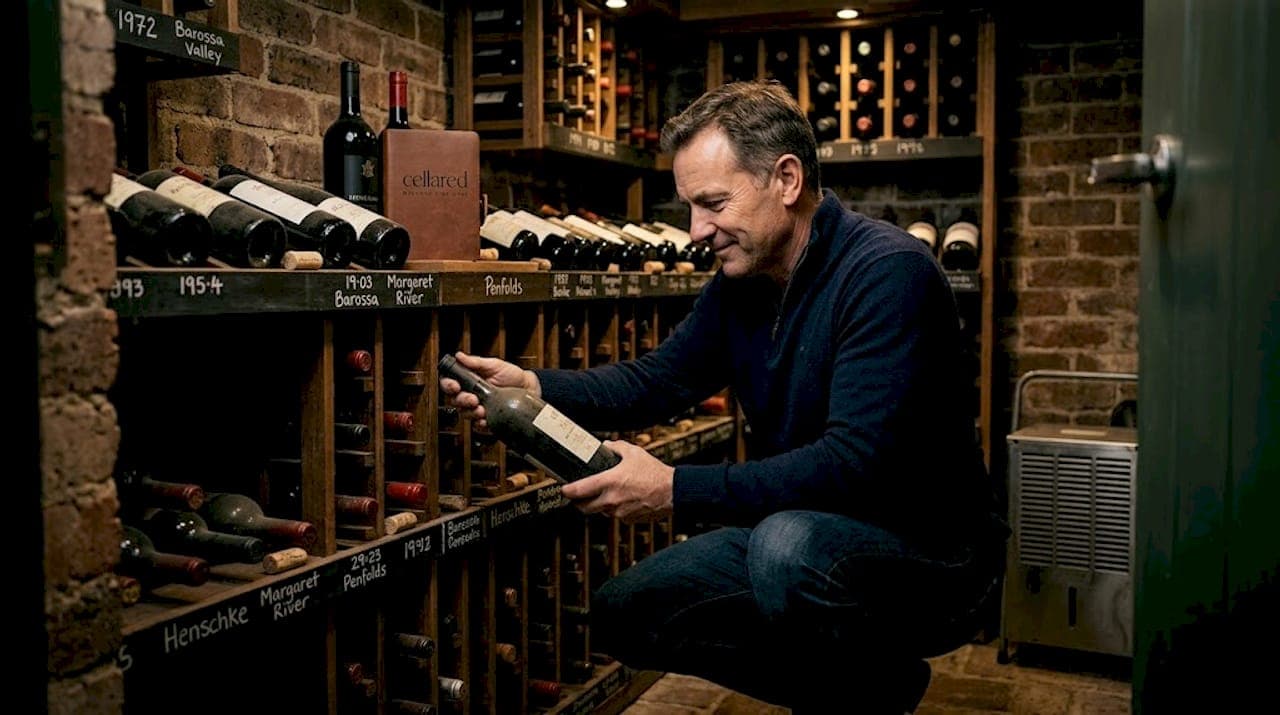
A private wine cellar is far more than a luxury flourish in a grand home. For serious collectors, it is the single most consequential decision in protecting and growing a fine wine portfolio. Climate-controlled wine storage designed for long-term preservation is what separates wines that peak magnificently from those that quietly deteriorate behind closed doors. Whether you hold a dozen first-growth Bordeaux or hundreds of meticulously sourced bottles from premier appellations, understanding what a private wine cellar truly is, and what it demands, will fundamentally change how you approach your collection.
Table of Contents
- Defining a private wine cellar: Purpose, types and key features
- The science of wine storage: Climate, location and technical benchmarks
- Value and benefits: Elevating investment, enjoyment and home prestige
- Key steps and pitfalls: Planning, building and maintaining your private cellar
- A fresh perspective: Why private wine cellars matter more than ever for collectors
- Partner with experts for world-class cellar outcomes
- Frequently asked questions
Key Takeaways
| Point | Details |
|---|---|
| Optimal environment matters | Temperature and humidity stability, not just luxury design, are critical for preserving wine value. |
| Investment and lifestyle boost | A private cellar enhances collection quality, resale potential, and personal enjoyment. |
| Expert guidance pays off | Partnering with professionals reduces errors and maximises your investment’s long-term return. |
| Plan for growth | Consider future collection expansion and maintenance when designing your cellar. |
Defining a private wine cellar: Purpose, types and key features
At its core, a wine cellar definition encompasses a purpose-built, climate-controlled room or cabinet within a private residence, designed specifically for storing and ageing wine collections over the long term. This is not a repurposed pantry shelf or a kitchen wine rack. It is an engineered environment where temperature, humidity, light, vibration, and air quality are all precisely managed to protect the integrity of every bottle inside.
Private cellars come in several distinct forms, each suited to different collection sizes and spatial constraints:
- Freestanding units: Compact, self-contained cabinets capable of holding between 46 and 200 bottles, ideal for those beginning a collection or supplementing a larger space.
- Modular wine rooms: Pre-designed systems that can be assembled within an existing room, typically accommodating 200 to 1,500 bottles with reliable climate control.
- Custom-built cellars: Bespoke, fully engineered spaces holding upwards of 3,000 bottles, constructed to exact specifications and often featuring professional-grade racking, glazed display walls, and dedicated cooling systems.
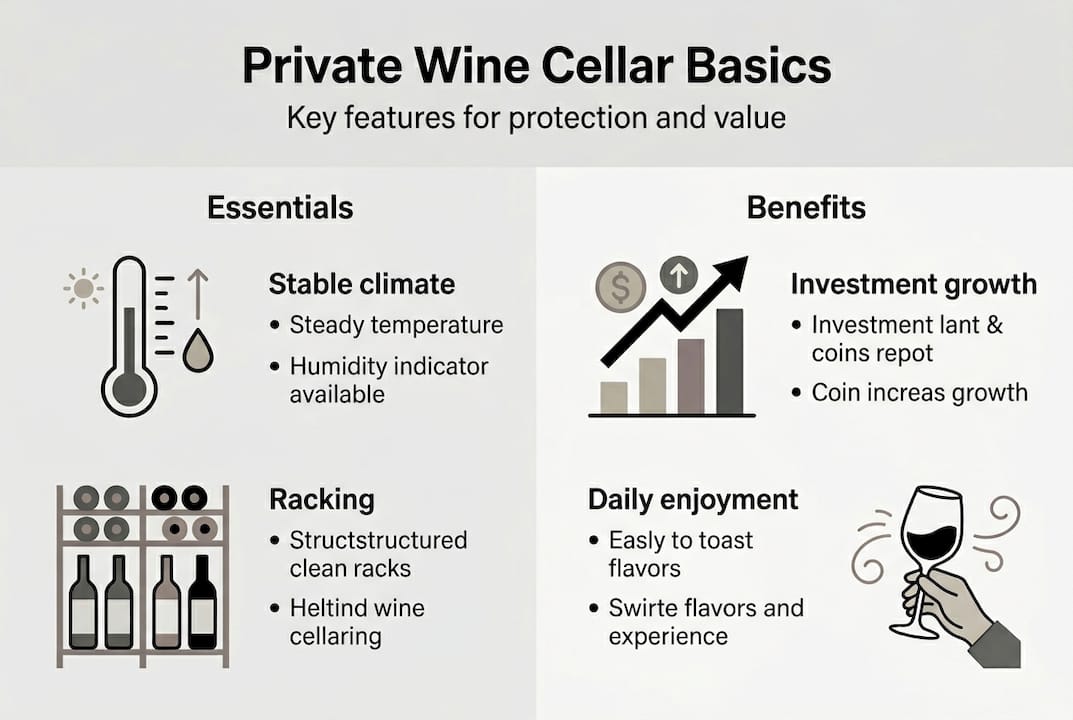
The essential features that distinguish a genuine private wine cellar from mere storage are worth understanding clearly. Temperature stability, maintained ideally at 13°C, is paramount. Relative humidity must remain between 60 and 70 per cent to preserve cork integrity and prevent label deterioration. Vibration must be minimised, as even subtle movement disrupts the slow chemical reactions that preserve wine flavours during ageing. UV light must be excluded entirely, and odour infiltration from adjacent spaces must be eliminated.
"A private wine cellar is the architecture of patience, a space built not for today's pleasure, but for the exceptional rewards of tomorrow."
Effective wine cellar management begins with the design phase. Racking systems should facilitate easy catalogue management and minimise bottle handling. Security, whether through discreet locking or integrated monitoring, is equally important for high-value collections.
Pro Tip: Before investing in aesthetics, prioritise the engineering fundamentals. A beautifully designed cellar that fails its climate brief will cost far more in spoiled wine than it saves in construction.
The science of wine storage: Climate, location and technical benchmarks
Wine is a living substance. The slow, transformative chemical reactions within a sealed bottle are acutely sensitive to their surrounding environment. Understanding the precise conditions required is not mere fastidiousness; it is the foundation of sound investment.
The most authoritative benchmark for ideal storage conditions specifies a stable temperature of 13°C (55°F), relative humidity between 60 and 70 per cent, and an environment free from light, vibration, and strong odours. However, a notable contrasting perspective holds that temperatures below 27°C (80°F) are broadly acceptable without bespoke systems, and that temperature fluctuations are more damaging than minor deviations from the ideal. Both views share a critical point: stability is paramount.
Here are the key technical benchmarks every collector should understand:
- Temperature: Maintain 13°C as the target. Seasonal swings exceeding 3 to 4 degrees Celsius will accelerate ageing unpredictably.
- Humidity: Keep between 60 and 70 per cent. Below 50 per cent, corks dry and shrink; above 80 per cent, mould threatens labels and potentially corks.
- Light exposure: UV light degrades wine compounds rapidly. Solid doors or UV-filtering glass are non-negotiable.
- Vibration: Keep the cellar away from HVAC systems, laundries, and high-traffic zones. Even low-frequency vibration impairs the wine ageing science that creates complexity over decades.
- Odour isolation: Wine can absorb strong odours through corks over time. Avoid proximity to kitchens, cleaning storage, or paint.
| Storage factor | Ideal benchmark | Risk if ignored |
|---|---|---|
| Temperature | 13°C stable | Premature ageing, wine faults |
| Humidity | 60 to 70% | Dried corks, mould, label damage |
| Light | Zero UV exposure | Chemical degradation |
| Vibration | Minimal | Disrupted ageing reactions |
| Odour | None | Taint through cork |
Passive cellars, those cooled by natural underground temperatures such as traditional basements, can be exceptional performers in the right climate. Active cellars rely on mechanical cooling systems and are essential in warmer or more variable climates. Custom wine cellars, when engineered correctly, not only protect the collection but measurably increase property value, a meaningful consideration for high net worth homeowners.
Pro Tip: Commission a thermal assessment of your chosen cellar space before installation. Identifying heat bridges and insulation weaknesses early will save considerable expense in ongoing cooling costs.
Value and benefits: Elevating investment, enjoyment and home prestige
Once your cellar operates to professional standards, the rewards extend far beyond simply keeping bottles at a consistent temperature. The influence on fine wine investments is profound and measurable.

Proper cellaring directly governs how wine evolves. A first-growth Bordeaux stored impeccably over 20 years will command a dramatically different price at auction than the same wine stored carelessly. Wine preservation methods that maintain optimal conditions are the difference between a bottle that realises its full potential and one that disappoints at the critical moment of opening or sale.
The benefits of a well-executed private cellar are substantial:
- Investment protection: Correct ageing conditions preserve and enhance the future resale value of fine wines.
- Collection integrity: Every bottle maintains its intended character, complexity, and longevity.
- Property value: A bespoke, beautifully engineered cellar adds considerable appeal and value to a luxury residence.
- Social prestige: The ability to offer guests wines drawn from your own meticulously curated cellar is a mark of exceptional taste and connoisseurship.
- Personal enjoyment: There is a singular pleasure in opening a wine that has been patiently cellared, knowing it has reached its precise peak.
"The finest cellars are not measured in bottles, but in the foresight and care that went into every design decision."
A wine collection valuation conducted on a well-managed cellar will invariably reflect stronger market values, both for insurance and for potential sale. Importantly, private cellars also transform the experience of entertaining at home, allowing collectors to offer guests wines with genuine provenance and immaculate condition.
| Cellar type | Cost profile | Climate control | Best suited for |
|---|---|---|---|
| Passive basement | Low to moderate | Natural, dependent on location | Cooler climates with stable geology |
| Active modular | Moderate | Mechanical, reliable | Most residential environments |
| Custom bespoke | High | Precision-engineered | Serious collectors and investors |
Key steps and pitfalls: Planning, building and maintaining your private cellar
Building a private wine cellar is a structured process that rewards careful planning and punishes shortcuts. The path from concept to operational cellar involves several critical stages.
- Assess your collection and growth ambitions: Know not just your current bottle count but your five and ten-year acquisition intentions. Cellars are far easier to build larger than to expand later.
- Choose the right location: Prioritise areas naturally insulated from temperature extremes. Below-ground spaces are preferred, but above-ground cellars with excellent insulation and active cooling are entirely viable.
- Invest in climate infrastructure first: The cooling and humidity system is the heart of the cellar. Allocate budget here before racking, flooring, or glazing.
- Select appropriate racking: High-quality racking minimises vibration, accommodates diverse bottle formats, and enables easy cataloguing. Modular systems offer flexibility as the collection grows.
- Implement ongoing monitoring: Digital temperature and humidity loggers allow continuous oversight. Professional reviews every 12 to 18 months are strongly advisable for significant collections.
The most common pitfalls collectors encounter include underestimating future growth, which leads to inadequate capacity within a few years of completion. Skimping on insulation creates thermal instability that no cooling system can fully correct. Ignoring proximity to vibration sources such as plant rooms or lifts quietly damages wine over years. And perhaps most critically, many collectors neglect to maintain accurate cataloguing and condition records, which undermines both getting wines valued accurately and managing provenance for future sale.
Capacities range from 46 bottles in freestanding units to more than 3,000 in custom rooms, with costs driven primarily by envelope construction, glazing, racking quality, and climate system sophistication. For high net worth collectors, investment in expert cellar management and proper wine ageing expertise delivers returns that far exceed the initial outlay.
Pro Tip: Engage a specialist with genuine cellar design and wine management experience before committing to any build. The cost of expert advice at the planning stage is negligible compared to the cost of rectifying structural or climate errors after construction.
A fresh perspective: Why private wine cellars matter more than ever for collectors
There is a persistent misconception among collectors that a private wine cellar is primarily a statement of wealth. It is not. It is a statement of seriousness. The finest collections in the world are anchored by exceptional storage, not exceptional aesthetics.
What we observe repeatedly is collectors who invest handsomely in acquiring extraordinary bottles, then compromise on the environment those bottles inhabit. In today's fine wine market, where provenance and condition are scrutinised with forensic precision by buyers and auction houses alike, even modest lapses in storage can cost tens of thousands in diminished value at the point of sale.
The collectors who consistently outperform the market understand that their cellar is not a passive backdrop. It is an active asset. Maintaining professional-grade conditions, working with specialists on futureproof wine buying strategies, and conducting regular valuations transforms a cellar from a room into a portfolio.
Pro Tip: The best cellars are invisible performers. When a cellar is working correctly, you never think about it. Design it to perform flawlessly, and let the wine take centre stage.
Partner with experts for world-class cellar outcomes
Building and maintaining a private wine cellar to the standard your collection deserves requires more than good intentions and quality materials. It demands expertise, foresight, and ongoing stewardship from professionals who understand both the wine and the investment.

At Cellared Fine Wine, we work with private collectors, estates, and investors to deliver precisely that. From bespoke wine buying strategies that anticipate what your cellar should hold, to comprehensive cellar management experts services that monitor, catalogue, and protect your collection on an ongoing basis, our team brings deep market knowledge and meticulous attention to every engagement. Whether you are building your first serious cellar or refining an established collection, we are here to ensure every decision serves your portfolio with precision and care.
Frequently asked questions
How much does a private wine cellar typically cost to build?
Custom cellars for serious collectors commonly begin at several tens of thousands of dollars, with costs driven by envelope construction, glazing quality, racking, and climate engineering, scaling significantly with size and complexity.
What's the minimum temperature and humidity control required?
Target 13°C with 60 to 70% relative humidity as your baseline; however, avoiding rapid climate fluctuations is more critical than hitting a precise number, as instability causes the greatest damage to wine over time.
Are there investment benefits to having a private wine cellar?
Absolutely. Proper cellaring protects wine quality and provenance, both of which are central to future resale value, and a well-engineered cellar can also increase the overall worth of your property.
Can I convert a simple basement or cupboard into a functioning wine cellar?
Yes, provided you can achieve genuine climate stability through insulation and, in most cases, active cooling systems, as passive solutions alone rarely deliver the consistency required for long-term wine investment protection.
Recommended
- Wine Cellar Management | Cellared | Bespoke Wine Buying, Valuation & Cellar Management
- Bespoke Fine Wine Buying | Cellared | Bespoke Wine Buying, Valuation & Cellar Management
- Sell Your Wine Collection | Cellared | Bespoke Wine Buying, Valuation & Cellar Management
- Test Conversion | Cellared | Bespoke Wine Buying, Valuation & Cellar Management
- Why cellar wine: unlock better flavors and preserve quality