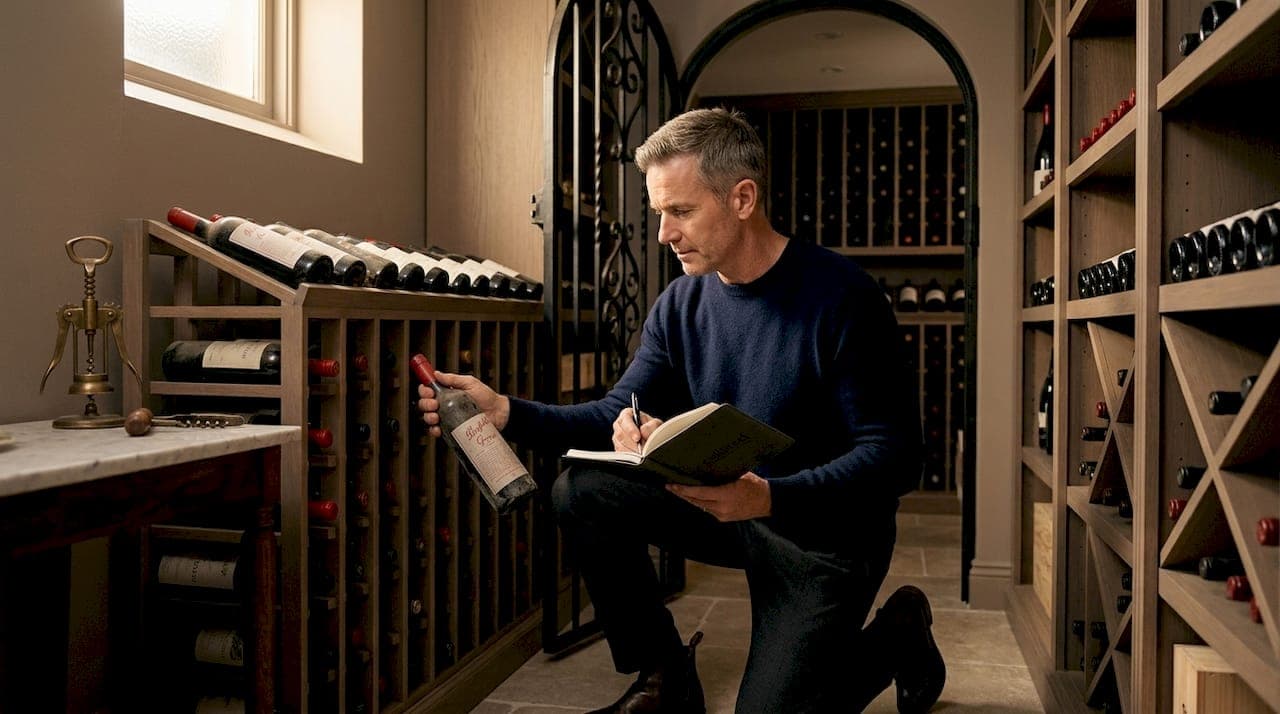
A single bottle of 1951 Penfolds Grange sold at auction for AUD$142,000, a figure that stops even seasoned collectors in their tracks. Yet price alone tells only part of the story. For collectors and investors across Australia and the broader APAC region, the real question is not what a wine fetched at its last sale, but why it commands that figure in the first place. Understanding the deeper forces behind collectibility, from terroir and heritage to scarcity and market sentiment, is what separates a well-assembled cellar from a truly exceptional one.
Table of Contents
- Core traits of collectible wines
- How critical acclaim and vintage shape collectibility
- Scarcity, legacy, and the Australian/APAC perspective
- Market cycles, sentiment, and strategic timing
- The overlooked truth: Why collectors' passion drives the market
- Taking your collection to the next level
- Frequently asked questions
Key Takeaways
| Point | Details |
|---|---|
| Heritage and acclaim | Wines with a storied legacy and strong critic endorsements are top collectible candidates. |
| Scarcity matters | Small production runs and old vine sources elevate wines to collectible status. |
| Vintage and condition | The best years and well-preserved bottles drive long-term appreciation. |
| Market timing | Strategic buying and selling during market cycles can maximise returns for collectors. |
Core traits of collectible wines
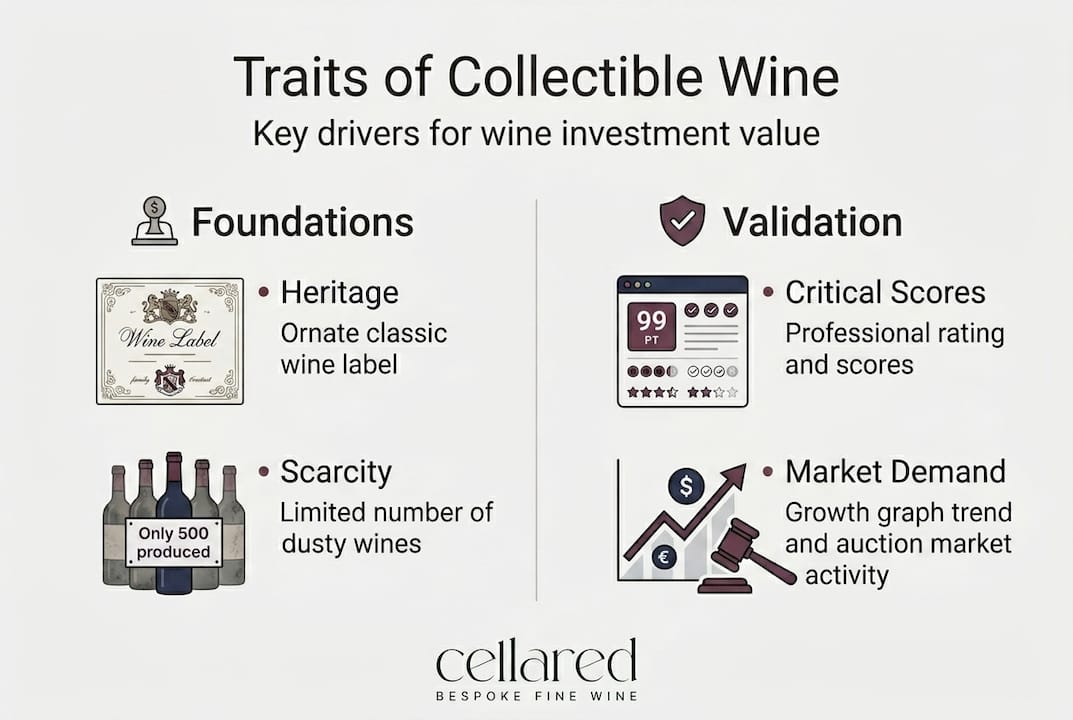
Collectibility is not an accident. It is the product of several intersecting attributes that, when aligned, elevate a wine from a fine drinking experience to a genuine asset class. The most enduring collectible wines share a recognisable constellation of qualities, and recognising these early is the mark of a skilled investor.
Heritage and iconic status sit at the foundation. A wine's story, the centuries of tradition, the pioneering winemaker, the defining moment in a region's history, lends it a cultural weight that no marketing campaign can manufacture. Penfolds Grange and Henschke Hill of Grace are the pre-eminent local examples: both are icons for their heritage, scarcity, critical acclaim, and secondary market performance. Internationally, estates such as Domaine de la Romanée-Conti, Petrus, and Screaming Eagle have built comparable mythologies over decades.
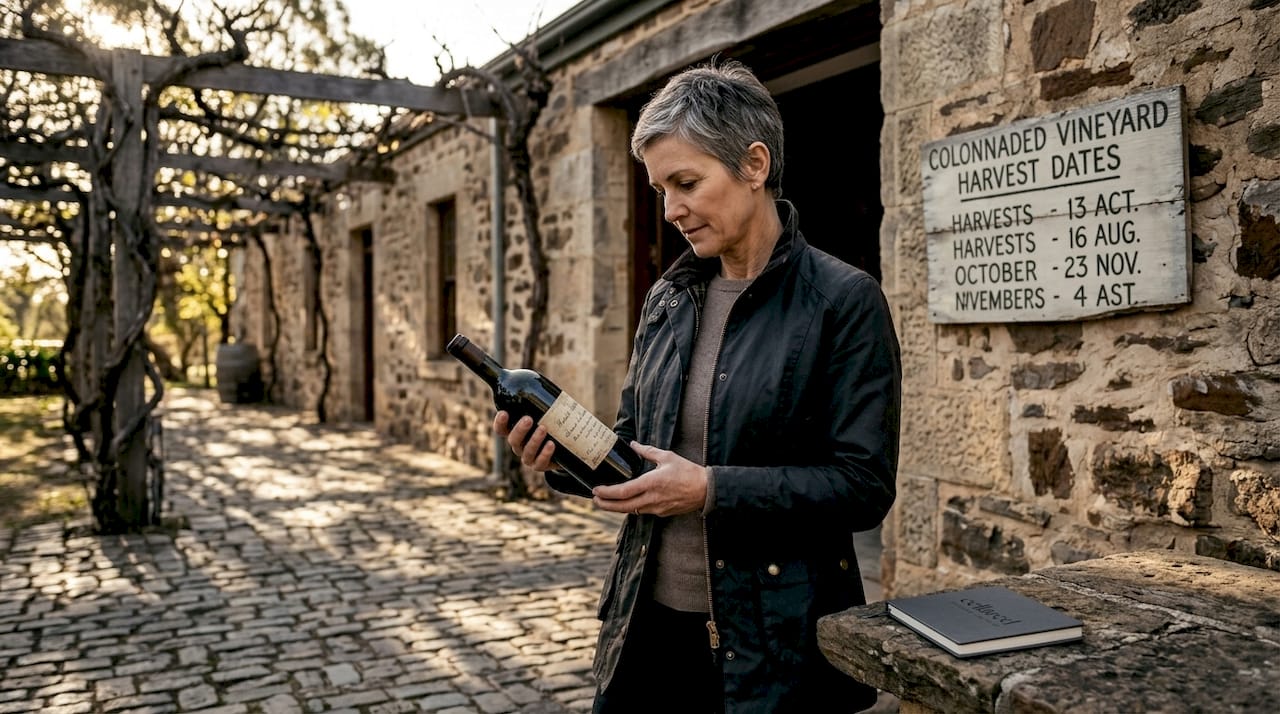
Scarcity is equally decisive. When a producer makes only a few thousand cases per year, or sources fruit from century-old vines, supply becomes the dominant market force. Limited production concentrates demand, keeps secondary market prices elevated, and makes each bottle feel like a fragment of something finite and irreplaceable.
Critical acclaim provides external validation. Scores of 95 points and above from respected critics and publications signal to the broader market that a wine merits serious attention. These scores correlate strongly with premium pricing on release and, more importantly, in the years that follow.
Long-term market performance is the fourth pillar. Truly collectible wines appreciate in value across multiple market cycles. They are not flash points of speculative demand; they are steady performers with deep, loyal collector bases.
The following table illustrates how these core traits align across three recognised collectible benchmarks:
| Wine | Heritage | Annual production | Benchmark score | Secondary market trend |
|---|---|---|---|---|
| Penfolds Grange | Est. 1951, national icon | ~8,000 cases | 95–100 pts | Strong, consistent appreciation |
| Henschke Hill of Grace | Est. 1958, single vineyard | ~1,000–1,500 cases | 96–100 pts | Exceptional long-term growth |
| Screaming Eagle | Cult Napa Valley producer | ~500 cases | 96–100 pts | One of the world's highest premiums |
Looking at this comparison, a pattern emerges: the wines that attract the most sustained collector interest are those where heritage, scarcity, and acclaim reinforce each other rather than operate in isolation. Bordeaux's legendary classified estates similarly demonstrate this interplay, with Bordeaux collectibility built over centuries of documented performance. Even emerging categories like grower Champagne, with their artisan production philosophies and severely limited allocations, are carving out a meaningful place in sophisticated cellars across the region.
Key attributes to assess when evaluating any wine's collectibility:
- Producer reputation: Is the estate known for meticulous viticulture and winemaking consistency?
- Vineyard provenance: Are the fruit sources exceptional, rare, or historically significant?
- Ageing potential: Does the wine's structure (tannin, acidity, concentration) suggest long-term development?
- Global recognition: Has the wine attracted international critical attention and appeared at major auctions?
- Release scarcity: Is allocation restricted, and does demand consistently outstrip supply?
Each of these factors individually adds interest. In combination, they create the conditions for genuine collectibility.
How critical acclaim and vintage shape collectibility
Critical scores serve as a common language in the fine wine market, providing a shorthand that helps buyers and sellers establish baseline value. Yet the relationship between acclaim and long-term collectibility is more nuanced than the numbers suggest, and the most sophisticated collectors understand its limits.
Scores of 95 points and above drive meaningful premiums at release and on the secondary market. Low-production cult wines producing fewer than 1,000 cases per year, such as Screaming Eagle, create a scarcity effect that amplifies the impact of those scores significantly. Older vintages from exceptional years appreciate further as physical supply diminishes with each bottle opened, a compounding scarcity that rewards patience in a collector's cellar.
However, critics' scores add only marginal value when assessed beyond the context of weather and vintage data. A 97-point score in a mediocre growing season tells a very different story to a 97-point score in a year of near-perfect conditions. Vintage quality, driven by temperature, rainfall, and harvest timing, is often a more reliable predictor of long-term value than the critic's assessment alone.
Consider the following comparison between critical influence and vintage quality as investment signals:
| Factor | Short-term price impact | Long-term value driver | Predictability |
|---|---|---|---|
| Critic score (95+) | High | Moderate | Moderate |
| Exceptional vintage | Moderate at release | High | Higher with data |
| Scarcity (sub-1,000 cases) | Very high | Very high | Consistent |
| Producer reputation | Moderate | Very high | Consistent |
The numbered steps below outline a disciplined approach to evaluating any wine before committing capital:
- Research the vintage conditions for the specific region and year. Access weather data, harvest reports, and grower commentary. This information is publicly available and frequently more revealing than a critic's tasting note.
- Cross-reference scores across multiple critics. A wine that receives consistently high marks from several respected voices carries more weight than a single high score from one publication.
- Assess wine vintage fundamentals to understand what a particular year means for ageing potential in that region.
- Check understanding wine scores to place individual ratings in their proper context, including the critic's methodology and track record.
- Consider vintage appraisal impact when reviewing a collection for insurance or sale, as the year of production materially affects market value.
"The most rewarding cellar decisions are rarely the most obvious ones. A modest score in an extraordinary vintage, from a producer of impeccable standing, can outperform a celebrated score from a difficult year by a considerable margin over time."
Pro Tip: When building a collecting strategy around critic scores, always layer in detailed weather and production data for each vintage you consider. The numbers alone are illuminating; the story behind them is transformative.
Scarcity, legacy, and the Australian/APAC perspective
Australia occupies a singular and often underestimated position in the global fine wine landscape. The country is home to two wines that stand alongside the world's greatest in any serious collection, and the regional APAC market has matured considerably in its appreciation of both local and international icons.
Penfolds Grange is designated as Langton's Heritage tier and holds the distinction of being the only Australian wine recognised as a Liv-ex First Growth equivalent. This classification places Grange in rarefied company alongside Pétrus, Screaming Eagle, and Romanée-Conti when considered on the global secondary market. The wine's consistent presence at major Australian and international auction houses, combined with its cultural resonance, gives it a staying power that few wines anywhere in the world can match.
Henschke Hill of Grace draws its power from a different source: a single, ancient vineyard in the Eden Valley, planted with Shiraz vines dating back to the 1860s. The vineyard itself is irreplaceable. When vines of that age are lost, they cannot be rebuilt. That irreversibility is precisely what gives Hill of Grace its almost spiritual status among collectors, and its scarcity (production rarely exceeds 1,500 cases in any given year) ensures that demand will perpetually exceed supply.
Key reasons why Australian and APAC collectors should anchor their cellars around locally recognised icons:
- Cultural resonance: Grange and Hill of Grace carry stories that resonate deeply within Australia and are increasingly understood internationally, supporting broad market liquidity.
- Documented auction history: Both wines have decades of auction records, providing a transparent and reliable price history for valuation purposes.
- Global recognition: International collectors and auction houses actively seek these wines, creating genuine export demand that supports domestic prices.
- Limited release history: Annual releases are eagerly anticipated, heavily allocated, and frequently traded the moment they appear on the secondary market.
Beyond the two flagship names, the APAC region is witnessing growing collector interest in wines from Japan's Hokkaido region, premium Chinese producers like Ao Yun, and a renewed appreciation for aged Australian Riesling and Semillon. Singapore and Hong Kong continue to serve as important trading hubs, with strong cultural appetite for Burgundy, Champagne, and top Bordeaux alongside regional discoveries. Exploring regional wine strengths across both hemispheres reveals opportunities that many collectors are only beginning to recognise.
Pro Tip: Prioritise producers with a recognised standing in established classification systems and a history of limited, allocated releases. These two factors, reputation and restriction, are the surest foundation for long-term collecting success.
Market cycles, sentiment, and strategic timing
No market, however rarefied, is immune to cycles. The fine wine market is no exception, and understanding its rhythms is as valuable as knowing which wines to select.
The Liv-ex market saw a correction of approximately 25% from its 2022 peak to its subsequent trough. For investors who had accumulated positions at the height of that bull run, the correction was sobering. For collectors with capital ready to deploy, it represented some of the most attractive entry prices seen in five years. Passion assets, as the academic literature describes them, blend quantifiable performance metrics with deeply subjective factors, including collector desire, cultural prestige, and the emotional resonance of ownership.
The following table maps the key phases of a typical fine wine market cycle and the appropriate strategic response:
| Market phase | Market indicators | Recommended approach |
|---|---|---|
| Bull market | Rising Liv-ex indices, strong auction results, high demand | Hold, selectively sell outperforming positions |
| Peak | Elevated prices, speculative buying, media attention | Reassess holdings, consider strategic exits |
| Correction | Falling indices, softer auction results, reduced liquidity | Research buying opportunities at lower prices |
| Recovery | Stabilising prices, renewed institutional interest | Accumulate quality producers with proven track records |
Three market signals that warrant close monitoring by any serious collector or investor:
- Liv-ex index movements: The Liv-ex Fine Wine 1000 is the broadest benchmark for secondary market health. Monthly movements provide early indicators of sentiment shifts across the major wine regions.
- Auction clearance rates: When high-end auctions report strong clearance rates and hammer prices above low estimates, the market is in confident territory. Weak clearances signal caution.
- Currency fluctuations in APAC: For Australian and regional buyers, currency movements between the AUD, USD, GBP, and HKD meaningfully affect the relative cost of acquiring international labels and the returns on selling into offshore markets.
"Timing in the fine wine market rewards the patient and the prepared. The collector who understands why prices move, not merely that they have moved, will always navigate cycles with greater clarity and confidence."
Knowing when and how to act requires more than market instinct. Professional selling strategies and access to expert valuation advice ensure that decisions are grounded in current market data rather than sentiment or speculation.
The overlooked truth: Why collectors' passion drives the market
After decades of observing how fine wine collections are assembled, traded, and valued, one truth remains consistently underappreciated: the most durable market value is not created by spreadsheets. It is created by communities of passionate, knowledgeable collectors who genuinely love what they are buying.
The quantifiable factors, scores, production volumes, Liv-ex rankings, matter enormously. But it is the stories surrounding a wine, the mythology of a particular vintage, the reverence passed between generations of collectors, and the networks of enthusiasts who share bottles and knowledge, that truly animate the market. Wines without that emotional gravitational pull tend to peak and fade, regardless of their technical merits.
The implication for collectors is profound: cultivate knowledge and relationships as assiduously as you curate labels. Attend tastings. Engage with the producer community. Develop your own palate and perspective. These investments in expertise and connection will guide you toward bespoke buying strategies that reflect genuine understanding rather than label-chasing. The collectors who thrive long-term are invariably those whose passion informs their strategy, not those who chase the market's last headline.
Taking your collection to the next level
Building a cellar that rewards both the palate and the portfolio requires more than instinct. It requires structured expertise, timely valuations, and a clear understanding of what you hold and why.
At Cellared Fine Wine, we work with collectors and investors across Australia and the APAC region to clarify exactly that. Whether you need expert appraisals for insurance, probate, or private advisory purposes, or require ongoing professional cellar management to protect and grow your holdings, our team brings deep market knowledge and a genuinely personal approach to every client relationship. We source rare and exceptional bottles, advise on strategic acquisitions, and provide the independent, court-ready valuations that sophisticated collectors and their advisers depend upon. The next level begins with a conversation.
Frequently asked questions
What defines a wine as collectible?
A collectible wine combines heritage, limited production, high critic scores, and strong market demand, particularly across sought-after vintages. Penfolds Grange and Henschke Hill of Grace set the benchmark locally, recognised for their heritage, scarcity, and critical acclaim.
Are wines with higher critic scores always more valuable?
High scores contribute meaningfully, but vintage quality and rarity are often stronger long-term value drivers. Research confirms that weather and vintage data can be more predictive than critic scores alone when assessing a wine's investment potential.
What recent trends affect the secondary market for fine wine?
Global market corrections have created notable buying opportunities, particularly at the premium end. The Liv-ex correction of around 25% from its 2022 peak has brought prices to multi-year lows, attracting renewed collector interest.
How important is scarcity for a wine's investment potential?
Scarcity is one of the most reliable drivers of collectibility and long-term price appreciation. Low-production cult wines like Screaming Eagle, with fewer than 1,000 cases produced annually, represent the gold standard for the scarcity premium in fine wine investment.
Recommended
- Sell Your Wine Collection | Cellared | Bespoke Wine Buying, Valuation & Cellar Management
- Wine Appraisals & Valuations | Cellared | Bespoke Wine Buying, Valuation & Cellar Management
- Wine Cellar Management | Cellared | Bespoke Wine Buying, Valuation & Cellar Management
- Bespoke Fine Wine Buying | Cellared | Bespoke Wine Buying, Valuation & Cellar Management