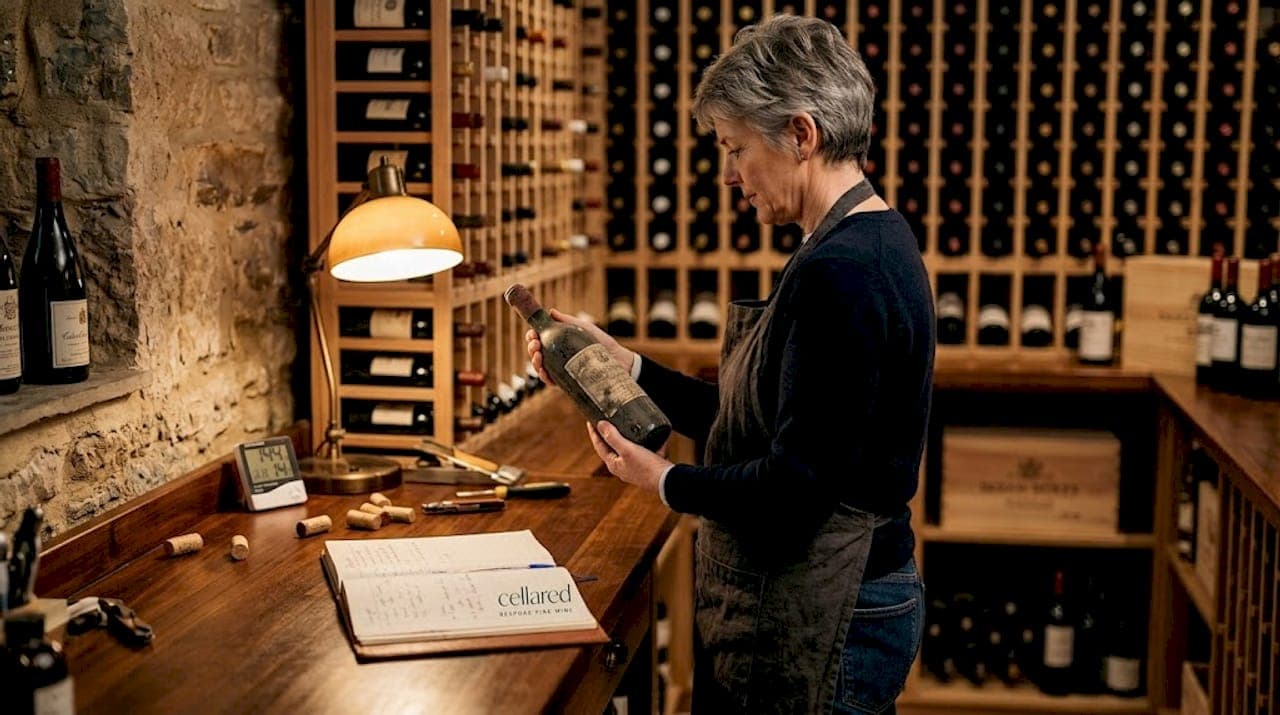
Prestige and price are seductive forces in the world of fine wine, yet they can mislead even the most experienced collectors. A trophy label on a poorly stored bottle, or a celebrated vintage acquired through an unverified channel, can quietly erode both financial value and personal enjoyment. Wine sourcing is the disciplined process of acquiring rare and fine wines through specialised channels, placing provenance, authenticity, and storage at the centre of every decision. For high-net-worth collectors and investors across Australia and the Asia-Pacific region, understanding this process is not optional. It is the difference between building a collection that appreciates and one that quietly disappoints.
Table of Contents
- What is wine sourcing and why does it matter?
- Sourcing channels: From auctions to off-market opportunities
- Provenance and authenticity: Why these matter more than prestige
- Key storage considerations for sourced wine
- Our take: The uncomfortable truth about rare wine sourcing
- Elevate your collection with expert wine sourcing
- Frequently asked questions
Key Takeaways
| Point | Details |
|---|---|
| Provenance is critical | Authenticity and sourcing history outrank price or prestige when acquiring rare wines. |
| Select sourcing channels wisely | Auctions, off-market deals, and brokers each offer unique opportunities and risks. |
| Professional storage is essential | Investment-grade wines require optimal cellar conditions and can benefit from bonded storage for tax advantages. |
| Scarcity often trumps fame | Low-volume, blue-chip wines with documented origins hold value better than household names. |
What is wine sourcing and why does it matter?
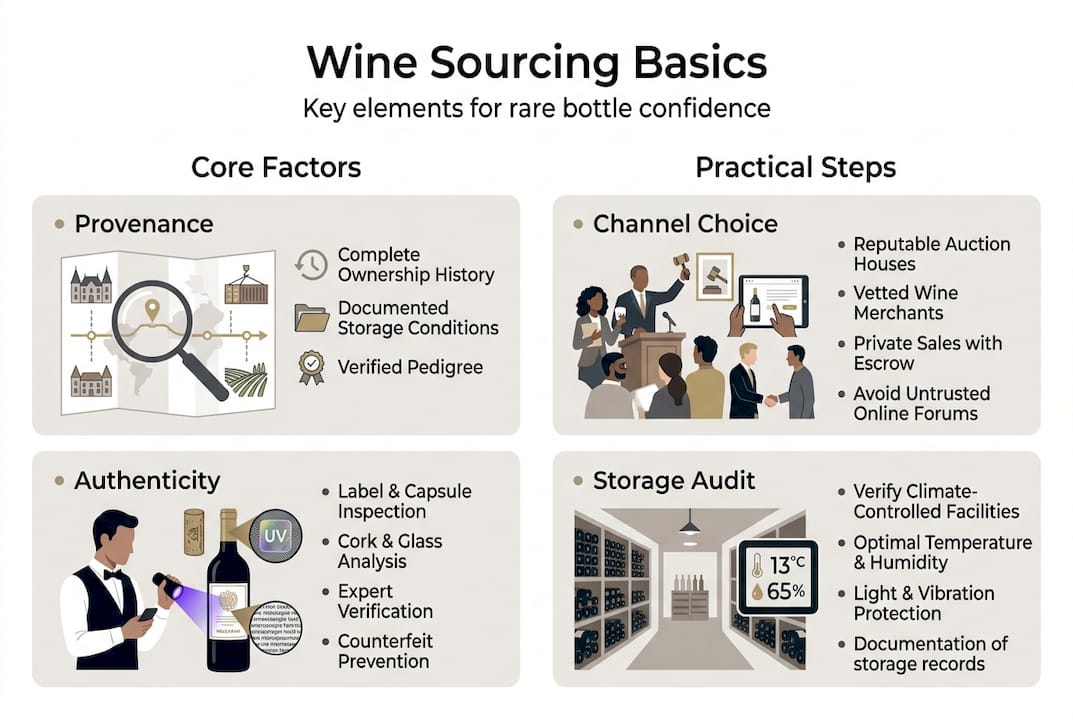
Wine sourcing is far more nuanced than selecting bottles from a retailer's shelf or bidding impulsively at auction. At its most precise, wine sourcing is the process of acquiring rare and fine wines through specialised channels, emphasising provenance, authenticity, and optimal storage to support investment or collection goals. This definition carries significant weight, because each element of it, provenance, authenticity, and storage, can independently make or destroy the long-term value of a bottle.
For collectors in Australia and across the Asia-Pacific, the context is particularly compelling. Engaging international markets from this part of the world means navigating import regulations, currency fluctuations, and logistical chains that can introduce multiple points of risk. A bottle that changes hands three times between a French négociant and a Sydney cellar may arrive perfectly or arrive compromised, and without meticulous documentation, there is no reliable way to know which.
What distinguishes genuine wine sourcing from ordinary buying comes down to several interconnected principles:
- Channel selection: Choosing the right acquisition pathway, whether direct from the domaine, through a trusted broker, via established auction houses, or through private networks, determines the integrity of what you receive.
- Provenance verification: Every bottle should carry a transparent and unbroken history, from production to your cellar. Missing links in this chain are red flags, not minor inconveniences.
- Authenticity assurance: Counterfeit fine wine is a documented global problem. Reputable sourcing requires independent verification, especially for rare back vintages.
- Storage continuity: Investment-grade wine must have been stored correctly at every stage of its journey. Temperature abuse is irreversible.
Understanding wine basics for confident choices is a useful foundation, but sophisticated collectors require a far deeper operational framework. Accurate wine appraisal and valuation becomes essential once bottles have been sourced, as does understanding the full market context when selling a wine collection at a later stage. Sourcing, in other words, does not exist in isolation. It is the first act in a long and carefully managed story.
For collectors focused on specific regions, such as Bordeaux wine sourcing, the stakes are especially high given the volume of imitation product that circulates in secondary markets.
Sourcing channels: From auctions to off-market opportunities
Once the principles of sourcing are understood, attention turns to the practical landscape of acquisition channels. Each pathway offers distinct advantages and exposes buyers to different categories of risk.
| Channel | Key advantage | Primary risk |
|---|---|---|
| Specialist retailer | Regulated, consistent supply | Limited access to rare releases |
| Auction house | Broad selection, price transparency | Provenance gaps in private consignments |
| Broker or merchant | Curated access, expert relationships | Requires trust and due diligence |
| Off-market or private | Unique library finds, negotiated pricing | Highest risk for authenticity and storage |
| Direct from producer | Unimpeachable provenance | Allocation scarcity, logistical complexity |
Navigating these channels effectively requires a structured approach. Consider the following sequence when engaging any new sourcing opportunity:
- Establish the seller's credentials before any conversation about price or availability begins.
- Request full provenance documentation, including purchase receipts, storage records, and import paperwork.
- Verify storage conditions at each point of custody, ideally with independent confirmation.
- Seek independent valuation to confirm that the asking price reflects current market reality.
- Engage a specialist intermediary for complex or high-value acquisitions where due diligence demands expert input.
Off-market vintages from private cellars and library releases require detective-like sourcing via trusted networks. The distinction between investing and collecting is also sharpened here: investment demands liquidity and impeccable provenance, while collecting can accommodate more emotionally driven decisions, provided the risks are understood and consciously accepted.
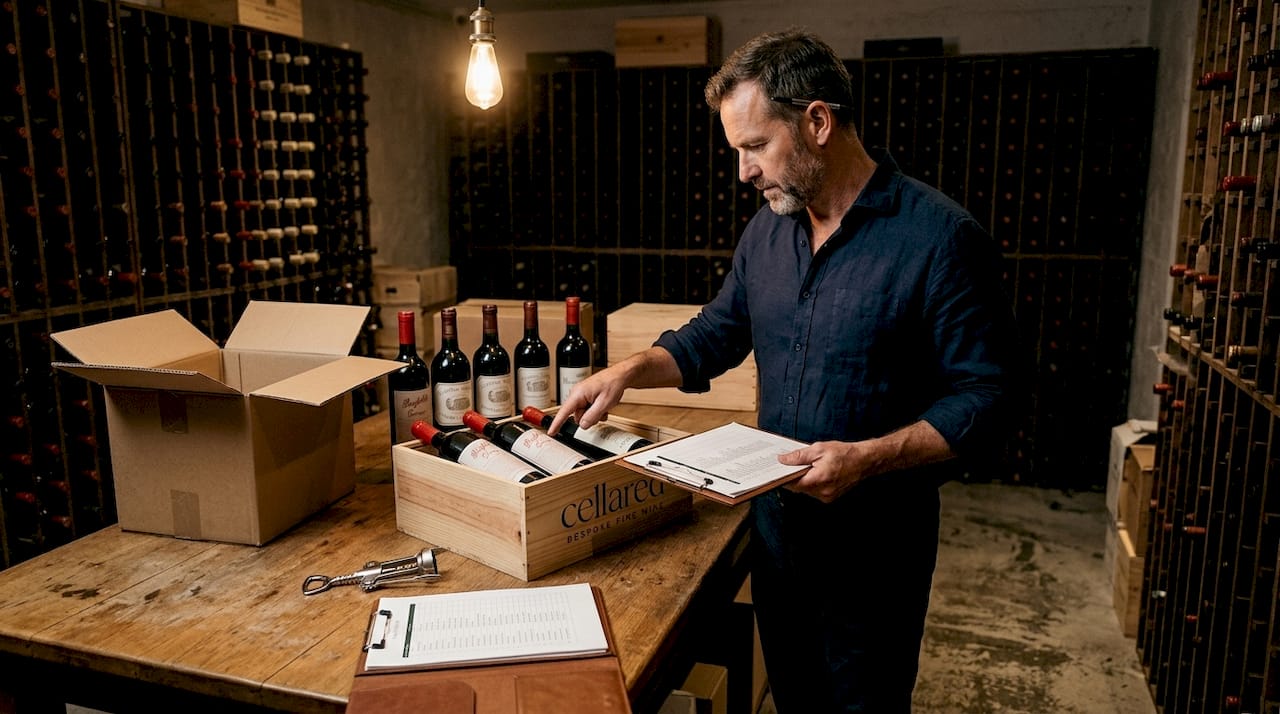
The wine sourcing basics available to general consumers barely scratch the surface of what sophisticated acquisition demands. Accessing bespoke wine buying services is often the most efficient pathway for collectors who want rare bottles without the operational burden of managing each channel themselves.
Pro Tip: When engaging in off-market or private trades, always insist on a third-party storage audit covering the most recent 12 months. Temperature logs and humidity records are not bureaucratic formalities; they are the evidence that protects your investment.
Provenance and authenticity: Why these matter more than prestige
A bottle bearing a celebrated name is not automatically a sound acquisition. This is one of the most important, and most frequently ignored, realities in fine wine collecting. Prestige alone is insufficient; scarcity and production volume are the true determinants of long-term value. A low-volume domaine like Domaine de la Romanée-Conti consistently outperforms high-volume prestige labels, while New World icons such as Penfolds Grange can exhibit greater volatility compared to stable Old World blue-chips.
Understanding wine vintage fundamentals provides essential context, but provenance goes beyond vintage knowledge. Consider the following when assessing any rare bottle:
| Wine type | Production volume | Value stability | Provenance complexity |
|---|---|---|---|
| Old World blue-chip (e.g., Burgundy Grand Cru) | Very low | High | Moderate to high |
| Iconic New World (e.g., Penfolds Grange) | Moderate | Variable | Moderate |
| Boutique single-vineyard releases | Very low | High potential | High |
| Large Bordeaux négociant labels | High | Moderate | Lower |
"Scarcity and verifiable origins define genuine investment value in fine wine. A famous label without a documented history is not an asset; it is a liability in waiting."
Red flags in authenticity checks deserve careful attention:
- Capsules that show signs of tampering or inconsistent ageing with the stated vintage
- Labels with font irregularities, faded ink, or misaligned printing inconsistent with known originals
- Fill levels significantly lower than expected for the stated age and storage conditions
- Sellers unable or unwilling to provide a documented chain of custody
- Cork condition inconsistent with the bottle's claimed storage history
Exploring fine wine regions in depth helps collectors understand why certain appellations command premiums rooted in genuine scarcity and terroir rather than marketing alone. The most meticulous collectors treat provenance verification not as a hurdle but as the foundation of every acquisition decision.
Key storage considerations for sourced wine
Perfect sourcing can be undone entirely by inadequate storage. For investment-grade wine, the conditions in which a bottle rests between acquisition and eventual consumption or resale are as consequential as any decision made during purchase.
The technical foundations are well established. Optimal storage conditions require a consistent temperature of 13 to 18 degrees Celsius, relative humidity between 50 and 70 per cent, complete absence of UV light exposure, and freedom from vibration. These parameters are not aspirational; they are the minimum standards for preserving investment-grade wine with integrity.
For Australian and Asia-Pacific collectors, several practical realities shape the storage landscape:
- Domestic climate risk: Australia's climate extremes make temperature-stable home cellars genuinely difficult and expensive to maintain at investment-grade standards.
- Bonded warehouse advantages: Professional bonded storage defers applicable duties and taxes while providing independently audited, climate-controlled environments. This is both a financial and a risk-management benefit.
- Documentation and insurance: Professional facilities generate the storage records that insurers, courts, and prospective buyers require. Home cellars rarely produce equivalent documentation.
- Accessibility vs. security: Collectors often underestimate the value of knowing their wines are protected by specialist security, independent of the risks inherent in residential premises.
Understanding why cellaring wine matters is a useful starting point, but for serious portfolios, professional management is the standard against which all alternatives should be measured. Engaging professional cellar management ensures that every bottle is tracked, monitored, and maintained under conditions that preserve both its drinking quality and its market value.
Pro Tip: If you store any portion of your collection at home, establish a written log recording temperature readings twice weekly, humidity levels, and any access events. This documentation, while modest, forms the provenance record that will matter if you ever insure, value, or sell those bottles.
Our take: The uncomfortable truth about rare wine sourcing
After years of working with collectors, investors, and estates across Australia and the broader Asia-Pacific region, a pattern emerges that no auction catalogue or investment report tends to acknowledge directly. The most significant risks in fine wine are rarely dramatic. They are quiet, incremental, and almost always avoidable with the right guidance.
Prestige intoxicates. A celebrated name or a record-breaking auction result can override sound judgement, and the market is not short of sellers who understand this. The uncomfortable reality is that illiquidity and counterfeit product are the two forces that most reliably damage collector outcomes, and both operate below the surface of visible market activity.
Emotional acquisitions, when managed with discipline, can absolutely outperform formulaic investment strategies. An off-market bottle sourced through a trusted relationship, carrying impeccable provenance and acquired at a fair price, often proves more rewarding than a high-profile auction purchase made under time pressure.
The discipline we advocate is straightforward: engage independent professional wine valuations before and after significant acquisitions, insist on documented custodial history, and build relationships with specialists whose interests are genuinely aligned with your own. The finest collections are built with patience and discernment, not with speed and noise.
Elevate your collection with expert wine sourcing
Building a collection of genuine depth and financial integrity requires more than access to premium bottles. It demands the kind of structured, expert support that protects your investment at every stage, from first acquisition to eventual valuation or sale.
Cellared Fine Wine offers a fully integrated approach to rare wine acquisition and portfolio management. Whether you are seeking bespoke sourcing for a specific bottle or region, require independent wine appraisals for insurance or estate purposes, or want professional cellar management solutions that meet the standards demanded by financial and legal advisors, our team brings the market knowledge and personal service that serious collectors deserve. Contact us to arrange a tailored consultation and take the next step with confidence.
Frequently asked questions
What makes wine sourcing different from simply buying wine?
Wine sourcing focuses on authenticity, provenance, and storage criteria, especially for rare or investment bottles, rather than simply purchase price or retail availability. It is a structured, strategic process rather than a transactional one.
How can I verify provenance and authenticity when sourcing rare wines?
Check for documented custodial history, engage trusted brokers, and use recognised channels; any deal where the chain of custody is unclear should be treated with significant caution. Remember that scarcity and production volume are stronger indicators of genuine value than prestige alone.
What are optimal storage conditions for investment-grade wine?
Maintain a consistent temperature of 13 to 18 degrees Celsius, 50 to 70 per cent humidity, no UV exposure, and consider bonded warehouses for the most rigorous investment-grade results.
Is sourcing Old World wine safer than New World for investment?
Traditional Old World blue-chip wines generally offer more stable liquidity and value over time. New World icons like Grange can deliver strong returns but tend to exhibit greater price volatility compared to established Old World benchmarks.
Recommended
- Wine Cellar Management | Cellared | Bespoke Wine Buying, Valuation & Cellar Management
- Wine Appraisals & Valuations | Cellared | Bespoke Wine Buying, Valuation & Cellar Management
- Bespoke Fine Wine Buying | Cellared | Bespoke Wine Buying, Valuation & Cellar Management
- Test Conversion | Cellared | Bespoke Wine Buying, Valuation & Cellar Management
- Wine corking explained: Why it matters for preservation & taste