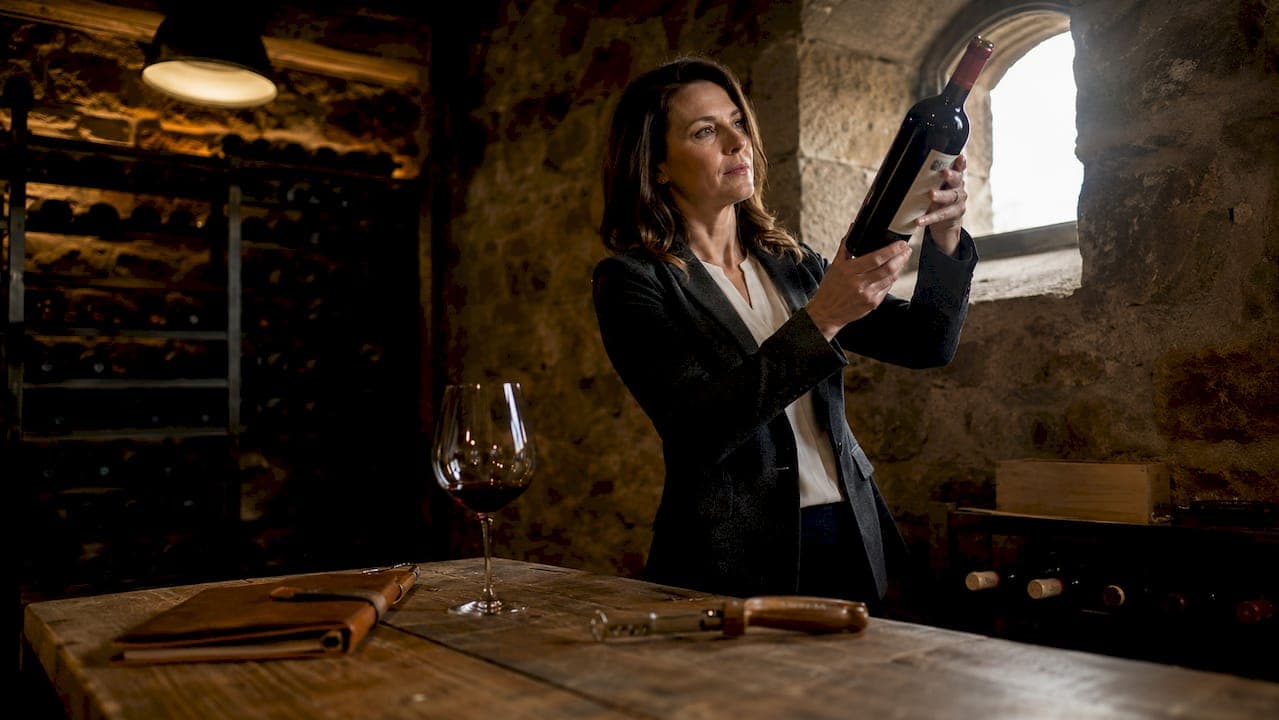
The role of wine specialists in law is to provide expert wine valuation, provenance authentication, and court-admissible reporting that legal professionals rely on in family law and probate cases. When a deceased estate contains a cellar of aged Burgundy or a disputed marriage asset includes cases of first-growth Bordeaux, the stakes are too high for a generic appraisal. Cellared Fine Wine and credentialled bodies like the Court of Master Sommeliers represent the standard of expertise that Australian lawyers and estate executors should seek when wine collections enter legal proceedings. Without specialist input, executors risk misvaluing assets by margins that can destabilise an entire estate settlement.
What is the role of wine specialists in law?
Wine specialists in legal contexts are accredited professionals who assess, authenticate, and value wine collections to produce reports that can withstand scrutiny in court. Their function is distinct from a retail wine merchant or a general property appraiser. Where a generic appraiser might assign a flat replacement value, a wine law expert examines each bottle's provenance, storage history, and current market position before arriving at a defensible figure.
Court-ready wine valuations support transparent and equitable division in family law disputes and probate by providing objective, market-aligned evidence. This matters because wine is not a static asset. A 2005 Penfolds Grange stored at consistent temperature in a purpose-built cellar is worth a materially different sum to the same wine stored in a suburban garage for a decade. Only a specialist can quantify that difference with authority.
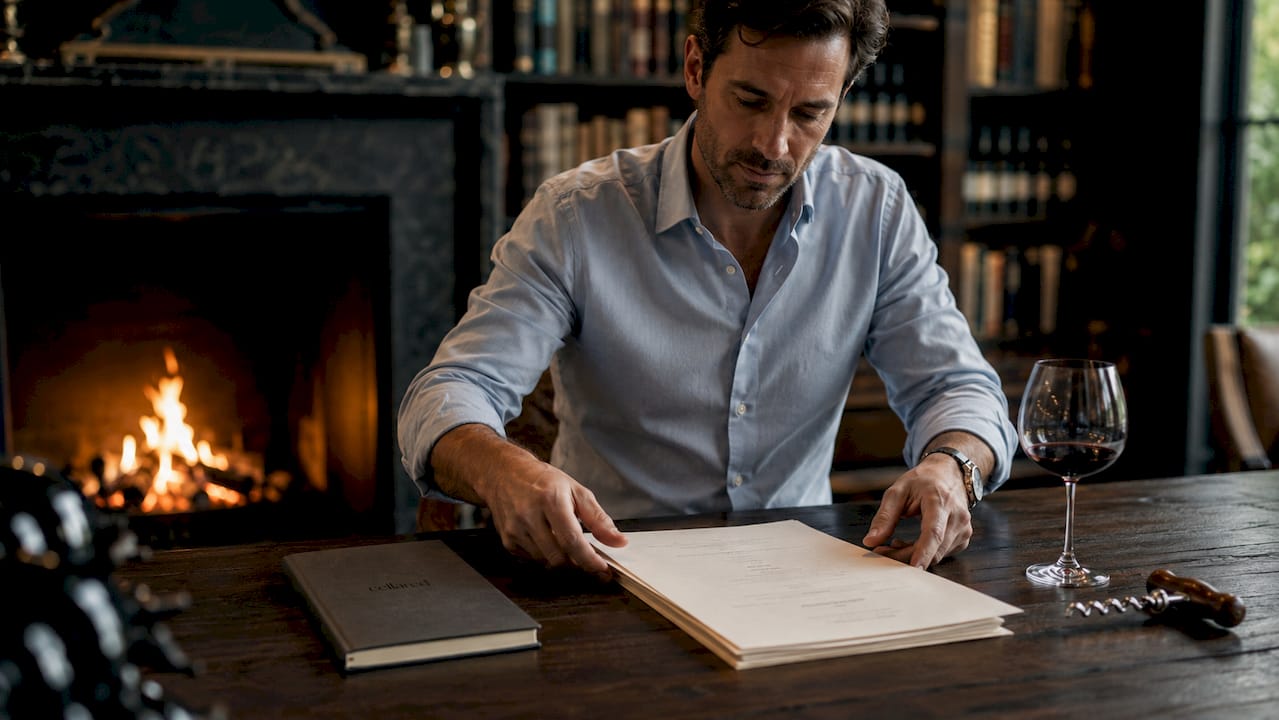
The legal aspects of wine collections are also more complex than most executors anticipate. Title, provenance documentation, insurance records, and purchase receipts all feed into a legally sound valuation. Wine specialists bring the analytical framework to assess each of these dimensions simultaneously, producing a report that a court, a mediator, or a family law barrister can rely upon without reservation.
How do wine specialists contribute to probate and family law cases?
The specialist process for legal wine valuations follows a structured sequence that separates it from any off-the-shelf appraisal service. Understanding this sequence helps lawyers and executors brief their specialist effectively and set realistic timelines for settlement.
Professional wine valuation for legal purposes typically involves a three-step process: cellar audit, provenance verification, and a market-led valuation report resulting in greater accuracy than generic appraisals. Each step builds on the last, and skipping any one of them produces a report that opposing counsel can challenge.
-
Cellar audit. The specialist physically inspects the collection, cataloguing every bottle by producer, vintage, appellation, and condition. High-end private cellars can contain over 1,500 labels with values exceeding one million dollars, which means the audit phase alone can require several days of meticulous work. The audit also identifies bottles that are damaged, mislabelled, or counterfeit, all of which affect the final valuation.
-
Provenance verification. The specialist examines purchase records, import documentation, storage logs, and any auction history attached to the collection. Provenance is the paper trail that confirms a bottle is what it claims to be and that it has been handled correctly from producer to cellar. Without verified provenance, even a prestigious label carries a discount in any serious market transaction.
-
Market-led valuation report. Drawing on current auction results, private sale data, and secondary market intelligence, the specialist assigns a defensible value to each line item. The final report is structured to meet the evidentiary standards required for family law proceedings or probate in Australian courts.
Pro Tip: Ask your wine specialist to include a section in their report addressing market liquidity. A cellar valued at $400,000 on paper may take 18 months to realise at that figure through auction, and that timing consideration is material to any settlement negotiation.
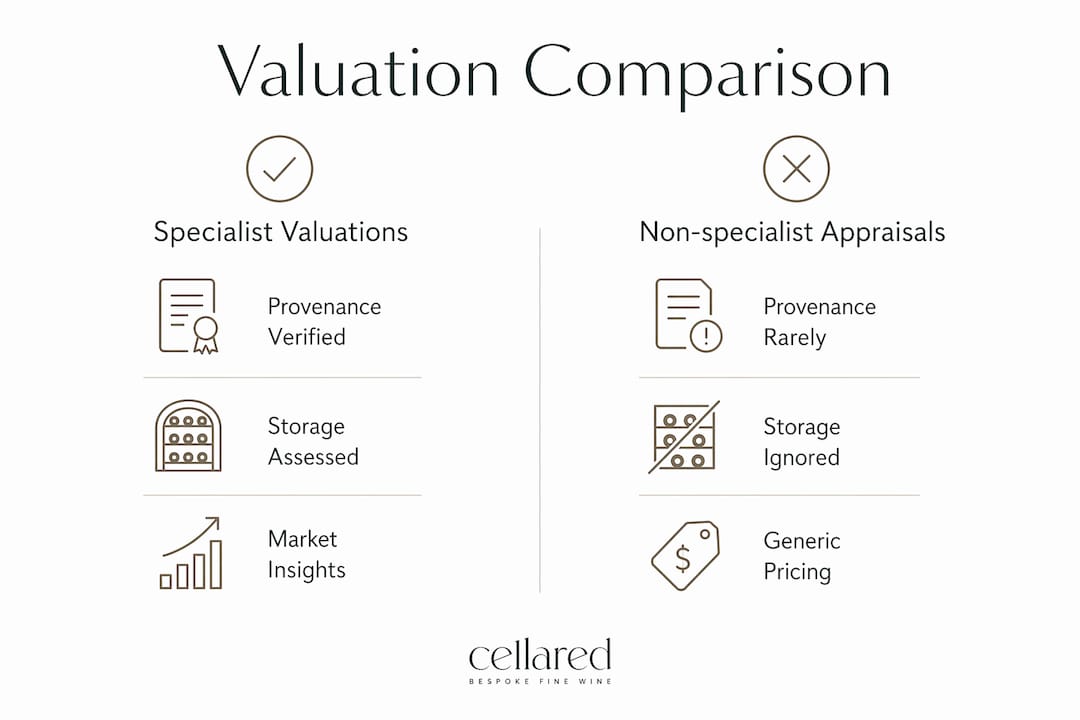
Generic appraisals often fail to verify provenance and storage conditions, which are the critical factors specialists assess to produce legally admissible valuations. The difference between a specialist report and a generic one is not merely academic. It is the difference between a valuation that holds up under cross-examination and one that collapses at the first challenge.
What qualifications define a wine specialist in legal valuations?
Credential quality is the first filter any lawyer or executor should apply when engaging a wine specialist for legal purposes. The wine industry has a clear hierarchy of professional qualifications, and not every person who describes themselves as a wine consultant carries the depth of knowledge required for court-ready work.
The most rigorous credential in the field is the Master Sommelier title, awarded by the Court of Master Sommeliers. Fewer than 280 individuals worldwide hold this title as of 2024, which reflects the extraordinary difficulty of the examination and the depth of knowledge required. The Master Sommelier examination tests blind tasting, theory, and service to a standard that has defeated the majority of candidates who attempt it.
Key distinctions between wine professionals relevant to legal engagements include:
- Master Sommeliers and Masters of Wine hold the highest internationally recognised credentials and are best suited to complex, high-value legal valuations where the report may face expert challenge.
- Certified Sommeliers and Advanced Sommeliers (Court of Master Sommeliers) possess strong technical knowledge and are appropriate for mid-range collections where the primary need is accurate market valuation rather than deep provenance investigation.
- Wine consultants without formal certification may have practical market experience but lack the structured credential base to defend their methodology under legal scrutiny.
- General property appraisers are not equipped to assess wine collections. Their methodologies do not account for vintage variation, provenance, storage conditions, or secondary market dynamics.
The sommelier's role in modern fine dining is far broader than service, involving complex inventory management and financial stewardship of collections worth millions of dollars. This operational experience with high-value wine assets is precisely what translates into credible legal valuation work. A specialist who has managed a restaurant cellar of 2,000 labels understands market movement, condition assessment, and provenance verification in a way that no textbook qualification alone can replicate.
Experience with high-value collections is as important as formal credentials. A specialist who has handled Domaine de la Romanée-Conti, Château Pétrus, or Henschke Hill of Grace in a professional context brings market intelligence that a generalist simply cannot match.
Specialist versus non-specialist valuations: what is the difference?
The contrast between specialist and non-specialist wine valuations is stark when examined across the criteria that matter most in legal proceedings.
| Criterion | Non-specialist appraisal | Specialist valuation |
|---|---|---|
| Provenance verification | Rarely conducted | Thorough document review and authentication |
| Storage condition assessment | Not assessed | Physically inspected and factored into value |
| Market-led pricing | Generic retail or replacement value | Current auction and secondary market data |
| Legal admissibility | Typically not court-ready | Structured to meet evidentiary standards |
| Counterfeit detection | Not within scope | Assessed as part of the audit process |
| Valuation accuracy | Risk of 50% or greater error | Market-aligned with defensible methodology |
Executors relying on non-specialist appraisals risk misvaluing wine assets by 50% or more due to insufficient verification of provenance and market factors. That magnitude of error is not a minor administrative inconvenience. In a contested estate or a family law property settlement, a 50% valuation error on a $300,000 cellar represents a $150,000 discrepancy that can derail negotiations and expose the executor to personal liability.
Expert human guidance provides situational awareness in legal valuations, identifying risks and market nuances that automated or generic assessments typically miss. No algorithm accounts for the fact that a particular producer's reputation collapsed following a scandal, or that a specific vintage is currently illiquid because the market is saturated with that label from a major cellar dispersal.
What challenges do wine specialists navigate in legal valuations?
Legal wine valuations are not straightforward exercises in price-matching. Several layers of complexity require specialist judgement that goes well beyond consulting a price guide.
The most consequential challenge is provenance and storage verification. Wine specialists manage provenance and storage condition issues that can lead to 30 to 40% value losses if improperly handled during valuations. A cellar that has experienced temperature fluctuations, excessive humidity, or vibration may contain bottles that are technically intact but commercially compromised. Identifying this requires physical inspection and, in some cases, technical assessment of fill levels and cork condition.
Additional challenges specialists routinely navigate include:
- Market liquidity and timing. Wine markets are cyclical and category-specific. Aged Champagne may be highly liquid in one quarter and slow-moving in the next. A specialist understands when to recommend a rapid auction realisation versus a patient private sale strategy, and that advice shapes the legal settlement terms.
- Valuation disputes between parties. In contested family law matters, each party may commission their own valuation. A credentialled specialist can defend their methodology under cross-examination and respond to challenges from opposing experts with authority.
- Partial collections and mixed provenance. Estates rarely contain a single, neatly documented collection. More commonly, the specialist encounters bottles acquired from multiple sources over decades, with inconsistent documentation. Reconstructing provenance in these circumstances requires investigative skill as much as wine knowledge.
- Counterfeit and mislabelled bottles. The fine wine market has a documented counterfeiting problem, particularly for prestigious Burgundy and Bordeaux labels. A specialist who can identify suspicious bottles protects the estate from valuing fraudulent assets.
Pro Tip: When briefing a wine specialist for a probate matter, provide access to all purchase records, insurance schedules, and any prior valuations from the outset. Incomplete documentation extends the audit phase and increases costs.
A wine specialist in legal contexts acts much like an attorney, providing context-aware, defensible valuations to avoid pitfalls like underreporting or asset misallocation. The parallel is instructive. Just as a lawyer provides advice calibrated to the specific facts of a matter rather than a generic legal template, a wine specialist calibrates their valuation to the specific collection, its history, and the current market. That specificity is what makes the report legally defensible.
Key takeaways
Wine specialists are indispensable in legal proceedings involving wine assets because their credentialled expertise, structured methodology, and court-ready reporting protect all parties from costly valuation errors.
| Point | Details |
|---|---|
| Specialist process matters | The three-step audit, provenance verification, and market-led report produces legally admissible valuations that generic appraisals cannot match. |
| Credentials signal credibility | Fewer than 280 Master Sommeliers exist worldwide; credential level directly affects a report's defensibility in court. |
| Storage affects value significantly | Poor storage and unverified provenance can reduce a collection's value by 30 to 40%, a risk only specialists can accurately quantify. |
| Non-specialist risk is substantial | Executors using generic appraisals risk valuation errors of 50% or more, exposing themselves to legal liability. |
| Market liquidity requires specialist insight | Timing and market conditions affect realisable value; specialist advice on holding versus selling shapes fair settlement outcomes. |
Why wine specialists are not optional in complex legal matters
I have seen the consequences of estates where a wine collection was valued by a general property appraiser who had no understanding of the secondary market. The report looked credible on paper. It had a figure, a methodology, and a signature. What it lacked was any engagement with provenance, storage history, or current auction data. The result was a valuation that one party accepted and the other challenged, leading to a dispute that cost more to resolve than the difference in the valuations themselves.
The parallel between a skilled lawyer and a credentialled wine specialist is one I find genuinely instructive. Both are asked to take a complex, fact-specific situation and produce a defensible, structured analysis that can withstand challenge. Neither can do their job well by applying a generic template. The lawyer who drafts a will without understanding the specific assets involved creates risk. The wine appraiser who values a cellar without understanding provenance, storage, and market dynamics creates the same risk, just in a domain that most legal professionals are not equipped to interrogate.
My observation, having worked with lawyers and estate executors across a range of matters, is that the missed opportunity is almost always at the briefing stage. Specialists are engaged too late, given incomplete documentation, or asked to produce a report on a timeline that does not allow for thorough provenance investigation. The cases that resolve cleanly are the ones where the specialist is brought in early, given full access, and allowed to produce a report that reflects the genuine complexity of the collection.
— David
How Cellared Fine Wine supports legal professionals and executors
Cellared Fine Wine provides court-ready wine valuations and bespoke cellar management services designed specifically for the needs of Australian lawyers, estate executors, and family law practitioners. Every valuation follows the structured three-step process of cellar audit, provenance verification, and market-led reporting, producing documentation that meets the evidentiary standards of Australian courts. Cellared's specialists bring deep secondary market knowledge and meticulous attention to provenance, giving legal professionals the independent, authoritative evidence they need to resolve wine asset disputes with confidence. To discuss your matter and understand how Cellared can support your next estate or family law engagement, visit cellaredfinewine.com.au.
FAQ
What does a wine specialist do in a legal matter?
A wine specialist conducts a physical cellar audit, verifies provenance and storage conditions, and produces a court-ready valuation report that legal professionals can rely on in family law and probate proceedings.
How is a specialist wine valuation different from a generic appraisal?
A specialist valuation incorporates provenance verification, storage condition assessment, and current secondary market data, whereas a generic appraisal typically applies retail replacement values without investigating the factors that most affect a fine wine collection's realisable worth.
What qualifications should a legal wine valuation specialist hold?
The most credible specialists hold credentials from the Court of Master Sommeliers or the Institute of Masters of Wine. Fewer than 280 Master Sommeliers exist worldwide, making their reports particularly defensible under legal scrutiny.
Can poor storage conditions affect a wine valuation in a legal dispute?
Poor storage and unverified provenance can reduce a collection's assessed value by 30 to 40%, a material difference that a specialist must identify and document to produce an accurate, court-admissible report.
When should a lawyer or executor engage a wine specialist?
A wine specialist should be engaged as early as possible in the estate administration or family law process, ideally before any asset schedules are prepared, to allow sufficient time for thorough audit and provenance investigation.