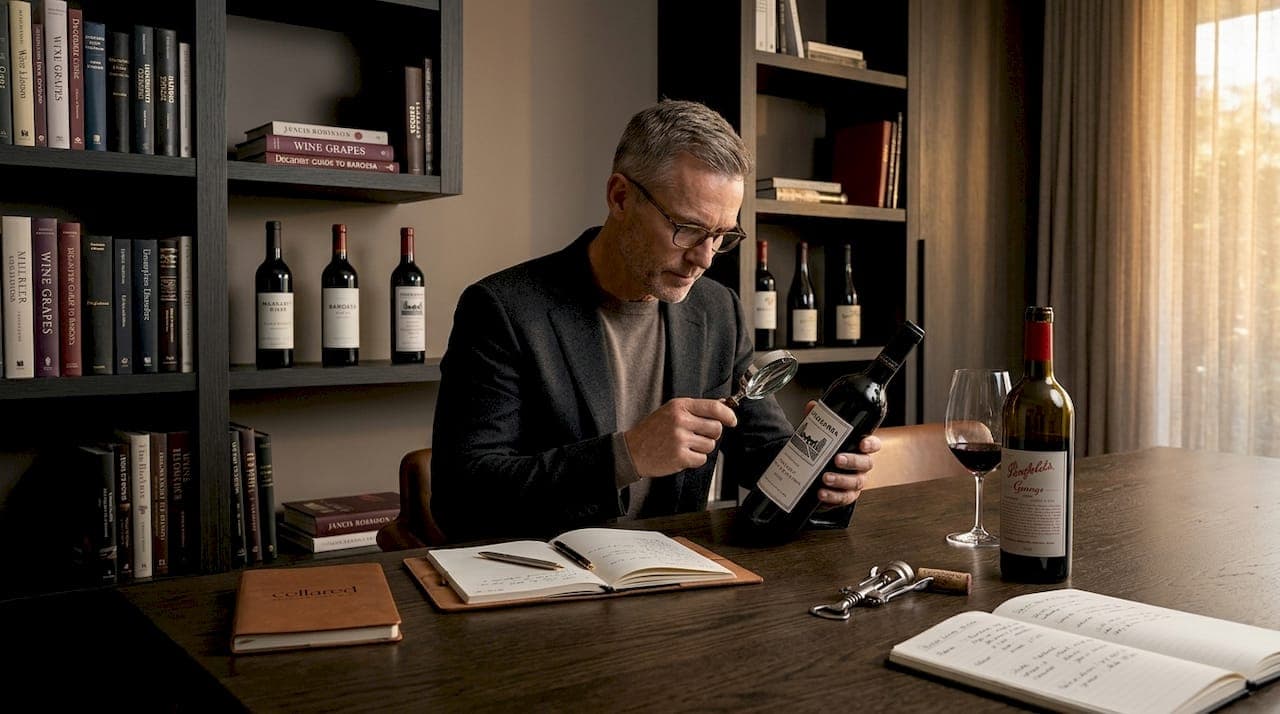
For many collectors across Australia and the Asia-Pacific region, custom wine advisory explained simply as "someone who recommends bottles" is a persistent and costly misunderstanding. In truth, a professional wine advisory service reaches far deeper than tasting notes or wine pairing advice at a dinner table. It encompasses the meticulous curation of a collection aligned with personal taste and financial goals, the rigorous management of provenance documentation, structured cellar planning, and disciplined investment strategy. For those building collections of genuine worth, whether for pleasure, legacy, or portfolio growth, understanding what tailored advisory truly offers is the first step toward collecting with real confidence.
Table of Contents
- Key takeaways
- How custom wine advisory works
- Provenance and documentation for collectors
- Cellar management and storage strategies
- Building a wine investment portfolio
- My perspective on what advisory really delivers
- How Cellared can serve your collection
- Common questions
Key takeaways
| Point | Details |
|---|---|
| Beyond recommendations | Custom wine advisory covers collection curation, investment strategy, provenance, and cellar management, not just bottle selection. |
| Provenance is foundational | Unbroken documentation chains protect insurance claims and preserve resale value throughout a collection's life. |
| Storage protects investment | Professional bonded storage with auditable provenance chains typically yields higher resale prices than home storage. |
| Advisory is ongoing | The greatest value comes from continuous advisory relationships that refine goals and adapt to market conditions over time. |
| Investment requires discipline | Building a wine portfolio demands regional diversification, liquidity awareness, and professional guidance on timing acquisitions and sales. |
How custom wine advisory works
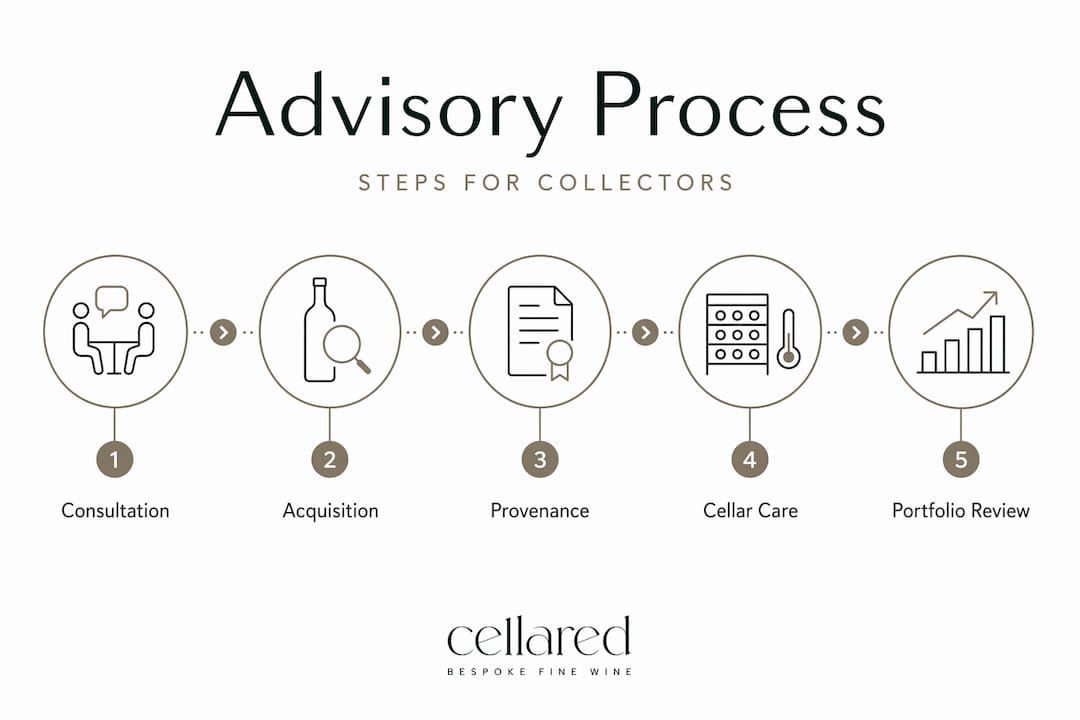
The process of personalised wine consultation begins with a structured, unhurried conversation. Not a sales pitch. A genuine exploration of who you are as a collector, what you drink and love, what you aspire to own, and what financial expectations you hold for the collection. This initial dialogue is the architecture upon which everything else is built.
A well-structured advisory process typically unfolds in four stages:
- Evaluation. The adviser assesses your current collection, if one exists, alongside your taste preferences, budget parameters, and collecting objectives. Are you drinking these wines? Storing them for decades? Building resale value?
- Framework development. A personalised collecting framework takes shape, identifying key regions, producers, and styles that align with your palate and goals. This is where customised wine recommendations begin to diverge sharply from generic mixed-case purchases.
- Execution. Curated selections are sourced with meticulous attention to quality, provenance, and price. Advisory execution follows a structured approach covering evaluation, framework development, curated selections, and ongoing optimisation.
- Ongoing refinement. Tastes evolve. Markets shift. Life circumstances change. The best advisory relationships adapt continuously, revisiting the framework and adjusting the collection strategy with each passing season.
The contrast with simply ordering a pre-assembled mixed case from a retailer is stark. Generic selections are built for average preferences. A private cellar curation service integrates taste profiling, storage planning, acquisition strategy, and portfolio refinement into a single, cohesive workflow that serves your specific aspirations.
Pro Tip: Ask any prospective wine adviser to describe their follow-up process after the initial consultation. If the answer is vague, the service is likely transactional rather than genuinely advisory.
Provenance and documentation for collectors
Provenance is, at its core, the complete and unbroken chain of custody for a wine from its original release to the present moment. It is the biography of a bottle. And for serious collectors and investors in Australia and across the APAC region, it is arguably the single most consequential factor in a collection's long-term value.
The essential documents that constitute strong provenance include:
- Original purchase invoice from a reputable merchant or auction house, clearly identifying the producer, vintage, and quantity
- Storage receipts from the facility holding the wine, with dates and conditions recorded
- Transfer records documenting any movement of the wine between locations or owners
- Timestamped photographs or digital cellar logs that visually confirm condition and placement over time
- Shipping documentation for any wine transported across borders or between states
The consequences of missing or incomplete documentation can be severe. Layered documentation is considered essential for insurance underwriting and for preserving resale value. Insurers writing specialist collectibles policies for wine collections require substantive proof of ownership, condition, and value. Without it, claims become contentious and payouts reduced.
Modern advisory services go further than paper trails. Digital archives, cloud-based cellar management platforms, and even laboratory testing for suspect bottles are now part of sophisticated provenance workflows. An 8-step provenance checklist to reduce collection risk, including lab testing protocols for questionable bottles, reflects how seriously the professional advisory world treats this discipline.
"Provenance should be treated as a routine operational process, not a one-time task, to maximise insurance and resale value." — Beyond the Bottle: Wine Provenance Guide
A skilled wine adviser makes provenance gathering an automatic part of every acquisition, not an afterthought when a sale or insurance event arises. Layered provenance proofs, collected immediately upon acquisition and continuously maintained, are what separate a collection with genuine market credibility from one that merely looks impressive on a rack.
Pro Tip: Scan and upload every purchase invoice, storage receipt, and transfer record to a dedicated cloud folder on the day of acquisition. Waiting until you need them is waiting until it is too late.
Cellar management and storage strategies
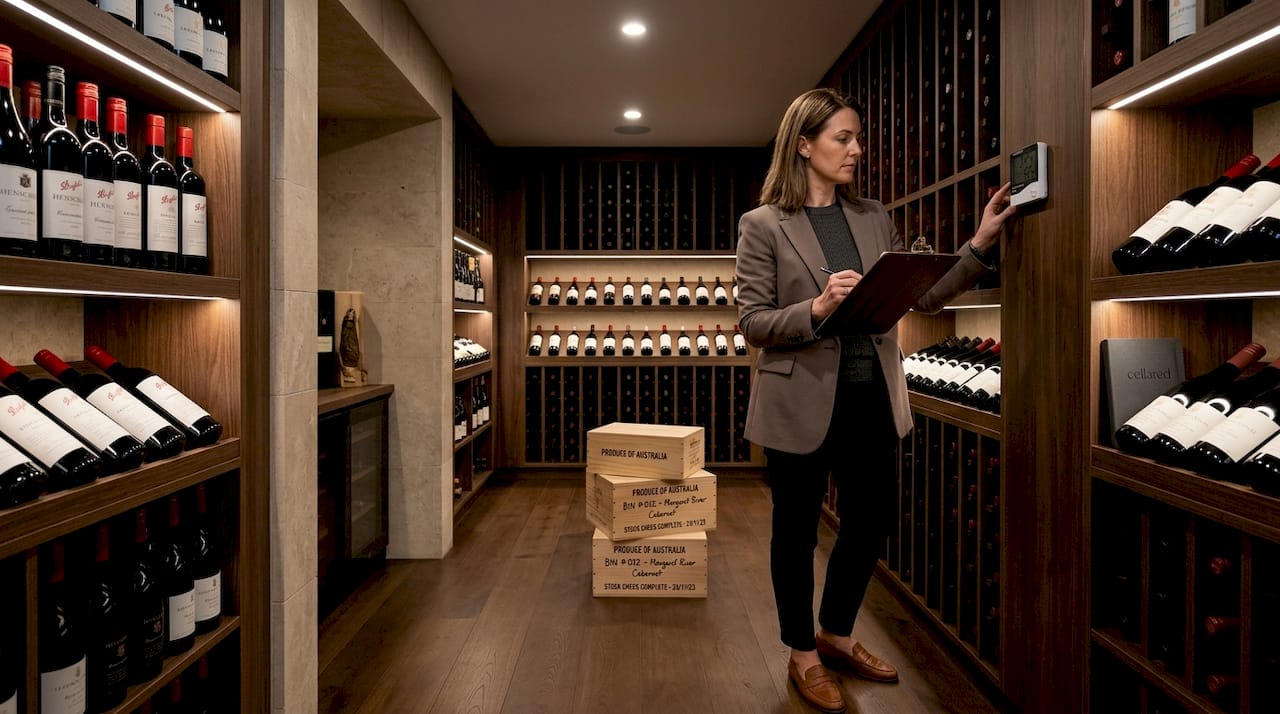
The question of where to store fine wine is never as simple as building a temperature-controlled room beneath the house. For collectors whose collections represent significant capital, the storage decision is also an investment decision, a provenance decision, and an insurance decision simultaneously.
| Storage option | Key advantages | Key limitations |
|---|---|---|
| Professional bonded warehouse | Auditable provenance chain, climate precision, insured in transit, no duties on in-bond stock | Monthly fees, less immediate access, requires planning for retrieval |
| Purpose-built home cellar | Immediate access, personal satisfaction, no ongoing storage fees | Difficult to independently verify conditions, insurer scrutiny, provenance gaps on transfers |
| Third-party specialist storage | Strong climate control, professional management, mid-range cost | Variable provenance documentation quality depending on provider |
Professional bonded storage with strict climate control and auditable provenance chains typically yields higher resale prices than home storage. The reasoning is straightforward. A buyer at auction or in a private sale trusts documented storage in a known facility far more than a personal cellar, regardless of how well-maintained that cellar might actually be.
The environmental parameters that professional storage addresses include temperature stability between 12°C and 14°C, humidity levels maintained at 60 to 70 percent, absence of vibration and ultraviolet light, and security systems with access logs. Each of these factors affects the wine's ageing trajectory and, by extension, its future value.
A competent advisory service, such as the cellar management services offered by Cellared Fine Wine, connects the storage decision directly to the collection's overall strategy. This includes disaster planning, regular condition audits, and a clear protocol for relocating bottles should a storage facility's circumstances change. The "white-glove" approach to cellar management treats every bottle as both a sensory treasure and a financial asset requiring active stewardship.
Pro Tip: Request a written condition report from your storage facility at least annually. This creates a timestamped record of your collection's state that strengthens both insurance claims and resale negotiations.
Building a wine investment portfolio
For collectors whose relationship with wine extends into investment territory, the role of custom wine advisory becomes even more structured and demanding. Wine investment is not a passive act. It requires the same disciplined thinking as any other alternative asset class, with the added complexity of physical goods that age, require specific conditions, and carry tangible provenance requirements.
Experienced advisers approach portfolio construction with several core principles:
- Establish a liquidity foundation. Investment-grade portfolios typically begin with Bordeaux as a regional liquidity base, given its global recognition and established secondary market. Average client portfolios of serious wine investors run to significant sums, with regional diversification strategies spanning Tuscany, Piedmont, Burgundy, Champagne, and California.
- Assess ageing potential rigorously. Not every exceptional wine is an exceptional investment. Advisers evaluate the ageing curve, expected peak drinking window, and the market's historical appetite for a producer and vintage before recommending an acquisition.
- Prioritise acquisition timing. Buying wines at or shortly after release often captures the best prices before critic scores and secondary market premiums accumulate. Advisers with strong trade relationships provide access that individual collectors cannot replicate independently.
- Manage risk through documentation and storage. Investment-grade outcomes depend heavily on professional bonded storage and a verifiable provenance chain, more than just the quality of the wine itself. A perfectly cellared bottle with impeccable documentation commands a premium that an identical bottle without that chain simply cannot.
- Balance portfolio goals with personal enjoyment. The most satisfying wine portfolios are ones where the collector genuinely wants to drink what they own. Advisory that ignores lifestyle and preference in favour of pure financial metrics tends to produce collections that feel alienating rather than enriching.
The benefits of independent wine advice become especially pronounced in the investment context, where conflicts of interest can subtly distort recommendations. An independent adviser with no commercial stake in a particular producer or merchant brings objectivity that is genuinely rare and genuinely valuable.
My perspective on what advisory really delivers
I have worked with collectors at many different stages of their relationship with wine, from those opening a first case of aged Barolo to families navigating estate collections worth hundreds of thousands of dollars. And the single most persistent misconception I encounter is the belief that wine advisory is fundamentally about tasting recommendations.
In my experience, the tasting note is the least important thing an adviser provides. The collectors who genuinely flourish are those who treat provenance discipline, storage rigour, and systematic acquisition strategy as equal in importance to what they actually drink. I have seen collections of extraordinary bottles diminished in value simply because paperwork was never gathered properly at the time of purchase. Conversely, I have seen collections of modest breadth achieve remarkable resale results because every bottle was documented, stored correctly, and held within an ongoing advisory relationship that tracked market conditions.
The other insight I carry from years in this field is that one-off advice rarely serves clients well. Wine collecting is a long game. The collection you hold today will be a different thing in a decade, in ambition, composition, and value. An ongoing relationship with an adviser who understands your goals and tracks the market on your behalf is worth far more than any single curated list, however thoughtfully assembled.
My honest counsel is this: seek advisory that integrates enjoyment with discipline from the very first conversation. The pleasure of fine wine and the rigour of collection management are not competing priorities. They are, when done well, inseparable.
— David
How Cellared can serve your collection
Cellared Fine Wine brings together the full spectrum of what genuine custom wine advisory delivers: bespoke wine buying, professional court-ready valuations for insurance, probate, and family law, and meticulous private cellar management for Australian and APAC collectors. Whether you are building a collection from its foundations, seeking an independent valuation for an inherited cellar, or looking to refine and focus a portfolio that has grown without a clear strategy, Cellared's approach is personal, market-led, and deeply experienced.
For collectors seeking precise, independent wine appraisals and valuations or comprehensive cellar management and sourcing support, Cellared works with you directly to clarify what you have, what it is worth, and how to manage it with confidence. Reach out to begin a consultation tailored entirely to your goals.
Common questions
What does a custom wine advisory service actually include?
Custom wine advisory covers personalised collection curation, provenance documentation, cellar management, acquisition strategy, and ongoing portfolio refinement. It is substantially more than tasting notes or bottle recommendations.
Why is provenance so important in wine collecting?
Provenance is the documented chain of custody for a bottle from release to present day. Without it, insurance claims become difficult and resale values are reduced, regardless of a wine's actual quality.
Is wine a viable investment for Australian collectors?
Fine wine has attracted growing interest as an alternative asset class, with 97% of wealth managers expecting fine wine demand to grow. Portfolios built with professional advisory, strong provenance, and bonded storage have historically delivered solid returns.
How do I know if I need ongoing advisory or a one-off consultation?
If your collection exceeds modest personal drinking stocks, or if you are acquiring wine with any investment intention, ongoing advisory will consistently outperform a single consultation. Collections require active management as markets and personal goals evolve.
What is the difference between bonded and standard home storage?
Bonded storage is held in a licensed, professionally managed warehouse with independently auditable conditions and full provenance trails. Home storage, however well-executed, lacks the third-party verification that insurers and buyers require for the strongest valuations.