A collector wine release is a limited batch of wine brought to market by a producer specifically to appeal to serious collectors, distinguished by restricted production volumes, exceptional ageing potential, and controlled access. These releases sit apart from standard commercial vintages. They carry the producer's public declaration of confidence in the wine's long-term quality, and that confidence shapes everything from pricing to how the wine is stored, traded, and eventually enjoyed.
What is a collector wine release and how does it differ from standard wine?
A collector release is defined by three qualities that standard wines rarely possess together: scarcity, declared ageing potential, and deliberate exclusivity. The term 'collector release' signifies a producer's belief that the wine will reward patience over years or even decades. That belief is not marketing. It is a reputational commitment, and the market treats it as such.
Standard commercial releases are made to drink now. They are produced in large volumes, priced for accessibility, and designed for immediate enjoyment. Collector releases operate on an entirely different logic. Production is deliberately constrained, distribution is selective, and the wine is often sold before it is even bottled.
The table below shows how the two categories compare across the traits that matter most to collectors.
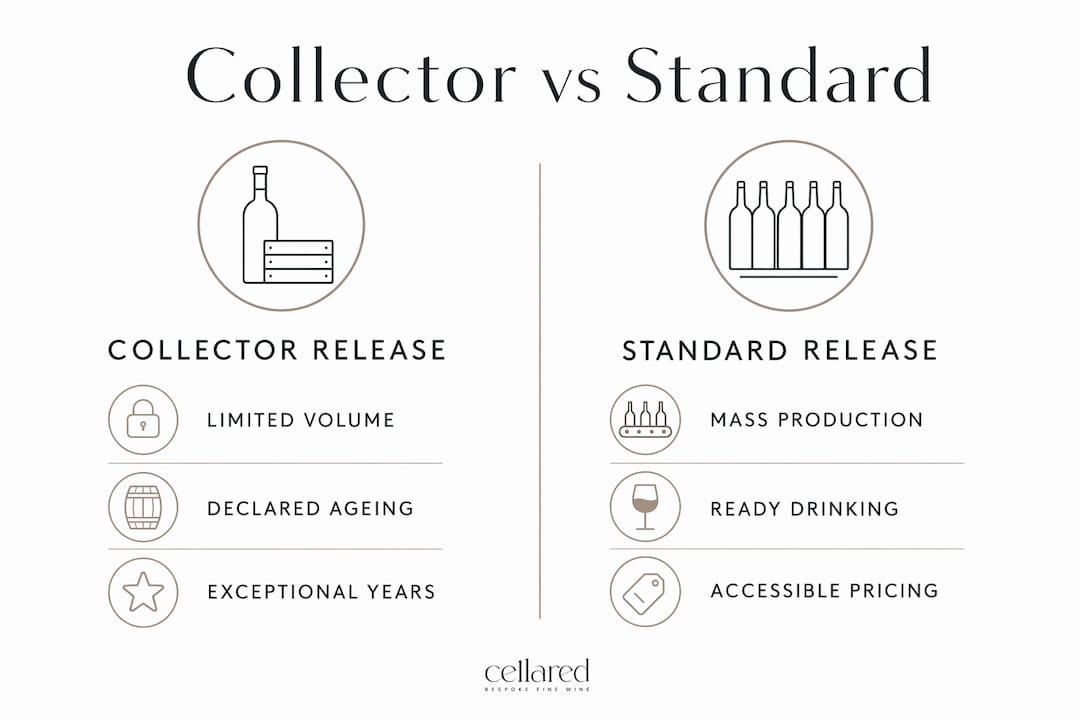
| Trait | Collector release | Standard release |
|---|---|---|
| Production volume | Limited, often single-estate or small-batch | Large-scale, commercially distributed |
| Ageing potential | Decades of cellaring potential | Typically 1–5 years |
| Access | Membership, allocation, or futures | Open retail |
| Pricing | Premium, often futures-discounted for members | Market retail |
| Declaration | Vintage or estate declaration required | No formal declaration |
Not all vintages qualify for collector-grade status. Producers choose only exceptional years based on rigorous criteria, and that selectivity is precisely what makes a declared vintage meaningful. When a house passes on a broad vintage declaration and instead releases a single-quinta or single-estate bottling, it is signalling that the year was good but not great. That distinction matters enormously for investment potential.
How do collector wine programs and memberships work?
Collector programs are structured access arrangements that give members priority over limited releases, often at prices well below what the open market will later demand. Joining a collector program can provide discounts of around 40% relative to final market release prices, alongside priority allocation rights. That pricing advantage is the primary financial case for membership.
The structure of these programmes varies, but most share a common architecture:
- Membership commitment. Some programmes require an upfront fee. Certain exclusive memberships charge a one-time fee of around $500, which typically includes bottles valued at $350 and access to preferential pricing across the range.
- Allocation process. Members receive offers for limited releases before the general public. Allocation size often scales with purchase history or membership tier.
- Early access and futures. Many programmes include en primeur offers, allowing members to buy wine before bottling at locked-in prices.
- Additional benefits. The best programmes combine preferential pricing with event invitations, concierge service, and access to library vintages. Ridge Vineyards' Monte Bello Collector programme is a well-regarded example of this model.
Pro Tip: Before committing to any collector programme, verify that the producer has a consistent track record of vintage declarations and that the membership terms clearly define allocation rights. A programme without transparent allocation rules rarely delivers on its promises.
Understanding how to secure limited releases before they sell out is a skill in itself. The collectors who do it well treat programme selection with the same rigour they apply to the wines themselves.
What release types do collectors encounter: en primeur, declarations, and special bottlings?
Collector circles recognise several distinct release formats, each carrying different implications for timing, pricing, and ageing. Understanding these formats is foundational to making informed decisions.
En primeur is the practice of buying wine as a future, typically 18–24 months before the wine is physically delivered. En primeur wines are shipped to bonded warehouses before final bottling, and buyers pay deposits or full purchase prices before taking possession. Bordeaux is the spiritual home of en primeur, but the model has spread to other regions and styles.
Vintage declarations are formal announcements by a producer that a particular year meets the standard for a collector-grade release. The declaration of a vintage wine is a producer's public statement of confidence in its long-term quality and ageing potential. In Port, for example, a house may choose not to declare a broad vintage and instead release a single-quinta bottling, signalling a qualified rather than exceptional year.
Special bottlings include library releases, magnums, and single-vineyard expressions that fall outside the standard range. These are often produced in tiny quantities and offered exclusively through collector programmes or direct allocation.
"Early releases from prominent estates during en primeur campaigns serve as market benchmarks influencing broader portfolio allocations." — The Drinks Business, 2026
Early critic reviews conducted during barrel tastings directly affect pricing and collector demand before a single bottle is shipped. A high score from a respected critic can move a futures price significantly within days of publication. Collectors who monitor these signals closely gain a real timing advantage.
The 2026 en primeur season has been characterised as subdued despite the uniqueness of the vintage, reflecting how market sentiment and broader economic signals shape collector appetite even when the wine itself is exceptional. That tension between wine quality and market timing is one of the most instructive dynamics in the collector world.
How to buy and manage collector wines effectively
Buying collector wines well requires a clear strategy before the offer arrives, not after. The best collector wine tips centre on preparation: knowing which producers you trust, understanding the release calendar, and having storage arrangements in place before you commit.
Key principles for buying collector releases:
- Follow the wine release calendar. Major en primeur campaigns, particularly Bordeaux, run in spring. Vintage Port declarations typically follow harvest assessments in autumn. Knowing these windows lets you plan capital and storage in advance.
- Prioritise producers with consistent declaration records. A house that declares only in genuinely exceptional years is more credible than one that declares broadly. Consistency in selectivity is a quality signal.
- Understand pricing drivers. Collector pricing is influenced by vintage reputation, critic scores, and global demand. Buying early in a campaign, before critic scores circulate widely, often secures the best price.
- Arrange bonded storage before buying futures. En primeur contracts require you to manage storage logistics. Bonded warehouses preserve provenance and condition, which directly affects resale value.
- Know what makes a wine collectible. Production volume, terroir, producer reputation, and ageing track record all contribute. A thorough understanding of what makes a wine collectible prevents costly impulse purchases.
Bespoke fine wine buying through a specialist adviser removes much of the research burden and provides access to allocations that are not available through standard retail channels.
Pro Tip: Balance investment logic with genuine enjoyment. The collectors who build the most satisfying cellars are those who buy wines they would be proud to drink, not just wines they expect to sell. Discipline and pleasure are not opposites in fine wine collecting.
Effective wine cellar management is the other half of the equation. Temperature, humidity, light, and vibration all affect how a collector wine develops. A wine bought perfectly but stored carelessly will underperform its potential every time.
Key takeaways
A collector wine release is defined by limited production, a producer's declared confidence in ageing potential, and controlled access through programmes, futures, or direct allocation.
| Point | Details |
|---|---|
| Definition of collector release | A limited wine batch declared by a producer for its exceptional ageing potential and exclusivity. |
| Membership advantages | Collector programmes offer discounts of around 40% and priority allocation before public release. |
| En primeur timing | Futures wines are delivered 18–24 months after purchase, requiring bonded storage arrangements. |
| Vintage declarations matter | Only exceptional years receive formal declarations; selectivity signals genuine quality. |
| Storage is non-negotiable | Proper cellar conditions preserve provenance and protect both drinking quality and resale value. |
Why collector releases are worth the patience
I have worked with collectors at every level, from those buying their first futures allocation to those managing cellars worth well into the millions. The one thing that separates the collectors who genuinely thrive from those who feel perpetually behind is their relationship with time.
Collector wine releases are not designed for instant gratification. A declared Vintage Port from a great house may not reach its peak for 20 or 30 years. A Barolo from a celebrated single vineyard in Serralunga d'Alba can spend a decade in the cellar before it begins to reveal its full complexity. The collectors who understand this do not experience that wait as a burden. They experience it as the point.
What I have also observed is that the collectors who struggle most are those who treat every release as a financial instrument first and a wine second. The market does reward patience and selectivity, but the collectors who buy purely on speculation often make poor decisions under pressure. They chase scores, overpay during hype cycles, and sell too early. The collectors who buy because they genuinely love what is in the bottle tend to hold longer, buy more wisely, and ultimately build collections of greater depth and value.
My honest caution is this: be selective about the programmes you join. Not every collector membership delivers genuine allocation advantage. Some are sophisticated mailing lists with a membership fee attached. Scrutinise the terms, the producer's declaration history, and the actual pricing relative to open market comparisons. The advantages of insider wine access are real, but only when the programme is genuinely structured to deliver them.
— David
Fine wine services for serious collectors
Collector wine releases reward those who approach them with knowledge, patience, and the right support behind them.
Cellared Fine Wine works with collectors, investors, and private clients to source rare and hard-to-find bottles, manage collections with professional care, and provide independent, market-led valuations for insurance, probate, and advisory purposes. Whether you are building a cellar from scratch, seeking a specific allocation, or need a court-ready valuation for an existing collection, Cellared Fine Wine offers the depth of market knowledge and personal service that serious collectors deserve. Reach out to discuss bespoke buying, professional wine appraisals and valuations, or ongoing cellar management tailored to your collection.
FAQ
What is a collector wine release in simple terms?
A collector wine release is a limited batch of wine produced by a reputable estate and offered specifically to collectors, distinguished by restricted availability, exceptional ageing potential, and controlled access through programmes or futures.
How much do collector wine programmes typically cost?
Membership fees vary widely. Some exclusive programmes charge a one-time fee of around $500, which often includes bottles and preferential pricing of up to 40% below final market release prices.
What is en primeur and why does it matter to collectors?
En primeur is the practice of buying wine as a future before bottling, typically 18–24 months before delivery. It offers potential cost savings and early access to limited releases, but requires buyers to manage bonded storage and accept market risk before the wine arrives.
How do vintage declarations affect collector wine value?
A vintage declaration is a producer's formal statement that a year meets collector-grade standards. Only exceptional years receive declarations, and that selectivity directly influences a wine's collectability, ageing trajectory, and long-term market value.
What is the best way to store collector wines after purchase?
Collector wines require stable temperature, controlled humidity, minimal light, and no vibration. Bonded warehouse storage preserves provenance and condition, which protects both drinking quality and resale value over the long term.