
Wine auctions are specialised secondary markets where rare and collectible bottles are bought and sold through competitive bidding, often achieving prices that far exceed standard retail. For collectors, investors, and enthusiasts seeking access to scarce Burgundy, aged Bordeaux, or iconic Australian releases, the auction room, whether physical or digital, remains the most transparent and dynamic venue available. In 2025, fine wine auction volumes grew by 18.5%, with over 300,000 bottles sold by major houses. That growth signals enduring demand, even as buyers become more discerning about what they bid on.
1. how wine auctions work: from consignment to settlement
The secondary market auction cycle follows five structured steps: consignment and inspection, estimate and reserve setting, catalogue publication, competitive bidding, and settlement. Understanding each step protects both buyers and sellers from costly surprises.
Consignment begins when a seller submits bottles for assessment. The auction house inspects condition, verifies provenance, and sets a reserve price below which the lot will not sell. The catalogue is typically published four to six weeks before the auction date, giving bidders time to research lots and request condition reports.
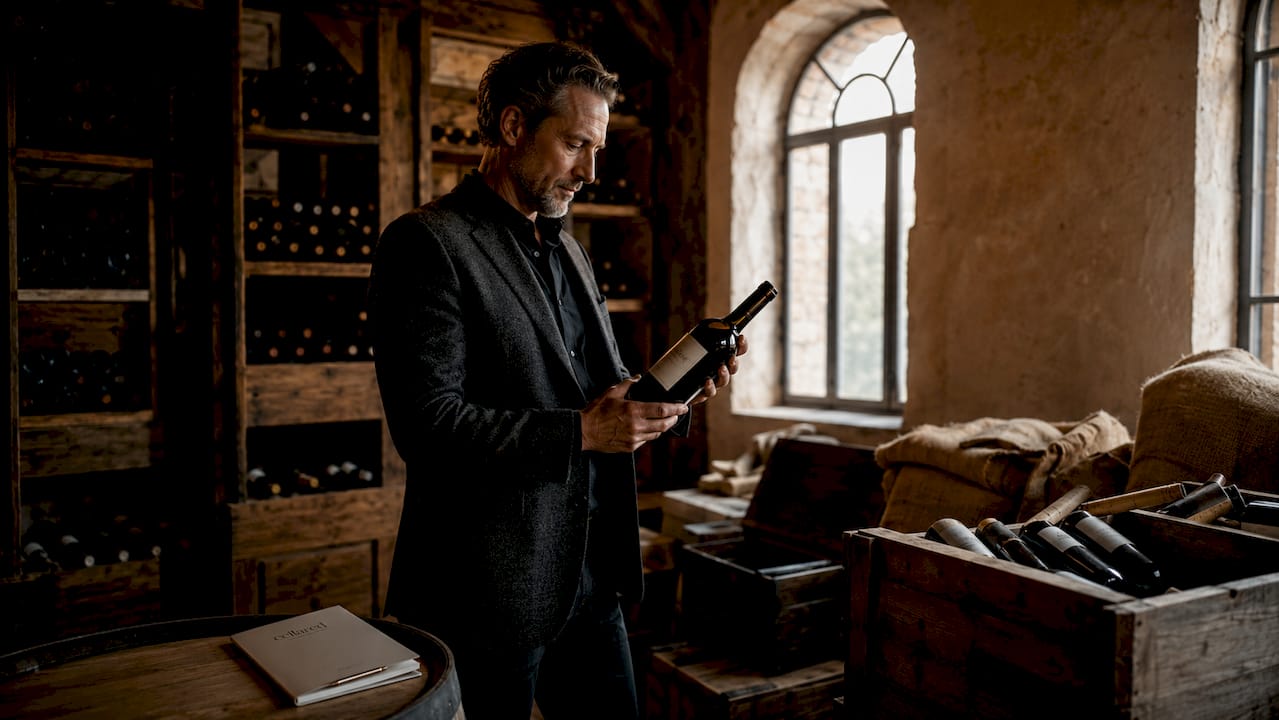
Bidding itself can occur in a live saleroom, by telephone, or increasingly through online platforms. Settlement follows within 7–14 days of the hammer falling. Buyer's premiums typically sit at 25–27% at major houses, and seller commissions run at 10–15%. These figures are not negotiable for small lots, but larger collections often attract more favourable terms.
Pro Tip: Request a condition report for every lot you intend to bid on. Auction houses prepare these on request, and they reveal details about ullage, label condition, and storage history that the catalogue description may not capture.
2. live versus online auction formats
Live auctions at traditional houses carry prestige and attract serious collectors, but most major auction volume has now shifted online. Online platforms offer monthly auction cycles, broader geographic reach, and lower barriers to entry for both buyers and sellers.
The key structural difference is the extended closing system used by online specialists. When a bid is placed near the closing time, the auction automatically extends by several minutes. This prevents last-second sniping and encourages genuine competition. Platforms like Wine Auctioneer have built their reputation on this format, making bidding fairer and more transparent.
For buyers, the practical implication is clear. You cannot simply place a final bid at the last second and walk away with a bargain. You need to set a firm maximum and let the system work. This discipline also protects you from emotional overbidding in the heat of a live room.
3. top wine auction houses and platforms in 2026
The auction market is served by a mix of traditional houses and specialist online platforms. Each suits different lot sizes, regions, and seller profiles.
| Auction House / Platform | Speciality | Format | Best For |
|---|---|---|---|
| Sotheby's | Bordeaux, Burgundy | Live and online | High-value single lots and cellar collections |
| Christie's | Bordeaux, Burgundy | Live and online | Established collectors with documented provenance |
| Langton's | Australian fine wine | Online and live | Australian sellers and buyers |
| Barossa Wine Auction | Australian regional | Annual live event | Barossa and South Australian producers |
| Zachys | Bordeaux, Burgundy, US | Online and live | Smaller consignments, North American market |
| Wine Auctioneer | Broad international | Online monthly | Regular buyers and sellers seeking accessibility |
Christie's and Sotheby's dominate the upper tier of the Bordeaux and Burgundy market. Langton's is the leading Australian house, with deep expertise in domestic producers including Penfolds, Henschke, and Giaconda. The Barossa Wine Auction stands as Australia's premier regional event, drawing collectors focused on Shiraz and Grenache from the Barossa Valley. Online specialists like Zachys handle smaller consignments effectively, making them accessible for collectors who do not hold cellar-sized collections.
4. how to buy wine at auction: key criteria
Buying at auction rewards preparation and penalises impulse. The most important criteria to assess before placing a bid are condition, provenance, and total cost.
- Ullage level: The space between the wine and the cork indicates potential oxidation or evaporation. High ullage can signal spoilage and should reduce your maximum bid accordingly. For older vintages, some ullage is expected, but anything beyond mid-shoulder warrants caution.
- Provenance and storage history: Wines with documented professional cellar storage command higher prices and lower risk. A bottle from a private cellar with no temperature records is a gamble, regardless of the label.
- Label and capsule condition: Damaged labels reduce resale value significantly. For investment-grade bottles, presentation matters as much as the wine inside.
- Estimate versus market value: Cross-reference the auction estimate against recent fine wine market data. Estimates can be conservative to attract bidding, or inflated to flatter the consignor.
- Total cost of acquisition: The hammer price is only the starting point. Add buyer's premium, taxes, and shipping costs, including temperature-controlled freight, to calculate your true cost per bottle.
Pro Tip: Set your maximum bid before the auction opens and treat it as fixed. The competitive atmosphere of a live room or a ticking online timer can push buyers well beyond rational value. Knowing your ceiling in advance is the single most effective discipline in auction buying.
5. how sellers can maximise auction returns
Selling at auction requires as much strategy as buying. The difference between a strong result and a disappointing one often comes down to timing, presentation, and choosing the right platform.
- Time your consignment carefully. The auction process typically takes 3–4 months from consignment to settlement. Plan well ahead of major seasonal sales, which attract the largest bidder pools and the most competitive prices.
- Negotiate commissions for significant collections. Seller commissions of 10–15% are standard, but auction houses will negotiate for large, high-quality collections. If your cellar holds rare or sought-after bottles, you have leverage.
- Document provenance meticulously. Lack of provenance documentation can disqualify lots from major houses or reduce estimates substantially. Purchase receipts, storage records, and temperature logs all add credibility and value.
- Consider auction versus merchant exchange. Auctions suit rare, high-value lots where competitive bidding can push prices above market rate. Merchant exchanges offer faster liquidity but less price discovery. For a 1996 Penfolds Grange in perfect condition, auction is almost always the better choice.
- Present your collection professionally. Photographs, original timber cases, and detailed cellar histories all improve catalogue presentation and attract serious bidders. First impressions in a catalogue listing carry real weight.
6. how to analyse wine auction results
Auction results are among the most reliable data points in the fine wine market. They reveal genuine buyer demand, regional preferences, and vintage sentiment in a way that retail pricing cannot.
When reviewing results, look beyond the hammer price. Compare the result against the pre-sale estimate to understand whether the lot outperformed or underperformed expectations. A bottle that sells at three times its high estimate signals exceptional demand. One that passes unsold tells you the market has moved on.
Track results across multiple auctions over time to identify trends. In 2025, Burgundy accounted for 41.3% of auction value while Bordeaux led in volume at 34%. Red wines represented 72% of traded volume. These figures confirm that collector appetite for Burgundy remains strong on a value basis, even as Bordeaux dominates by bottle count. For anyone building a fine wine portfolio, this kind of result analysis is indispensable.
7. common mistakes to avoid at auction
Even experienced collectors make avoidable errors at auction. Knowing the most common pitfalls sharpens your approach considerably.
The first mistake is ignoring total acquisition cost. Many buyers fixate on the hammer price and forget to add the buyer's premium, GST where applicable, and freight. A bottle that looks like a bargain at $200 hammer can cost $280 or more by the time it reaches your cellar. Always calculate the landed cost before bidding.
The second mistake is bidding without a condition report. Catalogue photographs are flattering by design. A condition report reveals the reality: actual ullage measurements, label tears, and any signs of seepage. Skipping this step on a high-value lot is a false economy.
The third mistake is poor timing on consignment. Sellers who rush bottles to market outside of major seasonal auctions often achieve lower results. The wine auction buying tips that matter most are the ones that account for the full cycle, from preparation through to settlement. Patience, as with the wines themselves, is rewarded.
Key takeaways
Successful participation in wine auctions depends on understanding the full process, from consignment timelines and commission structures to condition assessment and total cost calculation.
| Point | Details |
|---|---|
| Understand the full cost | Add buyer's premium of 25–27% plus taxes and freight to every hammer price before bidding. |
| Assess condition before bidding | Request condition reports and prioritise ullage level, provenance, and storage history. |
| Time consignments strategically | Plan 3–4 months ahead to align with major seasonal auctions and maximise bidder competition. |
| Use auction results as market data | Track hammer prices against estimates to identify genuine demand trends by region and vintage. |
| Match platform to lot quality | Use specialist houses like Sotheby's or Langton's for rare lots; online platforms suit broader collections. |
What i've learned from years at the auction block
The most common misconception I encounter is that wine auctions are purely about price. They are not. They are about information. Every result, every passed lot, and every bidding war tells you something about where collector sentiment sits right now. The auction room is the finest real-time indicator of fine wine value that exists.
What surprises first-time participants most is how much preparation separates good outcomes from poor ones. I have watched buyers overpay for bottles with compromised provenance simply because they did not request a condition report. I have seen sellers leave significant money on the table by consigning outside of the major seasonal sales. These are not bad luck. They are the predictable results of skipping preparation.
The shift to online auctions has democratised access in a genuinely meaningful way. A collector in Melbourne or Brisbane can now bid alongside buyers in London and New York without leaving their study. But that accessibility also brings new discipline requirements. The extended closing systems used by platforms like Wine Auctioneer reward patience and punish reactive bidding. Understanding how these systems work before you participate is not optional. It is the difference between a considered acquisition and an expensive mistake.
My honest view is that the collectors who thrive at auction treat it as a craft. They study results, build relationships with specialists, and approach each sale with clear criteria. The wine itself rewards patience. The auction process does too.
— David
How cellared fine wine supports your auction journey
Whether you are preparing to consign a cellar collection or searching for a specific bottle at auction, Cellared Fine Wine provides the expertise to guide every step.
Com offers professional wine valuations prepared to court-ready standards, giving consignors accurate, independent estimates before they approach any auction house. For buyers, Com's bespoke purchasing service monitors auction calendars, assesses condition reports, and advises on fair value across all major platforms. Com's cellar management service ensures your collection is stored, documented, and positioned for optimal auction performance when the time comes. Speak with the team at Cellared Fine Wine to discuss your collection with the depth of attention it deserves.
FAQ
What is a buyer's premium at wine auctions?
A buyer's premium is an additional charge added to the hammer price, typically 25–27% at major auction houses. It is paid by the buyer on top of the winning bid and must be factored into your total acquisition cost.
How long does the auction process take for sellers?
The full process from consignment to settlement typically takes 3–4 months. Sellers should plan well in advance to align with major seasonal auctions and achieve the strongest possible results.
What should i check before bidding on a wine lot?
Assess ullage level, provenance documentation, and storage history before placing any bid. Request a condition report from the auction house to confirm label condition and any signs of seepage or deterioration.
Are online wine auctions as reliable as live sales?
Online auctions now account for the majority of fine wine auction volume and are considered equally reliable for most lot types. Extended closing systems prevent last-second sniping and promote fair competition among bidders.
How do i know if an auction estimate is fair?
Cross-reference the auction estimate against recent secondary market results for the same wine and vintage. If the estimate sits significantly above recent hammer prices, the lot may be overpriced relative to current market trends.