
A wine concierge is defined as a dedicated specialist who curates, advises, and manages a client's wine collection with the precision of a private banker and the passion of a lifelong enthusiast. The role sits at the intersection of expert wine knowledge, exclusive market access, and deeply personalised service. For collectors and investors who want more than a bottle recommendation, a personal wine advisor transforms the entire experience of acquiring, storing, and enjoying fine wine. Understanding what a wine concierge does, and what separates an exceptional one from a merely competent one, is the first step toward building a collection with genuine confidence.
What is a wine concierge and what do they actually do?
A wine concierge is a professional who provides bespoke wine guidance across every stage of a collector's journey, from initial palate profiling through to cellar management and resale advice. The term "wine concierge" is the widely used descriptor, though the role is also known in the trade as a private wine advisor or personal wine consultant. Both terms describe the same function: a single, trusted point of contact who understands your tastes, your budget, and your long-term goals.
The service begins with a structured consultation. Retail concierge programmes typically open with a 30–60 minute session to establish palate preferences and collection goals. That initial conversation shapes every recommendation that follows, whether you are building a cellar for pleasure, investment, or both.
From that foundation, a wine concierge provides:
- Personalised wine recommendations calibrated to your taste profile and investment strategy
- Access to rare and limited-release wines from prestigious estates that are not available through standard retail channels
- Cellar building and management, including provenance verification, storage advice, and condition monitoring
- Provenance documentation to protect against counterfeit risk and support future resale
- Event access, including private tastings, winemaker dinners, and masterclasses
Serious collectors value concierge services precisely because they eliminate the stress of research, sourcing, and logistics. The concierge absorbs that complexity so you can focus on the pleasure and the investment.
Pro Tip: Ask your concierge to document your palate profile in writing after the first consultation. A well-recorded profile becomes the foundation for every future recommendation and ensures consistency even if your primary contact changes.

How does a wine concierge differ from a sommelier or subscription club?
The distinction matters because each service solves a different problem. A sommelier operates primarily in a restaurant or hospitality setting, pairing wines with food in real time. Their expertise is deep but contextual. A wine concierge, by contrast, works across your entire collecting life, advising on acquisition, storage, valuation, and resale without the constraint of a single venue or menu.
Wine subscription clubs occupy a different space again. They deliver curated selections on a schedule, which suits casual drinkers well. What they cannot offer is the exclusivity, rare allocations, and investment focus that define a true concierge relationship. Luxury curation services provide access to limited-production, iconic wines from prestigious estates, with provenance guarantees and exclusive community membership that subscription clubs simply do not replicate.
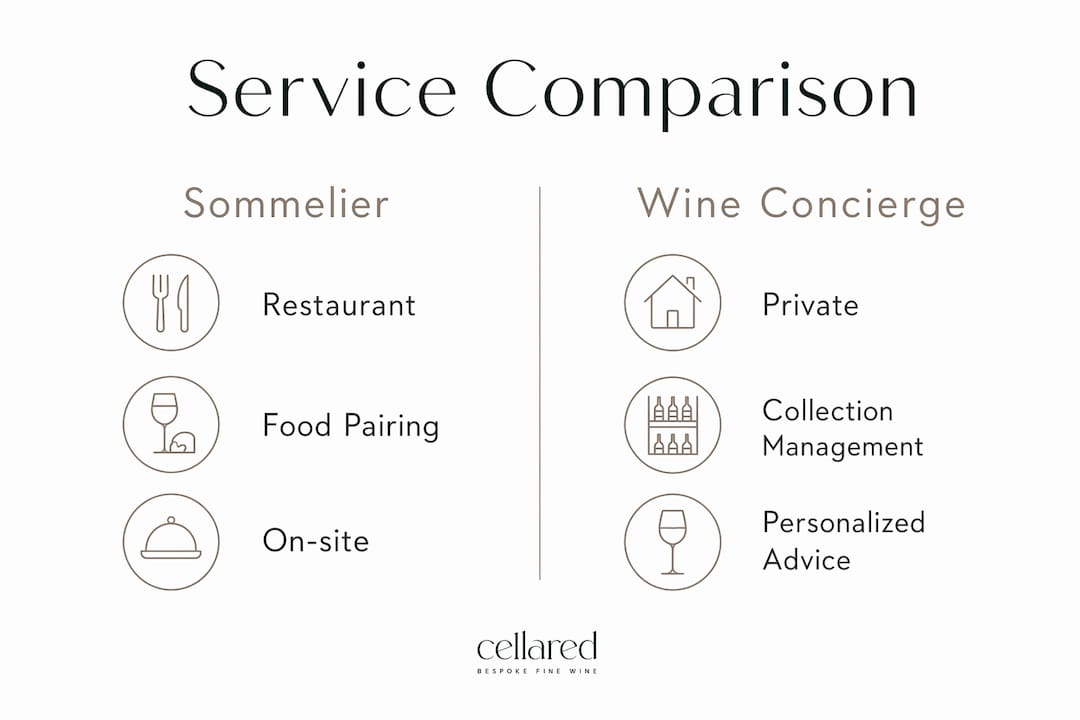
The table below clarifies the key differences:
| Feature | Sommelier | Subscription club | Wine concierge |
|---|---|---|---|
| Service setting | Restaurant or event | Online, scheduled delivery | Private, ongoing relationship |
| Personalisation | Moderate, food-driven | Low to moderate | High, profile-driven |
| Rare wine access | Limited | Limited | Extensive, allocation-based |
| Investment focus | None | None | Central to the service |
| Provenance support | Rarely | Rarely | Standard practice |
| Pricing model | Per-service or included | Subscription fee | Membership, flat fee, or purchase-integrated |
A wine concierge also functions as a private client advisor, offering a single point of contact for personalised buying advice, special gifting, and cellar expansion. That continuity of relationship is what separates the concierge model from every other wine service.
Pro Tip: If you are attending a private wine education session, such as those offered through specialist wine classes, bring your concierge's palate notes. A skilled educator can use them to deepen your understanding of why certain wines resonate with you.
What should you consider when choosing a wine concierge service?
Choosing the right personal wine advisor requires more than checking credentials. The relationship is long-term, and the quality of that relationship directly affects the quality of your collection. Work through these criteria before committing:
- Verified expertise. Look for qualifications such as Master Sommelier or Master of Wine, or demonstrated market experience with investment-grade wines. Credentials signal rigour, not just enthusiasm.
- Network access. The concierge's value is partly measured by who they know. Ask directly which estates, négociants, and auction houses they have established relationships with.
- Service customisation. A genuine concierge tailors every recommendation to your profile. If the first consultation feels generic, the service will be too.
- Provenance guarantees. Key trust factors include guarantees of authenticity, transparent storage advice, and clear communication about sourcing. Never engage a concierge who cannot document provenance.
- Pricing transparency. Pricing models vary. Some concierges charge a flat membership fee, others integrate their fee into purchase pricing, and some offer complimentary expert advice as part of an ongoing purchase relationship. Understand exactly what you are paying for before you begin.
- Communication standards. A 24-hour response window is a reasonable baseline expectation. Slower communication signals a service stretched too thin to serve you well.
- Red flags to watch for. Avoid any concierge who cannot name their sourcing partners, who discourages questions about provenance, or who pushes high-margin bottles without reference to your stated goals.
The right concierge will ask as many questions as you do. They will want to understand your cellar conditions, your investment horizon, your budget, and your drinking preferences before making a single recommendation.
How can a wine concierge enhance your collecting experience practically?
The practical impact of a wine concierge extends well beyond the initial consultation. Concierge services save collectors hundreds of hours by managing wine research, networking, sourcing, and bidding on rare wines. That time saving is tangible, but the intangible benefits are equally significant.
Here is how the relationship typically unfolds in practice:
- First consultation. You establish your palate profile, investment goals, storage capacity, and budget. The concierge maps these against current market availability and identifies priority targets.
- Ongoing acquisition. The concierge monitors allocation lists, auction calendars, and private sale opportunities on your behalf. When a bottle matching your profile becomes available, you hear about it first.
- Cellar management. Your advisor tracks drinking windows, monitors storage conditions, and flags bottles approaching peak maturity. This is where expert cellar management pays dividends, protecting both your enjoyment and your investment.
- Valuation and resale. When you are ready to sell, the concierge provides market-led valuation advice and connects you with appropriate buyers or auction channels. Provenance documentation assembled throughout the relationship supports stronger sale prices.
- Events and education. Many concierge services organise private tastings, winemaker visits, and masterclasses. Luxury wine experiences extend well beyond the bottle, offering community belonging and the confidence that comes from understanding exactly what you own and why.
Concierge-managed cellar services also build confidence in collecting rare wines by managing logistics, valuation, and resale advice as a unified service. The collector who works with a skilled concierge makes fewer costly mistakes and more rewarding acquisitions.
Pro Tip: Request a quarterly cellar review as part of your concierge agreement. A structured review catches bottles approaching their peak drinking window before they pass it, and keeps your investment thesis current with market conditions.
Key takeaways
A wine concierge is the most direct path from passive wine interest to confident, informed collecting and investing.
| Point | Details |
|---|---|
| Clear definition | A wine concierge is a private advisor who curates, sources, and manages your collection end to end. |
| Distinct from other services | Concierges offer investment focus, rare access, and provenance support that sommeliers and subscription clubs do not. |
| Choosing well matters | Verify credentials, provenance guarantees, and pricing transparency before committing to any concierge relationship. |
| Practical time savings | Concierge services manage research, sourcing, and bidding, saving collectors significant time and reducing costly errors. |
| Ongoing value | Quarterly cellar reviews, valuation support, and event access compound the value of the relationship over time. |
The concierge relationship is the collection's hidden infrastructure
After working in fine wine for many years, I have come to believe that the concierge relationship is the most underestimated asset a serious collector can hold. Most collectors spend enormous energy selecting individual bottles and almost no energy building the advisory infrastructure that protects and grows those selections over time.
The common misconception is that a wine concierge is a luxury reserved for buyers spending at the very top of the market. That is simply not accurate. The value of a skilled personal wine advisor scales with the seriousness of your intent, not the size of your budget. A collector spending thoughtfully at a moderate level benefits just as much from provenance guidance and rare access as someone assembling a cellar worth hundreds of thousands of dollars.
What I find most collectors underuse is the concierge's role in resale and valuation. The documentation assembled throughout a well-managed concierge relationship, provenance records, storage history, condition notes, becomes a material asset when it is time to sell. Buyers pay more for certainty. A concierge who has managed your collection from acquisition to sale has built that certainty into every bottle.
The luxury wine market in 2026 rewards collectors who treat their cellar as a living portfolio, not a static accumulation. A skilled concierge is the professional who makes that active management possible without consuming your time. If you are serious about collecting, the question is not whether you need a wine concierge. The question is why you have waited this long.
— David
Cellared Fine Wine: bespoke concierge services for serious collectors
Cellared Fine Wine offers the kind of deeply personal wine concierge service that serious collectors and investors deserve.
Whether you are building a cellar from scratch, seeking bespoke fine wine buying advice, or need a court-ready valuation for insurance or probate, Cellared brings deep market knowledge and genuine personal attention to every client relationship. The team sources rare and hard-to-find bottles, manages collections with care, and provides independent, market-led valuations that stand up to scrutiny. For collectors who want clarity, confidence, and access to the world's finest wines, Cellared Fine Wine is the natural next step.
FAQ
What is a wine concierge in simple terms?
A wine concierge is a private specialist who curates, sources, and manages your wine collection based on your personal taste profile, investment goals, and storage capacity. They act as a single trusted advisor across every stage of collecting.
How much does a wine concierge service cost?
Pricing varies by service model. Some concierges charge a flat membership fee, others integrate their fee into purchase pricing, and some offer complimentary expert advice as part of an ongoing purchase relationship. Always confirm the pricing structure before engaging.
Can a wine concierge help with wine investment?
A wine concierge provides market-led acquisition advice, provenance documentation, valuation support, and resale guidance, all of which directly support wine investment outcomes. Their network access to rare allocations also creates opportunities unavailable through standard retail channels.
How is a wine concierge different from a sommelier?
A sommelier focuses on food and wine pairing in a hospitality setting. A wine concierge manages your entire collecting life, including acquisition, storage, valuation, and resale, with no venue or menu constraints.
What should I ask a wine concierge before hiring them?
Ask about their credentials, which estates and auction houses they have relationships with, how they document provenance, and what their communication standards are. A 24-hour response window and transparent sourcing are reasonable baseline expectations for any reputable service.