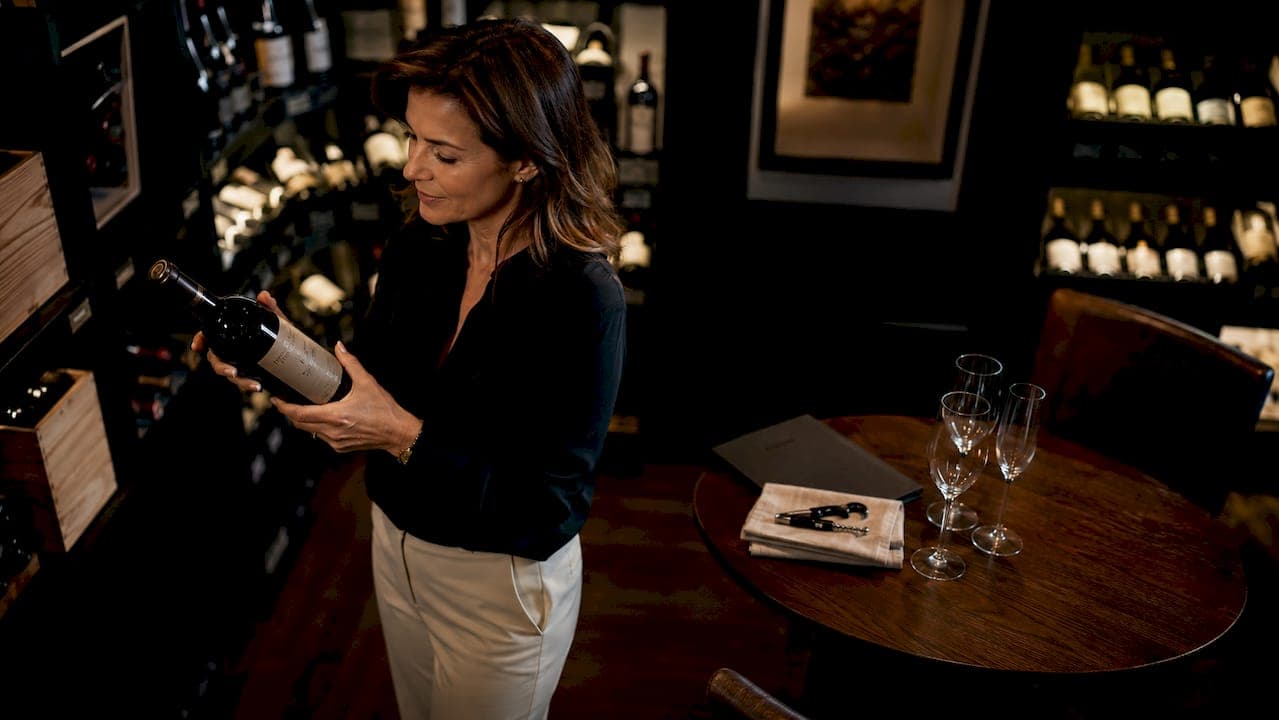
A wine merchant is defined as an independent specialist who buys and sells wine under their own name, curating selections, advising collectors, and managing inventory on behalf of their clients. The role sits between the winemaker and the consumer, acting as a market editor who filters the world's vast wine production into meaningful, quality-focused choices. Unlike a sommelier, who advises within a restaurant setting, or a winemaker, who crafts wine in the vineyard and cellar, the merchant's primary function is sourcing, curation, and advice. For beginners and seasoned collectors alike, understanding this distinction is the first step toward making better buying decisions.
What does a wine merchant do?
A wine merchant acts as an independent intermediary who purchases wine from producers and importers, then sells it directly to consumers under their own name. The merchant's value is not simply in holding stock. It lies in knowing which bottles are worth holding.
The core responsibilities of a wine merchant include:
- Sourcing and purchasing: Identifying wines from producers, importers, and auction houses that meet a defined quality standard.
- Inventory management: Tracking stock, monitoring cellaring conditions, and rotating selections to reflect market trends.
- Customer advice: Translating complex wine terminology into plain language so collectors and enthusiasts can buy with confidence.
- Market trend analysis: Watching shifts in regional demand, vintage quality, and critical scores to guide purchasing decisions.
- Community engagement: Hosting tastings, running wine clubs, and organising educational events that deepen customer relationships.
Wine shops today function as community hubs rather than simple retail outlets. Successful merchants integrate tastings, workshops, and online engagement to build loyalty that no supermarket shelf can replicate.
Merchants also operate across very different formats. Some run a physical shop on a high street. Others work exclusively online, shipping to private clients across the country. A growing number focus entirely on private client services, sourcing rare bottles to order and managing cellar collections on behalf of investors and estates.

Pro Tip: When assessing a merchant's credibility, ask how they source their wines. A merchant who can name the producer, the region, and the vintage's growing conditions is one who genuinely knows their catalogue.
How to become a wine merchant
Entering the wine merchant trade requires a combination of formal education, practical experience, and serious business preparation. Passion for wine is the starting point, not the finish line.
-
Earn a recognised qualification. WSET Level 2 certification is the minimum standard for credibility in the trade. WSET Level 3 is strongly recommended for anyone specialising in fine wines. WSET courses typically cost between EUR 400 and EUR 1,200 and take one to three months to complete. These qualifications build the tasting vocabulary and regional knowledge that clients expect.
-
Develop your palate deliberately. Tasting widely and systematically is non-negotiable. Work through different regions, varietals, and vintages. Keep detailed tasting notes. A merchant who cannot articulate why one Burgundy outperforms another at the same price point cannot advise clients with authority.
-
Understand the regulatory requirements. Licensing and regulatory compliance is complex and time-consuming. Excise licences alone can take one to three months to obtain. Business registration, food safety clearances, and alcohol regulation compliance all add to the administrative load before a single bottle is sold.
-
Prepare for significant capital investment. Opening a physical wine shop requires substantial upfront funding. Initial stock purchases range from EUR 10,000 to EUR 50,000, with store fit-out costs adding a further EUR 5,000 to EUR 20,000. Break-even typically takes 18–36 months. Online or private client models carry lower overheads but still require working capital for stock and logistics.
-
Build producer and importer relationships. Access to quality wine depends on trust built over time. Visit regions, attend trade tastings, and cultivate direct relationships with producers. These connections determine what you can offer clients that a supermarket buyer never could.
-
Define your niche. Many merchants build loyalty by focusing on organic, natural, or regionally specific wines that large retailers ignore. Competing on price against a supermarket is a losing strategy. Competing on expertise, provenance, and storytelling is where independent merchants win.
Pro Tip: Before committing to a physical shopfront, test your market by operating as a private client merchant or online retailer first. The lower overhead gives you time to build a client base before taking on a lease.
Wine merchant versus winery: what is the difference?
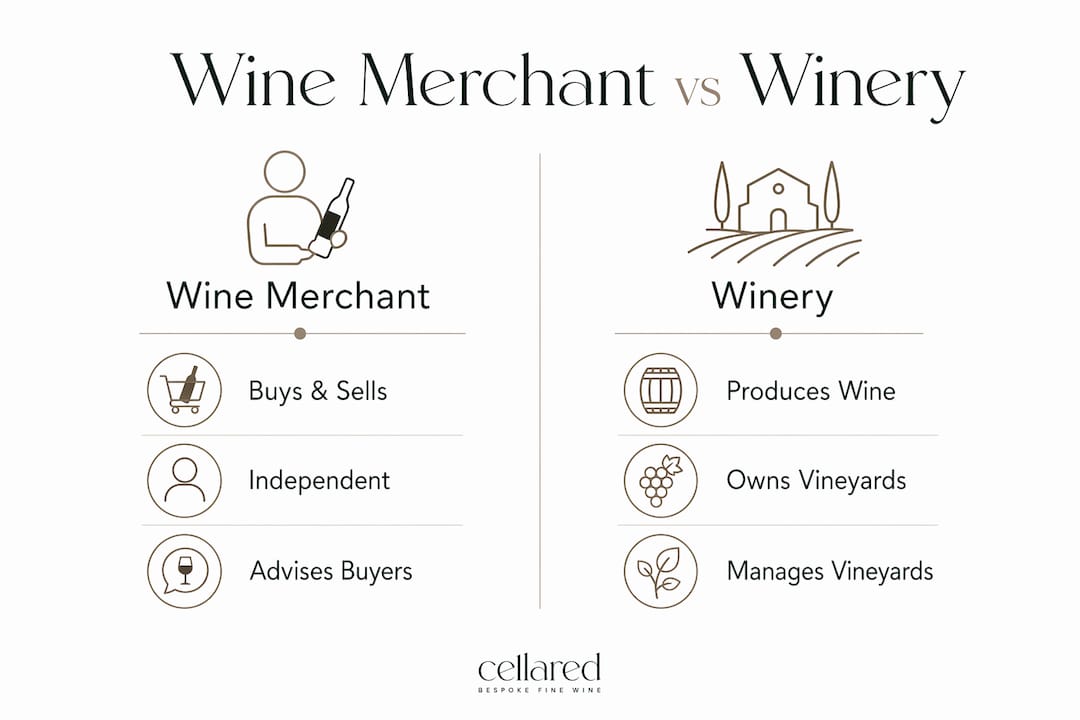
The distinction between a wine merchant and a winery is one that collectors must understand clearly. Confusing the two leads to misreading provenance, which matters enormously when buying fine wine.
A winemaker produces wine through vineyard management, harvest, fermentation, and maturation. Their focus is entirely on the craft of production. A wine merchant, by contrast, focuses on distribution, curation, and consumer experience. The merchant does not make wine. They select it, purchase it, and present it to clients with context and advice.
The distinction becomes more complex when négociants and brand houses enter the picture. A négociant is a merchant who buys grapes or bulk wine from growers and then blends, bottles, and sells the wine under their own label. This practice is common in Burgundy and Champagne. Some so-called "wineries" use contract production, sourcing fruit from growers rather than owning vineyards. Understanding these practices is vital for serious collectors evaluating provenance and authenticity.
| Role | Primary function | Owns vineyards? | Advises consumers? |
|---|---|---|---|
| Winemaker | Produces wine | Usually yes | Rarely |
| Négociant | Buys and blends wine | Sometimes | Occasionally |
| Wine merchant | Curates and sells wine | No | Always |
| Sommelier | Recommends wine in hospitality | No | Yes, within venue |
For collectors, the key question is always: who made this wine, where did the fruit come from, and how has it been stored? A skilled merchant can answer all three. A winery's marketing materials often cannot.
Why choose an independent wine merchant?
Independent wine merchants provide a level of curation and personalised advice that large retailers structurally cannot offer. The benefits of independent wine advice for collectors extend well beyond price or convenience.
The core advantages include:
- Market editing: An independent merchant filters thousands of available wines down to a curated selection chosen for quality, provenance, and value. This saves collectors time and reduces the risk of poor purchases.
- Personalised guidance: A merchant who knows your palate, your cellar conditions, and your budget can advise you in ways that a supermarket shelf or an algorithm cannot replicate.
- Access to rare and artisanal wines: Independent merchants curate selections focused on quality and unique provenance, including hard-to-find bottles from small producers that never reach mainstream retail.
- Education and community: Tastings, wine clubs, and workshops offered by independent merchants build genuine knowledge over time. A wine club membership can be one of the most efficient ways to develop your palate under expert guidance.
- The story behind the bottle: Independent merchants sell context alongside wine. Knowing the producer's philosophy, the vintage's weather, and the region's terroir transforms the experience of drinking a bottle.
Successful merchants build customer loyalty by selling stories and advice, not simply bottles. That distinction is what separates a great merchant from a warehouse with a licence.
Key takeaways
A wine merchant is the most valuable intermediary between the world's wine producers and the collector who wants to buy well, store correctly, and drink with confidence.
| Point | Details |
|---|---|
| Core definition | A wine merchant buys and sells wine independently, curating selections and advising clients. |
| Distinct from winemakers | Merchants focus on curation and advice; winemakers focus on production and craft. |
| Education matters | WSET Level 2 is the minimum standard; Level 3 is recommended for fine wine specialisation. |
| Capital requirements | Opening a physical shop requires substantial upfront investment with an 18–36 month break-even period. |
| Independent value | Independent merchants offer market editing, rare access, and personalised advice that large retailers cannot match. |
The romance is real, but so is the hard work
People are drawn to the idea of becoming a wine merchant for understandable reasons. The world of fine wine carries genuine romance: the terroir of Burgundy, the structured complexity of aged Barolo, the thrill of finding an undervalued producer before the critics do. I understand that pull completely.
What most enthusiasts do not see is the operational reality sitting behind it. Passion for wine is essential but genuinely insufficient. The merchants I respect most are the ones who treat logistics, cash flow, and client relationships with the same rigour they bring to a tasting. The ones who fail are almost always those who believed that loving wine was enough.
My advice to collectors choosing a merchant is this: look for someone who can tell you not just what a wine tastes like, but why it is priced the way it is, where the fruit came from, and how it will evolve in your cellar. That depth of knowledge is the mark of a merchant who has done the work. It is also the clearest signal that their advice is worth following.
— David
How Cellared Fine Wine serves collectors and enthusiasts
Cellared Fine Wine operates as a specialist fine wine business built around the needs of serious collectors, investors, and private clients who want more than a bottle on a shelf.
Com offers bespoke wine buying tailored to individual collector needs, sourcing rare and hard-to-find bottles with meticulous attention to provenance and condition. For collectors who need clarity on what their cellar is worth, Com provides independent, market-led wine appraisals and valuations prepared to court-ready standards for insurance, probate, and family law purposes. Professional cellar management services are also available for clients who want their collections managed with care and precision. Every service is delivered with the depth of knowledge and personal attention that defines what a great wine merchant does.
FAQ
What is the wine merchant definition in plain terms?
A wine merchant is an independent specialist who buys wine from producers or importers and sells it to consumers, providing curated selections and personalised advice alongside each purchase.
How is a wine merchant different from a sommelier?
A sommelier advises guests within a hospitality setting such as a restaurant. A wine merchant operates independently, buying and selling wine commercially and advising clients across a broader range of purchasing decisions.
What qualifications do you need to become a wine merchant?
WSET Level 2 is the recognised minimum for credibility in the trade. WSET Level 3 is strongly recommended for anyone specialising in fine or rare wines.
What are the benefits of using an independent wine merchant?
Independent merchants offer curated selections, access to rare and artisanal wines, personalised advice, and educational experiences such as tastings and wine clubs that large retailers cannot provide.
Can a wine merchant help with cellar management and valuations?
Yes. Specialist merchants like Com offer professional cellar management, bespoke sourcing, and independent valuations for insurance, probate, and private advisory purposes.