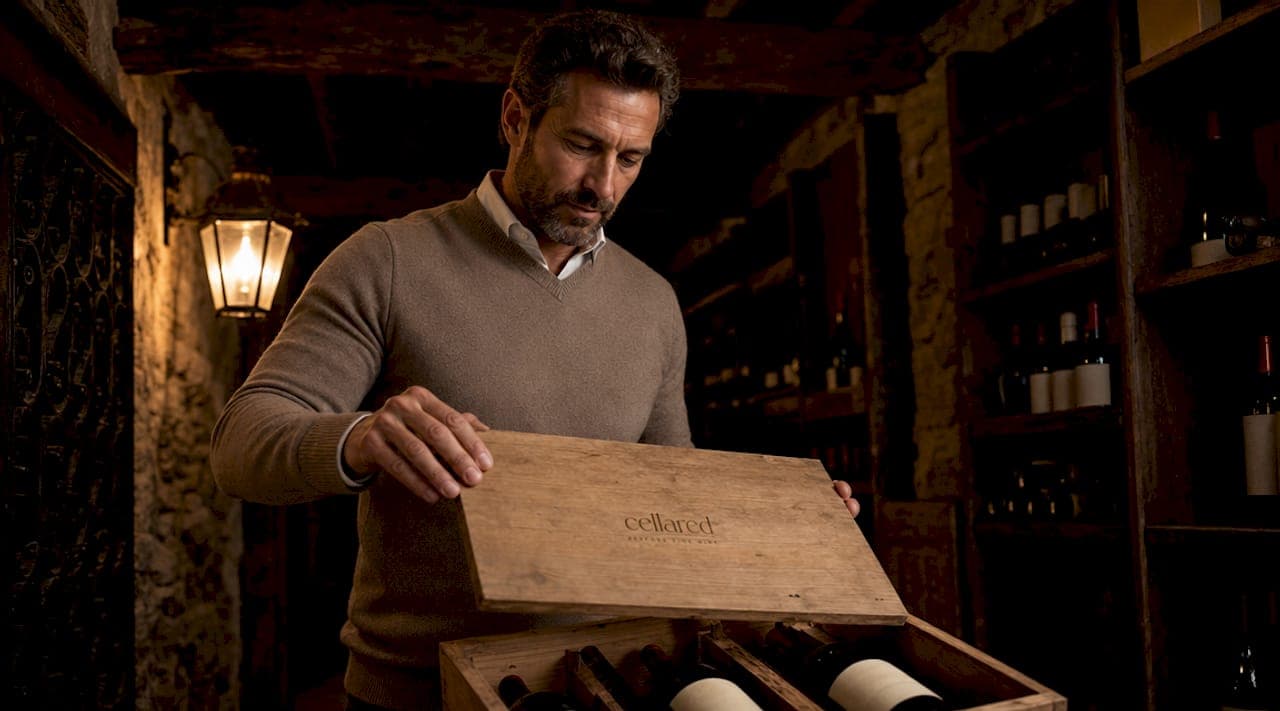
OWC in wine stands for Original Wooden Case, the official wooden packaging a winery uses to release its premium bottles to market. Far more than a container, the OWC is a physical declaration of a wine's provenance, quality tier, and ageing potential. When a case of first-growth Bordeaux or a celebrated Barossa Shiraz arrives sealed in its original timber box, bearing the winery's branded markings and intact nails or staples, it communicates something no certificate alone can replicate: this wine has travelled untouched from producer to cellar. For collectors and investors alike, understanding OWC meaning in wine is the foundation of buying and valuing fine wine with confidence.
What is OWC in wine and why does it matter?
OWC is defined as the original wooden case in which a winery packages and ships its top-tier wines directly from the estate. The term is used universally across the fine wine trade, from négociants in Bordeaux to auction houses in London and specialist dealers in Sydney. It distinguishes premium releases from secondary or entry-level bottlings, which typically arrive in cardboard or original carton cases, known in the trade as OCC or OCCB.
The OWC carries the winery's identity in a tangible form. The timber is often branded or stencilled with the château name, vintage year, appellation, and bottle count. This branding is not decorative. It is the first line of provenance verification, confirming that the wine inside originated directly from the producer and has not been repackaged, substituted, or tampered with. OWC packaging carries the winery's brand and seal, indicating the bottles have not been removed or interfered with.
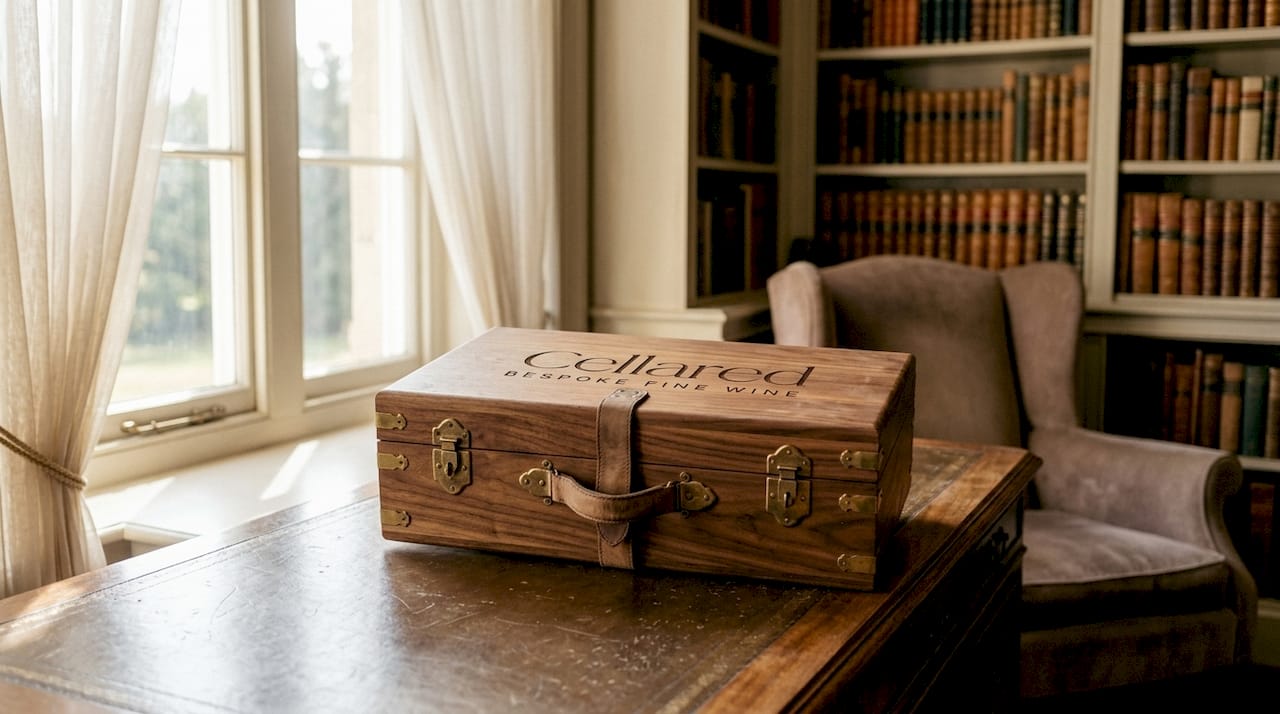
For collectors, the OWC is also a signal of which wines a winery considers its finest work. Estates like Penfolds, Giacomo Conterno, and Domaine de la Romanée-Conti reserve wooden case packaging for their prestige cuvées. If a wine arrives in an OWC, the producer is telling you it is built to age, worth cellaring, and worthy of the extra cost and care that timber packaging demands.
Why do wineries choose wooden cases over cardboard?
The choice of wood over cardboard for premium releases is both practical and deeply traditional. Wooden cases offer superior impact resistance and temperature insulation compared to cardboard, protecting wine during long-term cellaring. This matters enormously for wines intended to age for a decade or more, where even minor physical shock or repeated temperature fluctuation can compromise the integrity of the cork and, ultimately, the wine itself.
The tradition of wooden wine cases stretches back centuries in Bordeaux, where châteaux have shipped their classified growths in timber since the trade routes of the 18th century. The wood absorbs minor vibrations during transport, provides a degree of structural rigidity that cardboard cannot match, and holds its form reliably in humid cellar conditions where cardboard would soften and collapse. For a case of wine valued at thousands of dollars, this structural reliability is not a luxury. It is a necessity.
Beyond the physical, OWC is a deliberate choice linked to heritage and wine identity. The weight of a timber case in your hands, the sound of the lid being prised open, the sight of bottles nestled in their original straw or cardboard dividers: these sensory details reinforce the prestige of the wine before a single bottle is opened. Wineries understand this. The packaging is part of the product.
- Structural integrity: Wood resists compression and impact far better than cardboard, protecting bottles during freight and long-term storage.
- Humidity resilience: Timber holds its shape in cellar conditions of 70 to 75 per cent relative humidity, where cardboard deteriorates.
- Provenance signalling: Branded timber cases confirm the wine's origin and release tier at a glance.
- Collector appeal: An intact OWC adds visual and tactile prestige that enhances the experience of receiving and storing fine wine.
Pro Tip: When purchasing wines at auction or through a merchant, always ask whether the OWC is intact and whether the original nails or staples are undisturbed. A case that has been opened and resealed is not the same provenance story as one that has never been touched.
What does an OWC tell you about quality, provenance, and value?
The OWC is part of a wine's identity, reserved for premium cuvées and signalling the wine's status and ageing potential. This is not marketing language. It is a structural truth about how the fine wine market operates. Estates do not spend the additional cost of timber packaging on wines they expect to be consumed within a year. The OWC is reserved for wines built to evolve over time, and its presence tells a buyer that the producer stands behind the wine's long-term trajectory.
Provenance is the single most important factor in fine wine valuation, and the OWC is its most visible physical marker. Collectors value unopened OWCs highly since they visually confirm the wine's untouched condition, enhancing trust in provenance. When a sealed case of 2010 Pétrus or 2016 Penfolds Grange arrives with its original timber intact, a buyer can be confident the wine has not been subjected to unknown storage conditions, partial consumption, or bottle substitution.
It is worth distinguishing OWC from two related terms that collectors encounter regularly:
| Term | Definition | Significance |
|---|---|---|
| OWC | Original Wooden Case, the winery's timber packaging | Confirms provenance, premium tier, and untouched condition |
| OC | Original Case, may be cardboard or timber | Confirms original packaging but not necessarily wooden |
| OCC / OCCB | Original Carton Case / Original Carton Case Branded | Used for secondary releases; less prestige than OWC |
| IB | In Bond, professional bonded warehouse storage | Confirms storage conditions and tax status, not packaging |
Collectors distinguish OWC from OC and IB: OWC is the original wooden packaging, while IB denotes professional storage conditions that maintain provenance from winery to buyer. A wine can be both OWC and IB, and when it is, it represents the gold standard of provenance for the secondary market.
Pro Tip: When reviewing a wine's provenance documentation, look for both OWC and IB notations together. A wine stored In Bond in its original wooden case from release is the most credible provenance story you can present to a future buyer or valuer.
How should collectors store and handle wines in OWCs?
Proper storage of OWC wines requires attention to the cellar environment, the physical handling of the case, and a clear decision about whether to keep bottles inside or outside the timber packaging. The following practices reflect the standards used by professional cellars and bonded warehouses across Australia and the United Kingdom.
-
Maintain consistent temperature. Store OWC wines at 12 to 14 degrees Celsius with minimal fluctuation. Temperature variation, not absolute temperature, is the primary threat to wine in long-term storage. A cellar that holds steady at 13 degrees is superior to one that swings between 10 and 18 degrees seasonally.
-
Control humidity. Aim for 70 to 75 per cent relative humidity. This range keeps corks supple without encouraging mould growth on labels or timber. The OWC itself will absorb some ambient moisture, which is normal and desirable.
-
Store cases horizontally. Wooden cases should be stacked on their sides so that bottles remain in contact with their corks. Upright storage allows corks to dry over time, which accelerates oxidation. Most OWCs are designed with this orientation in mind.
-
Minimise handling and movement. Vibration is a genuine threat to aged wines. Once an OWC is placed in its cellar position, it should remain undisturbed until the wine is ready to be assessed or sold. Frequent repositioning disturbs sediment and stresses the cork seal.
-
Keep the case sealed until necessary. Opening an OWC to inspect individual bottles reduces the provenance value of the case as a whole. If you need to assess condition, open the case once, inspect carefully, and reseal with the original hardware where possible.
For collectors managing larger portfolios, professional cellar management provides the controlled environment and documented handling records that protect both the wine and its resale value over time.
Common misconceptions about OWC in the collector community
Several persistent myths about OWC packaging circulate among newer collectors, and they are worth addressing directly because acting on them can result in damaged wine or poor purchasing decisions.
The most common misconception is that the wooden case provides meaningful insulation against temperature extremes. OWCs do not provide full insulation against temperature spikes and offer little padding within the case. A timber case sitting in a garage during an Australian summer will not protect its contents from heat damage. The wood slows the rate of temperature change marginally, but it is not a substitute for a properly climate-controlled environment. Collectors who store OWC wines in uncontrolled spaces are risking the wine regardless of the quality of the packaging.
A second misconception is that all premium wines come in OWCs. Not all premium wines come in wooden cases; some use original carton cases (OCC) or cardboard for secondary releases. Many respected producers use branded cardboard for their second wines or regional releases. The absence of an OWC does not disqualify a wine from being excellent or age-worthy. It simply places it in a different tier of the producer's portfolio.
The third misconception concerns partial cases. An unopened OWC can increase the wine's value, but opened or partial OWCs may not add similar worth. A case of twelve bottles from which six have been consumed and replaced in the original timber is not an OWC in any meaningful provenance sense. The market treats it accordingly. Buyers and valuers will discount a partial or disturbed case significantly compared to a sealed original.
OWC and wine investment in 2026
Wine investment trends in 2026 continue to favour provenance and secure storage, making OWC combined with professional cellaring an important consideration for serious collectors. The market has become more discerning, not less, as digital auction platforms and global trading have increased price transparency and raised buyer expectations around documentation and condition.
"Provenance is no longer a nice-to-have in the fine wine market. It is the price of entry for serious buyers. An OWC stored In Bond from release is the clearest possible statement that a wine's history is unimpeachable."
Collectors often trade high-value OWC wines stored In Bond, maintaining provenance and tax advantages simultaneously. In practical terms, this means a case of 2018 Château Margaux held in a London or Melbourne bonded warehouse since its en primeur release, still in its original timber, represents a near-perfect provenance chain. That chain translates directly into buyer confidence and, by extension, into price. For guidance on identifying wines with this level of investment credibility, the article on investment-grade wine provides a detailed framework.
The relationship between OWC and resale value is not abstract. Auction results consistently show that wines offered in intact, sealed original wooden cases achieve stronger hammer prices than the same wine offered as loose bottles or in disturbed cases. The OWC is, in this sense, a financial instrument as much as a packaging choice.
Key takeaways
An intact, sealed OWC stored In Bond from release is the most credible provenance statement a fine wine can carry, and it directly influences both market value and buyer confidence.
| Point | Details |
|---|---|
| OWC definition | Original Wooden Case is the winery's official timber packaging for premium, age-worthy releases. |
| Provenance value | A sealed, undisturbed OWC confirms the wine's untouched condition and origin from the producer. |
| Storage requirements | OWC wines require consistent temperature, controlled humidity, and minimal handling to retain condition and value. |
| Market premium | Unopened OWCs achieve stronger resale prices; partial or disturbed cases are discounted by buyers and valuers. |
| OWC versus IB | OWC describes the packaging; IB describes the storage conditions. The combination of both represents the gold standard. |
Why OWC matters more than most collectors realise
I have handled thousands of cases over the years, and the OWC still carries a particular weight, both literally and figuratively. There is something about lifting a branded timber case, feeling the solidity of it, seeing the original nails intact, that no amount of paperwork can replicate. It is the physical embodiment of an unbroken chain of custody.
What I see newer collectors underestimate is how much the condition of the OWC itself matters, not just the wine inside. A case with water damage, broken slats, or evidence of resealing raises questions that a pristine case does not. When I assess a collection for valuation purposes, the state of the timber is one of the first things I examine. It tells a story before a single bottle is lifted out.
My advice to collectors building an investment-grade cellar is straightforward: buy OWC where you can, store it properly from day one, and resist the temptation to open cases for casual inspection. The provenance you preserve today is the premium you capture when you sell. Patience, as with the wines themselves, is rewarded.
— David
How Cellared Fine Wine can help with your OWC collection
Managing a collection of OWC wines requires more than good intentions. It demands precise storage conditions, meticulous documentation, and a clear understanding of what each case is worth in the current market. Com provides bespoke cellar management and professional valuations that account for provenance factors like OWC integrity, IB storage history, and condition at the time of assessment. Whether you are building a collection, preparing for insurance or probate, or considering a sale, Com's team brings the market knowledge and personal attention that fine wine demands. Explore the full range of services at Cellared Fine Wine and take the next step with confidence.
FAQ
What does OWC stand for in wine?
OWC stands for Original Wooden Case, the timber packaging a winery uses to release its premium wines. It serves as a provenance marker, confirming the wine has not been removed or tampered with since leaving the producer.
Does OWC affect the value of a wine?
Yes. An intact, sealed OWC increases a wine's value at auction and in private sales because it confirms unbroken provenance. Opened or partial cases do not carry the same premium.
Is OWC the same as In Bond storage?
No. OWC refers to the original wooden packaging, while In Bond (IB) refers to professional bonded warehouse storage conditions. A wine can be both OWC and IB, which represents the strongest possible provenance combination.
Do all fine wines come in OWCs?
Not all premium wines use wooden cases. Some producers use original carton cases (OCC) for secondary releases or regional bottlings. The OWC is typically reserved for a winery's top-tier, age-worthy cuvées.
How should I store wines in an OWC at home?
Store OWC cases horizontally at 12 to 14 degrees Celsius with 70 to 75 per cent relative humidity, away from vibration and light. The wooden case does not insulate against temperature extremes, so a properly climate-controlled environment remains non-negotiable.