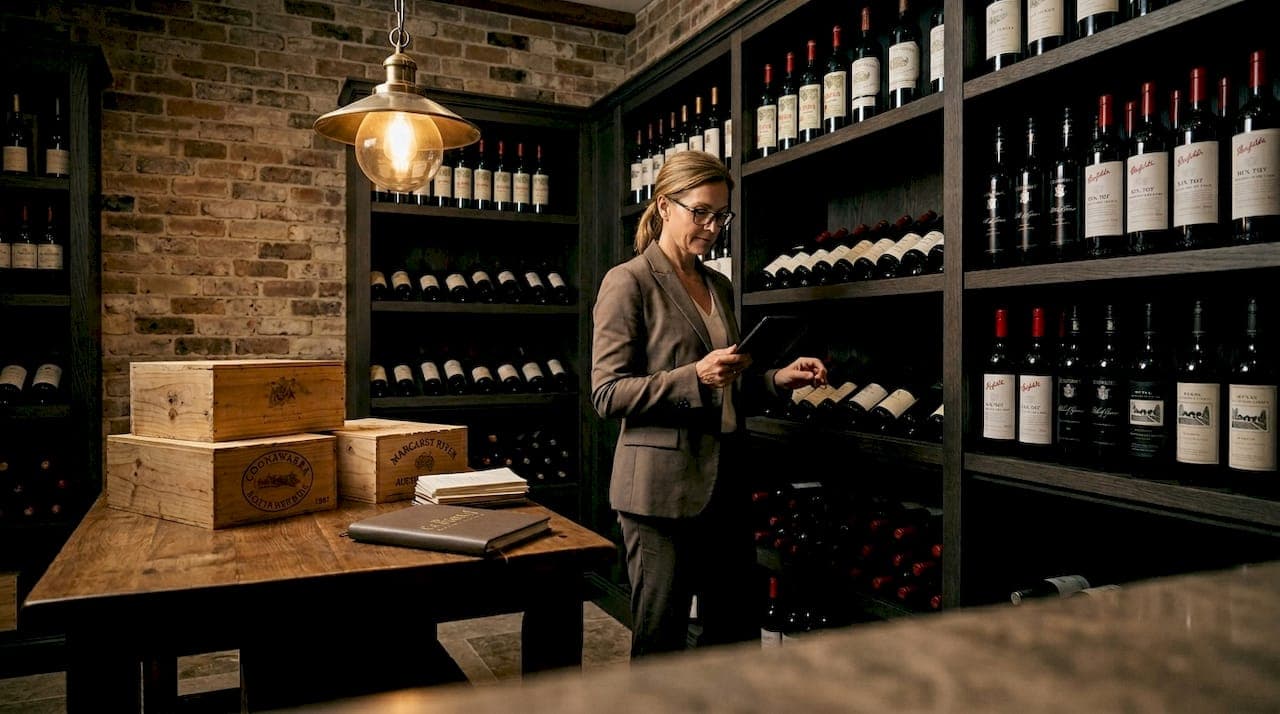
Fine wine collecting rewards patience and knowledge in equal measure, yet the gap between acquiring beautiful bottles and managing them with genuine purpose is wider than most enthusiasts expect. The question of why use wine consultants often arises only after a collection has grown beyond what spreadsheets and good intentions can contain. A well-considered collection is not merely an accumulation of exceptional vintages. It is a living portfolio, shaped by provenance, storage conditions, personal taste, and market awareness. Understanding how wine consultants can help you navigate this complexity is the first step toward collecting with real confidence.
Table of Contents
- Key takeaways
- Why use wine consultants: the full scope of their work
- Operational clarity: systems that prevent costly mistakes
- Collection value, provenance, and the language of worth
- Tasting as education: sharpening the collector's palate
- David's perspective: the advisor you did not know you needed
- How Cellared supports serious collectors
- FAQ
Key takeaways
| Point | Details |
|---|---|
| Consultants define direction | Portfolio evaluation aligns your collection with personal goals and market trends from the outset. |
| Documentation prevents crises | Centralised records support proactive planning, insurance claims, and estate considerations. |
| Tastings educate, not just entertain | Curated tasting experiences build preference knowledge that guides smarter long-term purchasing. |
| Valuations protect your investment | Professional appraisals consider condition, provenance, and market data to produce defensible figures. |
| Objectivity is the rarest ingredient | An experienced consultant offers impartial advice that avoids the emotional bias collectors rarely notice in themselves. |
Why use wine consultants: the full scope of their work
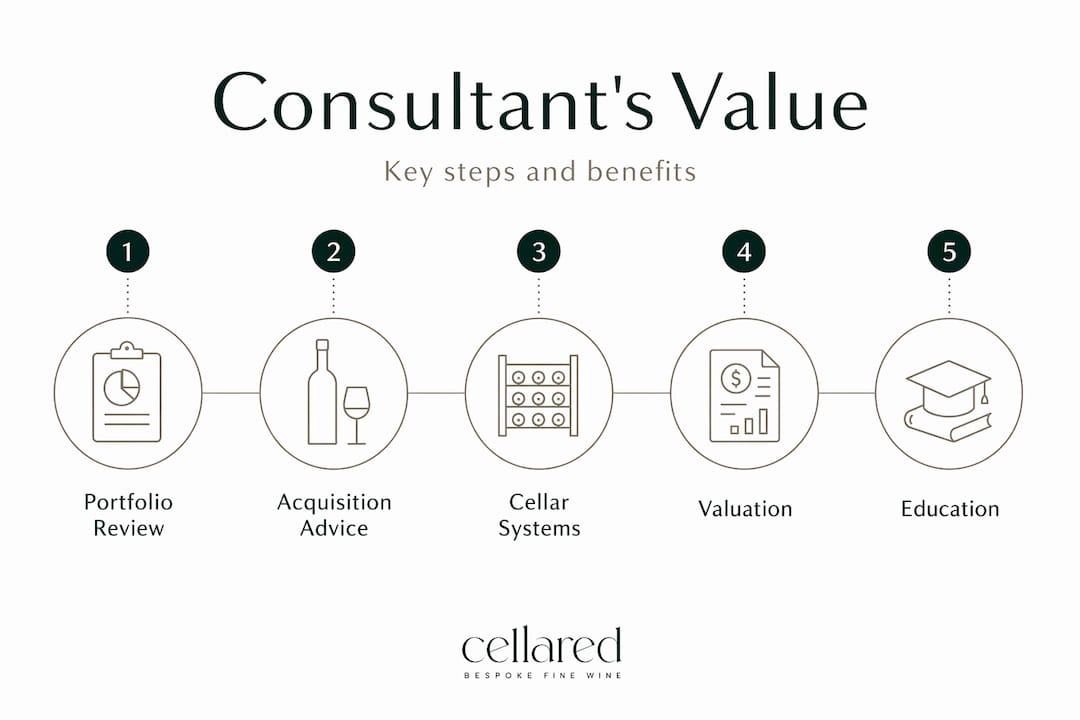
Many collectors assume a wine consultant is simply someone who recommends what to buy. The reality is considerably richer. Consulting services are designed to provide experienced, objective input across portfolio evaluation, product selection, and brand or market alignment, helping clients make better decisions without the costly trial-and-error that often defines early collecting.
The core services a skilled consultant provides fall into four interconnected areas:
- Portfolio evaluation and development. A consultant examines what you already own, identifies gaps, duplications, and misdirections, then maps a forward strategy tied to your goals. Whether you are building for personal enjoyment, investment, or eventual sale, the portfolio must tell a coherent story.
- Cellar management. This extends far beyond knowing where each bottle sits. It encompasses recordkeeping, inventory control, storage condition monitoring, insurance readiness, and the documentation required for estate planning or legal purposes.
- Tasting guidance. Consultants organise and lead structured tastings tailored to your palate and education level. These sessions are not passive enjoyment. They are deliberate exercises in developing the vocabulary and judgement to guide future purchases.
- Strategic purchasing. Rather than reacting to auction catalogues or retailer promotions, a consultant builds a purchasing framework. This means acquiring with intention and long-term value in mind, rather than impulse.
The benefit of this breadth is that every decision reinforces the others. A cellar managed with precision informs valuations. Tasting experience sharpens purchasing criteria. Portfolio clarity makes every new acquisition meaningful rather than incidental.
Pro Tip: Before your first consultation, write down three goals for your collection, whether that is drinking pleasure, investment growth, or legacy. A consultant can only align your portfolio with your intentions if those intentions are clearly stated.
Operational clarity: systems that prevent costly mistakes
One of the least celebrated yet most transformative benefits of wine consultants is what they bring to the operational side of collecting. Many serious collectors own magnificent bottles but hold that knowledge in scattered notebooks, memory, and informal spreadsheets. This is a fragile architecture.
Centralised management systems connect acquisition history, storage locations, valuations, and supporting documentation in a single, accessible record. The result is a collection that functions with clarity rather than anxiety. Consider how this plays out in practice:
- Insurance claims become straightforward. When a storage facility suffers temperature damage, a collector with accurate cellar records can file a claim backed by documented valuations, purchase history, and condition notes. A collector relying on memory cannot.
- Estate and probate planning proceeds without guesswork. Executors and legal professionals require precise inventories and defensible values. A well-documented collection presents no obstacles, whereas an undocumented one creates delays, disputes, and potential undervaluation.
- Purchasing decisions improve over time. When acquisition history is cleanly recorded, consultants can identify patterns, flag underperforming segments of a portfolio, and redirect future spending with evidence rather than instinct.
- Storage becomes proactive rather than reactive. Centralised workflows allow consultants to flag bottles approaching optimal drinking windows, monitor condition changes, and advise on rotation before opportunities are missed.
The reactive scramble that characterises undocumented collections is not simply inconvenient. It is financially and emotionally costly. Bottles drunk past their peak, insurance claims that cannot be substantiated, and estate disputes over undocumented assets are all avoidable outcomes. A consultant with structured systems eliminates each of them.
Pro Tip: Ask any prospective consultant how they record and share collection data with clients. If the answer is a spreadsheet emailed occasionally, look further. The right consultant uses a system that gives you live visibility into your own collection.
Collection value, provenance, and the language of worth
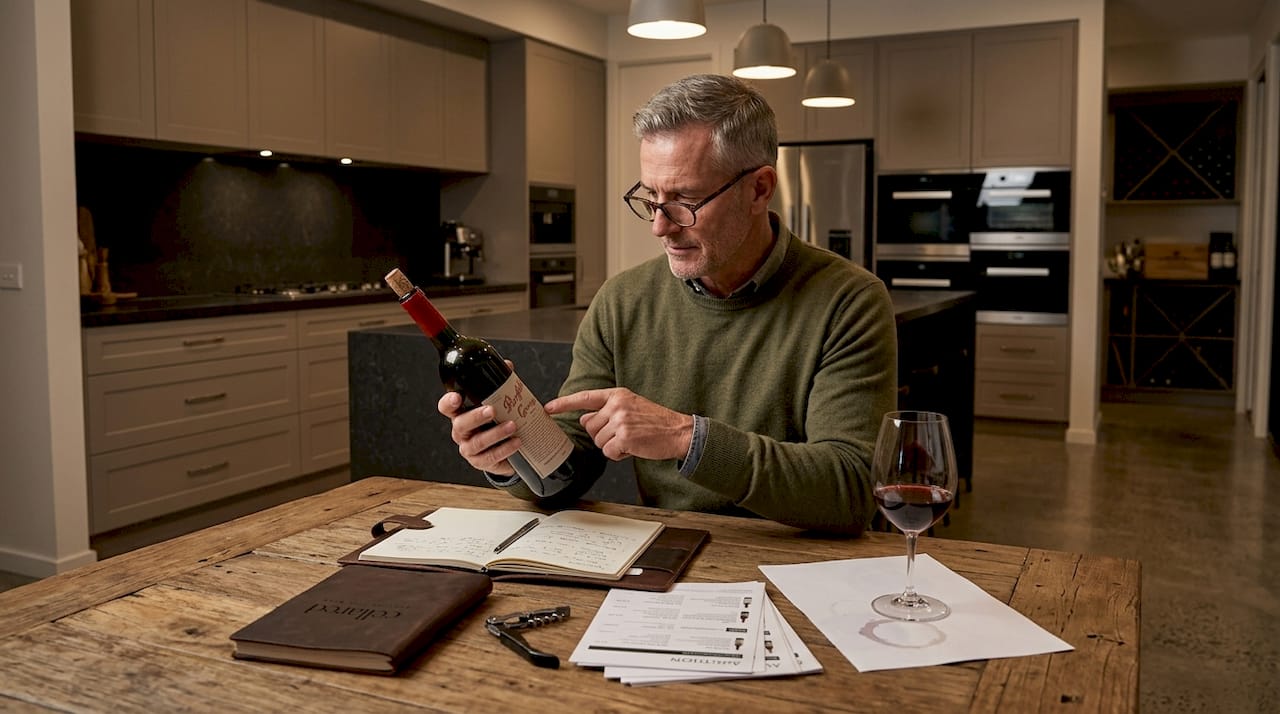
A bottle of Penfolds Grange does not speak for itself. Its value is shaped not only by what is inside the glass, but by the story surrounding it: the vintage conditions, the acquisition history, the storage provenance, and the collector's own narrative. This is where the advantages of using wine experts extend into territory most collectors never fully consider.
Strategic messaging and brand narrative directly influence how collections and individual wines are perceived and remembered. A consultant who understands communications can help you articulate the unique character of your collection in ways that resonate with buyers, insurers, and fellow enthusiasts alike.
The financial dimension is equally precise. Professional valuations draw on comprehensive analysis of financial performance metrics, asset condition, market comparables, and provenance documentation. The contrast between a consultant-supported valuation and an informal estimate is significant:
| Valuation type | Methodology | Suitable for |
|---|---|---|
| Informal estimate | Based on current retail or recent auction results | Casual guidance only |
| Professional appraisal | Market analysis, condition assessment, provenance review | Insurance, probate, sale, family law |
| Court-ready valuation | Documented, defensible, prepared by qualified expert | Legal proceedings, SMSF compliance, estate disputes |
The distinction matters enormously when a collection changes hands, becomes subject to a legal process, or requires insurance coverage proportionate to its true worth. A consultant who can provide or coordinate court-ready valuations is not a luxury. For a serious collector, it is a necessity.
Collectors who integrate documentation as part of their ongoing practice achieve consistent execution of consultant advice and simplify every future valuation engagement. The habits formed early protect the collection's worth for years to come.
Tasting as education: sharpening the collector's palate
There is a particular pleasure in tasting wine with someone who knows how to listen to it. Wine consultants who specialise in guided tastings do something more sophisticated than pouring good bottles and describing what they detect. They profile your preferences, set boundaries on the selection, and create the conditions for genuine discovery.
Taste curation by consultants begins with preference profiling to create a bounded selection, typically no more than six wines, enabling clearer preference discovery rather than generic recommendations based on ratings alone. The experience becomes structured and purposeful.
The educational benefits of consultant-led tastings extend across several dimensions:
- Vocabulary development. Understanding the difference between the floral violet lift of a young Nebbiolo and the tertiary leather and dried rose of a ten-year-old Barolo is not innate. It is learned through guided comparison, and a skilled consultant accelerates that process considerably.
- Purchasing confidence. When you can articulate what you enjoy and why, you are far less susceptible to the persuasive power of wine lists, auction catalogues, and enthusiastic retailers. Your consultant's guidance becomes internalised over time.
- Preference mapping. Repeated tastings reveal patterns that a consultant can translate into a clear purchasing profile. You may discover that your enjoyment consistently favours aged Burgundy over young Bordeaux, a realisation that reshapes future acquisition priorities.
- Food and occasion pairing. Consultants conducting wine consulting for events and private dining scenarios help collectors understand which wines perform best in specific contexts, preserving exceptional bottles for the moments they deserve.
The tasting experience, at its best, is interactive learning shaped around your palate. It transforms wine from a product category into a personal language.
David's perspective: the advisor you did not know you needed
I have worked with collectors at every stage of the journey, from someone who has just purchased their first case of aged Riesling to those managing cellars that represent decades of considered acquisition. What strikes me, consistently, is how long it takes most collectors to recognise what a structured advisory relationship actually provides.
The complexity is rarely visible until it becomes a problem. Bottles drunk too early because there was no drinking window record. Insurance claims that stall because valuations were never formalised. Estates where the family cannot agree on the worth of a collection because no independent documentation exists. These are not rare scenarios. They are the predictable outcomes of managing something sophisticated without a structured approach.
What I have found, time and again, is that the most significant value a consultant brings is not the bottle they source or the tasting they arrange. It is the quiet confidence that comes from knowing your collection is documented, purposeful, and protected. The benefits of independent wine advice extend far beyond pleasant conversations over a decanter. They shape outcomes that matter financially and personally.
Hire an advisor before you think you need one. The best time to build the right systems was when the collection was small. The second best time is now.
— David
How Cellared supports serious collectors
Cellared Fine Wine exists precisely for collectors who want expertise woven into every aspect of their wine life, not just the buying decisions.
Cellared's bespoke consulting services cover the full spectrum of collection management: strategic purchasing of rare and exceptional bottles, professional and court-ready valuations for insurance, probate, and family law, and meticulous cellar management that keeps your collection organised, documented, and protected. Every client engagement is shaped around individual goals, whether you are building a collection for the cellar, managing an estate, or seeking an independent valuation for legal or financial purposes. The team at Cellared brings deep market knowledge and a highly personal approach to each engagement, ensuring your collection reflects both your taste and your intentions. If you are ready to manage your collection with the clarity and confidence it deserves, Cellared is the partner to make that possible.
FAQ
What do wine consultants actually do?
Wine consultants provide portfolio evaluation, strategic purchasing advice, cellar management, guided tastings, and professional valuations. Their role spans both the practical and financial dimensions of wine collecting, offering objective expert input that helps collectors make better decisions from the outset.
How can a wine consultant help with insurance or estate planning?
A consultant maintains centralised records of acquisition history, storage conditions, and professional valuations, which means insurance claims and estate documentation are straightforward and defensible. Accurate cellar records enable proactive planning rather than reactive scrambling when circumstances require formal documentation.
When should I hire a wine advisor?
The ideal time to engage a wine advisor is before your collection grows complex enough to become difficult to manage. However, consultants add immediate value at any stage, particularly when a collection requires formal valuation, strategic direction, or improved documentation systems.
Are wine consultants only for very large collections?
No. A consultant brings value to collectors at every level, from those building a focused selection of fifty bottles to those managing multi-thousand bottle cellars. The structured approach to collection organisation and purposeful purchasing benefits collectors regardless of scale.
What is the difference between a wine consultant and a sommelier?
A sommelier specialises in service, pairing, and cellar management within a hospitality context. A wine consultant typically operates in an advisory capacity across purchasing, valuation, portfolio strategy, and documentation, often working with private collectors, estates, and investors rather than restaurant operations.