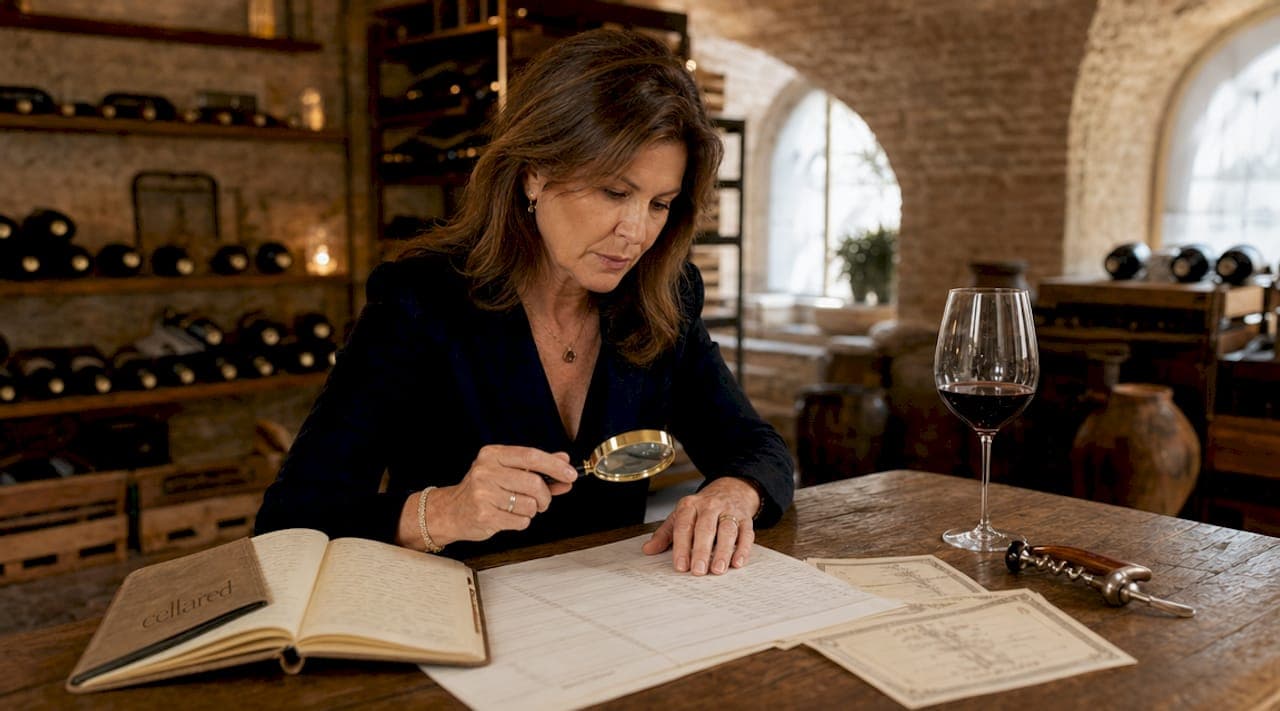
Estate planning with wine is the deliberate process of valuing, preserving, and integrating a fine wine collection into your broader estate plan so that both financial worth and sentimental legacy are protected. A cellar of aged Burgundy, first-growth Bordeaux, or rare Australian Shiraz is not simply a lifestyle asset. It is a capital asset with measurable market value, specific tax obligations, and logistical requirements that most standard estate plans overlook entirely. Collectors who treat their wine as an afterthought risk leaving heirs with undervalued bottles, unexpected tax bills, and collections sold at a fraction of their true worth.
How to accurately value your wine collection for estate planning
Professional valuation is the foundation of any sound estate plan that includes wine assets. Retail price guides, cellar management apps, and casual estimates are insufficient for probate, tax reporting, or fair distribution between heirs. What courts, the Australian Taxation Office, and beneficiaries require is a documented fair market value prepared by a recognised specialist.
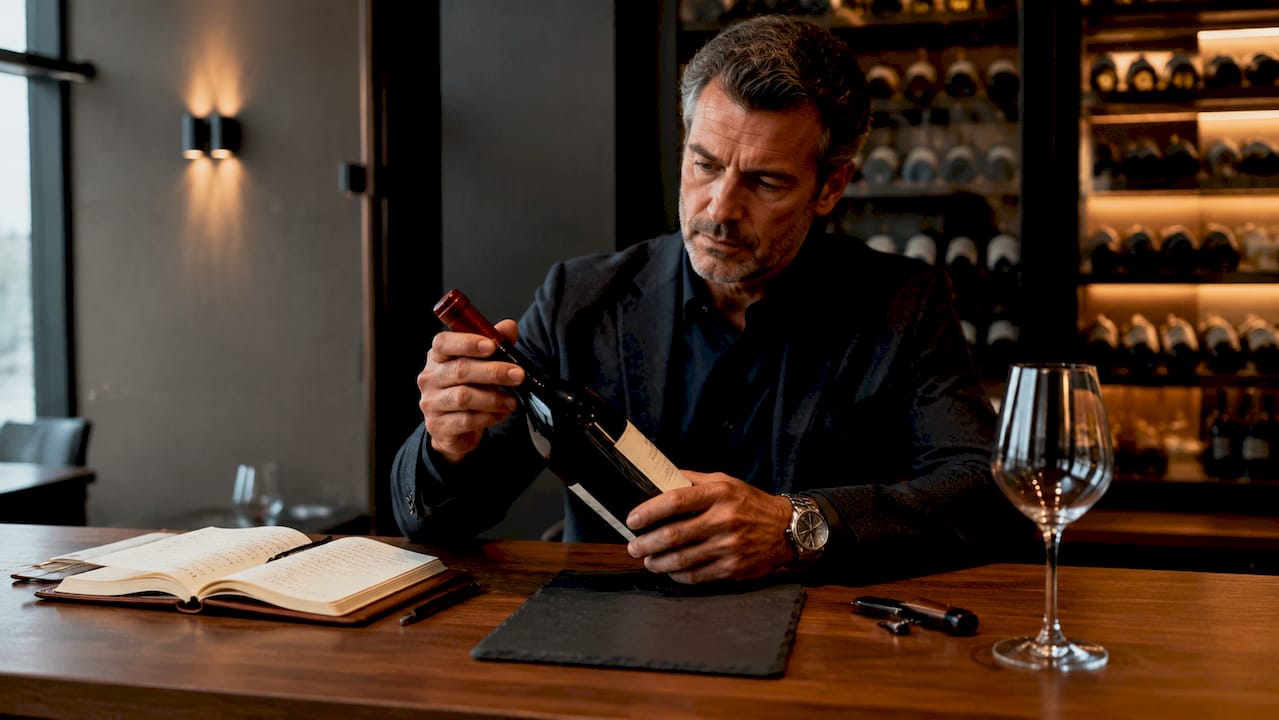
Specialist appraisal firms such as Sotheby's and Christie's, alongside independent wine valuers, establish fair market value by assessing provenance, storage history, condition, and current secondary market pricing. This level of scrutiny matters because a single case of 2010 Penfolds Grange or 1996 Giacomo Conterno Barolo Monfortino can represent tens of thousands of dollars in estate value. An informal estimate that misses this by even twenty percent can distort the entire estate.
Valuations should be updated every two to three years, or immediately following a significant market movement or acquisition. The fine wine market is not static. Prices for Domaine de la Romanée-Conti, Leroy, and Screaming Eagle shift materially with vintage releases, critic scores, and auction results. A valuation prepared five years ago may bear little resemblance to current market reality.
Key documentation to maintain alongside your valuation includes:
- A complete cellar inventory with producer, vintage, format, and quantity
- Purchase receipts and provenance records for each significant acquisition
- Storage facility agreements confirming temperature and humidity controls
- Photographs of labels, capsules, and fill levels for high-value bottles
- Previous appraisal reports with appraiser credentials attached
Pro Tip: When selecting a valuation professional, confirm they hold recognised credentials, carry professional indemnity insurance, and can produce court-ready reports. Cellared Fine Wine's probate wine valuations are prepared to precisely this standard.
What are the tax implications of wine in your estate?
Tax treatment of wine collections is more nuanced than most collectors anticipate, and the consequences of misclassification are significant. Wine held as a capital asset is subject to capital gains tax on disposal, and at death, the step-up in basis provision can eliminate accumulated gains entirely. However, step-up in basis requires a properly documented appraisal and correct classification. Without this, heirs may face capital gains tax on the full appreciated value of bottles acquired decades ago.
In the United States, the federal estate tax applies at 40% on estates exceeding $13.61 million. This threshold means that a substantial wine collection, combined with property and other assets, can push an estate into taxable territory without the collector ever anticipating it. Australian collectors face different thresholds, but the principle of accurate valuation to establish the taxable estate remains equally critical.
| Tax consideration | Key detail |
|---|---|
| Capital gains tax | Applies on disposal; step-up in basis at death can eliminate gains if collection is properly appraised |
| Estate or inheritance tax | Varies by jurisdiction; US federal rate is 40% above $13.61M threshold |
| Annual gift transfers | The annual gift exclusion of $19,000 per person allows gradual transfer of wine ownership without triggering gift tax |
| Family limited partnerships | Valuation discounts for lack of marketability and minority interest can reduce gift and estate tax exposure materially |
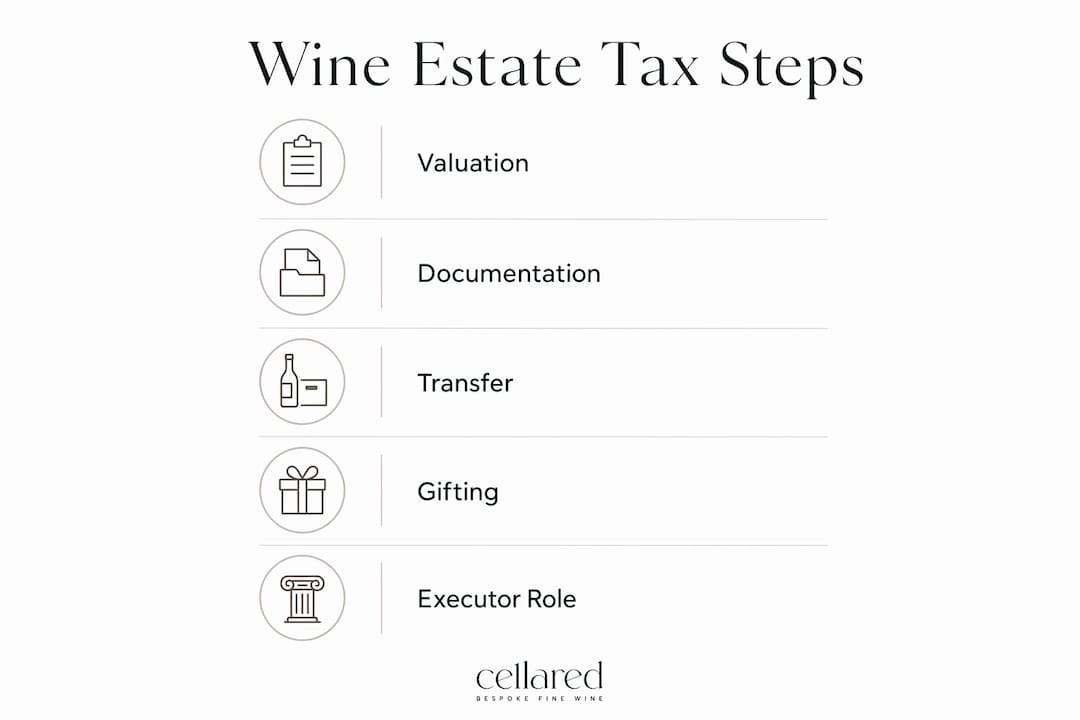
Gifting wine gradually over time is one of the most practical strategies available to collectors. Transferring a case or two of high-value bottles annually to intended heirs keeps the value below gift tax thresholds and reduces the taxable estate incrementally. Family limited partnerships offer a more structured approach, allowing valuation discounts based on minority interest and lack of marketability, which can reduce the assessed value of the collection for tax purposes.
Pro Tip: Timing matters considerably. Gifting bottles during a period of lower secondary market prices reduces the assessed gift value. Consult a tax adviser familiar with tangible personal property before executing any transfer strategy.
Why does executor selection matter for wine collections?
The choice of executor is one of the most consequential decisions in any estate plan that includes wine, yet it is routinely made without regard for the specific demands of managing a cellar. Executors lacking wine expertise frequently cause both financial and sentimental damage through rushed liquidation, poor storage decisions, and failure to engage appropriate specialists.
An executor managing a wine collection must be equipped to perform, or authorise others to perform, a specific set of tasks that go well beyond standard estate administration:
- Maintaining climate-controlled storage without interruption from the date of death
- Engaging a specialist valuer to establish fair market value for probate
- Identifying and contacting preferred auction houses such as Langton's, Hart Davis Hart, or Sotheby's Wine
- Setting appropriate auction reserves based on current market data rather than sentimental or historical cost
- Distributing specific bottles or cases to named beneficiaries in accordance with the will
- Documenting the chain of custody for high-value bottles throughout the process
Your will or a separate letter of wishes should explicitly grant the executor authority to hire wine specialists, access storage facilities, and make informed decisions about timing. Auction timing, reserve settings, and clear executor authority are critical to maximising returns from an estate wine sale. Without this authority documented clearly, an executor may default to the path of least resistance, which is almost always a bulk sale at well below market value.
How to preserve and distribute a wine collection after death
Continuity of storage is the single most urgent practical concern when a collector dies. Storage lapses post-death risk substantial value loss within months, as temperature fluctuations, vibration, and light exposure can irreversibly damage bottles that have been cellared for decades. The estate plan must address storage continuity as a priority, not an afterthought.
A structured approach to distribution protects both the collection's integrity and family relationships. Consider the following sequence when planning for wine asset distribution:
- Confirm storage continuity by nominating a responsible party or professional cellar management service to maintain conditions from the date of death until distribution is complete.
- Commission a full appraisal of the collection at fair market value to establish a baseline for equitable distribution.
- Identify heirs with genuine interest and capability to store and care for wine. Gifting a case of aged Barolo to a beneficiary without temperature-controlled storage is not a gift. It is a loss.
- Determine the split between in-kind gifts and liquidation. Some heirs may prefer cash equivalent to their share, which requires a sale through auction or a specialist dealer.
- Document specific bequests clearly in the will, naming bottles, producers, and vintages where possible to avoid disputes.
- Establish a timeline for distribution that allows the executor to act without pressure, particularly if market timing is relevant to maximising auction proceeds.
The legal aspects of wine collections are often underestimated by collectors who focus on acquisition and enjoyment rather than succession. Clear legal frameworks, prepared in advance, are what separate a collection that passes gracefully to the next generation from one that is sold under duress.
How does wine fit into broader estate and succession planning?
Wine collections do not exist in isolation. For collectors with significant assets, integrating the cellar into the broader estate plan requires coordination across legal, tax, and financial disciplines. Winery estate planning must synchronise business succession with personal asset plans to preserve both brand and operations, a complexity that extends to private collectors whose cellar represents a meaningful share of total wealth.
Multi-disciplinary planning teams comprising an estate attorney, tax adviser, and financial planner are the standard for estates of meaningful complexity. Each professional brings a distinct lens. The estate attorney drafts the instruments. The tax adviser models the implications of different transfer strategies. The financial planner ensures liquidity is available so that wine assets are not forced into sale to cover estate costs.
Trusts and entity structures such as family limited partnerships or limited liability companies can hold wine collections in a way that provides both tax efficiency and governance clarity. These structures allow the collector to define who manages the collection, under what conditions bottles may be sold, and how proceeds are distributed, all without the collection passing through probate. Digital asset management, including a secure and regularly updated cellar inventory accessible to the executor and legal team, is the practical backbone of any well-structured wine estate plan.
For collectors building or refining their approach, a wine valuation checklist is a practical starting point for understanding what documentation an estate plan requires.
Key takeaways
Effective estate planning with wine requires professional valuation, tax-aware transfer strategies, and an executor with the authority and knowledge to protect the collection's value.
| Point | Details |
|---|---|
| Professional valuation is non-negotiable | Fair market value established by a recognised specialist is required for probate, tax reporting, and equitable distribution. |
| Tax planning reduces estate exposure | Step-up in basis, annual gifting, and family limited partnerships each offer material tax advantages when properly documented. |
| Executor selection is critical | Appoint an executor with wine knowledge or explicit authority to engage specialists, or risk rushed liquidation at below-market value. |
| Storage continuity protects value | Climate-controlled storage must be maintained without interruption from the date of death to preserve the collection's integrity. |
| Integration with broader planning | Wine assets should be coordinated with legal, tax, and financial advisers as part of a unified estate strategy. |
What I have learned from working with wine estates
Working closely with collectors and estates over many years, the pattern I observe most often is not negligence. It is assumption. Collectors assume their executor will know what to do, that their heirs will want the wine, and that the collection's value is roughly what they paid for it. All three assumptions are frequently wrong.
The most damaging scenario I encounter is a cellar of genuine quality, perhaps a lifetime of carefully chosen Burgundy and aged Barolo, handed to an executor who has never attended an auction and does not know the difference between a négociant bottling and a domaine wine. The result is a bulk sale to a local retailer at forty cents in the dollar, completed within weeks of probate because nobody thought to slow the process down.
The second most common failure is documentation. A collector who knows their cellar intimately, who can recite the provenance of every significant bottle, often leaves behind nothing more than a rough spreadsheet. When that collector is gone, so is the context. Provenance is value. Without it, even exceptional bottles become ordinary ones in the eyes of a buyer.
My strong advice is to start the planning process earlier than feels necessary, update your valuation every two to three years, and have a direct conversation with your intended executor about what the role actually requires. If they are not equipped for it, appoint a specialist to assist them. The cost of that expertise is trivial compared to the value it protects.
— David
How Cellared can support your wine estate planning
Cellared Fine Wine provides the specialist expertise that wine estate planning demands, from court-ready probate valuations to ongoing cellar management that protects your collection's condition and value over time.
Whether you are preparing an estate plan for the first time, updating an existing one, or managing a collection on behalf of an estate, Cellared's team offers independent, market-led wine appraisals and valuations prepared to the standard required by solicitors, accountants, and courts. Our cellar management service maintains storage continuity and documentation, so that your collection is protected at every stage. To discuss your specific requirements, visit Cellared Fine Wine and speak with our team directly.
FAQ
What is estate planning with wine?
Estate planning with wine is the process of formally valuing, documenting, and integrating a fine wine collection into your estate plan to ensure accurate tax reporting, equitable distribution, and preservation of the collection's value for heirs.
How often should a wine collection be valued for estate planning?
A wine collection should be professionally valued every two to three years, or immediately following a significant acquisition or market movement, to ensure the estate plan reflects current fair market value.
Can wine be gifted to reduce estate tax?
Yes. The annual gift tax exclusion of $19,000 per person allows collectors to transfer wine ownership gradually over time, reducing the taxable estate without triggering gift tax obligations.
What happens if an executor has no wine knowledge?
Executors without wine expertise frequently resort to rushed liquidation, resulting in significant financial loss. The will should explicitly authorise the executor to engage specialist valuers, auction houses, and cellar managers.
Do wine collections qualify for step-up in basis at death?
Wine collections classified as capital assets and supported by a documented appraisal can qualify for step-up in basis at death, eliminating capital gains tax on accumulated appreciation. Without proper appraisal and classification, heirs may face significant tax liability.