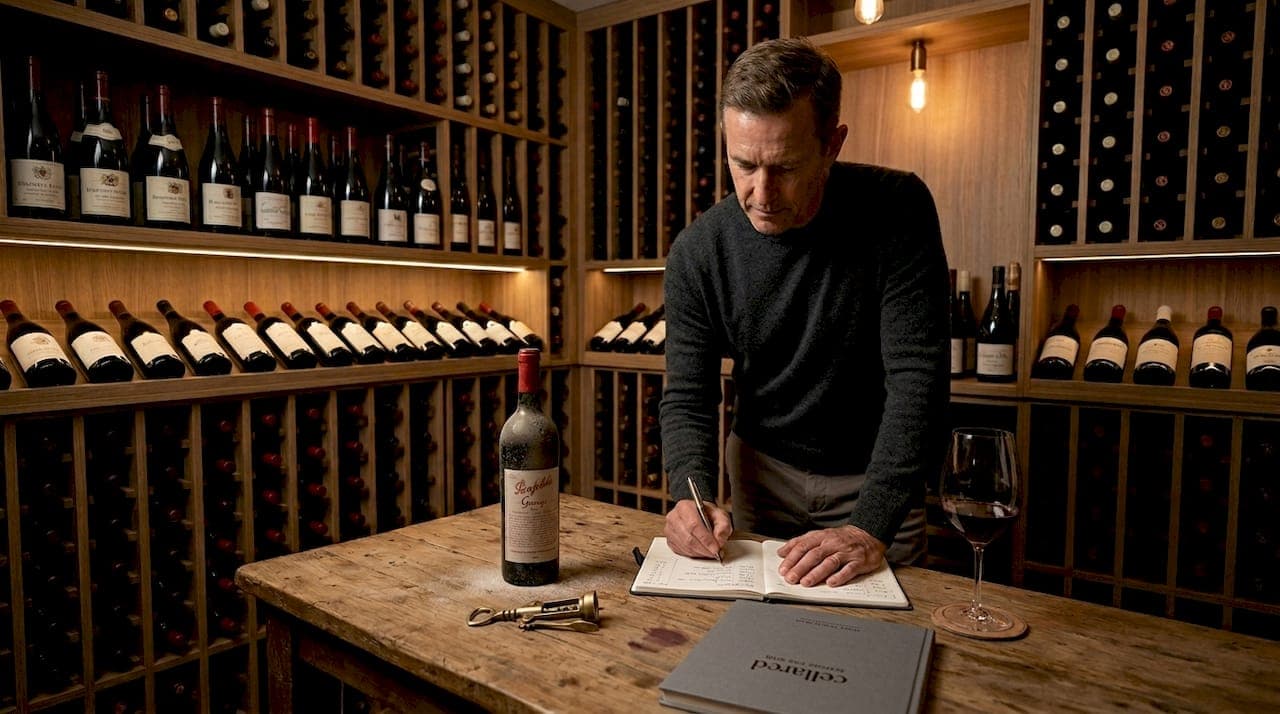
Few assets combine financial weight and sentimental depth quite like a fine wine collection. Yet defining wine collection exit strategies is something most collectors delay until a crisis forces the issue. An estate settlement, a family dispute, or a sudden need for liquidity can transform a lovingly assembled cellar from an asset into a source of conflict and financial loss. The decisions you make, or neglect to make, about how and when to sell, distribute, or retain your collection will determine whether it realises its full potential or quietly haemorrhages value.
Table of Contents
- Key takeaways
- Defining wine collection exit strategies
- Comparing exit strategy approaches
- Maximising value through auctions and private sales
- Managing emotional and family dynamics
- Practical steps to build your exit plan
- My perspective on why collectors wait too long
- How Cellared supports your exit planning
- FAQ
Key takeaways
| Point | Details |
|---|---|
| Start with a professional appraisal | A current, documented valuation is the non-negotiable foundation of any credible exit plan. |
| Value-based division is fairest | Dividing a collection by bottle count ignores wide value variance and creates heir disputes. |
| Rushed auction sales destroy value | Fire-sale conditions can reduce collection realisations by 20 to 40 per cent. |
| Governance prevents family conflict | Pre-agreed protocols and clear communication separate smooth transitions from costly disputes. |
| Timing and presentation matter enormously | Strategic sale timing and strong provenance documentation protect and maximise sale proceeds. |
Defining wine collection exit strategies
The phrase "exit strategy" carries a clinical sound, but for collectors and families, it represents something far more personal: the considered stewardship of something carefully built over years or decades. Professional wine appraisals are the essential starting point, providing fair market value, detailed documentation, and the critical distinction between investment-grade bottles and those intended for consumption. Without this foundation, every decision that follows rests on assumption.
Valuing a wine collection accurately requires more than a cursory glance at recent auction results. Provenance, storage history, label condition, and the rarity of individual bottles all influence a bottle's true market worth. A case of 1996 Penfolds Grange in original timber, stored in a temperature-controlled cellar, is a very different proposition from a single bottle of the same wine with no documented history. These distinctions matter enormously when you are planning to sell or distribute.
Appraisals should also be refreshed regularly. Valuations older than three years carry real risk: markets shift, critical vintages peak or pass, and estate or insurance requirements change. A collection appraised in 2021 may be significantly mispriced by 2026, particularly for Burgundy, Champagne, and Barolo, where secondary market dynamics have moved sharply in recent years.
- Appraisals should identify investment-grade bottles separately from everyday drinking stock
- Detailed bottle documentation, including purchase receipts, storage records, and photographs, supports accuracy
- Valuations must be tailored to purpose: estate planning, insurance, and private sale each require a different standard
- Engaging a recognised wine valuation specialist reduces the risk of under- or over-estimating your position
Pro Tip: Commission a wine valuation checklist review before any appraisal appointment. Collectors who arrive with organised documentation consistently receive more accurate and defensible valuations.
Comparing exit strategy approaches
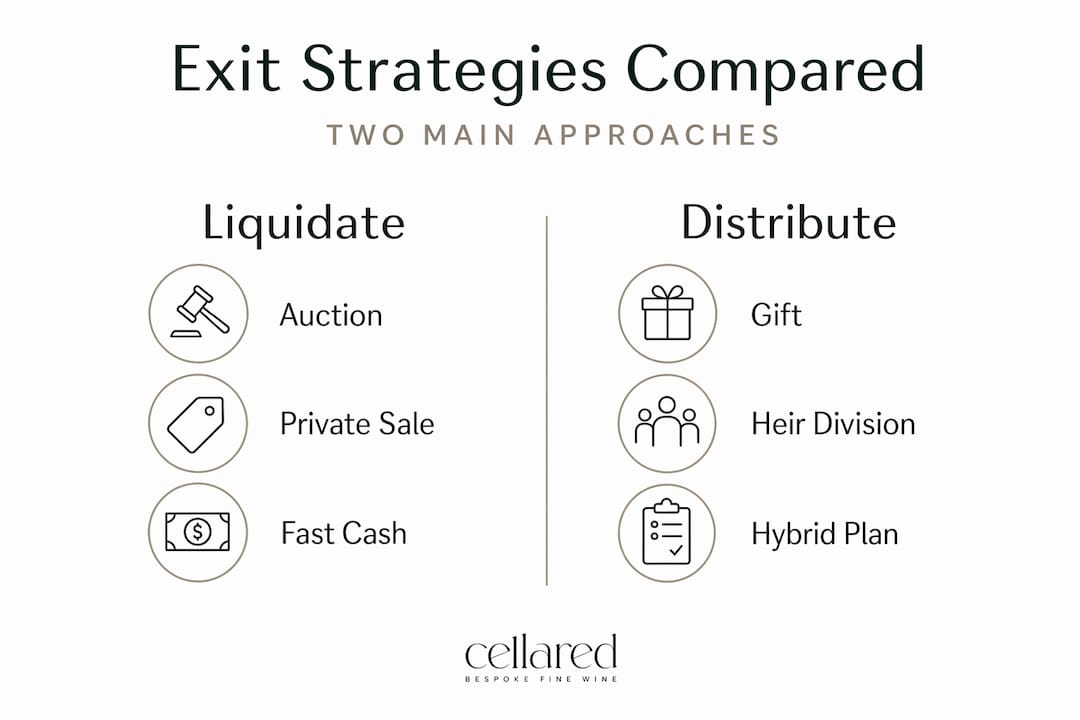
Not every exit looks the same, and choosing the right approach requires an honest assessment of your goals, your timeline, and the composition of the collection itself. The three most common approaches each carry distinct advantages and trade-offs.
| Strategy | Best suited for | Key advantage | Key risk |
|---|---|---|---|
| Full liquidation (auction or private sale) | Collectors seeking clean realisation or facing estate settlement deadlines | Simplest execution, direct cash outcome | Rushed sales sacrifice value; timing is critical |
| In-kind distribution to heirs | Families where beneficiaries genuinely appreciate and want the wines | Preserves sentimental and emotional value | Requires accurate valuations; beneficiaries may not understand wine markets |
| Hybrid approach | Most families with mixed collection compositions and heir circumstances | Flexibility to maximise value and honour personal wishes | More complex to administer; requires detailed planning |
The value-based allocation principle deserves particular attention. Dividing a collection equally by bottle count is almost never appropriate, because the value variance within a single cellar can be extraordinary. A three-bottle allocation including a 2005 Pétrus, a 2012 Barolo Riserva, and a current-release Clare Valley Riesling represents wildly different monetary value despite identical bottle counts. Value-based division, informed by a current appraisal, is the approach that protects family relationships and reflects genuine fairness.
Hybrid strategies, combining selective private sales of the most liquid and valuable bottles with in-kind gifts of sentimental favourites, often produce the most satisfying outcomes for families. They require deliberate planning and honest family communication, but they allow collectors to honour both the financial and personal dimensions of what they have built.
Maximising value through auctions and private sales
Auctions have produced extraordinary results for well-prepared collections. The collection from Hostellerie Jérôme, sold across multiple events with full sell-through rates, raised over US$6.37 million and demonstrated exactly what strategic execution, trusted auction partners, and meticulous provenance presentation can achieve.
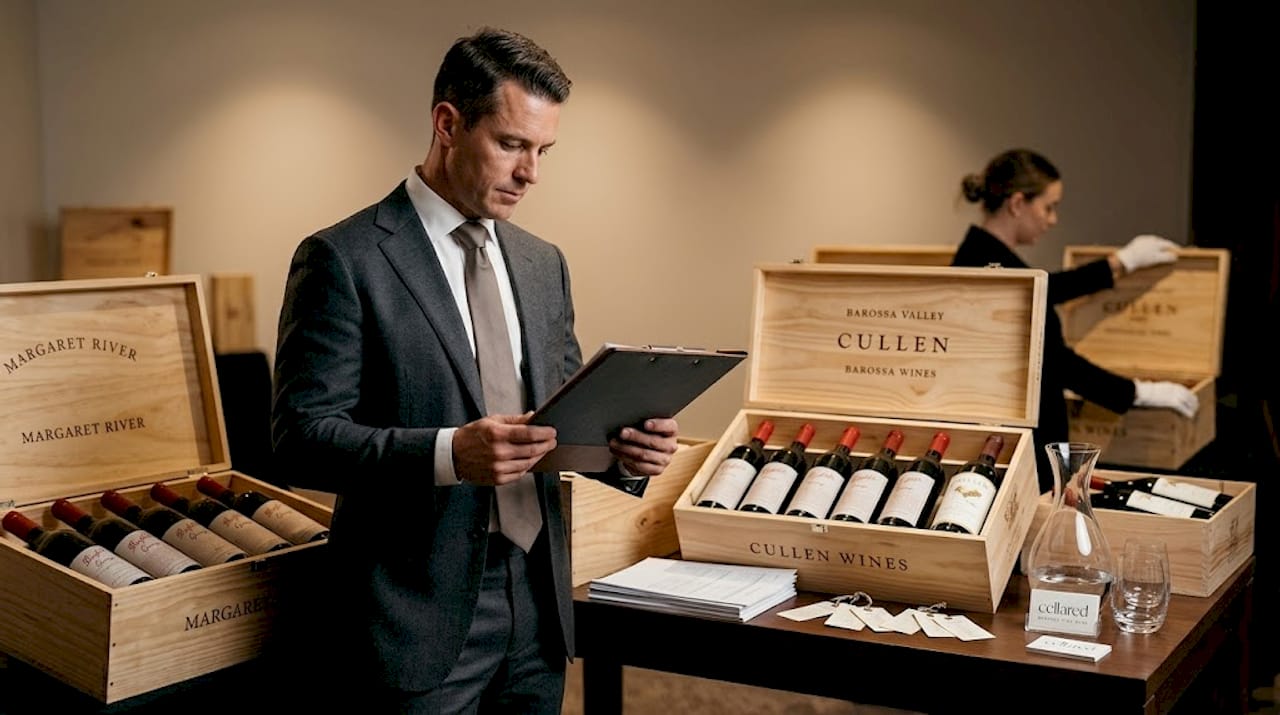
The inverse is equally instructive. Rushed auction liquidations can reduce a collection's realised value by 20 to 40 per cent. When executors or beneficiaries face time pressure, whether from estate administration deadlines or simple impatience, they are at the mercy of the market rather than in command of it.
Several factors separate a well-executed wine sale from a costly one:
- Timing: Certain wines sell better in strong economic conditions or at key calendar moments. Prestige Burgundy and first-growth Bordeaux attract the most competitive bidding in autumn sales when international buyers are most active.
- Reserve settings: Reserves that are too ambitious deter buyers; reserves that are too conservative leave money on the table. An experienced specialist provides the calibration.
- Presentation and provenance: Buyers at the top tier of the market demand documented storage history, original packaging, and clear chain of ownership. Gaps in documentation erode confidence and price.
- Private sale as an alternative: Private sales offer price certainty and typically lower commission structures than public auction. They suit rare, high-value bottles where a specific buyer network can be engaged discreetly.
Pro Tip: If you are planning to sell a wine collection through auction, engage your specialist at least six months before your target sale date. This allows time for cataloguing, photography, condition assessment, and optimal placement within an auction calendar.
Managing emotional and family dynamics
Fine wine collections accumulate meaning alongside monetary value. A bottle opened to celebrate a birth, a case acquired on a honeymoon trip through Burgundy, a vertical of an iconic Grange assembled over thirty years: these are not merely assets. They carry the weight of lived experience. This emotional dimension is one of the greatest sources of both richness and risk in exit planning.
Emotional attachments consistently override rational planning when families face the task of dividing or selling collections. Without governance structures and clear communication established in advance, disputes over sentiment, mismatched expectations about value, and disagreements about whether to sell or retain can fracture relationships and diminish outcomes.
Practical governance tools that experienced families and advisors use include:
- A designated collection committee with clear decision-making authority
- Pre-agreed policies distinguishing which bottles are for sale and which are for distribution
- A named executor or advisor with demonstrable wine market knowledge
- Regular family meetings where collection updates, valuations, and intentions are shared openly
- Written documentation of the collector's wishes regarding specific bottles or vintages
Liquidity mismatches represent another practical hazard. Executors managing estates with significant wine holdings often face cash obligations, such as taxes, probate costs, and beneficiary distributions, against an illiquid asset. Planning the conversion of part of the collection to cash in advance, rather than in response to urgency, is the difference between a measured sale and a fire sale.
Practical steps to build your exit plan
Translating intent into action is where many collectors stall. The good news is that the process is methodical rather than complex, provided you begin before urgency arrives.
- Commission a current, purpose-fit appraisal. Engage a specialist to document fair market value for every bottle, distinguish investment-grade stock from drinking stock, and produce a report suitable for your specific purpose, whether that is estate planning, insurance, or a prospective sale.
- Build and maintain a detailed inventory. A continuously updated wine inventory with photographs, purchase records, and storage logs underpins both valuation accuracy and buyer confidence. Refresh it annually.
- Evaluate sell versus retain decisions. Not every bottle in your cellar belongs in the same exit pathway. Identify which wines are approaching their drinking windows, which carry the strongest investment upside, and which hold personal significance worth preserving.
- Set realistic timing expectations. Quality wine sales take time. From the decision to sell to funds in hand via auction, a realistic timeframe is six to twelve months. Private sales can move faster but require an active buyer network.
- Communicate clearly with heirs and executors. Write down your intentions. Share your appraisal and your wishes with the people who will carry them out. Silence is the single greatest driver of estate disputes involving collections.
- Engage professional cellar management and advisory support. Collectors who leverage specialist cellar management maintain collection condition and documentation standards that consistently support stronger exit outcomes.
Pro Tip: Learning to identify investment-grade wine early in your collecting life shapes smarter acquisition decisions and gives you a more defensible, higher-value collection to exit from when the time comes.
My perspective on why collectors wait too long
I have worked with collectors at every stage of this process, and the pattern I see repeatedly is not ignorance. Most collectors understand, in principle, that exit planning matters. What holds them back is the emotional difficulty of confronting the end of something they love.
There is a particular kind of collector who has spent decades building something extraordinary, who knows every bottle in the cellar by vintage and story, and who simply cannot bring themselves to plan for its dispersal. I understand that attachment deeply. But I have also seen what happens to those collections when urgency arrives without preparation. Bottles of real significance sell at indifferent prices. Families argue over wines that were never properly valued. Executors make hasty decisions because no one left them a map.
The collectors who navigate exits well share one characteristic: they treated their collections as what they actually were, assets with both financial and personal dimensions, and they planned accordingly. They updated their appraisals, named advisors who understood wine markets, and communicated their intentions to the people who mattered. They did not wait for a crisis to force clarity.
My strongest advice is this: the best time to define your exit strategy was when you acquired your first investment-grade bottle. The second best time is now. Start with a professional appraisal, build your inventory, and have one honest conversation with your family or executor. Everything becomes clearer from there.
— David
How Cellared supports your exit planning
When the complexity of exit planning feels significant, having a specialist in your corner changes everything. Cellared Fine Wine offers the meticulous, independent valuations that form the bedrock of any credible strategy, whether you are preparing for estate distribution, considering a private sale, or simply wanting clarity on what your collection is worth today.
Cellared's professional wine appraisal services are court-ready and purpose-fit, covering insurance, probate, family law, and private advisory requirements. The bespoke cellar management offering maintains your collection in optimal condition while ensuring your inventory and documentation remain sale-ready at any moment. For collectors considering a partial or full realisation, Cellared's expert guidance provides access to trusted buyer networks and auction specialists, protecting your position throughout the process. Contact Cellared today to commission a valuation or discuss your exit planning needs.
FAQ
What is a wine collection exit strategy?
A wine collection exit strategy is a structured plan for selling, distributing, or transferring a collection in a way that protects financial value and meets personal or estate goals. It typically includes a current appraisal, a sell versus retain analysis, and clear communication with heirs and executors.
How often should I have my wine collection valued?
Appraisals should be refreshed at least every three years, or sooner following significant market movements or changes in estate or insurance requirements. An outdated valuation carries real financial and legal risk.
Is auction always the best way to sell a wine collection?
Not necessarily. Auctions work well for rare, well-documented collections with time to plan, but private sales can offer better price certainty and lower commissions for high-value bottles. The best option depends on the collection's composition, your timeline, and market conditions.
How should wine collections be divided among heirs?
Value-based division is almost always fairer than splitting by bottle count, given the significant price variance within most collections. A professional appraisal and clear family communication prevent disputes and ensure equitable outcomes.
What is the biggest mistake collectors make when selling wine?
Rushing the process. Forced or hurried liquidations at auction can reduce a collection's value by 20 to 40 per cent. Starting the exit planning process well before any deadline is the single most effective way to protect value.