
Wine grading is the structured process of evaluating and categorising wines according to both quality scores and physical condition, giving collectors and enthusiasts a reliable framework for understanding value. Two distinct systems operate in parallel: the quality rating scale, most famously the 100-point system championed by critics like Robert Parker and publications such as Wine Spectator, and condition grading, which assesses the physical state of the bottle itself. Together, these systems form the backbone of the fine wine market, informing every decision from cellar purchase to auction room bidding. Understanding both is not merely useful. It is the difference between buying with confidence and buying blind.
What is wine grading and how does it work?
Wine grading is defined as the systematic assessment of a wine's quality and physical condition using recognised scoring frameworks and standardised physical criteria. The process draws on two complementary disciplines: sensory evaluation, which produces a numeric score, and condition assessment, which examines the bottle's fill level, label, capsule, and cork. Neither discipline alone tells the full story. A wine scoring 97 points from a celebrated vintage may still be compromised if its fill level has dropped to the low shoulder, signalling oxidation risk and dramatically reduced drinkability.
The purpose of wine grading extends well beyond personal enjoyment. It underpins insurance valuations, probate assessments, auction estimates, and private sale negotiations. For collectors building or liquidating a cellar, a clear grasp of wine grading criteria is as important as understanding the provenance of the bottles themselves. Grading creates a shared language between buyers, sellers, critics, and custodians, one that transcends regional preference and personal palate.
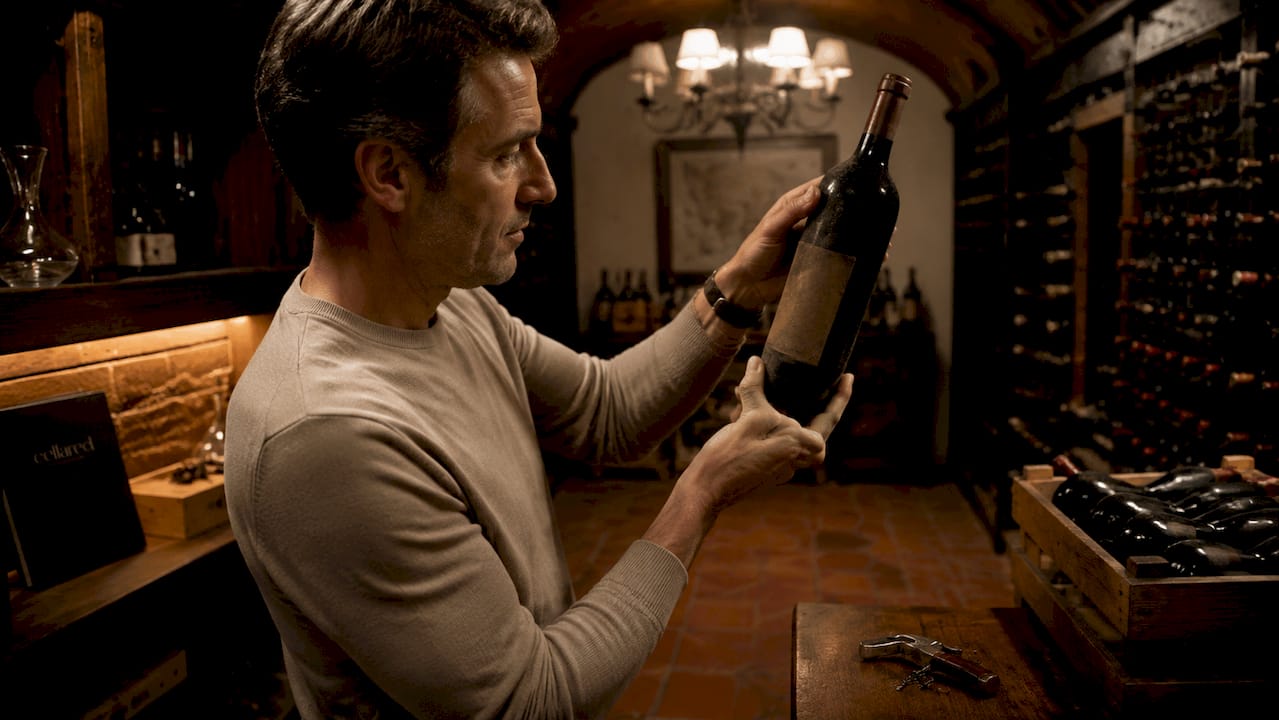
How does the 100-point wine rating system work?
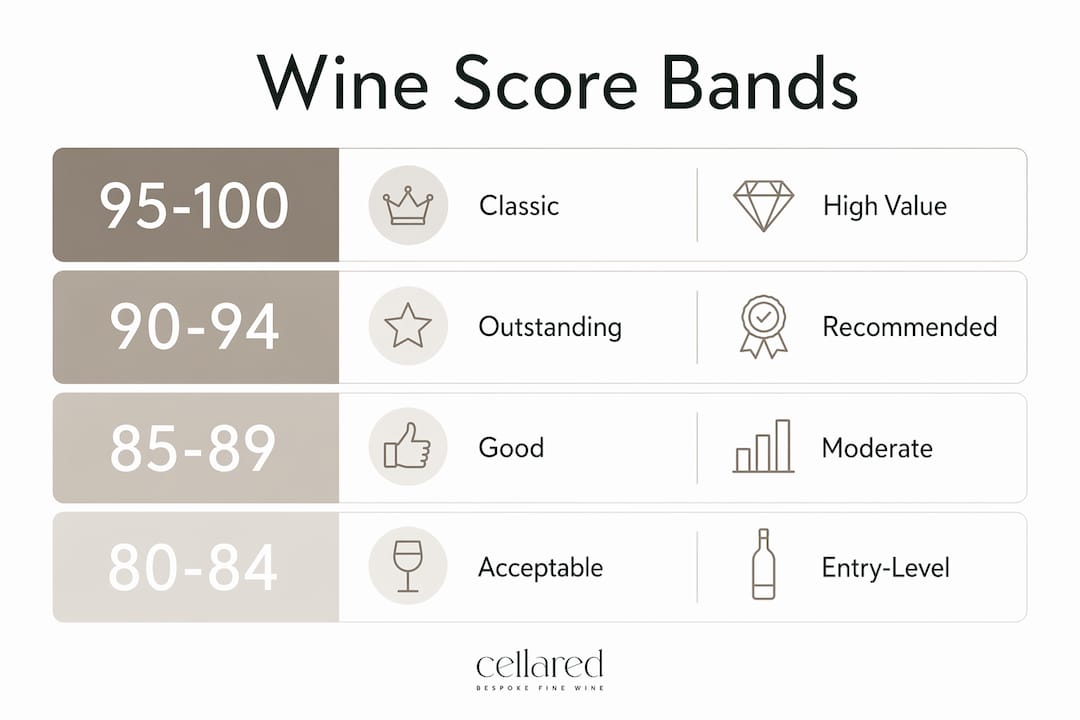
The 100-point scale is the most influential wine rating system in the US and international fine wine market, and it operates practically between 80 and 100 points, functioning as an effective 20-point range for quality assessment. Scores below 80 are rarely published by major critics, making the scale's lower half largely theoretical. This compression means that every point within the 80 to 100 range carries genuine weight.
What the score bands actually mean
| Score range | Quality descriptor | Collector significance |
|---|---|---|
| 95–100 | Classic or exceptional | Benchmark wines; strong investment and cellaring potential |
| 90–94 | Outstanding | Highly recommended; reliable quality for drinking and holding |
| 85–89 | Very good | Solid everyday drinking; limited long-term appreciation |
| 80–84 | Good | Acceptable quality; generally not suited to serious collecting |
The criteria evaluated during a formal tasting assessment include appearance, nose, palate, and finish. Appearance covers colour depth, clarity, and viscosity. The nose examines aromatic complexity, intensity, and the presence of faults. Palate assessment weighs structure, balance, acidity, tannin, and fruit expression. Finish measures the length and quality of flavour after swallowing. Each criterion contributes to the final score, though critics weight them differently according to their own methodology.
Before the 100-point scale gained dominance, systems like the 20-point Davis Scale, developed at the University of California, Davis, were widely used in academic and commercial contexts. The 20-point system remains in use in some Australian and European wine competitions, though its influence on the collector market has diminished considerably. The 100-point scale's granularity gives it a psychological advantage: a score of 94 feels meaningfully different from 91 in a way that a 20-point equivalent simply cannot replicate.
- 95–100: Wines of extraordinary complexity and character; considered classics of their type
- 90–94: Outstanding wines with superior quality and distinct personality
- 85–89: Very good wines with special qualities worth seeking out
- 80–84: Good wines, soundly made and suitable for everyday enjoyment
Pro Tip: When comparing scores across publications, check whether the critic uses the full 100-point scale or a compressed variant. A 90 from one critic may not carry the same weight as a 90 from another if their scoring distributions differ significantly.
What is wine condition grading and why does it matter?
Wine condition grading is the assessment of a bottle's physical state, independent of its quality score, and it directly determines market value and drinkability. The most critical factor is ullage, the fill level within the bottle. Ullage is classified by shoulder height, where "into neck" is considered excellent and "low shoulder" indicates a high risk of oxidation and significantly reduced value. A bottle with low shoulder fill may be undrinkable regardless of its original score or the prestige of its producer.
Common condition grading factors
Beyond ullage, condition grading examines several physical elements that collectively determine a bottle's integrity:
- Label condition: Tears, staining, mould, or fading reduce desirability and auction value, even when the wine itself is sound
- Capsule integrity: Damaged, corroded, or missing capsules raise questions about storage history and potential tampering
- Cork condition: Seepage, weeping, or a pushed cork suggests temperature fluctuation or poor cellaring
- Bottle integrity: Chips, cracks, or unusual sediment patterns can indicate mishandling or provenance concerns
The practical consequences of poor condition grading are severe. Poor storage can reduce a wine's potential score by 2 to 8 points, and in some cases signals that the wine is undrinkable regardless of producer reputation. This is not a marginal adjustment. An 8-point reduction on a wine originally rated 95 places it firmly in the "very good" band, with corresponding implications for price and desirability.
Pro Tip: Always request a condition report alongside any score when purchasing fine wine at auction or through a private sale. Reputable auction houses and specialist dealers like Cellared Fine Wine provide detailed condition notes as standard practice.
| Condition factor | Excellent | Acceptable | Compromised |
|---|---|---|---|
| Ullage | Into neck | Base of neck | Low shoulder or below |
| Label | Clean, intact | Minor staining | Torn, mouldy, or missing |
| Capsule | Intact, no corrosion | Minor wear | Damaged or absent |
| Cork | No seepage | Slight weeping | Pushed or heavily stained |
How do subjective ratings and objective assessments differ?
Wine scoring is inherently subjective, and wine scores should be treated as purchase guidelines rather than absolute measures of quality, because taste is personal and quality itself is multidimensional. Two critics tasting the same wine blind may arrive at scores three or four points apart, not because one is wrong, but because their palates, reference points, and weighting of criteria differ. This is not a flaw in the system. It is an honest reflection of wine's complexity.
Crowdsourced platforms like Vivino offer a different perspective. Vivino ratings correlate with professional critics' scores but generally show smaller correlations among themselves, because amateur raters prioritise immediate pleasure while professionals assess long-term maturation potential. A young Barolo that a critic scores at 96 for its cellaring trajectory may receive a modest 3.7 on Vivino from drinkers who find its tannic backbone austere and unyielding at release. Both assessments are valid. They simply answer different questions.
Technological advances are beginning to address the objectivity gap. Near-Infrared spectroscopy and machine learning are being applied to wine quality assessment, combining human sensory evaluation with automated chemical analysis. These tools can detect faults, measure phenolic compounds, and predict ageing potential with a precision no palate can match. The future of wine quality assessment likely lies in hybrid systems that pair human expertise with machine analysis, preserving the nuance of tasting while reducing individual bias.
How does wine grading impact collectors and the fine wine market?
Wine grading shapes every stage of the collector's journey, from initial purchase through to eventual sale or valuation. Scores guide acquisition decisions, condition assessments protect against overpaying for compromised stock, and aggregating multiple critics' ratings helps mitigate dependence on any single palate. This practice of seeking consensus scores reflects the layered trust system that underpins the fine wine market.
For collectors building a serious cellar, a practical approach to grading involves several deliberate steps:
- Cross-reference scores from at least two or three respected critics before committing to a purchase, particularly for wines above a certain price threshold
- Request condition reports for any bottle with more than ten years of age, paying particular attention to ullage and label integrity
- Track score trajectories over time, since a wine rated 88 on release may attract a retrospective score of 93 as it matures, altering its market position considerably
- Understand provenance alongside grading, because a perfectly scored bottle with uncertain storage history carries more risk than a well-documented bottle with a slightly lower score
- Reassess condition at key intervals, particularly after any change in storage environment, since temperature fluctuation and humidity shifts can degrade condition grading rapidly
Bottle condition operates as a market factor entirely independent of the original quality score. A wine's condition affects market value more than high scores alone when physical integrity is compromised. At auction, two bottles of the same wine from the same vintage can attract prices differing by 30 to 50 per cent based solely on condition grading. Understanding wine market trends in this context helps collectors make better-informed decisions about when to hold and when to sell.
Key takeaways
Wine grading combines numeric quality scores and physical condition assessment, and both dimensions must be understood together to make sound collecting and investment decisions.
| Point | Details |
|---|---|
| Two systems work together | Quality scores and condition grading are equally important; neither alone determines a wine's true value. |
| The 100-point scale is compressed | Scores effectively operate between 80 and 100, making each point within that range meaningful for collectors. |
| Ullage is the critical condition factor | Fill level below base of neck signals oxidation risk and can reduce value regardless of the original score. |
| Scores are guidelines, not gospel | Treat critic ratings as informed purchase guides, then cross-reference multiple sources to build a consensus view. |
| Technology is improving objectivity | Near-Infrared spectroscopy and machine learning are advancing the precision of wine quality assessment beyond what human tasting alone can achieve. |
Scores tell part of the story. The bottle tells the rest.
After years of working with fine wine collections, I have come to regard numeric scores with deep respect and healthy scepticism in equal measure. A score from Robert Parker or Wine Spectator is a remarkable piece of information. It distils hours of careful tasting into a single number that travels across markets, languages, and decades. But I have seen too many collectors pay a premium for a celebrated score only to receive a bottle whose condition tells a very different story.
The most instructive moments in wine grading are not the 100-point perfect scores. They are the bottles rated 88 that drink like something far greater because the provenance is immaculate and the condition is flawless. And they are the 96-point bottles that disappoint because the fill level has dropped and the cork has wept. The score is the wine's potential. The condition is whether that potential was honoured.
My advice to any collector is this: treat scores as the beginning of your research, not the end of it. Develop your own palate alongside your knowledge of grading systems. Learn to read a condition report as fluently as you read a tasting note. And never let a number override what your senses tell you when the glass is in your hand.
— David
How Cellared can support your collection
Cellared Fine Wine works with collectors, investors, and private clients who understand that grading is only as useful as the expertise behind it. Whether you are building a cellar from scratch, seeking a professional wine valuation for insurance or probate purposes, or looking to acquire rare bottles with full condition and provenance documentation, Cellared brings the depth of knowledge and personal attention that the fine wine market demands. The team provides independent, market-led assessments that account for both quality scores and physical condition, giving you a complete picture of what your collection is truly worth. Explore bespoke cellar management and advisory services at Cellared Fine Wine.
FAQ
What does a wine grade of 90 or above mean?
A score of 90 to 94 on the 100-point scale indicates an outstanding wine with superior quality and distinct character. Scores of 95 and above are reserved for wines considered classics of their type, with exceptional complexity and ageing potential.
How is wine condition grading different from quality scoring?
Quality scoring reflects sensory assessment of the wine itself, while condition grading evaluates the physical state of the bottle, including ullage, label, capsule, and cork. A wine can score highly on quality but still be compromised if its condition grading reveals oxidation risk or poor storage history.
What is ullage and why does it matter?
Ullage is the fill level of wine within a bottle, classified by its position relative to the shoulder. A fill level at "into neck" is considered excellent, while "low shoulder" indicates a high risk of oxidation and significantly reduced market value regardless of the wine's original score.
Can crowdsourced ratings replace professional wine scores?
Crowdsourced ratings from platforms like Vivino correlate with professional critics' scores but measure different qualities. Amateurs tend to prioritise immediate drinking pleasure, while professionals assess long-term maturation potential, making both sources useful but not interchangeable for serious collecting decisions.
How do collectors use wine grading to make purchase decisions?
Experienced collectors cross-reference scores from multiple critics to build a consensus rating, then assess bottle condition independently before committing to a purchase. Provenance documentation and storage history are considered alongside grading to form a complete picture of a wine's value and drinkability.