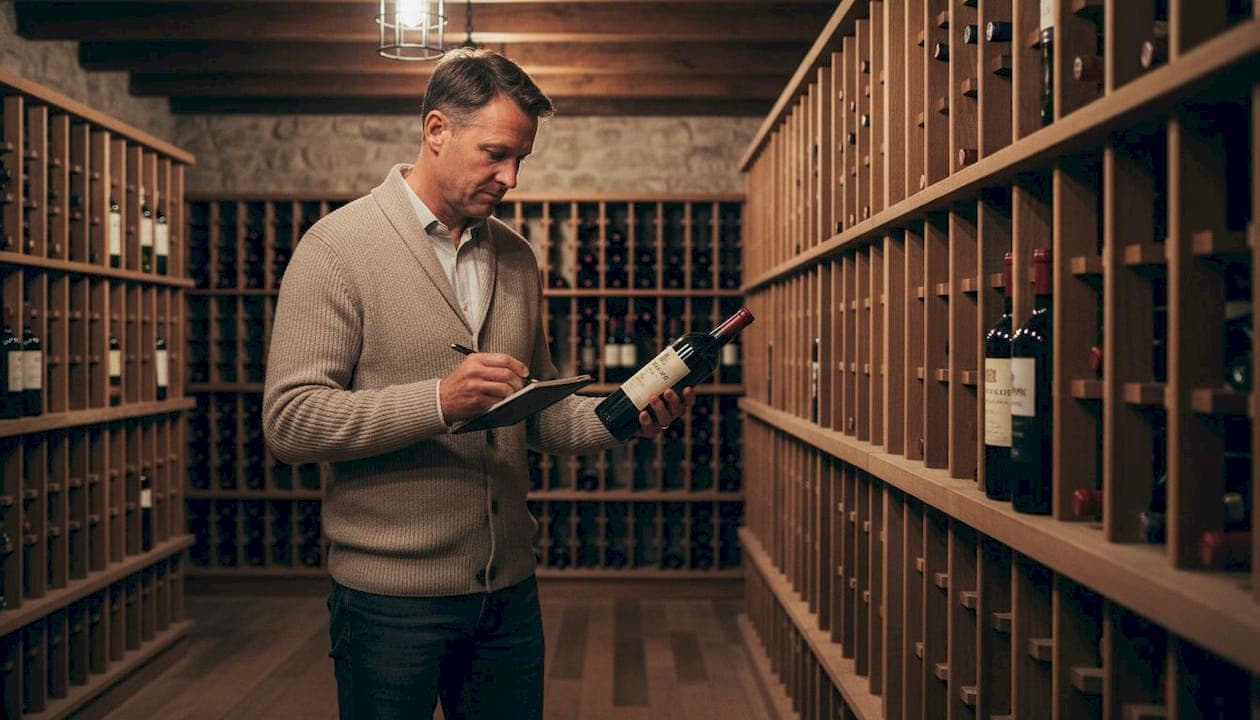
Few things in the cellar inspire as much fascination, and as much misunderstanding, as the concept of wine maturity. The assumption that all wines simply improve with age is one of the most persistent myths in collecting circles. Understanding wine maturity means recognising that aging is not passive waiting. It is a dynamic, chemically complex process with a beginning, a peak, and an inevitable decline. For collectors and enthusiasts alike, grasping this process unlocks sharper buying decisions, greater tasting pleasure, and more confident investment choices.
Table of Contents
- Key takeaways
- What is wine maturity: the science behind it
- How grape variety shapes aging potential
- Recognising maturity through the senses
- Wine maturity, investment value, and cellar management
- Maturity versus aging: knowing when to act
- My perspective on wine maturity
- How Cellared can help you manage wine maturity
- FAQ
Key takeaways
| Point | Details |
|---|---|
| Maturity is a peak, not a plateau | Wine reaches a drinking window of harmony and complexity before eventually declining. |
| Not all wines age well | The majority of commercial wines are designed for early consumption within one to three years. |
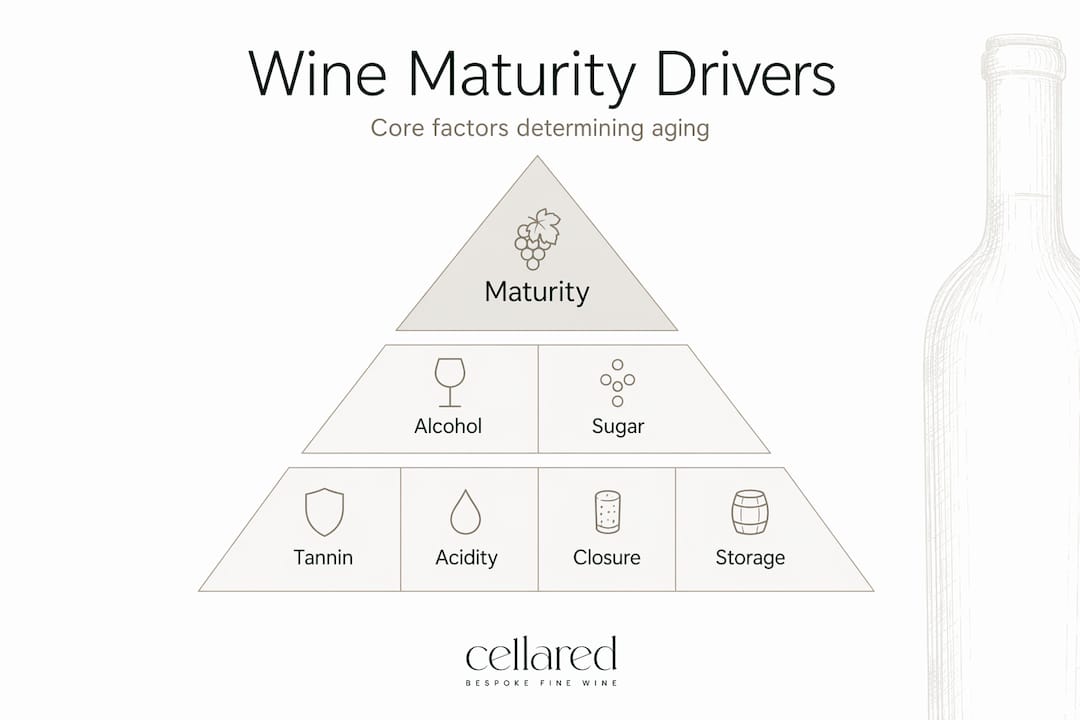
| Structure determines aging potential | Tannin, acidity, alcohol, and residual sugar collectively shape how long a wine can mature. |
| Storage conditions are everything | Temperature, humidity, and light directly influence whether a wine reaches its full maturity potential. |
| Maturity is personal | The ideal drinking window aligns with individual palate preferences as much as objective chemical development. |
What is wine maturity: the science behind it
Wine maturity is best understood as the point at which a wine's complexity, balance, and harmony reach their peak. Tannins soften and evolve, primary fruit aromas give way to layered tertiary notes of leather, tobacco, dried fruit, and earth, and the wine presents a seamless structural coherence that younger bottles rarely achieve. It is not simply the result of time passing. It is the outcome of specific, controlled chemical transformations.
At the heart of the wine maturity process is a carefully regulated form of oxidation. Natural cork closures are not flaws in packaging. They are precision instruments. Oxygen permeates cork slowly, facilitating tannin polymerisation, the process through which harsh, grippy tannin chains bind together into longer molecules that feel silkier on the palate. Without this gentle oxygen ingress, wines risk reductive faults. Too much oxygen, and the wine oxidises prematurely.
Acidity functions as a preservative, regulating the rate of oxidation and maintaining freshness over decades. Wines with a pH between 3.0 and 3.8, particularly varieties like Riesling and Chenin Blanc, carry exceptional aging potential precisely because their acidity acts as a structural scaffold. Strip that away, and the wine collapses long before maturity arrives.
Storage conditions are not secondary considerations. They are fundamental to the wine maturity process. The following factors each exert significant influence on how a wine evolves:
| Storage factor | Ideal condition | Impact if incorrect |
|---|---|---|
| Temperature | 13–15°C (55–59°F) | Accelerated or uneven aging |
| Humidity | 60–75% | Cork desiccation or label damage |
| Light | Minimal, no UV | Premature oxidation and off-flavours |
| Vibration | Absent | Disruption of sediment and chemical processes |
Pro Tip: Even a single summer of poor storage at elevated temperatures can push a fine wine past its maturity peak years ahead of schedule. Consistency matters more than perfection.
"Wine aging is not a linear journey. It is a conversation between chemistry, environment, and time. The cellar you build around your bottles is as much a part of their maturity as the grapes themselves."
How grape variety shapes aging potential
Understanding wine aging requires accepting that different wines are fundamentally built for different purposes. A Beaujolais Nouveau is crafted for immediate pleasure. A Grand Cru Burgundy or a Barolo from a great vintage is engineered, through viticulture and winemaking, to reward patience measured in decades. The difference lies not in preference but in structural composition.
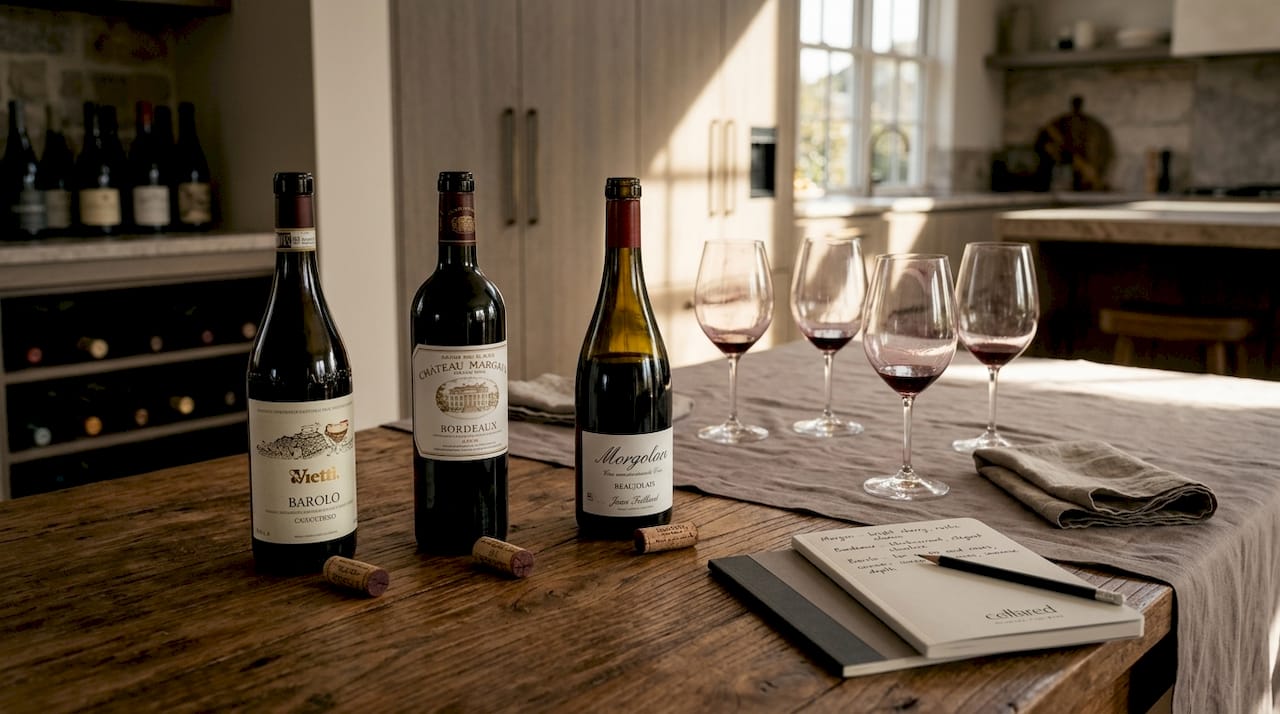
Aging potential varies dramatically by variety. High tannin reds, such as Nebbiolo, Cabernet Sauvignon, and Sangiovese, carry aging windows of ten to twenty-five years in exceptional vintages. Vintage Port, with its fortified structure and residual sugar, can require fifteen to twenty years before its layers fully integrate. Riesling, despite its pale appearance, ages with extraordinary grace thanks to its piercing acidity, developing complex petrol and honey notes over many years.
Contrast this with wines designed for early drinking:
- Gamay (Beaujolais styles): Best within two to three years of vintage.
- Pinot Grigio (northern Italian styles): Ideally consumed within twelve to eighteen months.
- Rosé: With rare exceptions, intended for the current vintage.
- Unoaked Sauvignon Blanc: Vibrant and expressive young, diminishing with extended cellaring.
Alcohol content also shapes the aging trajectory. Wines with elevated alcohol often develop faster, as alcohol acts as a solvent that accelerates aroma extraction and integration. The interplay of tannin, acidity, residual sugar, alcohol, vintage character, closure type, and cellar conditions determines every wine's individual maturity timeline. No single factor acts in isolation.
Vintage charts, such as those published by respected authorities, classify wines as 'Drink Now', 'Hold', or 'Past Peak'. These are not infallible, but they provide an indispensable framework for collectors managing drinking window decisions across multiple wines and regions.
Recognising maturity through the senses
The ability to assess wine maturity in the glass is one of the most rewarding skills a collector can develop. It transforms tasting from passive pleasure into informed dialogue with the wine's history and potential. The signals are clear once you know what to look for.
- Colour evolution. In red wines, the shift from deep purple and ruby towards garnet and tawny at the rim is a strong maturity indicator. In whites, the development from pale straw towards golden amber signals oxidative development and age.
- Aroma transformation. Primary aromas, the fresh fruit and floral notes present in young wines, gradually give way to secondary and then tertiary complexity. Mature reds carry notes of dried fruit, leather, forest floor, tobacco, and savoury spice. Mature whites develop lanolin, beeswax, nougat, and honeyed complexity.
- Tannin texture. Young, structured reds announce their tannins with grip and astringency. In a wine approaching or at maturity, those tannins settle into a fine, powdery texture, present but never intrusive.
- Palate integration. In a mature wine, the components of fruit, acid, tannin, and alcohol feel woven together rather than separate. Nothing jars. The wine presents as a unified whole.
- Finish length. Mature wines tend to display a longer, more complex finish, where flavours evolve and shift across the palate in ways that younger wines rarely achieve.
Smaller bottle formats age faster due to a higher surface-area-to-volume ratio, which allows experienced collectors to open a half bottle or standard bottle of a given wine to gauge how the larger format magnums in their cellar are progressing. This practice offers a practical, low-risk method of tracking maturity across a case.
Pro Tip: When assessing a mature wine, always stand the bottle upright for at least 24 hours beforehand. This allows sediment to settle and makes careful decanting far more precise.
Wine maturity, investment value, and cellar management
For collectors who regard fine wine as both pleasure and asset, understanding how does wine age carries direct financial consequences. A wine acquired at release and stored through its optimal maturity window may command significantly stronger secondary market pricing than the same wine opened prematurely or held past its peak.
Maturity affects investment value in several concrete ways:
- Provenance and condition. A bottle with documented, consistent storage in ideal conditions is inherently more valuable than one with an uncertain history. Buyers and auction houses pay premiums for verifiable provenance.
- Timing auction participation. Using vintage classifications and valuation frameworks for collectors to time sales to coincide with a wine approaching peak maturity can optimise realised prices.
- The risk of the maturity cliff. Poor storage does not merely slow development. It can push a wine off a cliff into irreversible decline, destroying both drinking pleasure and financial value in a single warm summer.
- Multiple formats as monitoring tools. Holding bottles in varying sizes within a case allows collectors to track maturity without sacrificing their prized magnums to early sampling.
| Wine type | Approximate peak window | Key structural drivers |
|---|---|---|
| Barolo (Nebbiolo) | 15–25 years | High tannin, high acidity |
| Cabernet Sauvignon | 10–20 years | Tannin, structured acidity |
| Vintage Port | 20–40 years | Residual sugar, fortified spirit |
| Riesling (Mosel) | 10–30 years | High acidity, low alcohol |
| Pinot Noir (Burgundy) | 8–20 years | Acidity, terroir complexity |
Mature wines with sediment require careful handling at the point of service. Standing the bottle upright for a day before opening, then decanting slowly over a candle or light source, separates the wine from its deposits without sacrificing clarity or character. This is not a minor detail. Mishandling a decades-old wine at the point of service is a costly and irreversible mistake.
Professional cellar management services offer collectors the discipline and infrastructure to maintain optimal conditions throughout a wine's maturity trajectory, protecting both the experience and the investment.
Maturity versus aging: knowing when to act
The distinction between aging and maturity is one that separates experienced collectors from novices. Aging simply describes the passage of time. Maturity describes the achievement of a specific quality state. The two are related but not identical.
Maturity is a window, not a destination. Every wine, from a ten dollar table red to a classified Bordeaux, reaches a point of peak expression. The question is whether you are paying attention.
The majority of commercial wines released each year are not designed to age. They are formulated for the shelf and intended for the table within one to three years of bottling. Cellaring a high-volume supermarket Shiraz for fifteen years does not deepen its complexity. It diminishes what little structure it had.
For the collector, the practical decision framework runs as follows. Wines with defined structural depth, strong vintage character, and proper provenance are candidates for extended cellaring. Wines without these qualities are candidates for the dinner table. Applying this filter consistently prevents the common disappointment of opening a bottle that aged rather than matured.
The interaction of aging factors including tannin, acidity, sugar, alcohol, closure, and storage is what determines outcomes. Maturity is not awarded by patience alone. It is earned by structure and environment in equal measure.
My perspective on wine maturity
In my experience, the single greatest misconception I encounter among collectors is treating maturity as a fixed point rather than a moving window. I have opened the same wine across five consecutive vintages and found each one occupying a different stage of development, which speaks to how powerfully terroir and vintage variation shift the timeline.
What I have learnt from years of tasting wines at various stages is that maturity aligns as much with personal preference as with objective chemistry. Some collectors find their ideal drinking window several years before textbook peak maturity, preferring vibrant structure over full tertiary development. That is not wrong. That is self-awareness.
The lesson I return to most often is this: storage environment is the variable that most collectors underestimate until they experience a premature decline firsthand. A wine stored correctly for twenty years and a wine stored carelessly for five can arrive at similar states of decline. The cellar is not a passive vessel. It is an active participant in maturity.
My advice is to taste broadly across ages and formats, track your own responses honestly, and rely on professional guidance for managing your collection's valuation before the window closes.
— David
How Cellared can help you manage wine maturity
Whether you are building a cellar for long-term investment, managing an inherited collection, or seeking clarity on when to drink, hold, or sell, the complexities of wine maturity benefit enormously from professional guidance.
Cellared Fine Wine offers bespoke buying and valuation services tailored specifically to collectors navigating the maturity question. From independent, market-led appraisals that account for a wine's position within its drinking window, to hands-on cellar management that preserves optimal aging conditions, Cellared brings deep market knowledge to every decision. The team also provides professional wine appraisals and valuations for insurance, probate, and private advisory purposes, with a precision that only comes from genuine specialist expertise. When maturity matters, having the right guidance transforms both enjoyment and returns.
FAQ
What is wine maturity exactly?
Wine maturity refers to the point at which a wine reaches its peak of complexity, balance, and harmony, marked by softened tannins and evolved tertiary aromas. It is distinct from simple aging, as it describes a specific quality state rather than mere time elapsed.
Do all wines improve with age?
No. Most commercial wines are designed for early consumption and do not improve beyond one to three years after release. Only wines with sufficient tannin, acidity, and structural depth genuinely benefit from extended cellaring.
How do I know when a wine is past its peak maturity?
A wine past maturity typically shows flat, oxidised aromas, dull fruit, excessive browning in colour, and a short, hollow finish on the palate. These signals indicate the wine has moved beyond its optimal drinking window and will not recover.
What factors affect wine maturity the most?
The primary factors are tannin concentration, acidity level, residual sugar, alcohol, closure type, and storage conditions. The interaction of these structural factors determines how long a wine can mature and when it reaches its peak.
Can I use bottle size to track wine maturity progress?
Yes. Smaller formats such as half bottles mature faster than standard bottles or magnums due to their higher surface-area-to-volume ratio. Purchasing multiple formats of the same wine allows collectors to open smaller sizes for assessment without disturbing the larger bottles.