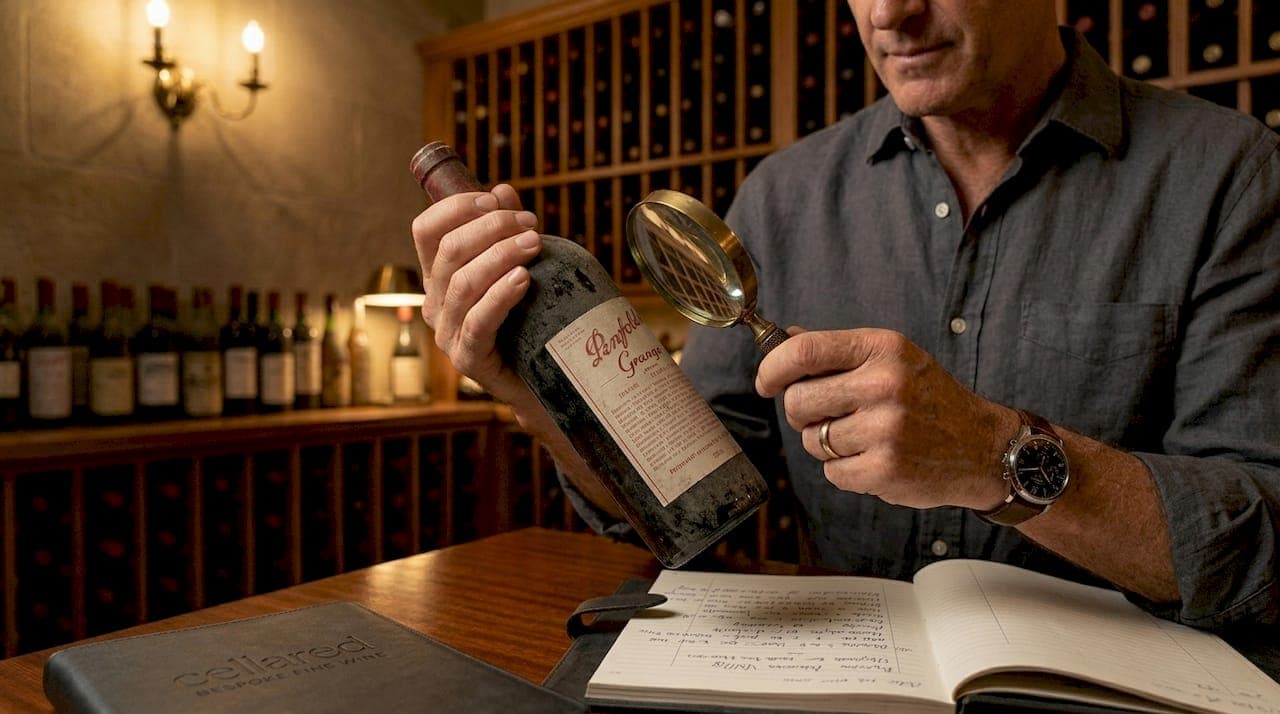
Wine fraud prevention is the practice of using layered verification methods, including provenance checks, physical inspection, and authentication technology, to protect fine wine investments from counterfeiting and misrepresentation. For collectors acquiring bottles of Pétrus, Domaine de la Romanée-Conti, or Château Lafite Rothschild, the stakes are considerable. A single fraudulent bottle can represent tens of thousands of dollars in loss, and the fine wine market's opacity makes it a persistent target for sophisticated criminals. The wine fraud prevention tips in this guide move from foundational sourcing discipline through to cutting-edge authentication science.
1. Verify provenance and seller credibility before buying
The single most powerful defence against counterfeit wine is purchasing through sellers with documented, verifiable provenance. Seller trust and reputation weigh as heavily as any physical bottle inspection, because reputable merchants act as gatekeepers who absorb the authentication burden on your behalf. Established négociants, auction houses such as Sotheby's Wine and Hart Davis Hart, and specialist retailers with long trading histories carry reputational skin in the game that private sellers simply do not.
Before committing to any purchase, request the full chain of custody. Provenance documentation should include original purchase receipts, certificates of authenticity, and a clear record of storage conditions across the wine's entire life. If a seller cannot produce this documentation, the correct response is to walk away, regardless of how attractive the price appears.
Storage history matters as much as ownership history. A bottle of 2005 Pauillac stored in a warm garage for five years is not the same wine as one kept in a professional temperature-controlled facility. Cross-check storage claims against the bottle's physical condition, and confirm that the seller holds any relevant authorisation from the producer or appellation body.
- Request chain-of-custody records covering every ownership transfer
- Confirm original purchase receipts match the bottle's stated vintage and producer
- Verify storage conditions: temperature, humidity, and duration in professional facilities
- Check seller credentials and reviews across multiple independent platforms
- Confirm authorisation or relationship with the producer where possible
Pro Tip: When buying at auction, contact the auction house directly to ask how they authenticated the lot. Reputable houses will describe their process in detail. Vague answers are a red flag worth heeding.
2. Physical inspection: how to spot fake wine bottles
Physical examination is the collector's first line of defence once a bottle is in hand. Label anomalies such as uneven fonts, absent engravings, or UV-reactive materials inconsistent with the stated vintage are practical red flags that counterfeiters frequently fail to eliminate. Genuine labels from prestigious producers are printed on specific paper stocks with precise typography; a magnifying glass reveals discrepancies invisible to the naked eye.
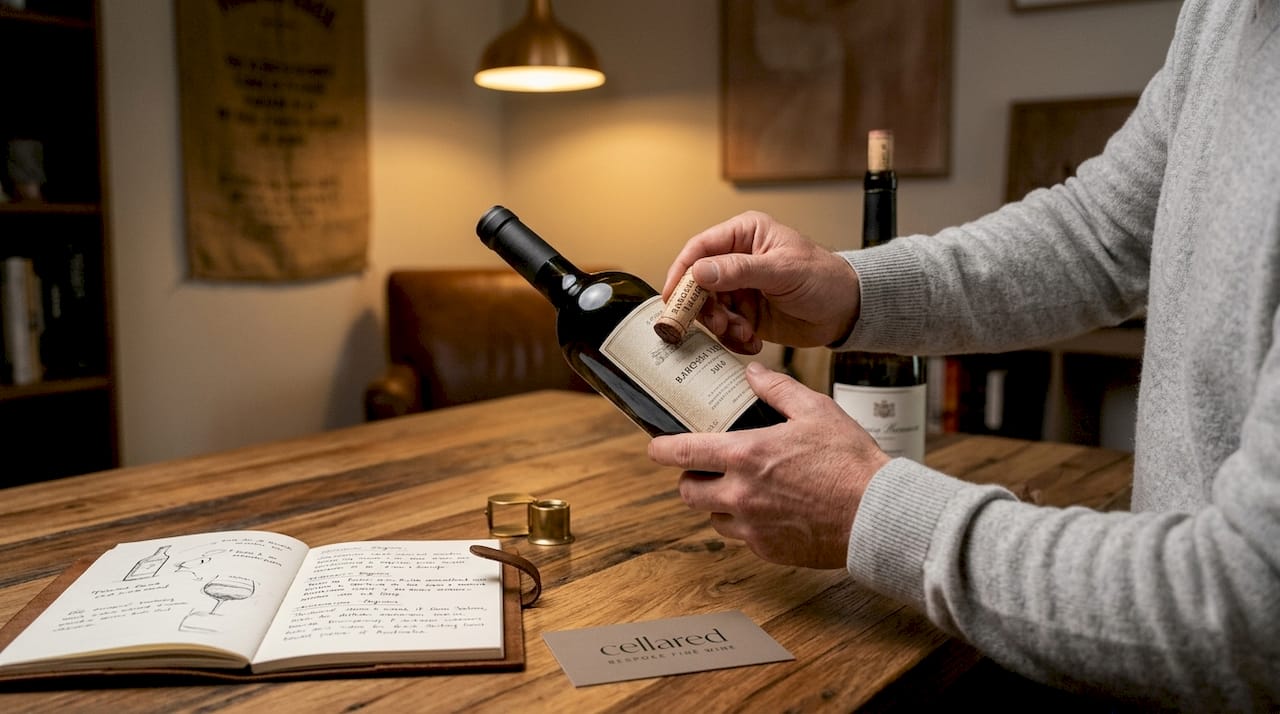
The cork deserves equal scrutiny. Check the cork's vintage against the label vintage and examine the ullage, the space between the wine and the closure. Older wines naturally show some evaporation, so a 1990 Burgundy with a perfectly full fill level warrants scepticism. A mismatch between the cork branding and the label vintage is among the clearest signals of counterfeiting.
Bottle weight and glass quality are equally telling. Premier Grand Cru producers use heavyweight, often engraved or etched glass that is expensive to replicate. Counterfeiters typically source lighter, cheaper glass, and the difference is immediately apparent when you hold the bottle. Examine the punt depth, the embossing on the base, and the precise shape of the shoulder, all of which vary by producer and vintage.
Suspiciously perfect labels on genuinely aged bottles are a paradox that experienced collectors learn to distrust. A 1982 Bordeaux should show some foxing, slight yellowing, or minor wear consistent with four decades of storage. A label in mint condition on a bottle claiming that age is almost certainly a forgery.
- Examine label printing under magnification for font consistency and paper quality
- Compare bottle glass weight and engravings against known authentic examples
- Inspect the cork for producer branding and vintage alignment with the label
- Assess ullage and sediment deposits relative to the wine's stated age
- Treat pristine label condition on old bottles as a warning, not a reassurance
Pro Tip: Build a small reference library of authenticated bottles from key producers. Photographs of genuine labels, corks, and capsules from Christie's or Sotheby's catalogues serve as excellent comparison benchmarks.
3. Advanced authentication technologies worth knowing
Modern authentication science has made certain categories of wine fraud nearly impossible to execute without detection, provided collectors know which technologies to look for and request. The most compelling example is Château Angélus in Saint-Émilion, which uses a DNA-based wax seal incorporating unique grapevine genetic markers. The seal is non-reusable and destroys the DNA signature if tampered with; customers can mail wax samples directly to the château for verification.
| Technology | Method | Fraud prevention benefit |
|---|---|---|
| DNA wax seals | Grapevine genetic markers embedded in closure wax | Tamper-evident; destruction on opening confirms authenticity |
| Blockchain and NFC/QR codes | Immutable digital provenance records linked to physical bottle | Forgery of ownership chain becomes near-impossible |
| Near-infrared spectroscopy | Non-invasive light analysis of wine content | Verifies chemical composition without opening the bottle |
| Smart holograms | Tamper-reactive holographic capsule seals | Visible evidence of resealing or capsule replacement |
Blockchain-based platforms such as Chai Vault track multiple authenticity markers simultaneously, creating a digital record that is practically impossible to falsify. When a bottle carries an NFC chip or QR code linked to a blockchain record, a collector can verify the entire ownership and storage history from a smartphone in seconds. This technology is now appearing on releases from producers in Bordeaux, Burgundy, and Napa Valley.
Near-infrared fluorescence spectroscopy allows laboratories to analyse wine content without removing the cork, comparing the chemical fingerprint of the liquid against known authentic samples. This method is particularly valuable for bottles where physical inspection raises questions but opening would destroy the investment value. Certified Fraud Examiners note that layering physical checks with technology-based traceability makes wine fraud significantly less profitable for criminals, which is itself a deterrent.
4. Maintaining chain-of-custody and documentation post-purchase
Acquiring an authentic bottle is only the beginning. Detailed chain-of-custody documentation enhances market liquidity and prevents intermediaries from discounting or rejecting your inventory when you eventually sell. Every bottle in a serious collection should carry its own paper trail, maintained with the same rigour as a financial asset.
The practical discipline involves retaining original packaging, outer cartons, and any producer certificates alongside the bottle itself. An up-to-date inventory, cross-referenced against purchase receipts and storage records, allows you to verify provenance internally and present it convincingly to future buyers or auction houses. Some auctioneers refuse to assess wines lacking documentation, which means poor record-keeping directly reduces your collection's liquidity.
Secure storage is inseparable from documentation integrity. Secure facilities with recorded access, surveillance, and proper insurance protect both the physical wine and the authenticity record. Temperature and humidity logs from professional storage providers serve as independent corroboration of storage claims, strengthening provenance when you sell. For guidance on building a structured approach, the wine cellar security workflow published by Cellared covers the practical steps in detail.
One often-overlooked risk is the empty bottle. Fraudsters actively seek genuine empties from prestigious producers to refill with inferior wine. Destroy labels and break bottles before disposal, or arrange for secure disposal through your storage provider. This single habit closes a vulnerability that many collectors leave open for years.
- Retain original packaging, receipts, and certificates for every bottle
- Maintain a current inventory cross-referenced with purchase documentation
- Store wines in professional facilities with temperature, humidity, and access logs
- Destroy or deface empty bottles and labels before disposal
- Ensure collection insurance covers both value and authenticity-related loss
5. What to do if you suspect wine fraud
Suspecting fraud requires a structured response, not a private confrontation with the seller. The first step is to document everything: photographs of the bottle, label, cork, capsule, and any anomalies, alongside all purchase records and correspondence. This evidence base supports both official reporting and any subsequent legal or insurance claim.
Reporting channels vary by jurisdiction. In Australia, Wine Australia operates a dedicated fraud officer for suspected wine fraud cases. In the United Kingdom, the Food Standards Agency handles wine fraud complaints. In the United States, the Alcohol and Tobacco Tax and Trade Bureau operates a TTB Fraud Hotline, and the European Anti-Fraud Office covers EU member states. Using official channels rather than private dispute resolution creates a formal record and contributes to broader enforcement efforts.
- Document all physical evidence with photographs before taking any further action
- Preserve all purchase records, receipts, and communications with the seller
- Contact the relevant authority: Wine Australia, the Food Standards Agency, or the TTB Fraud Hotline depending on your jurisdiction
- Engage a professional authentication service or accredited laboratory for chemical or DNA analysis
- Notify your insurer and, where relevant, the auction house or merchant through whom the bottle was acquired
Professional authentication services and accredited laboratories can conduct chemical analysis or DNA testing to confirm or refute fraud suspicions definitively. Wine fraud prevention is a behavioural discipline requiring ongoing diligence, not a one-time task. The collector who treats each acquisition with the same structured scrutiny builds a collection that is both authentic and defensible.
Key takeaways
Effective wine fraud prevention requires layering seller credibility checks, physical inspection, technological authentication, and rigorous documentation into a single, consistent acquisition discipline.
| Point | Details |
|---|---|
| Prioritise seller credibility | Buy from established merchants or auction houses with documented provenance processes. |
| Inspect physical details methodically | Check labels, cork vintage alignment, glass weight, and ullage against the bottle's stated age. |
| Leverage authentication technology | DNA seals, blockchain records, and spectroscopy provide near-impossible-to-fake verification. |
| Maintain post-purchase documentation | Retain receipts, certificates, and storage logs to protect liquidity and authenticity claims. |
| Report fraud through official channels | Contact Wine Australia, the Food Standards Agency, or the TTB Fraud Hotline with documented evidence. |
The layered approach is the only approach
I have handled enough collections over the years to know that the collectors who get burned are almost never naive. They are often experienced buyers who trusted one layer of verification and skipped the others. A pristine certificate of authenticity paired with a bottle whose glass weight feels wrong should trigger every alarm, not just mild curiosity. Certificates can be matched to genuine bottles by careful fraudsters; the physical bottle rarely lies with the same fluency.
What I have come to believe, after working through the authentication of hundreds of bottles, is that seller credibility is the foundation everything else rests on. A bottle sourced from a trusted négociant with thirty years of trading history and a documented storage chain is already ninety percent authenticated before you lift it from the box. The physical and technological checks are the remaining ten percent, and they matter enormously, but they cannot substitute for that foundation.
The technology available in 2026 is genuinely remarkable. DNA-embedded wax seals and blockchain provenance records have raised the cost of fraud to the point where certain categories of wine are becoming practically impossible to counterfeit at scale. But most of the bottles in circulation predate these technologies, and that is where vigilance remains non-negotiable. The wine provenance frameworks that serious collectors use are not bureaucratic exercises. They are the accumulated wisdom of a market that has been defrauded, repeatedly, and learned from it.
My honest recommendation is to treat every acquisition as if you will one day need to prove its authenticity to a sceptical buyer or a court. That mindset changes how you document, how you store, and how you source. It is not paranoia. It is the discipline that separates a collection with genuine investment value from a cellar full of expensive uncertainty.
— David
Protect your collection with Cellared Fine Wine
Cellared Fine Wine works with collectors, investors, and private clients to source, authenticate, and manage fine wine with the rigour that serious collections demand. Whether you need a professional wine valuation for insurance or probate purposes, bespoke buying support to source rare bottles through verified channels, or secure cellar management with full documentation and provenance records, Cellared brings deep market knowledge and a highly personal approach to every engagement. If you hold bottles you want authenticated, or you are building a collection and want to buy with confidence, contact Cellared Fine Wine to discuss how we can help protect what you have built.
FAQ
What is the most reliable way to avoid counterfeit wines?
Purchasing through established merchants or auction houses with documented provenance processes is the most reliable method, as reputable sellers act as gatekeepers who authenticate before sale. Combining this with physical inspection and provenance documentation provides the strongest protection.
How do I check if a wine label is genuine?
Examine the label under magnification for font consistency, paper quality, and printing sharpness, and compare it against authenticated reference images from auction catalogues. Genuine labels from premier producers use specific paper stocks and precise typography that counterfeiters rarely replicate perfectly.
What should I do if I suspect I have purchased a fake wine?
Document all physical evidence with photographs, preserve all purchase records and communications, then report to the relevant authority: Wine Australia in Australia, the Food Standards Agency in the UK, or the TTB Fraud Hotline in the United States. Engage a professional authentication service for chemical or DNA analysis to confirm your suspicions.
Does blockchain technology actually prevent wine fraud?
Blockchain-based platforms create immutable digital provenance records that make falsifying the ownership chain practically impossible for bottles carrying NFC chips or QR codes linked to those records. The limitation is that most bottles in circulation predate this technology, so physical and documentary checks remain necessary.
How important is storage documentation for wine authenticity?
Storage documentation is critical. Some auctioneers refuse to assess wines lacking storage records, and detailed chain-of-custody logs directly enhance a collection's market liquidity and resale value.