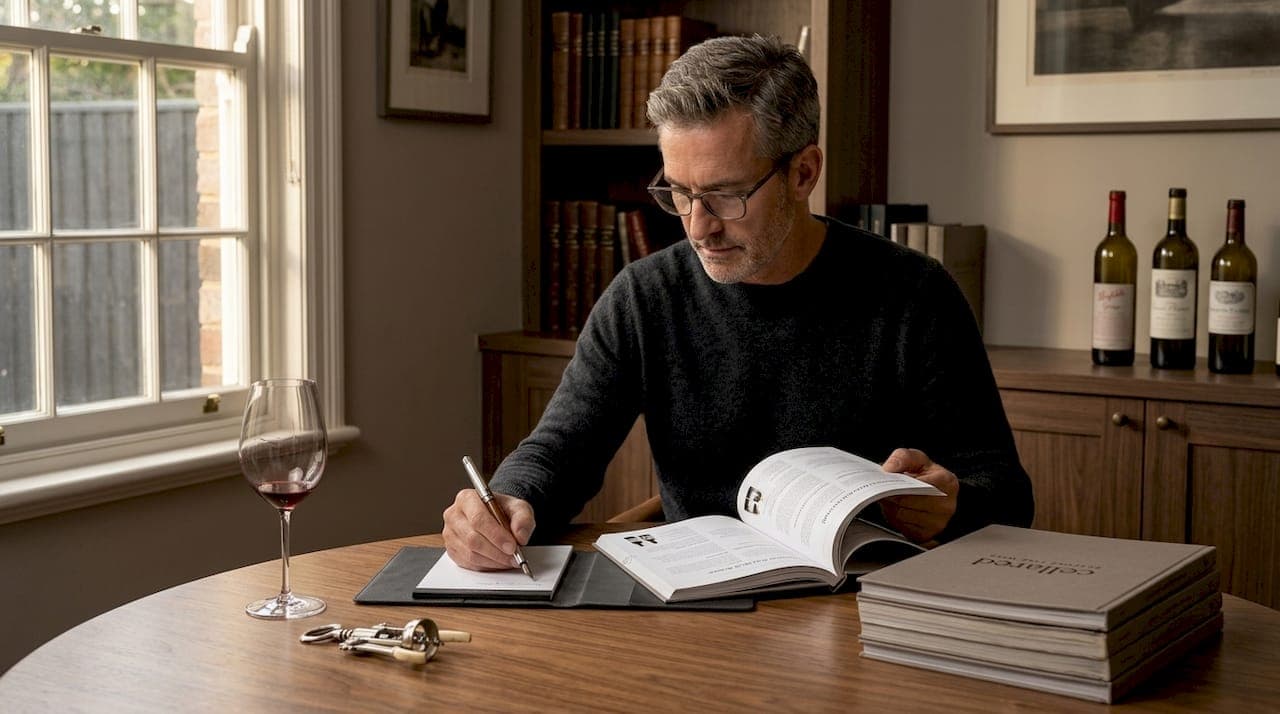
Fine wine auctions offer access to bottles of extraordinary rarity and depth. A first-growth Bordeaux from a celebrated vintage, a meticulous Burgundy from a single hallowed parcel, or a decade-old Barossa Shiraz at the peak of its tannic complexity. These are wines that rarely appear on retail shelves. Yet without the right wine auction buying tips, that same excitement can become a costly lesson. Auction environments carry their own rhythm, their own risks, and their own rules. Understanding them before you bid is not merely prudent. It is the difference between a collection that grows in beauty and value, and a cellar full of regrets.
Table of Contents
- Key takeaways
- 1. Set your goals and budget before you bid
- 2. Study the catalogue with a disciplined eye
- 3. Assess condition, provenance, and authenticity rigorously
- 4. Develop structured bidding strategies
- 5. Choose your auction house with the same care as your wine
- 6. Understand market pricing before you set your ceiling
- 7. Compare key buying tips at a glance
- 8. Plan storage and collection management from the outset
- My perspective on buying wine at auction
- How Cellared Fine Wine supports auction buyers
- FAQ
Key takeaways
| Point | Details |
|---|---|
| Budget beyond the hammer price | Factor in buyer's premiums of 15 to 25%, taxes, shipping, and insurance before you bid. |
| Provenance outweighs appearance | An unbroken chain of custody matters far more than a pristine label when assessing wine quality. |
| Set bidding ceilings and hold to them | Use proxy bids to enforce your maximum and avoid the costly pull of auction fever. |
| Choose auction houses with care | Reputable houses with transparent practices protect you from fraud and poorly documented lots. |
| Store properly from day one | Climate-controlled storage and retained provenance records protect both quality and future resale value. |
1. Set your goals and budget before you bid
The most grounded wine auction advice begins not at the auction house, but at your own desk. Before you ever open a catalogue, you need clarity on why you are buying. Are you building a long-term investment collection, seeking particular bottles for personal enjoyment, filling gaps in a maturing cellar, or purchasing a meaningful gift? Each motivation shapes which lots matter and how much they are worth to you.
Once your intention is settled, construct your full budget with precision. The hammer price is only the beginning. Buyer's premiums typically add 15 to 25% on top of the winning bid, and additional fees including taxes, shipping, and insurance can push your actual outlay substantially higher. A bottle that hammers at $1,000 can cost $1,250 or more before it reaches your cellar.
- Calculate your true maximum price per lot after all fees are applied
- Rank your target lots by priority to guide spending when funds are limited
- Build in a contingency buffer of around 10% for unexpected charges
- Resist the temptation to reallocate funds from lower-priority lots to chase a prized one
Pro Tip: Write your all-in ceiling price on paper beside each lot before the auction opens. Once bidding begins, that number is fixed. Not negotiable.
2. Study the catalogue with a disciplined eye
Navigating wine auction catalogues well is a distinct skill, and one that separates confident buyers from those who rely on instinct alone. Catalogues from reputable auction houses carry detailed lot descriptions covering producer, vintage, region, quantity, format, and condition notes. Read every word.
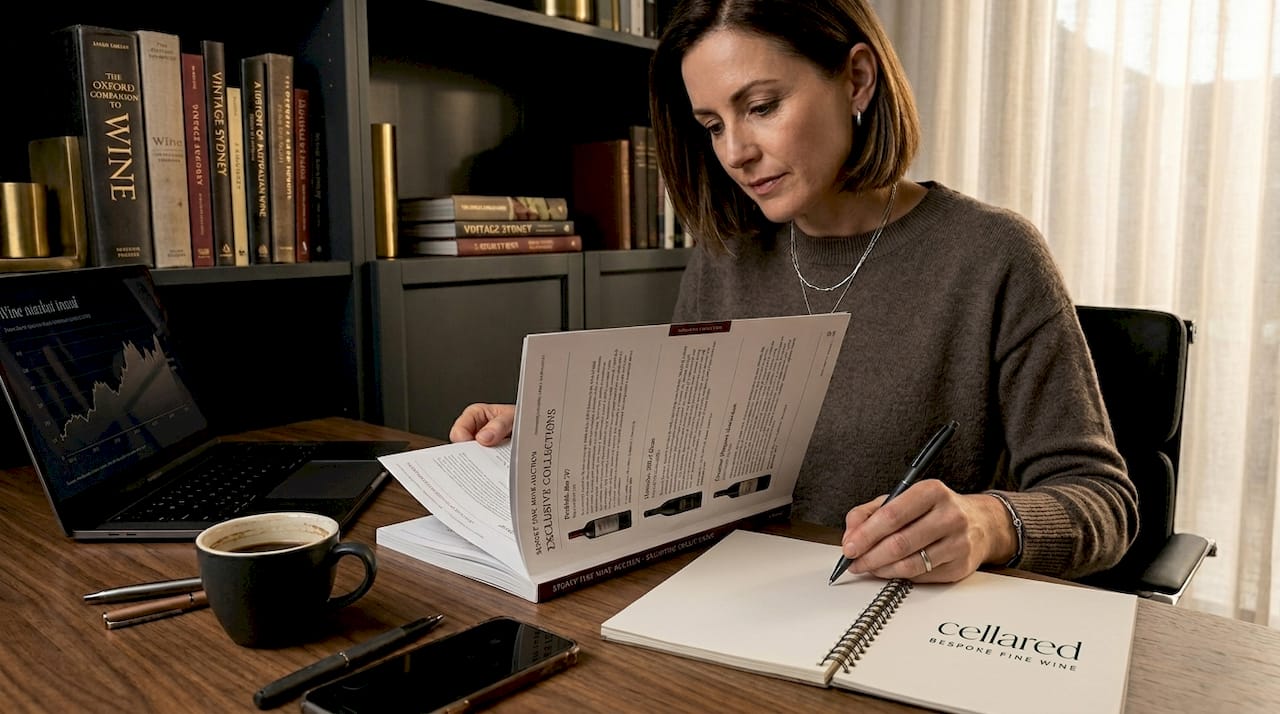
Pay close attention to the language used in condition reports. Phrases such as "minor label soiling" or "capsule slightly nicked" are common and broadly acceptable. More concerning are references to seepage, heavily corroded capsules, or unusually low fill levels. Understand that auction houses provide condition reports but accept no responsibility for wine drinkability. You buy on an as-is basis, with limited recourse after the sale.
Cross-reference catalogue estimates against current market data. Estate wine sales and secondary market platforms can reveal whether a lot's estimate reflects genuine value or elevated expectations. A well-read catalogue is your first form of protection.
3. Assess condition, provenance, and authenticity rigorously
No set of wine auction buying tips carries more weight than this one. The physical condition of a bottle tells one story. Its provenance tells another, often more truthful one.
Ullage, the air space between the wine and the cork, is a primary indicator of possible spoilage in aged bottles. A fill level sitting well below the base of the cork in a relatively young wine is cause for concern. In older bottles, some ullage is expected, but the level should correspond to the wine's age and the house's storage history.
Provenance, however, is where authentication truly lives. An unbroken chain of custody and documented purchase and storage records outweigh even the most immaculate label. A bottle sourced directly from a château's library, with original purchase receipts and temperature logs, is far more trustworthy than a visually perfect bottle of uncertain origin.
A pristine label and a vivid colour can seduce the eye. Only documented provenance can reassure the intellect. When buying at auction, let your intellect lead.
Key factors to assess in any lot:
- Fill levels relative to the wine's age and expected ullage
- Label condition and the integrity of the capsule
- Original wooden cases or original packaging where available
- Storage records: temperature, humidity, and handling history
- Purchase history traceable to a reputable source
For rarer or higher-value lots, consider consulting a specialist with deep market knowledge before bidding. The cost of independent advice is negligible against the risk of acquiring a compromised bottle at premium prices. Cellared Fine Wine's provenance frameworks for collectors offers a useful grounding in this area.
4. Develop structured bidding strategies
Effective bidding strategies for wine auctions are less about aggression and more about architecture. The collectors who consistently buy well are those who have built a structured approach before a single paddle is raised or a cursor moved.
- Calculate your ceiling with all fees included. Your maximum bid should reflect the total cost you are prepared to pay, not just the hammer price.
- Use proxy bidding where available. Online auction platforms allow you to enter a maximum and let the system bid incrementally on your behalf. This removes emotion from the process entirely.
- Start conservatively. Beginning with a cautious opening bid lets you observe genuine competition without driving up the price prematurely.
- Read the room. In live auctions, monitor the energy around particular lots. Sustained competition from two or three determined bidders is often a signal to hold your position and allow the price to travel beyond your ceiling.
- Distinguish between live and online bidding dynamics. Live auctions carry momentum and social pressure; online auctions reward patience and careful timing in the final minutes.
- Never enter a bidding war that exceeds your valuation. The wine will come back to market eventually. Clear financial limits protect you from costly decisions made in the heat of competition.
Pro Tip: In online auctions, placing your maximum proxy bid early rather than sniping in the final seconds often secures the lot at a lower final price, because the system resolves tie bids in favour of the first bidder to reach that level.
5. Choose your auction house with the same care as your wine
Not all auction houses are created equal, and the selection of a reputable house is itself one of the top wine auction tips that experienced collectors take seriously. Houses with strong wine expertise, rigorous provenance verification, and clear condition reporting practices provide meaningful protection for buyers.
When evaluating a house, consider:
| Factor | What to look for |
|---|---|
| Wine specialisation | Dedicated wine departments with catalogued expertise |
| Condition reports | Detailed, consistent, and photographically supported |
| Provenance disclosure | Chain of custody documentation supplied with lots |
| Buyer's premium | Clearly stated and competitive within market range |
| Payment terms | Payment windows of 7 to 14 days are standard; confirm penalties for late settlement |
| Post-sale logistics | In-house storage, packing, and shipping support |
| Online bidding platform | Stable, transparent, and well-moderated |
Comparing these factors across two or three houses before committing to a sale can meaningfully reduce risk and reveal genuine differences in how lots are presented and priced. Read the full terms and conditions, particularly around dispute resolution and their policies on misrepresented lots.
6. Understand market pricing before you set your ceiling
One of the more underappreciated wine auction buying tips is the discipline of genuine price research. Knowing what a wine should cost, based on current market evidence, is what separates a fair purchase from an expensive mistake.
Track recent auction results for the specific producer, vintage, and format you are targeting. Markets shift, sometimes sharply. Champagne prices rose 16% in 2025, reaching an average of €201 per bottle, illustrating how certain categories can appreciate quickly while others plateau or retreat. A structured fine wine buying approach uses verified auction results data to build a realistic price band for each target lot before bidding opens.
Look beyond headline auction estimates. These figures serve marketing functions as much as pricing ones. Cross-reference with trusted secondary market data, broker valuations, and specialist advisors to form an independent view of what constitutes value for any given lot.
7. Compare key buying tips at a glance
Bringing the major strategies together into a single reference point helps buyers prioritise effort and understand where each tip delivers the greatest protective value.
| Buying tip | Primary benefit | Key risk it mitigates |
|---|---|---|
| Set a full budget including fees | Prevents overspending | Auction fever and hidden costs |
| Assess provenance and condition | Confirms authenticity and quality | Fraud and flawed or spoiled bottles |
| Use structured bidding strategies | Controls acquisition cost | Competitive overbidding |
| Select reputable auction houses | Ensures transparency and recourse | Misrepresentation and poor lot quality |
| Research market pricing independently | Validates purchase value | Overpaying against market benchmarks |
| Plan storage from day one | Preserves quality and resale potential | Deterioration and diminished future value |
Each tip compounds the others. Meticulous provenance assessment means little if you overpay. Disciplined bidding is undermined if you have chosen a house with opaque terms. Think of the tips not as a checklist but as an interlocking framework, each element reinforcing the integrity of the whole.
8. Plan storage and collection management from the outset
The moment you win a lot, your responsibility for that wine begins. Effective cellar management post-auction is not an afterthought. It is the continuation of every careful decision you made before bidding.
Storage options range from domestic wine refrigerators, suitable for smaller collections of everyday and near-term drinking wines, through to professionally managed, climate-controlled facilities designed for long-term maturation and investment-grade bottles. For serious collectors, professional storage carries additional advantages beyond temperature and humidity control.
- Retained provenance: ongoing documentation that follows the wine through your ownership
- Insurance-ready valuations: accurate records that support both cover and future claims
- Accessibility: the ability to inspect, consolidate, or sell portions of your collection with confidence
- Separation from household risk: fire, flood, and equipment failure affect home storage far more than bonded facilities
Retaining all original auction paperwork, condition reports, and lot descriptions is as important as the storage environment itself. This documentation forms the provenance chain for any future sale, whether at auction, through a private broker, or as part of an estate settlement.
My perspective on buying wine at auction
I have seen collectors walk away from extraordinary auctions with bottles they cherish decades later, and I have watched others pay handsomely for lots that disappointed the moment the cork was drawn. The difference, in almost every case, came down to preparation rather than passion. Both parties cared deeply about the wine. Only one had done the work.
What the auction room reveals, more than anything, is how quickly enthusiasm can outpace judgement. I have noticed that first-time buyers often underestimate the pull of the room, that subtle, almost social pressure to win. Setting financial limits before you enter is not timidity. It is the architecture of a genuinely great collection.
The 2026 market is nuanced. Certain categories are rising sharply while others offer genuine value for patient, informed buyers. My strongest advice is to approach each auction as a disciplined exercise in selective acquisition, not a competition to be won. The wines worth having will come back around. Your capital will not.
— David
How Cellared Fine Wine supports auction buyers
Buying at auction with confidence requires more than good intentions. It requires the kind of market knowledge, provenance expertise, and post-purchase support that transforms an exciting bid into a genuinely sound acquisition.
Cellared Fine Wine works with collectors and investors to provide bespoke wine buying advice and bidding support, independent provenance and condition verification, and professional cellar management tailored to the complexity of auction-sourced collections. Whether you are stepping into your first wine auction or refining a strategy built over years, Cellared brings depth, discretion, and market authority to every stage of the process. Explore our wine cellar management services to see how we can help preserve and grow what you have worked to acquire.
FAQ
What does buyer's premium mean at a wine auction?
The buyer's premium is a percentage fee charged by the auction house on top of the hammer price. It typically ranges from 15 to 25%, meaning a winning bid of $1,000 can result in a total payment of $1,250 or more before taxes and shipping.
How important is provenance when buying wine at auction?
Provenance is the single most reliable indicator of a wine's authenticity and quality. An unbroken chain of custody with documented purchase and storage records carries more weight than any visual inspection of the bottle itself.
How do I avoid overpaying at a wine auction?
Research recent comparable auction results before bidding, calculate your all-in ceiling price including all fees, and use proxy bidding tools to enforce your maximum. Never adjust your ceiling once bidding begins.
What should I check in an auction house condition report?
Look for references to ullage levels, capsule integrity, label condition, and any signs of seepage or damage. Remember that condition reports do not guarantee drinkability and that purchases are typically made on an as-is basis.
How soon do I need to pay after winning a wine auction lot?
Most reputable auction houses require payment within 7 to 14 days of the sale. Failing to pay within this window can result in penalties or the suspension of your bidding privileges at future sales.