
Acquiring fine wine sits at the intersection of passion and precision. The fine wine acquisition process rewards those who approach it with patience and structure, yet it presents genuine complexity at every turn: verifying provenance, deciphering legal shipping restrictions, navigating auction platforms, and selecting storage arrangements that protect both quality and resale value. Whether you are building a cellar for investment, personal enjoyment, or gifting, the decisions you make early in the process shape the long-term value of your collection. This guide walks you through each stage with the clarity and rigour that exceptional wine demands.
Table of Contents
- Key takeaways
- Starting the fine wine acquisition process
- Sourcing and purchasing fine wine: step by step
- The fine wine gifting process and legal requirements
- Managing your collection post-acquisition
- Common pitfalls in the acquisition process
- My perspective on building a fine wine collection
- How Cellared can support your collection
- FAQ
Key takeaways
| Point | Details |
|---|---|
| Know your investment scale | Managed fine wine accounts typically begin at £5,000, with average portfolios reaching £65,000. |
| Provenance is non-negotiable | Verified chain of custody protects both authenticity and future resale value. |
| In-bond storage adds real value | Storing wine in-bond preserves provenance, defers duty, and strengthens resale credentials. |
| Gifting wine requires compliance | Licensed sellers, adult signatures, and destination state laws all apply to wine gifts. |
| Consolidate orders to save on fees | Grouping purchases within free storage windows reduces per-bottle daily storage charges. |
Starting the fine wine acquisition process
Every serious collector benefits from understanding what the fine wine acquisition process actually requires before spending a single dollar. The barriers are real, and they are worth respecting.
Investment minimums and typical portfolio sizes
The numbers matter from the outset. Minimum entry for managed fine wine accounts sits at approximately £5,000, while the average invested portfolio reaches around £65,000. These figures reflect the genuine cost of building a collection with meaningful diversity and market traction, not a hobbyist's handful of bottles.
Below is a useful orientation for those entering the market at different levels:
| Entry level | Approximate spend | What it typically buys |
|---|---|---|
| Introductory | £5,000 | A focused selection of one or two Bordeaux producers |
| Mid-level | £20,000 to £40,000 | Regional diversification across Burgundy, Rhône, and Tuscany |
| Serious collector | £65,000 and above | Structured portfolio with primary and secondary market positions |
Provenance, authenticity, and storage conditions
Provenance is the spine of any fine wine collection. A bottle without a verified history of ownership and storage is a bottle with diminished credibility, regardless of its label. Before any purchase, you should confirm storage temperature records where available, original tissue and case markings, and the seller's chain of custody documentation.
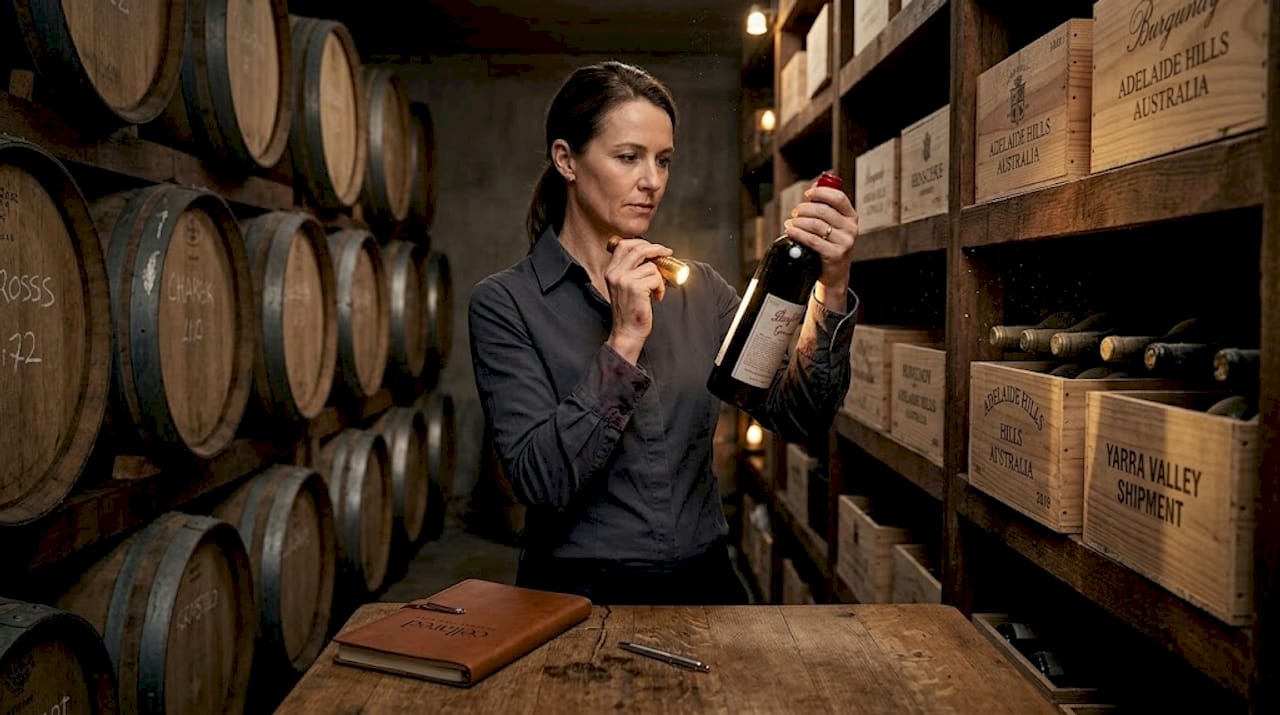
The tools supporting the fine wine acquisition workflow today are considerably more sophisticated than a decade ago. Professional brokerage services, reputable auction catalogues, and specialist platforms now offer detailed provenance records as a standard expectation rather than an added extra.
Pro Tip: Always request original wooden case documentation for Burgundy and Bordeaux. Bottles presented in their original cases with intact stencilling command meaningfully higher prices at auction and in private sales.
Sourcing and purchasing fine wine: step by step
Once your foundations are in place, the fine wine acquisition workflow moves into its most active phase. Here is how to approach each stage with precision.
-
Research regions and producers with investment credibility. Bordeaux remains the core of the secondary market due to its liquidity and decades-long track record, while Tuscany, Piedmont, and California offer compelling diversification. Burgundy commands extraordinary prices at auction but demands deep knowledge of individual communes and producers. A well-structured fine wine buying guide will help you map regions against your investment goals and risk appetite.
-
Select your buying channel deliberately. Each channel carries distinct advantages. Direct from estates offers price transparency and relationship-building with producers. Negotiants provide access to allocation wines from Bordeaux and Burgundy. Online auction platforms deliver competitive pricing and liquidity, but require discipline. Private brokerage arrangements, particularly for rare or aged bottles, offer provenance assurances that open markets rarely match.
-
Verify provenance before committing funds. Request full storage history and inspect label condition, fill level, and capsule integrity. For auction purchases, engage the platform's specialist team or an independent consultant before bidding on bottles above five figures.
-
Understand how auction bids work. Online auction bids are binding, with immediate invoicing upon winning. Prompt payment is not courtesy but obligation. Defaulting on an auction invoice risks losing access to the platform entirely.
-
Arrange storage from the moment of purchase. The question of where your wine lives from day one matters more than most new collectors appreciate.
Pro Tip: When using online auction platforms for the first time, set a firm maximum bid and walk away from it. The heat of live bidding has cost more than a few collectors several thousand dollars on wines they later regretted purchasing at inflated prices.
In-bond versus at-home storage
In-bond storage keeps your wine within a bonded warehouse, deferring import duties until the wine leaves bond for consumption. More significantly, in-bond storage maintains an unbroken, auditable provenance chain that commands higher resale prices and greater buyer confidence. For collectors treating wine as a long-term asset, this is not optional. It is the professional standard.
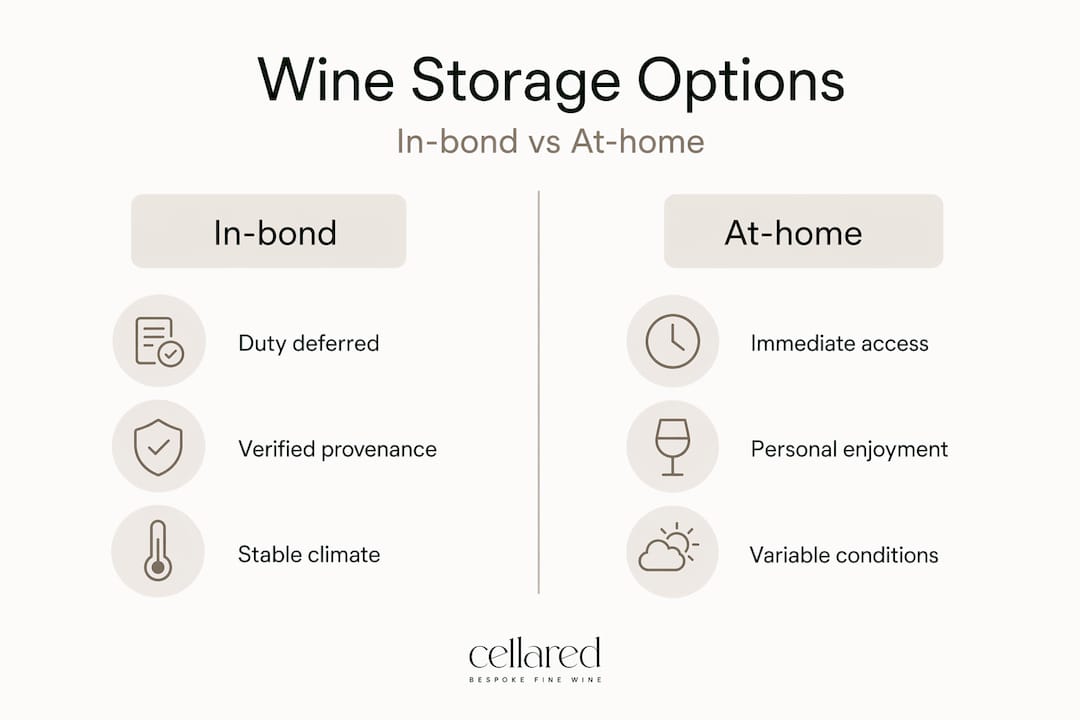
Home storage, while convenient for wines destined for personal enjoyment, introduces temperature variability and provenance gaps that reduce resale credibility. Reserve the cellar at home for bottles you intend to drink.
The fine wine gifting process and legal requirements
The fine wine gifting process operates under a distinct set of constraints that collectors must understand before sending bottles across borders or interstate.
- Licensed sellers only. Direct-to-consumer wine shipping laws require that all shipments, including gifts, be sent by a licensed seller. You cannot simply box up a bottle and post it through a general courier as a gift.
- Adult signature is mandatory. All wine deliveries require a recipient who can sign for the parcel as an adult. Carriers will not leave wine unattended.
- Destination laws control delivery. State and territory shipping laws apply regardless of where the sender is located. What is legal to ship from one jurisdiction may be prohibited at the receiving end.
- Delivery attempts are limited. Couriers typically attempt delivery two to three times before holding the parcel, which creates risk for time-sensitive gifts.
- Packaging must be purpose-built. Moulded pulp shippers designed for one to three bottles offer both protection and a presentation quality appropriate for fine wine gifts.
"The finest wine gift is a wasted gesture if it arrives broken, unsigned for, or prohibited at its destination. Compliance is not bureaucracy. It is the difference between a memorable gift and an expensive disappointment."
Pro Tip: Notify the recipient before sending any wine gift. Knowing a delivery is coming allows them to arrange an appropriate person to sign and prevents the frustration of missed delivery attempts.
When approached correctly, the fine wine gifting process becomes an extension of your broader collection and acquisition strategy. Gifting from your own cellar, for example, is an entirely different matter from purchasing and shipping commercially, and the two should be managed separately within your collection records.
Managing your collection post-acquisition
Acquiring the wine is only half the story. The decisions made after purchase shape whether your collection grows in value or quietly deteriorates in both quality and market relevance.
Storage fees and consolidation strategies
Professional storage platforms commonly offer a 30-day free storage window after purchase. Beyond this period, fees typically run to approximately €0.09 per bottle per day. Across a collection of one hundred bottles held for an additional three months, that adds up to more than €800 in avoidable costs.
Collectors benefit financially by consolidating multiple smaller purchases into a single outbound shipment before the free window closes. This requires planning your buying activity in concentrated periods rather than spreading orders thinly across the year.
| Management task | Recommended approach | Frequency |
|---|---|---|
| Inventory audit | Professional cellar management software or specialist service | Annually, at minimum |
| Valuation review | Independent market appraisal | Every two years, or before sale |
| Storage fee review | Consolidate and ship within free windows | Each purchase cycle |
| Provenance documentation | Update records with each purchase, transfer, or auction result | Ongoing |
Ongoing valuation and preparing for resale
A collection that is not periodically valued is a collection whose performance you cannot measure. Independent market appraisals serve multiple purposes: insurance coverage, estate planning, and informing the decision of when and how to sell. Specialist wine collection strategies should include a scheduled appraisal process, particularly as your portfolio grows beyond a handful of cases.
When the time comes to sell, bottles stored in-bond with complete documentation will always attract more competitive bids than wines with uncertain histories, regardless of the label.
Pro Tip: Keep a running digital record of every purchase invoice, storage certificate, and auction result that touches your collection. When you eventually sell, this paper trail is worth real money.
Common pitfalls in the acquisition process
Even experienced collectors encounter avoidable mistakes. The following are the most consequential.
- Purchasing without provenance verification. Counterfeit and misrepresented wines remain a genuine risk in the market, particularly for highly sought-after Burgundy and aged Bordeaux. Never purchase on label and description alone.
- Ignoring storage fees. Small per-bottle fees compound across large collections. See the fine wine investment risks that storage mismanagement can introduce over time.
- Overbidding at auction. The binding nature of auction bids means there is no exit. Discipline before the hammer falls is the only protection.
- Mismanaging wine gifts. Attempting to ship wine outside licensed channels creates legal exposure and delivery failure.
- Delaying expert advice. For collections above £20,000, a specialist broker or cellar manager is not a luxury. It is risk management.
"The most expensive mistake in fine wine is not the bottle you overpaid for. It is the collection you under-managed."
My perspective on building a fine wine collection
I have worked with collectors at every stage of the acquisition journey, from those buying their first case of Pauillac to those managing cellars worth hundreds of thousands of dollars. What I have observed, consistently, is that the collectors who build the most enduring and valuable collections share one quality above all others: patience.
The temptation to move quickly, to chase the most-discussed vintage or the latest critic score, leads to overpayment and provenance shortcuts. What I recommend, and what I have seen work time and again, is a deliberate workflow. Research first, purchase second, and let storage and documentation do the quiet work of building value over years rather than months.
I have also seen technology change this space materially. Market data platforms, digital provenance records, and specialist brokerage networks have made the luxury wine purchasing experience more transparent than at any point in the past. But technology cannot replace the judgement of someone who knows a wine region deeply and has watched a market move across decades. Expert networks still matter enormously.
My honest advice: balance your enjoyment with your investment goals. The finest cellars I have encountered belong to collectors who drink their wines with genuine pleasure, not those who treat every bottle as an untouchable asset. Wine is, ultimately, made to be opened.
— David
How Cellared can support your collection
Cellared Fine Wine offers a bespoke service for every stage of the acquisition journey, from identifying the right bottles and regions to match your goals, through to professional cellar management services that protect and grow the value of what you have built. Whether you need an independent wine appraisal and valuation for insurance or estate purposes, or bespoke buying support to source rare and hard-to-find bottles, Cellared brings the market knowledge and personal attention that serious collectors deserve. If you are ready to approach your collection with the structure and confidence it warrants, Cellared is where that conversation begins. Explore the full suite of private client services to see how Cellared can work alongside you.
FAQ
What is the minimum investment for fine wine?
Managed fine wine accounts typically begin at around £5,000, with the average portfolio sitting closer to £65,000, reflecting the scale required for meaningful market diversification.
How do I verify provenance before purchasing?
Request original case documentation, storage history records, fill level inspection, and an independent specialist assessment for any bottle above five figures in value.
Can I ship wine as a gift?
Yes, but only through a licensed seller, with adult signature required at delivery. Destination laws apply regardless of where the sender is located, so compliance must be confirmed for each jurisdiction.
What is in-bond storage and why does it matter?
In-bond storage holds your wine in a bonded warehouse, deferring import duties and maintaining an unbroken provenance chain. This verifiable history consistently commands higher resale prices and is the professional standard for investment-grade collections.
How often should I have my wine collection valued?
An independent market appraisal every two years is the baseline, with additional valuations recommended before any significant sale, insurance review, or estate planning event.