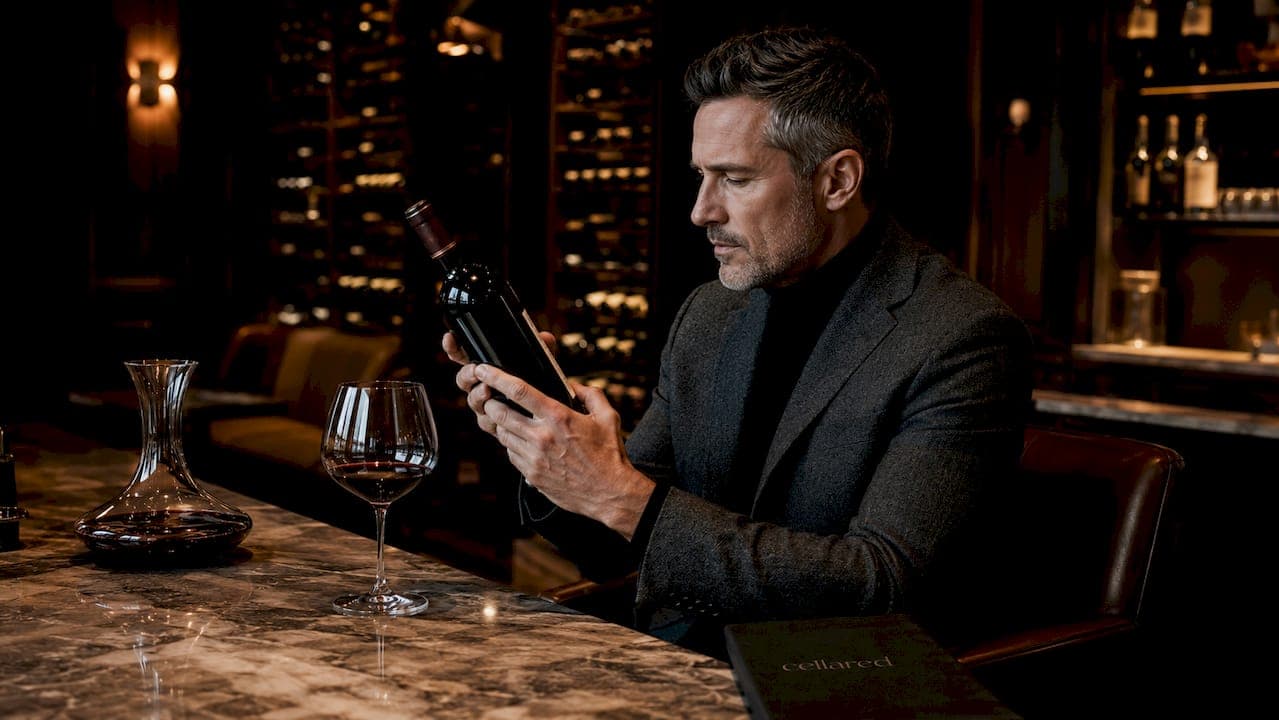
Protecting wine inventory is defined as the practice of controlling environmental conditions, securing physical storage, maintaining accurate digital records, and verifying provenance to preserve both the quality and financial value of a collection. Fine wine is not a passive asset. A single temperature spike, a missing custody record, or an unlocked cellar door can erase years of careful acquisition and significant capital. The strategies that matter most combine climate science, layered physical security, meticulous inventory discipline, and provenance technology. Collectors who treat these four pillars as a unified system consistently achieve better outcomes at auction, in insurance claims, and at the point of sale.
How to protect wine inventory through optimal environmental controls
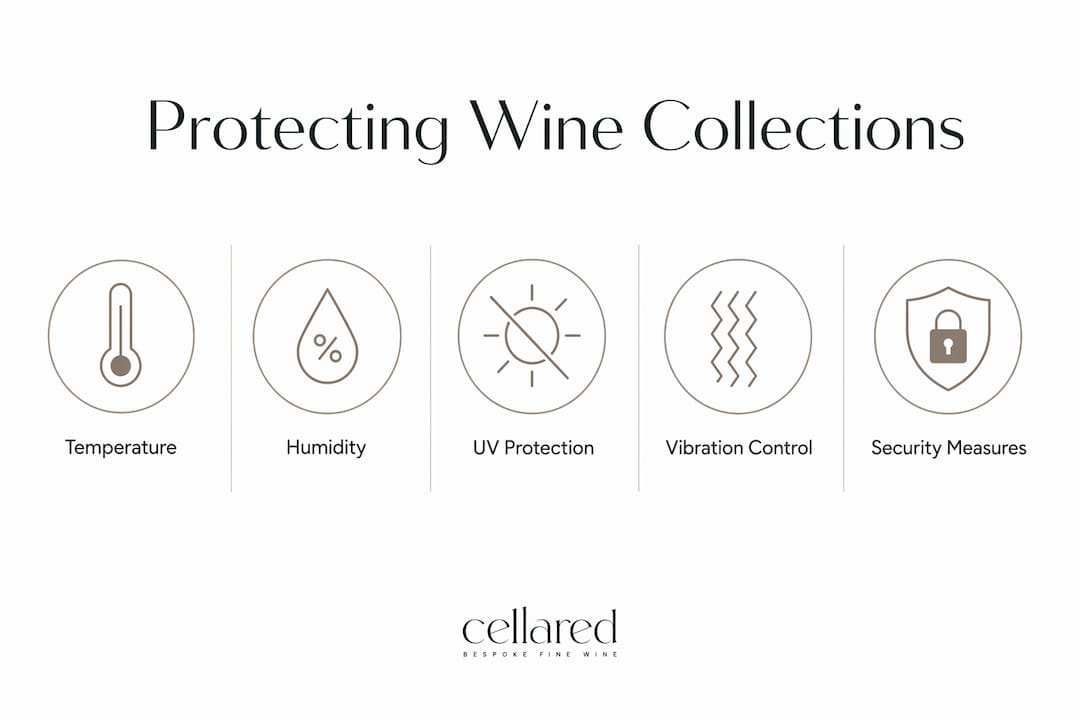
The single greatest threat to a wine collection is an uncontrolled environment. Industry standards require a constant temperature between 10–15°C, with the ideal window sitting at 12–14°C, and humidity maintained between 60% and 80%. Deviation from these ranges accelerates oxidation, weakens corks, and strips a wine of the complexity that makes it valuable in the first place.
Temperature fluctuation is more damaging than a consistently cool or warm cellar. Rapid cycling between warm and cold causes liquid to expand and contract, forcing air past the cork and introducing oxygen prematurely. A wine stored at a steady 16°C will age faster than intended but remain drinkable. A wine that swings between 10°C and 22°C across a single week may be ruined within months.
Humidity deserves equal attention. Optimal humidity at 70–80% keeps corks supple and prevents evaporation through the seal. Below 50%, corks dry and shrink, allowing air infiltration. Above 85%, mould colonises labels and wooden cases, destroying provenance documentation and resale presentation.
UV light is a silent destroyer. Direct sunlight and fluorescent lighting both generate UV radiation that degrades tannins and causes premature browning in white wines. Cellars should use LED lighting with no UV output, and any glazed surfaces must be fitted with UV-blocking film or glass.
Vibration is the most overlooked variable. Constant movement from nearby machinery, foot traffic, or even a refrigerator compressor disturbs sediment and disrupts the slow chemical reactions that define fine wine ageing. Bottles should rest on vibration-dampening racks, away from appliances and structural walls that carry noise.
| Condition | Optimal range | Risk if breached |
|---|---|---|
| Temperature | 12–14°C | Oxidation, cork failure, accelerated ageing |
| Humidity | 70–80% | Cork shrinkage, mould, label damage |
| UV light exposure | Zero | Tannin degradation, premature browning |
| Vibration | Minimal | Sediment disturbance, disrupted ageing |
Smart sensors and IoT devices connected to smartphones now allow collectors to monitor temperature and humidity remotely, with instant alerts when conditions drift outside acceptable ranges. This technology transforms reactive management into proactive stewardship.
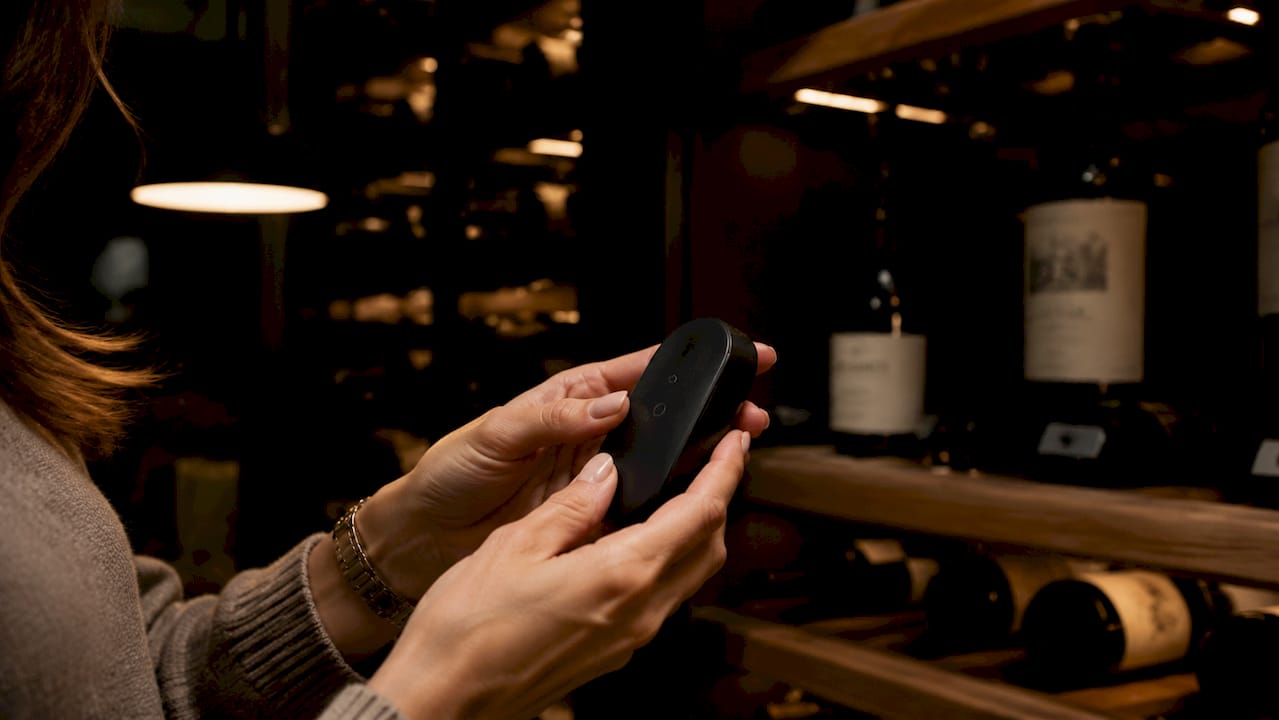
Pro Tip: Install a dual-sensor unit that logs temperature and humidity every 15 minutes. Export the data monthly and retain it as part of your insurance and provenance records. A documented climate history adds credibility to any valuation or claim.
How to implement security measures to prevent theft and physical damage
Physical security for a wine collection follows the same logic as any high-value asset: layers. A single lock is a single point of failure. A layered defence strategy combines reinforced doors with deadbolts, smart locks with access logging, motion sensors, window security film, and surveillance cameras. Each layer independently deters or detects a threat.
The practical steps for building this system include:
- Reinforced entry doors with commercial-grade deadbolts rated for forced entry resistance
- Smart lock systems that log every access event with a timestamp and user ID, creating an auditable trail
- Motion-activated sensors positioned to cover entry points and the cellar interior, linked to a monitored alarm system
- Security film on windows to prevent smash-and-grab access while also blocking UV light
- Surveillance cameras with off-site cloud storage so footage cannot be destroyed on-site
- Restricted key access limited to named individuals, with access reviewed and updated annually
The economics of security matter. Building a private professional cellar carries significant construction costs, making bonded storage an attractive alternative for larger collections. Professional bonded facilities offer climate control, 24-hour security, and tax deferral on Duty and VAT until wine is withdrawn, which eases cash flow for investors holding stock over multiple vintages.
For collectors who prefer a home cellar security workflow, the investment in smart locks and monitored alarms typically costs a fraction of what a single theft or insurance excess would represent.
Pro Tip: Review your access log quarterly. Unexplained access events are the earliest warning sign of internal theft, which accounts for a disproportionate share of cellar losses in private collections.
What are best practices for inventory management and insurance?
Managing a wine cellar is a financial discipline, not a hobby exercise. Accurate logging of all stock, including vintage, location, cost, and maturity window, is the foundation of realising portfolio returns and avoiding the costly mistake of drinking capital before it peaks.
A sound inventory management system follows these steps:
- Create a digital record for every bottle including high-resolution photographs of the label, capsule, and fill level, plus full provenance documentation from purchase receipt to storage history.
- Practise cycle counting by auditing small subsets of your inventory on a regular schedule rather than attempting a full stocktake annually. Cycle counting catches losses from evaporation, breakage, or misplacement before they compound.
- Reconcile physical stock against digital records at each count, logging any discrepancies immediately. This discipline supports tax compliance and valuation integrity.
- Commission an annual professional appraisal to update market values. Fine wine markets move quickly, and an appraisal that is two years old may significantly understate or overstate your position.
- Secure a specialised all-risk insurance policy with a rider that covers fine wine specifically. Standard home contents policies rarely cover collections at replacement value, and they almost never account for market appreciation.
Treating collections as formal assets with digital inventories, annual appraisals, and all-risk insurance riders is the standard recommended practice for serious collectors in 2026. The integration of inventory records and insurance documentation also accelerates claims processing, which matters when time-sensitive decisions about damaged stock are required.
For collectors seeking structured guidance on wine cellar insurance, the detail of policy terms, particularly around provenance requirements and valuation methodology, deserves careful attention before a loss event occurs.
How can provenance verification and technology prevent fraud?
Wine fraud affects up to 20% of fine wine in circulation globally. That figure is not a theoretical risk. It represents a material threat to the resale liquidity and financial value of any serious collection. Provenance is the largest single factor in auction market pricing, and failure to document custody chains leads to severe devaluation regardless of the wine's actual quality.
The most effective approach to provenance protection combines covert physical security features with blockchain-backed digital records:
- UV-reactive inks and micro-embossing on labels and capsules are detectable only by specialised scanners, making replication prohibitively difficult for counterfeiters
- Blockchain digital twins create an immutable record of every custody event, from producer to négociant to collector, that cannot be altered retrospectively
- Documented chain of custody from the original purchase invoice through every storage transfer and valuation event
- Authentication beyond the label, including cork inspection, fill level assessment, and capsule condition review, conducted by a qualified specialist before significant purchases
Collectors can take practical steps immediately. Request full provenance documentation at the point of purchase. Retain every invoice, storage receipt, and valuation report. For bottles acquired at auction, obtain the auction house's provenance notes and store them with the physical record. For guidance on fraud prevention strategies, the depth of verification required scales with the value of the bottle.
Authenticity protection employs covert security features detectable only by specialised scanners, complementing blockchain-based digital twins for provenance that is effectively unbeatable in any serious dispute.
The commercial benefit is direct. Bottles with complete, verified provenance command materially higher prices at auction and attract more confident private buyers. Provenance is not administrative overhead. It is a component of the wine's value.
Key takeaways
Protecting a wine collection requires four integrated disciplines: environmental control, physical security, digital inventory management, and provenance verification, each reinforcing the others to preserve quality and financial value.
| Point | Details |
|---|---|
| Environmental control | Maintain 12–14°C and 70–80% humidity with zero UV exposure and minimal vibration. |
| Layered physical security | Combine smart locks, motion sensors, alarms, and cameras for deterrence and evidence. |
| Digital inventory discipline | Log every bottle with photos and provenance, and practise regular cycle counting. |
| Annual professional appraisal | Update market values yearly and align insurance coverage to current replacement cost. |
| Provenance verification | Use blockchain digital twins and covert security features to protect resale liquidity. |
What I've learned from years of watching collectors get this wrong
The collectors who suffer the most significant losses are rarely the ones who ignored security entirely. They are the ones who got three of the four pillars right and assumed the fourth would take care of itself. I have seen cellars with exceptional climate control and no insurance documentation. I have seen beautifully insured collections with no provenance records, making claims almost impossible to settle at fair value.
The most common pitfall is treating inventory management as a task for later. Collectors acquire bottles with care and intention, then defer the record-keeping until the collection grows to a size where catching up feels impossible. By that point, gaps in provenance have already eroded value that can never be fully recovered.
Technology adoption is accelerating, and collectors who resist it are accepting unnecessary risk. Smart sensors, digital inventory platforms, and blockchain provenance tools are no longer the preserve of institutional investors. They are accessible, affordable, and increasingly expected by insurers and auction houses alike.
My practical advice: start with the environment, because damage there is irreversible. Then build your security layer. Then get your records in order, even if that means working backwards through your acquisition history. A collection managed with private cellar management discipline is a collection that retains its full potential, both in the glass and on the balance sheet.
— David
Cellared Fine Wine: expert support for serious collectors
Fine wine deserves more than good intentions. Cellared Fine Wine provides specialist cellar management services tailored to collectors and investors who want their collections protected, accurately valued, and positioned for long-term growth.
Cellared's team delivers court-ready wine appraisals and valuations for insurance, probate, and private advisory purposes, combining deep market knowledge with a personal approach that generic valuation services cannot match. Whether you need bespoke buying advice, a full cellar audit, or independent market-led valuations, Cellared works with you to manage your collection with the rigour it deserves. Reach out to the team at Cellared Fine Wine to discuss your collection's specific needs.
FAQ
What is the ideal temperature for storing fine wine?
The ideal storage temperature for fine wine is 12–14°C, held constant without fluctuation. Temperature swings are more damaging than a slightly elevated but stable environment.
How often should I appraise my wine collection?
Annual professional appraisals are the recommended standard for serious collectors. Fine wine markets move quickly, and outdated valuations leave collectors underinsured and poorly positioned for resale.
What does a layered security system for a wine cellar include?
A layered cellar security system includes reinforced doors with deadbolts, smart locks with access logging, motion sensors, window security film, and surveillance cameras with off-site storage.
How does provenance affect the resale value of wine?
Provenance is the largest factor in resale liquidity. Bottles with complete, documented custody chains command higher auction prices, while gaps in provenance lead to significant devaluation regardless of wine quality.
What is cycle counting in wine inventory management?
Cycle counting is the practice of auditing small subsets of a wine inventory on a regular schedule, rather than conducting a single annual stocktake. It catches losses from breakage, evaporation, or misplacement before they accumulate unnoticed.