
A cellar book is defined as a specialised ledger for wine collectors, designed to record and organise every bottle in a collection, from vintage and producer through to storage location and drinking window. Think of it as the memory of your cellar. Without it, even a modest collection of fifty bottles becomes difficult to manage with any real intention. Hugh Johnson's cellar book, spanning over 200 pages, set the standard for what serious wine recordkeeping looks like, and the principles it established remain the benchmark for collectors today.
What is a cellar book and what does it contain?
A cellar book is a structured journal purpose-built for wine collection management, and it does far more than a blank notebook ever could. Blank notebooks lack the pre-formatted fields that dedicated cellar books provide, meaning collectors risk omitting the precise data points needed for insurance appraisals or resale valuations. A quality cellar book brings discipline to what might otherwise be a pleasurable but disorganised pursuit.
The core fields in a well-designed cellar book typically include:
- Vintage and producer — the foundational identifiers for every bottle
- Region and appellation — critical for understanding ageing potential and terroir context
- Purchase price and date — essential for tracking investment value over time
- Storage location — bin number, rack position, or temperature zone within your cellar
- Drinking window — the projected period of peak enjoyment, often spanning several years
- Tasting notes — personal observations recorded after opening, which inform future decisions
Beyond these fields, professional cellar books include illustrated guides on temperature, light exposure, and bottle orientation. This educational content is not decorative. It gives anyone managing the cellar, including family members or a cellar manager, a consistent reference point for maintaining conditions that protect wine quality over years and decades.
Physical quality matters considerably in a cellar book. Luxury editions are often leather-bound with high-gsm paper and gilded pages, retailing from around £70 for quality editions. That durability is not vanity. A cellar book that survives twenty years of use becomes a historical record of your collection's evolution, and the tactile experience of writing in it encourages the kind of deliberate attention that good cellar management demands.
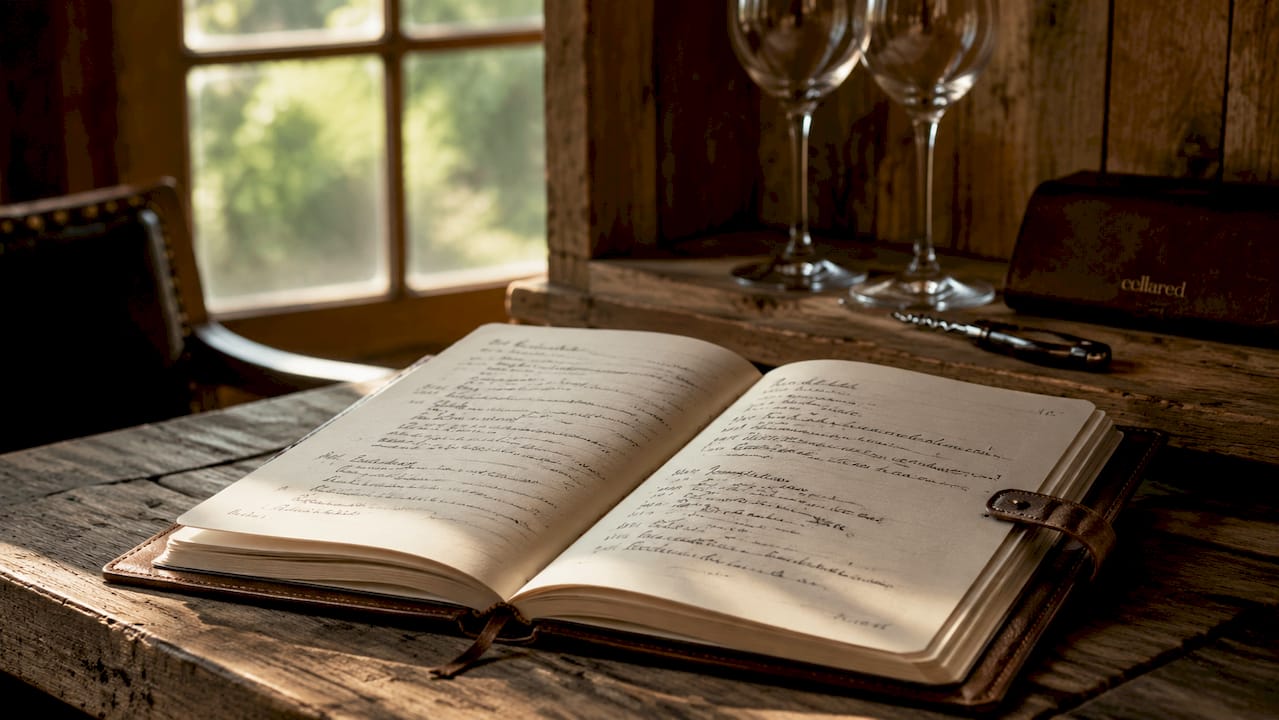
Pro Tip: Choose a cellar book with acid-free, high-gsm paper. Ink written on inferior paper fades within a decade, which defeats the purpose of long-term recordkeeping entirely.
Why is maintaining a cellar book so important?
A cellar book is not a passive log. It is an active management tool that protects both the financial and sensory value of a collection. The most common failure collectors experience is what practitioners call "cellar drift," and manual records are the most reliable defence against it.
Cellar drift occurs when a collector loses track of which bottles are approaching their peak, which have passed it, and which still need years of patience. A Barolo from a celebrated producer might need fifteen years before it softens its tannic backbone into something truly magnificent. Without a record of when it was purchased and what its drinking window is, that bottle is as likely to be opened too early as it is to be forgotten entirely.
The benefits of consistent cellar inventory management extend well beyond personal enjoyment:
- Insurance and valuation — organised, dated records with purchase prices give valuers the documentation they need to produce accurate, court-ready appraisals
- Collection strategy — records reveal patterns in your buying habits, helping you identify gaps or over-representation of certain regions or styles
- Resale confidence — provenance documentation, including storage history, adds measurable value when selling through auction or private channels
- Estate planning — a well-maintained cellar book gives executors and family members clarity about what exists and what it is worth
"A cellar book is not just record-keeping. It is a vital management system that extends the collector's enjoyment strategy and protects the investment they have made in every bottle."
The discipline of writing in a cellar book also sharpens a collector's awareness of their own collection. Collectors who record tasting notes develop a more refined palate over time, because the act of writing forces articulation of what they are experiencing. That feedback loop, from cellar to glass to page, is one of the most underrated benefits of private wine cellar management.
How to use a cellar book effectively
Effective cellar book use follows two distinct phases, and conflating them is the most common mistake collectors make. The first phase is educational. The second is operational.
-
Read the introductory guide first. Quality cellar books open with an illustrated essay covering cellar environment principles: temperature stability between 10°C and 14°C, humidity levels, darkness, and vibration reduction. This section is not preamble. It is the foundation that makes every subsequent entry meaningful, because it tells you what conditions you are recording against.
-
Assign a unique location code to every storage position. Before recording a single bottle, map your cellar physically. Label each rack, bin, or zone with an alphanumeric code. This makes the storage location field in your cellar book genuinely useful rather than vague.
-
Record each bottle at the point of purchase. Do not wait until the wine arrives or until you find a moment to catch up. Experienced collectors track maturation lifecycle, tasting notes, and exact physical bottle locations from the moment of acquisition. Retrospective entries are always less accurate.
-
Enter the full data set for every bottle. This means vintage, producer, region, purchase price, supplier, storage location, and projected drinking window. Partial entries create the same gaps that structured cellar books are designed to prevent, particularly when purchase prices or storage details are missing at the time of appraisal.
-
Update the record when a bottle is opened. Note the date, who was present, the occasion, and your tasting observations. Cross-reference these notes when buying similar wines in future. Over time, your cellar book becomes a personalised guide to your own palate.
-
Review the book quarterly. Scan upcoming drinking windows and plan consumption or gifting accordingly. This review habit is what separates a cellar book used as a living document from one that gathers dust after the first few entries.
Pro Tip: Photograph each bottle's label when you record it. A small printed photo taped beside the entry gives you an instant visual reference and adds a layer of provenance documentation that valuers genuinely appreciate.
For collectors who want to connect their physical records to a broader wine collection workflow, the cellar book serves as the authoritative source of truth that any digital system should mirror, not replace.
Physical cellar books vs digital inventory tools
The choice between a physical cellar book and a digital inventory tool is not simply a matter of preference. It reflects how a collector relates to their wines and what they need from their records.
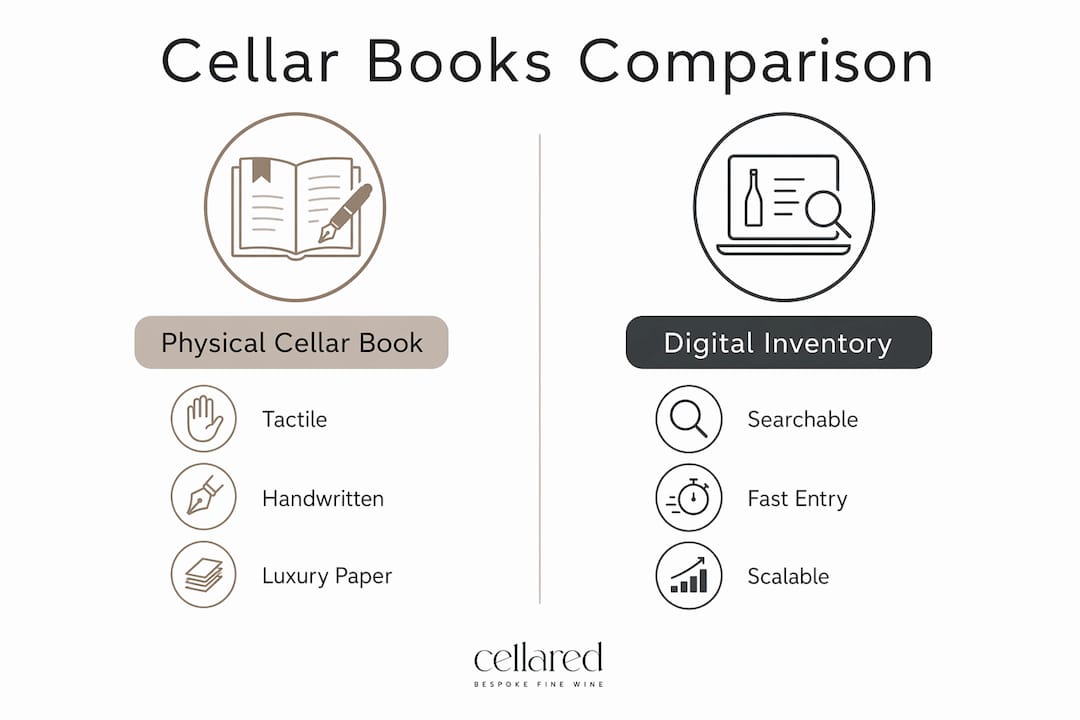
Physical cellar books offer qualities that digital tools cannot replicate. The act of writing by hand slows a collector down in a productive way, encouraging reflection rather than rapid data entry. A leather-bound volume sitting on a library shelf carries cultural weight. It is an artefact of a collecting life, not a database entry. For many serious collectors, the physical book is part of the ritual of cellar management.
| Feature | Physical cellar book | Digital inventory tool |
|---|---|---|
| Data structure | Pre-formatted fields, fixed layout | Flexible, searchable, filterable |
| Durability | Decades with quality materials | Dependent on platform continuity |
| Ease of update | Manual, deliberate | Fast, often mobile-friendly |
| Insurance documentation | Handwritten records, may need supplementing | Exportable reports, often preferred by insurers |
| Tactile engagement | High, encourages mindful recording | Low, functional rather than experiential |
| Cost | £70 and above for quality editions | Varies widely, often subscription-based |
Digital tools offer speed and searchability that physical books cannot match, particularly for collections exceeding several hundred bottles. However, organising your wine cellar for value often benefits from the combination of both approaches: a physical cellar book for the ritual and the record, and a digital system for search and reporting.
The most important factor in choosing a cellar book is whether its structure matches your collection's complexity. A small collection of fifty bottles suits a compact, elegantly designed volume. A collection spanning multiple regions, producers, and decades warrants a larger format with more fields per entry and room for extended tasting notes.
Key takeaways
A cellar book is the single most effective tool a collector can use to protect both the enjoyment and the financial value of their wine collection.
| Point | Details |
|---|---|
| Core definition | A cellar book is a structured ledger recording vintages, storage locations, and drinking windows for each bottle. |
| Prevents cellar drift | Regular entries stop collectors losing track of ageing bottles and missing peak drinking windows. |
| Supports valuation | Detailed purchase prices and storage records give valuers the documentation needed for insurance and probate appraisals. |
| Two-phase use | Read the educational guide first, then record every bottle systematically from the point of purchase. |
| Physical vs digital | Physical books suit mindful, ritual-driven collectors; digital tools add searchability for larger collections. |
The discipline that changes how you collect
I have worked with collectors at every level, from those managing a modest forty-bottle rack to estates holding thousands of bottles across multiple storage facilities. The single most consistent difference between collectors who genuinely enjoy their wines and those who feel vaguely anxious about their cellars is the presence of a well-maintained cellar book.
The collectors who struggle are rarely those with the smallest collections. They are the ones who bought enthusiastically, stored carefully, and then lost the thread. A 2010 Barolo from a revered Langhe producer sitting in the back of a rack, past its window, is not a tragedy of storage. It is a tragedy of recordkeeping.
What I find most interesting is how the physical act of writing changes a collector's relationship with their wines. There is something about putting pen to paper, noting the bin location, the purchase price, the anticipated drinking window, that makes the bottle real in a way that a spreadsheet entry never quite does. Collectors who write in their cellar books tend to open their wines more intentionally. They plan dinners around upcoming windows. They notice when a style is underrepresented. The book becomes a mirror of their taste and their ambitions as a collector.
The cultural value of a well-kept cellar book is also underestimated. I have seen cellar books passed between generations, annotated across decades, carrying tasting notes from dinners that are now family history. That is not something a cloud-based inventory tool will ever replicate. As collections evolve, the cellar book should evolve with them. Add a section for gifted bottles. Note the occasions. The book is not just about the wine. It is about the life lived around it.
— David
Professional cellar management for serious collectors
For collectors whose cellars have grown beyond what a single volume can comfortably manage, professional oversight becomes the natural extension of good recordkeeping.
Cellared Fine Wine offers bespoke wine cellar management that builds directly on the principles a cellar book establishes. From organising physical storage and maintaining condition records to providing court-ready wine valuations for insurance, probate, and family law purposes, Cellared brings the same meticulous attention to your collection that a well-kept cellar book demands of its owner. Whether you are managing a growing collection, preparing an estate, or simply want greater clarity over what you hold and what it is worth, Cellared provides the expertise to manage with confidence.
FAQ
What is the cellar book definition in simple terms?
A cellar book is a structured journal used by wine collectors to record details about each bottle in their collection, including vintage, producer, storage location, and drinking window.
How does a cellar book differ from a plain notebook?
Dedicated cellar books provide pre-formatted fields for the specific data points collectors need, such as purchase price and storage location, which blank notebooks consistently lack and which are critical for insurance and valuation purposes.
What is the importance of a cellar book for insurance?
A cellar book with dated purchase prices, storage records, and tasting notes gives valuers the documentation required to produce accurate appraisals for insurance, probate, and private advisory purposes.
How often should I update my cellar book?
Record each bottle at the point of purchase, update the entry when a bottle is opened with tasting notes and the date, and review the full book at least quarterly to monitor upcoming drinking windows.
Can a cellar book replace digital inventory management?
A physical cellar book and a digital tool serve different purposes. The cellar book provides tactile, deliberate recordkeeping and long-term durability, while digital tools offer searchability and reporting for larger collections. Many serious collectors use both.