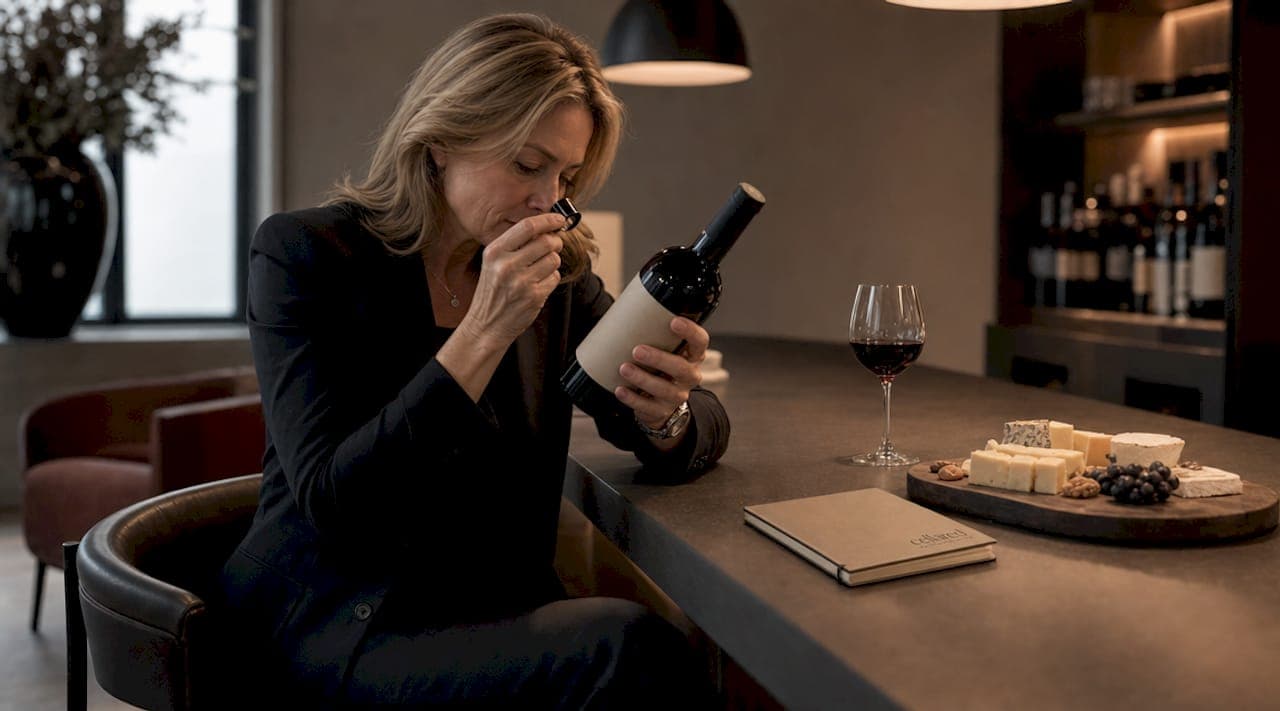
Wine authentication is the process of verifying a bottle's provenance, genuineness, and quality to confirm it is exactly what it claims to be. For collectors and investors, this verification process stands between a sound acquisition and a costly mistake. Counterfeit wines account for 10% to 30% of premium-segment sales in high-risk markets, a figure that underscores how real and pervasive the threat remains. Authentication draws on physical inspection, documentary evidence, and scientific analysis, each method reinforcing the others to build a picture of a wine's true identity. Provenance, the documented chain of ownership from winery to current holder, sits at the heart of every credible authentication assessment.
What is wine authentication and why does it matter?
Wine authentication is the structured verification of a bottle's identity, confirming that its origin, vintage, producer, and condition align with what is stated on the label and in supporting documentation. The process is not merely academic. A single bottle of first-growth Bordeaux or aged Burgundy can command tens of thousands of dollars, and the difference between a genuine bottle and a sophisticated forgery is often invisible to the untrained eye. Authentication protects that investment by applying rigorous, repeatable checks across multiple dimensions of the bottle.
The importance of wine authentication extends beyond individual transactions. It upholds the integrity of the secondary market, preserves the reputations of prestigious producers, and gives collectors the confidence to buy, sell, and insure with accuracy. When authentication fails, the consequences ripple outward: auction houses face legal exposure, estates lose value, and collectors bear financial losses that are rarely recoverable. Understanding fine wine investment risks is inseparable from understanding how authentication works.
What traditional methods are used to authenticate wine bottles?
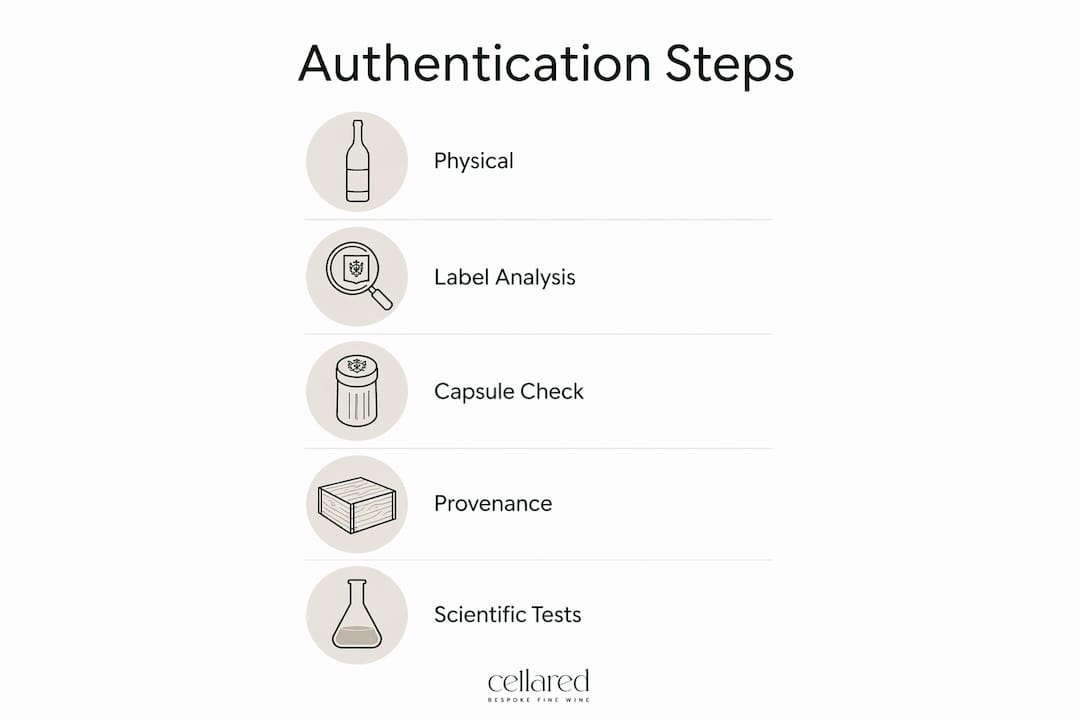
Physical inspection remains the foundation of wine authentication, and a trained eye can detect a great deal before any laboratory is involved. The process is methodical, moving from the outermost elements of the bottle inward.
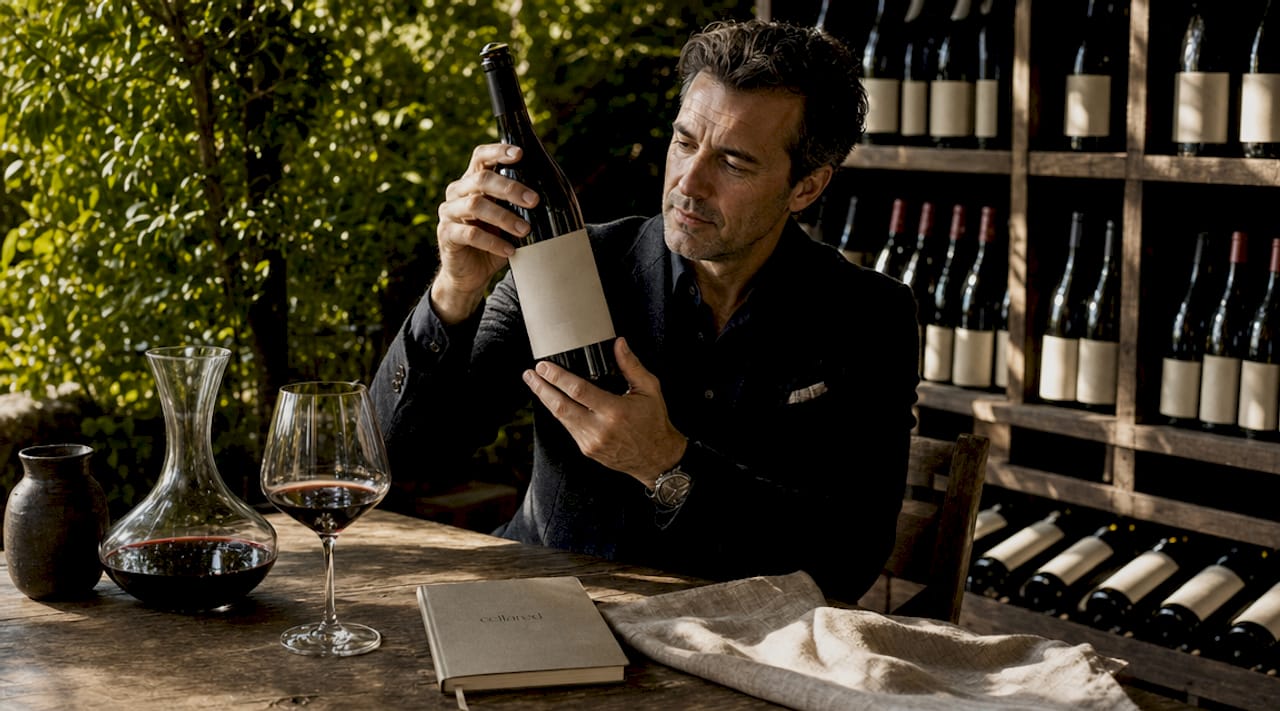
Label analysis is the first point of scrutiny. Authentic labels from prestigious estates are printed on specific paper stocks with precise typography, consistent colouring, and exacting alignment. Foxing, minor staining, and gentle wear are expected on genuinely aged bottles. Overly pristine labels on older bottles are a red flag, not a reassurance, because authentic bottles acquire natural ageing signs over decades. Counterfeiters frequently underestimate this detail, producing labels that look too perfect.
Capsule and cork inspection follows. The capsule should sit flush, show no signs of re-sealing, and bear the producer's markings. Cork branding and vintage matching the label is a definitive authentication step, though it requires removing the capsule. Scratches on the cork or inconsistencies between the cork's vintage and the label's vintage are telltale signs of tampering. Many collectors overlook this step, reluctant to disturb the presentation of a bottle they intend to resell.
Glass markings and fill level provide further evidence. French bottles produced after 1930 typically carry the capacity printed directly on the glass, and the absence of this marking on a supposedly post-1930 French bottle warrants immediate scrutiny. Fill level, known as ullage, should be consistent with the bottle's stated age and storage conditions. Excessive ullage in a young wine, or unusually high fill in a very old one, both merit explanation.
Provenance documentation completes the traditional approach. A credible chain of custody includes purchase receipts, storage records, auction house catalogues, and certificates of authenticity. Ex-domaine provenance conveys the highest confidence, meaning the bottle has been held by the producing estate or château until sale. Any gap in the ownership record introduces uncertainty that physical inspection alone cannot resolve.
Pro Tip: When examining an older bottle, use a UV light and a jeweller's loupe. UV light reveals paper repairs, re-glued labels, and ink inconsistencies invisible in normal lighting. A loupe exposes printing irregularities that separate genuine estate labels from high-quality reproductions.
How is modern technology transforming wine authentication?
Technology has shifted wine authentication from an art dependent on individual expertise to a science capable of objective, repeatable verification. The advances are substantial, and collectors who ignore them are working with an incomplete toolkit.
-
NFC technology. Near-field communication chips embedded in capsules or glass allow a smartphone scan to retrieve verified provenance data directly from the producer's database. The scan confirms the bottle's identity, scan history, and geolocation log, creating a tamper-evident digital record. NFC tags provide strong anti-counterfeit protection but are vulnerable when adhesive is weak, making physical tamper evidence an essential companion to the digital check.
-
Blockchain digital ledgers. Blockchain records ownership transfers and supply chain events in an immutable sequence that cannot be altered retroactively. Each transaction, from the winery to the négociant to the auction house, is logged and time-stamped. This creates a transparent, verifiable history that supports both authentication and valuation.
-
Spectroscopic and isotopic analysis. Methods including nuclear magnetic resonance (NMR) spectroscopy, infrared spectroscopy, and stable isotope analysis examine a wine's chemical composition at a molecular level. Geochemical fingerprinting and machine learning are increasingly used to verify composition and origin independently, detecting adulteration and confirming regional identity with a precision no physical inspection can match.
-
Digital product passports. European producers are adopting digital product passports via QR codes, providing consumers with granular, transparent authentication data at the point of purchase. The EU's regulatory push toward mandatory DPPs signals that digital authentication is becoming a baseline expectation, not a premium feature.
-
Machine learning classification. AI algorithms trained on thousands of authenticated wine profiles can classify an unknown sample against known benchmarks, identifying anomalies in chemical composition that suggest fraud or mislabelling. This approach is particularly powerful for high-volume screening at auction.
The critical limitation of all digital and scientific methods is access. NMR spectroscopy requires specialist laboratory equipment and trained analysts. Blockchain verification depends on the producer having adopted the system in the first place. Digital product passports and IoT integration are transforming authentication into a brand asset, but adoption remains uneven across regions and producers.
Traditional versus scientific authentication: which approach wins?
Neither approach wins in isolation. The most credible authentication combines both, with each method compensating for the other's weaknesses.
| Criterion | Traditional methods | Scientific and digital methods |
|---|---|---|
| Cost | Low to moderate | Moderate to high |
| Accessibility | High; requires expertise, not equipment | Low to moderate; requires specialist tools or producer adoption |
| Accuracy | Variable; subject to human error | High; objective and repeatable |
| Invasiveness | Non-invasive for most checks | Non-invasive for NFC and blockchain; minor for spectroscopy |
| Scalability | Limited by expert availability | High; AI and NFC scale efficiently |
| Provenance depth | Dependent on documentation quality | Deep; immutable digital records where adopted |
Traditional physical inspection is accessible, low-cost, and draws on centuries of accumulated expertise. Its weakness is that counterfeiters have studied the same literature. A sophisticated forgery can pass a visual inspection conducted by someone without deep experience of a specific producer's label history. Scientific methods are objective and difficult to deceive, but they require either laboratory access or producer-side adoption of digital systems.
Pro Tip: Before purchasing a significant bottle, request both the provenance documentation and confirmation of any digital authentication the producer supports. Cross-referencing a blockchain record against physical condition checks takes minutes and adds a layer of assurance that neither method provides alone.
Practical steps for collectors to authenticate wine bottles
Approaching authentication with a structured method reduces the risk of oversight and builds a repeatable practice across a collection.
- Examine the label under natural light and UV light, looking for foxing, consistent ageing, and printing quality that matches the producer's known standards for that vintage.
- Check the fill level against documented expectations for the wine's age and storage history. Consult auction records or producer guidelines for reference.
- Inspect the capsule for flush fit, producer markings, and any signs of re-sealing or disturbance.
- Remove the capsule if the purchase warrants it and examine the cork for vintage branding consistent with the label. Scratches or inconsistencies indicate tampering.
- Request the full provenance chain from the seller, including purchase receipts, storage records, and any certificates of authenticity. Understanding provenance types is the foundation of confident buying.
- Scan any NFC chip or QR code present on the bottle and verify the result against the producer's database.
- Treat suspiciously pristine labels on old bottles as a warning, not a selling point. Authentic ageing leaves marks.
- Buy from reputable sources with established authentication protocols. Securing rare bottles through trusted channels reduces exposure to fraud at the point of acquisition.
- Engage a professional authentication service for bottles above a threshold value you set for your collection. The cost of expert assessment is negligible against the risk of acquiring a forgery at significant price.
Laboratory analysis combined with AI-driven fingerprinting offers a future-proof approach for collectors who hold or acquire bottles at the highest price points. The investment in professional verification pays for itself the first time it prevents a costly mistake.
Key takeaways
Wine authentication requires a layered approach combining physical inspection, provenance documentation, and scientific or digital verification to reliably confirm a bottle's identity and value.
| Point | Details |
|---|---|
| Counterfeit prevalence is significant | Counterfeits account for 10% to 30% of premium wine sales, making authentication a necessity, not an option. |
| Provenance is the cornerstone | Ex-domaine or fully documented chain-of-custody records provide the highest confidence in a bottle's authenticity. |
| Physical inspection has clear limits | Sophisticated forgeries can pass visual checks; combining physical methods with scientific analysis closes the gap. |
| Technology is raising the standard | NFC chips, blockchain ledgers, and spectroscopic analysis offer objective, repeatable verification unavailable to the naked eye. |
| Layered authentication is best practice | No single method is infallible; combining traditional, digital, and scientific checks provides the most reliable outcome. |
The authentication question collectors should be asking sooner
I have worked with collectors at every level, from those managing a few dozen bottles to those overseeing cellars worth millions, and the pattern I observe most consistently is this: authentication is treated as a problem to solve after a suspicious purchase, rather than a discipline applied before every significant acquisition.
The sophistication of modern counterfeiting has outpaced the instincts of even experienced collectors. I have seen bottles with impeccable labels, correct ullage, and plausible provenance documentation that failed spectroscopic analysis. The forgers who produce these bottles have studied the same reference materials the experts use. Physical inspection, however meticulous, is no longer sufficient on its own for bottles above a certain value threshold.
What I find genuinely encouraging is the trajectory of digital authentication. NFC-enabled capsules and blockchain provenance records are moving from novelty to expectation among serious producers. The EU's digital product passport mandate will accelerate this further. For collectors buying today, the question is not whether to adopt a layered authentication approach, but how quickly to build that discipline into every acquisition decision. The collectors who do this consistently are the ones who sleep well when the market shifts.
— David
How Cellared Fine Wine supports your collection
Cellared Fine Wine works with collectors, investors, and private clients who understand that provenance and authenticity are the foundations of every sound wine decision. Whether you are acquiring a single exceptional bottle or managing a cellar of significant depth, Cellared brings the expertise, market knowledge, and professional rigour to verify, value, and protect what you hold. From court-ready wine valuations for insurance and probate to bespoke buying with full authentication protocols, every service is built around the confidence that comes from knowing exactly what you own. Speak with the Cellared team at cellaredfinewine.com.au to discuss your collection.
FAQ
What does wine authentication involve?
Wine authentication involves verifying a bottle's provenance, label, cork, fill level, and documentation to confirm its origin and genuineness. Advanced methods include NFC scanning, blockchain verification, and spectroscopic chemical analysis.
How common is counterfeit wine in the premium market?
Counterfeit products account for 10% to 30% of premium-segment sales in high-risk wine and spirits markets. This rate makes authentication a practical necessity for any collector acquiring bottles of significant value.
What is provenance and why does it matter for authentication?
Provenance is the documented chain of ownership from the winery to the current holder, and ex-domaine provenance conveys the highest level of confidence. Gaps in provenance documentation introduce uncertainty that physical inspection alone cannot resolve.
Can a smartphone be used to authenticate wine?
Yes, where a producer has embedded an NFC chip or QR code linked to a blockchain record, a smartphone scan can retrieve verified provenance data and scan history. This digital check should always be combined with physical inspection for reliable results.
When should a collector engage a professional authentication service?
A professional service is warranted for any bottle above a value threshold where the cost of expert assessment is proportionate to the acquisition price. Specialist appraisers apply both physical expertise and access to scientific analysis that individual collectors typically cannot replicate.