
Brand names of wine are defined as the commercial identities that producers use to signal quality, origin, and style to buyers across every market tier. They carry the weight of heritage, marketing investment, and consumer trust in a single label. For collectors and enthusiasts, reading a brand name correctly is the difference between a sound acquisition and a costly misjudgement. Names like Barefoot, Dom Pérignon, and Antinori each occupy distinct positions on the spectrum from mass-market convenience to rarefied investment territory. Understanding where a name sits on that spectrum is the foundation of any serious cellaring strategy.
What are brand names of wine and why do they matter?
A branded wine is defined as a product engineered for consistent flavour and reliable volume across retail channels. The goal is recognition, not revelation. Consumers reach for the same bottle because it tastes the same every time, regardless of vintage variation or terroir nuance. That consistency is the brand's commercial promise.
This stands in direct contrast to what the industry calls a label. A label, in the collector's sense, is tied to a specific place, a specific producer, and often a specific vintage. It embraces variability as a feature, not a flaw. Brands focus on recognition and consistency, whereas labels emphasise terroir and vintage variability. That distinction reshapes how you evaluate every bottle you consider adding to your collection.
Brand names also carry enormous commercial weight. They drive retail shelf placement, marketing spend, and consumer loyalty at scale. A name that resonates builds trust before the cork is pulled. For enthusiasts building a portfolio, the brand name is the first filter, not the final one.
Pro Tip: When you encounter an unfamiliar wine name, ask whether it appears on multiple vintages with identical flavour descriptors. If it does, you are looking at a brand. If the producer discusses vintage variation openly, you are looking at a label worth investigating further.
- Consistency signals: Branded wines maintain flavour profiles across years, making them reliable for gifting and entertaining but rarely for cellaring.
- Terroir signals: Label-driven wines reference specific communes, vineyards, or appellations, which is the language of scarcity and pedigree.
- Marketing signals: Heavy advertising spend, celebrity partnerships, and supermarket placement all indicate a brand orientation rather than a collector orientation.
- Heritage signals: Founding dates, family lineage, and appellation history on the label suggest a producer who values provenance over volume.
Which wine brands lead globally and what drives their success?
The world's most recognised wine names succeed through a combination of volume, consistency, and deliberate positioning. They occupy different market tiers, but each has mastered the art of making its name synonymous with a particular experience.
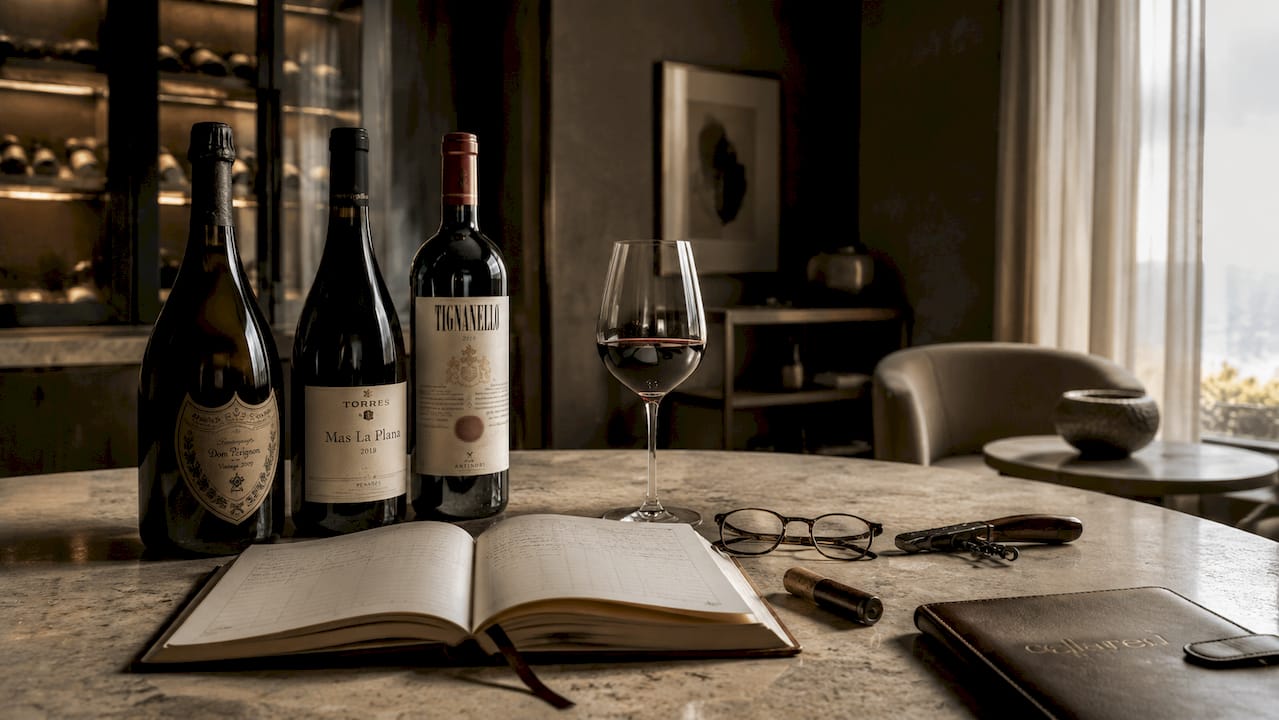
Barefoot is the clearest example of mass-market dominance. Barefoot sold almost 19.5 million nine-litre cases in 2023 and expanded its offerings to 30 varieties as of 2026. That scale reflects a brand built entirely on accessibility and range, not on terroir or vintage prestige. It is the benchmark for understanding how volume-driven wine names operate.
Antinori and Torres represent a different category entirely. Both families have produced wine for centuries, and their names carry the authority of documented history. Antinori's Tignanello, for instance, helped define the Super Tuscan category in the 1970s. Torres has built a reputation across Spain and Chile by combining quality with genuine environmental commitment. These are names that collectors respect because the pedigree is verifiable.
Dom Pérignon occupies the apex of the prestige tier. The name functions as both a brand and a collector's label, depending on the release. Standard vintage Dom Pérignon is widely available and heavily marketed. The Plénitude releases, however, are a different proposition entirely. Late-disgorged Champagnes like the former 'Œnothèque' fetch significantly higher auction prices than standard vintages. The name alone does not guarantee investment value. The specific release within that name does.
Understanding wine market trends in 2026 helps collectors identify which names are gaining momentum and which are plateauing. Brand portfolio diversity, as seen with Torres across multiple regions, also insulates producers against single-vintage risk, which is a factor worth weighing when assessing long-term brand stability.
How do brand names affect wine investing and collecting?
The relationship between a brand name and its investment value is not linear. A famous name does not automatically produce a collectible asset. Mass-market brands rarely hold investment value beyond retail price. True portfolio appreciation comes from labels with scarcity and pedigree. Collectors who conflate the two often discover the error only at resale.
The auction market makes this distinction visible. A rare 1959 Dom Pérignon Rosé sold for $84,700 at auction, a figure that reflects scarcity, provenance, and the specific prestige of that release. No mass-market brand achieves comparable results, regardless of how widely recognised its name may be. The auction floor rewards rarity, not recognition.
"The distinction between brands and labels is crucial for investment strategy: brands offer consistent quality and marketing but limited scarcity, whereas labels emphasise terroir and vintage-based rarity. Collectors who treat branded wines as investment assets often find their portfolios underperform against those built on pedigreed labels."
Heritage, scarcity, and provenance are the three pillars of collector value. A brand name that signals all three, as Dom Pérignon's Plénitude tier does, earns its place in a serious portfolio. A name that signals only recognition and availability does not. Consulting wine auction guides for 2026 gives collectors a clear view of which names are performing at the top end of the market.
| Brand tier | Investment potential | Key driver |
|---|---|---|
| Mass-market brands | Low | Volume and retail recognition |
| Heritage family labels | Moderate to high | Terroir, pedigree, and documented history |
| Prestige Champagne houses | High (select releases) | Scarcity, maturity designation, and provenance |
| Cult producers | Very high | Limited production and critical acclaim |
What makes a wine brand name memorable or effective?
The most enduring wine names work on multiple levels simultaneously. They communicate origin, evoke emotion, and carry a story that survives the transaction. Naming a wine brand requires a nuanced balance of marketing appeal and authentic storytelling to attract both casual consumers and discerning collectors.
G.H. Mumm's Cordon Rouge is a masterclass in visual and linguistic branding. The red sash label has symbolised Mumm's quality since 1876 and functions as a mark of heritage that collectors immediately recognise. The name 'Cordon Rouge' is French for 'red ribbon,' a direct reference to the Legion of Honour, which positions the wine within a tradition of excellence without requiring explanation. That kind of layered meaning is what separates a memorable name from a forgettable one.
Names like 'Hexameter' or 'Fleur de Mer' demonstrate how linguistic choices shape brand positioning in the modern market. Poetic or exotic names generate curiosity and shelf appeal. They work well for emerging producers who lack the heritage of a Mumm or an Antinori but want to signal ambition and craft. The risk is that novelty fades. A name built on intrigue alone rarely sustains collector interest over decades.
Pro Tip: When assessing a wine name for long-term relevance, look for names anchored to a specific place, family, or tradition. Names that rely purely on clever wordplay or irreverence tend to attract early attention but rarely build the collector confidence that drives auction premiums.
- Place-anchored names: Names tied to a specific appellation or vineyard signal terroir commitment and geographic authenticity.
- Family names: Producer surnames carry accountability. When a family puts its name on a bottle, the reputational stakes are personal.
- Heritage references: Names that draw on documented history, like Cordon Rouge's Legion of Honour connection, build credibility through association.
- Poetic or evocative names: Effective for shelf appeal and emerging brands, but require quality to sustain long-term relevance.
- Irreverent or cheeky names: Irreverent wine branding drives shelf appeal but does not guarantee cellaring potential or investment value.
How to interpret brand names when expanding your collection
Reading a wine name with precision is a skill that separates informed collectors from reactive buyers. The name is the entry point, not the conclusion. Every name on a label carries signals worth decoding before a purchase decision is made.
Start with the brand's consistency record. A name that has maintained quality across multiple vintages and regions demonstrates the kind of institutional discipline that supports long-term value. Antinori's multi-generational track record is a useful benchmark. Wine provenance frameworks give collectors the tools to verify that consistency through documented ownership and storage history.
Research the brand's collector reputation separately from its retail presence. A name that dominates supermarket shelves and a name that commands auction premiums are rarely the same name. Understanding what makes a wine collectible requires looking beyond marketing spend to scarcity, critical scores, and secondary market performance.
- Check secondary market prices: Auction results reveal what the market actually pays, not what the producer hopes to charge.
- Assess appellation specificity: Names tied to tightly defined appellations carry more geographic credibility than broad regional designations.
- Review vintage data: Brands that publish detailed vintage notes signal transparency. Those that do not may be prioritising consistency over authenticity.
- Examine the producer's portfolio: A producer with a focused range of high-quality wines is more credible than one with dozens of labels across unrelated regions.
- Consult independent valuations: Market-led appraisals from specialists like Cellared Fine Wine provide an objective view of a name's current and projected worth.
Key takeaways
The most important distinction in wine collecting is between a brand built on recognition and a label built on terroir, scarcity, and pedigree.
| Point | Details |
|---|---|
| Brand versus label distinction | Brands offer consistency; labels offer scarcity and terroir, which drives collector value. |
| Mass-market names and investment | High-volume brands like Barefoot rarely appreciate beyond retail price in a portfolio. |
| Prestige names and auction value | Specific releases from names like Dom Pérignon command significant auction premiums. |
| Heritage as a value signal | Names anchored to place, family, or documented history carry stronger long-term credibility. |
| Independent valuation matters | Market-led appraisals separate genuine collector assets from well-marketed retail products. |
The brand name trap most collectors fall into
The most common mistake I see collectors make is treating a famous name as a proxy for investment quality. It is an understandable error. When a name appears on billboards, in restaurants, and across every bottle shop in the country, it feels authoritative. But authority in the retail market and authority in the collector market are two entirely different things.
The producers who command the highest auction premiums are often the least visible in everyday retail. Their names are known to collectors precisely because they are not everywhere. Scarcity is the point. When a name becomes ubiquitous, the collector premium tends to erode, regardless of the underlying quality.
The advice I give consistently is this: build your knowledge of a name before you build a position in it. Understand its appellation, its vintage history, its secondary market trajectory. A name that has held value through difficult vintages and economic downturns is a name worth trusting. One that has only ever been marketed is a name worth questioning.
— David
Fine wine expertise for serious collectors
Cellared Fine Wine works with collectors, investors, and private clients who want to buy well, value accurately, and manage their collections with confidence.
Whether you are assessing a single bottle or an entire cellar, Cellared's team provides independent wine appraisals grounded in real market data, not guesswork. For collectors building a portfolio around the world's finest names, Cellared also offers bespoke cellar management that protects both the wine and its long-term value. Every service is tailored to the individual client, combining deep market knowledge with the kind of personal attention that serious collections deserve.
FAQ
What is the difference between a wine brand and a wine label?
A wine brand prioritises consistent flavour and broad retail availability, while a wine label emphasises terroir, vintage variability, and producer pedigree. Collectors generally find investment value in labels, not brands.
Which wine brand sells the most globally?
Barefoot is the top-selling wine brand in the US market, selling almost 19.5 million nine-litre cases in 2023. Its success is built on affordability and a wide range of varieties, not on collector prestige.
Do famous wine brand names hold investment value?
Most famous brand names do not appreciate significantly beyond retail price. Investment value comes from labels with documented scarcity, provenance, and critical acclaim, such as specific Dom Pérignon Plénitude releases.
What makes a wine brand name memorable for collectors?
Names anchored to a specific place, family lineage, or historical tradition carry the strongest long-term credibility. G.H. Mumm's Cordon Rouge, for example, has carried its red sash heritage marker since 1876.
How should collectors research a wine brand before buying?
Check secondary market auction results, review vintage-specific critical scores, and consult independent valuations from specialists. Understanding collector wine releases helps distinguish genuine investment assets from well-marketed retail products.