
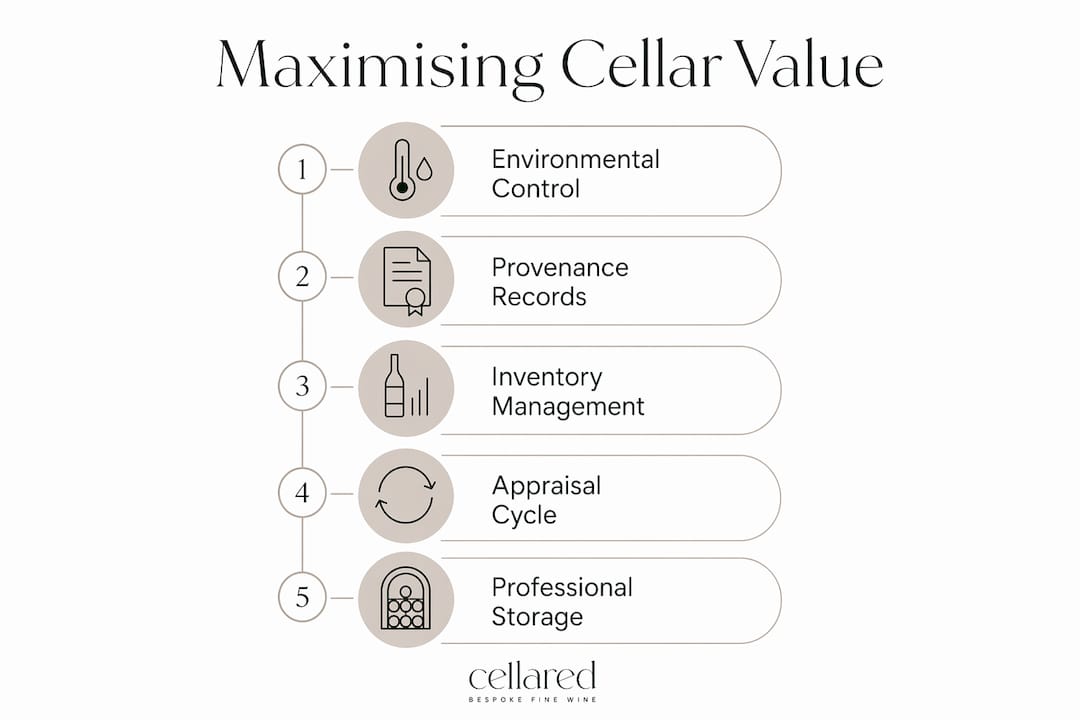
Maximising cellar value is defined as the deliberate combination of precise environmental control, meticulous provenance documentation, and disciplined portfolio management to protect and grow the financial worth of a fine wine collection. For collectors and investors, this is not a passive exercise. Professional storage with documented provenance can increase wine resale value by 5–20% depending on the producer, a figure that reflects how seriously buyers and auction houses weigh storage history. The strategies in this guide address every lever available to you, from the microclimate inside your cellar to the frequency of your appraisals.
How to maximise cellar value through environmental control
The single most consequential decision a collector makes is where and how wine is stored. Every bottle in your cellar is a living asset, and its condition at the point of sale determines its price.
Temperature: stability over perfection
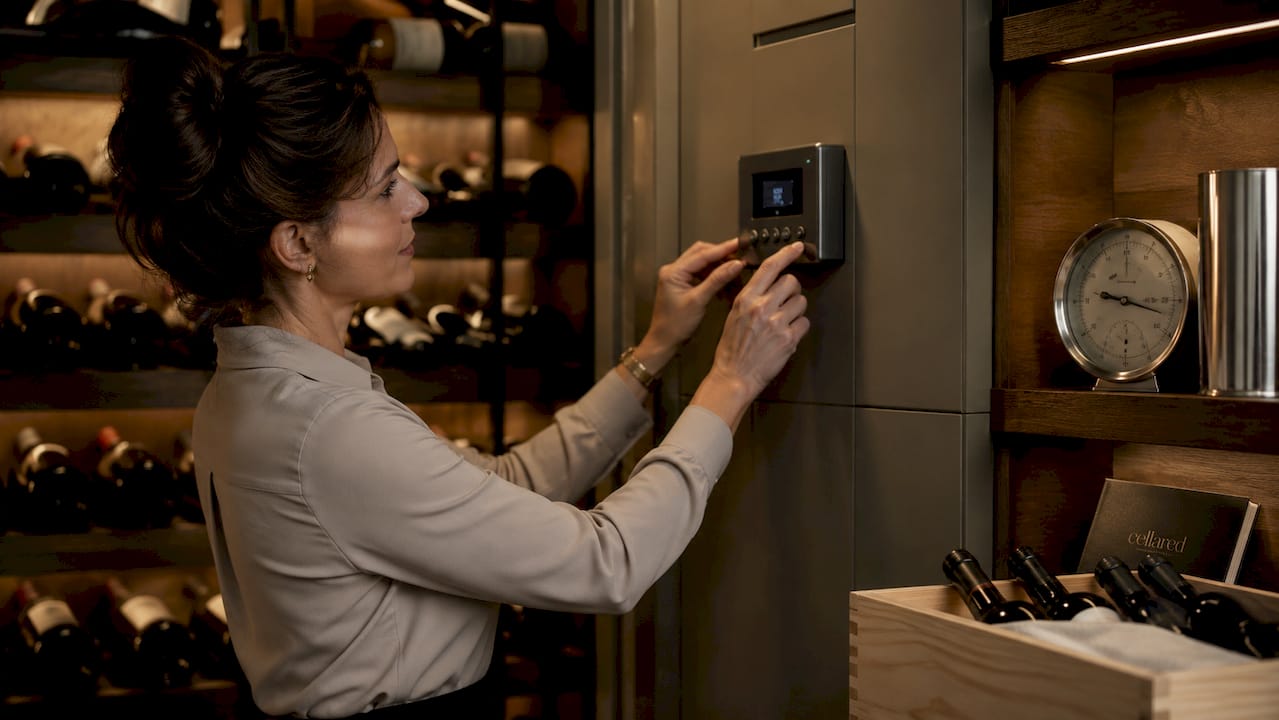
The optimal storage temperature for long-term wine cellaring sits between 50–59°F (10–15°C), with 55°F widely regarded as the ideal target. What matters more than hitting an exact number, however, is consistency. Microclimate stability prevents cork stress and oxidation far more effectively than any single temperature setpoint. A cellar that fluctuates between 45°F and 65°F across seasons will degrade wine faster than one held steadily at 58°F year-round. Collectors who invest in climate monitoring technology protect themselves against the silent losses that temperature swings cause.
Humidity, light, and vibration
Relative humidity between 60–70% is the target range for preserving corks and labels. Below 50%, corks dry and shrink, allowing oxygen ingress that accelerates ageing and destroys resale condition. Above 80%, mould becomes a genuine risk to both labels and wooden cases, both of which affect presentation value at auction. Light exposure causes UV and phenolic degradation, and vibration disrupts the ageing process by disturbing sediment and accelerating chemical reactions. Professional cellars eliminate these variables with low-UV LED lighting and vibration-isolated racking.
The practical checklist for environmental control covers these key areas:
- Temperature: Hold between 10–15°C with minimal seasonal fluctuation
- Humidity: Target 60–70% relative humidity; use a hygrometer to monitor continuously
- Light: Install low-UV LED lighting and avoid direct sunlight exposure
- Vibration: Keep wine away from appliances, foot traffic, and mechanical equipment
- Air quality: Maintain adequate ventilation to prevent musty odours transferring to corks
Pro Tip: Install a digital data logger that records temperature and humidity over time. This log becomes part of your provenance record and adds tangible evidence of proper care at the point of resale.
For a deeper look at microclimate management for private cellars, the principles of stability and monitoring apply equally to home and professional facilities.
Does provenance documentation really increase resale value?
Provenance is the currency of the fine wine market. A bottle's storage history is as important to a serious buyer as the wine itself. Without it, even exceptional bottles attract discounts.
Why buyers pay a premium for documented history
Buyers discount bottles with poor or unknown storage history because they cannot assess the risk of premature ageing or cork failure. The uncertainty alone reduces what they are willing to pay. Conversely, a bottle accompanied by intake records, movement logs, and continuous temperature data commands confidence at auction and in private sales. Professional bonded storage facilities generate this documentation automatically, which is one reason serious collectors favour them over home cellars for high-value bottles.
"Pro-level storage reduces buyer uncertainty by maintaining comprehensive intake, movement, and temperature records, improving transparency and trust at resale. Professional cellaring also optimises conditions to reduce bottle variation and improve case consistency, increasing attractiveness for wholesale buyers and auction houses."
The practical steps for building strong provenance documentation include:
- Intake records: Log the date, source, and condition of every bottle or case on arrival
- Movement logs: Record any transfer between storage locations, including dates and reasons
- Temperature and humidity records: Retain continuous monitoring data for the life of the collection
- Insurance coverage: Maintain current insurance that reflects appraised value, not purchase price
- Chain of custody: Keep original purchase receipts, auction catalogues, and merchant invoices
Understanding the different types of wine provenance helps collectors identify which records carry the most weight with buyers and valuers.
Best practices for cellar inventory management and appraisal
A cellar without a current inventory is a cellar losing value silently. Treating your collection like an accounting system is the highest-leverage habit a collector can adopt.
Annual inventory reconciliation
Annual physical inventory reconciliation against a digital record prevents silent inventory loss and ensures your cellar reflects reality rather than memory. Digital tools such as CellarTracker allow collectors to track individual bottles, drinking windows, and purchase prices in one place. The physical count confirms what the digital record says and catches discrepancies before they become costly surprises. Collectors who skip this step often discover at the point of sale that bottles have passed their drink window, been consumed without record, or deteriorated without notice.
Appraisal cycles and market alignment
Portfolio management requires ongoing review to synchronise appraisal, insurance, and sales with market windows. A 3–5-year appraisal cycle aligned with market shifts captures value movements in key regions and producers. Fine wine markets move in cycles, and a Burgundy purchased a decade ago may now represent a disproportionate share of your portfolio's value. Aligning appraisal frequency with drink windows and market conditions allows you to sell at peak value rather than hold past it.
The recommended approach to inventory and appraisal management follows these steps:
- Conduct a full physical count annually. Match every bottle against your digital inventory and resolve discrepancies immediately.
- Schedule professional appraisals every 3–5 years. Align timing with known market cycles for your key producers and regions.
- Review drink windows during each inventory cycle. Identify bottles approaching their peak and plan sales or consumption accordingly.
- Update insurance valuations after each appraisal. An outdated insurance value exposes you to significant underinsurance risk.
- Assess portfolio composition actively. Rebalance toward producers and vintages with strong secondary market demand.
Pro Tip: Treat your cellar appraisal as a financial audit, not a formality. A current, independent valuation from a specialist like Cellared Fine Wine gives you the market-led data needed to make confident buying, selling, and insurance decisions.
Understanding wine cellar insurance is a natural companion to the appraisal process, as coverage gaps often only become apparent when a collection is properly valued.
How to plan for cellar expansion without sacrificing quality
Cellar expansion is a capital decision, not just a storage one. Every additional bottle added to your collection carries an ongoing cost that collectors must account for.
Budgeting for professional storage
The combined annual cost of professional storage and insurance typically runs 0.6–1.2% of cellar value. On a collection worth $500,000, that represents $3,000–$6,000 per year. This figure is the baseline for any expansion budget. Collectors who underestimate ongoing storage costs often find themselves making reactive decisions, such as selling prematurely or moving wine to substandard conditions, both of which erode value. A detailed breakdown of wine storage costs helps collectors build realistic expansion budgets before committing capital.
Home cellar versus professional facility
The choice between a home cellar and a professional facility involves trade-offs that affect both condition and resale value.
| Factor | Home cellar | Professional facility |
|---|---|---|
| Environmental control | Dependent on construction quality | Engineered and monitored continuously |
| Provenance documentation | Collector-managed | Automatically generated |
| Insurance | Requires specialist policy | Often included or simplified |
| Buyer confidence at resale | Lower without third-party verification | Higher due to independent records |
| Ongoing cost | Capital-intensive upfront | Predictable annual fee |
Pro Tip: For bottles valued above $500 per unit, professional bonded storage almost always pays for itself through the resale premium it generates. Reserve home cellaring for wines you plan to drink within five years.
The most common mistake collectors make during expansion is prioritising quantity over quality of storage. Adding 500 bottles to a cellar with inadequate humidity control does not grow a portfolio. It accelerates its decline. Plan for space, temperature, and humidity capacity before purchasing additional stock, and learn why cellaring wine in proper conditions is the foundation of any value-building strategy.
Key takeaways
A fine wine collection reaches its maximum value only when environmental control, provenance documentation, and active portfolio management work together as a single discipline.
| Point | Details |
|---|---|
| Environmental stability is non-negotiable | Hold temperature at 10–15°C with 60–70% humidity to protect corks, labels, and ageing potential. |
| Provenance adds 5–20% to resale value | Documented intake, movement, and temperature records build buyer confidence and command price premiums. |
| Annual inventory prevents silent loss | Reconcile physical stock against digital records every year to catch discrepancies and expired drink windows. |
| Appraisals should align with market cycles | Schedule professional valuations every 3–5 years and update insurance immediately after each appraisal. |
| Expansion requires cost planning | Budget 0.6–1.2% of cellar value annually for storage and insurance before committing to new purchases. |
What I have learned about cellar value after years in fine wine
The collectors I have worked with who achieve the strongest resale outcomes share one habit: they treat their cellar records with the same rigour they apply to their financial accounts. They do not rely on memory or rough estimates. They maintain intake logs, they schedule appraisals, and they review drink windows before the market moves past them.
The uncomfortable truth is that most collectors underestimate how much provenance affects price. A bottle from a great vintage, stored impeccably but without documentation, will always sell at a discount to an identical bottle with a clean paper trail. Buyers at auction and in private sales are not just buying wine. They are buying certainty.
My advice to collectors balancing enjoyment with investment is this: drink your everyday bottles freely, but protect your investment-grade stock with the same discipline you would apply to any serious asset. The cellar that grows in value is the one that is managed, not just filled.
— David
Professional cellar management and valuation with Com
Com, Cellared Fine Wine, works with collectors and investors across Australia to protect and grow the value of fine wine collections. Whether you need a court-ready valuation for insurance or probate, bespoke buying advice to strengthen your portfolio, or ongoing professional cellar management to maintain optimal conditions and provenance records, the team brings deep market knowledge and a highly personal approach to every engagement.
For collectors ready to take a more disciplined approach to their collection, Cellared Fine Wine offers the independent, market-led expertise needed to buy well, value accurately, and manage with confidence.
FAQ
What is the ideal temperature for long-term wine storage?
The optimal range is 50–59°F (10–15°C), with 55°F as the widely accepted target. Stability matters more than the exact setpoint, as temperature fluctuations cause cork stress and accelerate oxidation.
How much does provenance affect wine resale value?
Documented provenance can increase resale value by 5–20% depending on the producer. Buyers discount bottles with unknown or inconsistent storage history due to the perceived risk of poor condition.
How often should I have my wine cellar appraised?
A 3–5-year appraisal cycle aligned with market shifts is the recommended practice. Insurance valuations should be updated immediately after each appraisal to avoid underinsurance.
What does professional wine storage cost annually?
Professional storage and insurance combined typically costs 0.6–1.2% of cellar value per year. For a $500,000 collection, that equates to $3,000–$6,000 annually.
What records should I keep to protect cellar value?
Maintain intake records, movement logs, continuous temperature and humidity data, original purchase receipts, and current insurance documentation. These records form the chain of custody that buyers and auction houses require.