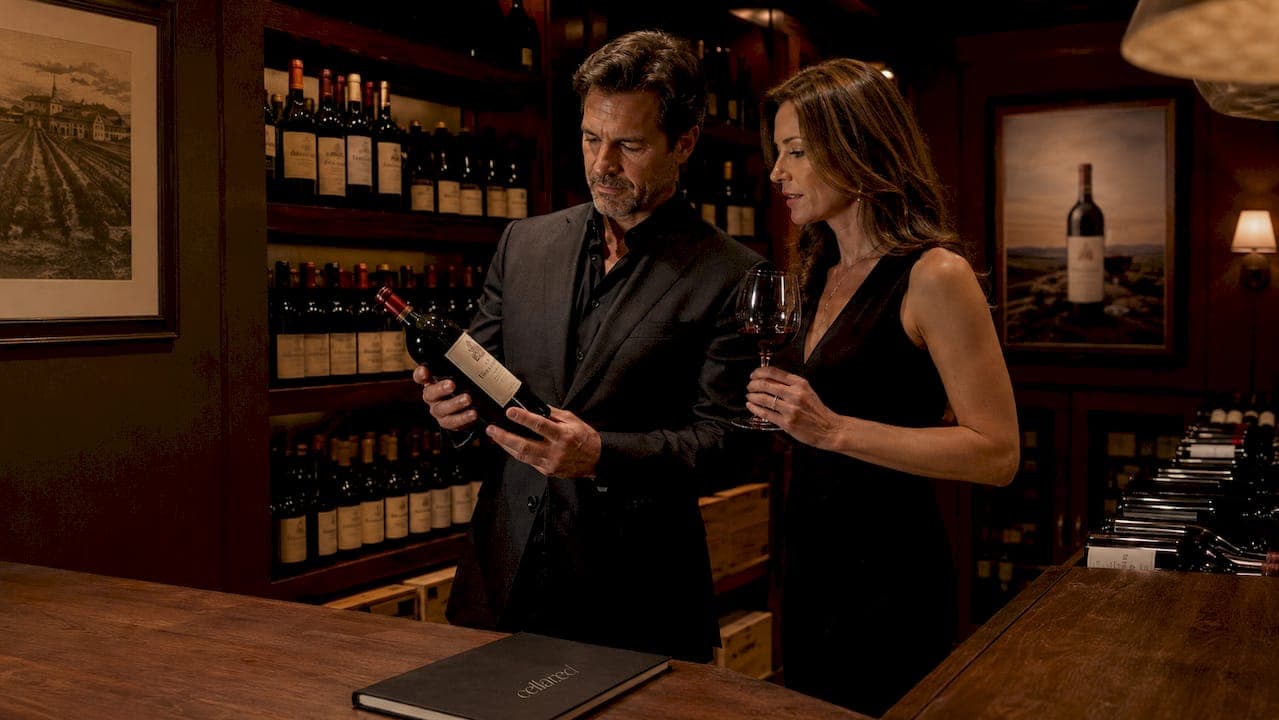
A first growth wine is defined as the highest classification of red wine estate in Bordeaux, France, representing the absolute pinnacle of prestige, quality, and market value in the global fine wine world. Known formally as Premier Cru Classé, this designation originates from the 1855 Bordeaux Classification and applies to just five estates: Château Lafite Rothschild, Château Latour, Château Margaux, Château Haut-Brion, and Château Mouton Rothschild. For collectors and investors, understanding what defines a first growth wine is the foundation of every serious fine wine decision.
What is a first growth wine and where does the classification come from?
The 1855 Bordeaux Classification is the origin of first growth status, and its story begins with an imperial commission. Napoleon III ordered the Bordeaux wine trade to rank its finest estates for the Paris Universal Exhibition of 1855. The brokers tasked with the ranking used market reputation and prevailing prices as their primary criteria, not terroir alone. That commercial logic produced a hierarchy that has shaped the global fine wine market ever since.
The original classification ranked 61 red wine châteaux across five tiers, with four estates sitting at the very top as First Growths. Those four were Château Lafite Rothschild, Château Latour, Château Margaux, and Château Haut-Brion. The fifth and final addition came more than a century later.
"The only substantial change to the 1855 Classification in over 170 years was the 1973 promotion of Château Mouton Rothschild from Second to First Growth. That single revision, after decades of lobbying by Baron Philippe de Rothschild, underscores just how immovable this classification truly is."
The stability of the classification is both its greatest strength and its most debated characteristic. Estates that were commercially dominant in 1855 remain enshrined at the top today, regardless of shifts in winemaking philosophy or vineyard management. For collectors, that permanence is precisely what makes first growth status so valuable as a signal of prestige.
The five First Growth estates
- Château Lafite Rothschild (Pauillac): celebrated for elegance, finesse, and extraordinary longevity
- Château Latour (Pauillac): revered for power, structure, and one of the longest ageing trajectories in Bordeaux
- Château Margaux (Margaux): admired for perfumed complexity and silky texture
- Château Haut-Brion (Pessac-Léognan): the only Left Bank estate outside the Médoc, known for earthy depth and consistency
- Château Mouton Rothschild (Pauillac): famous for its artist label series and opulent, richly fruited style
What distinguishes first growth wines from other classifications?
First growth wines stand apart from the other 56 classified growths in ways that go well beyond a number on a label. The distinction begins with terroir. Each of the five estates sits on exceptional gravel-rich soils that drain freely, stress the vines beneficially, and produce grapes of concentrated flavour and structural complexity. That combination of geology, microclimate, and centuries of viticultural refinement is extraordinarily difficult to replicate.
The flavour profiles of Premier Cru Classé wines share certain hallmarks, though each estate expresses them differently:
- Deep, layered fruit: blackcurrant, plum, and dark cherry, often evolving toward dried fruit and leather with age
- A firm tannic backbone that softens over decades into something closer to velvet
- Pronounced secondary and tertiary complexity: cedar, graphite, tobacco, truffle, and forest floor
- Exceptional length on the palate, often measured in minutes rather than seconds
- Ageing potential that routinely extends 30–50 years in the finest vintages
One of the most misunderstood aspects of first growth classification is its attachment to the estate rather than to specific vineyard plots. Classification is estate-centric, meaning a château can legally buy or sell vineyard parcels without losing its Premier Cru status. The classification travels with the name, not the land. That nuance matters enormously for collectors assessing terroir-based arguments about quality.
Limited annual production across the five estates adds a layer of rarity that sustains collector demand. Scarcity combined with historic prestige drives strong secondary market values, particularly for sought-after vintages.
Pro Tip: When comparing first growth wines across estates, focus on the vintage year and the specific château's track record in that year. Broad generalisations about "Pauillac versus Margaux" matter far less than understanding how a particular estate performed in a particular growing season.
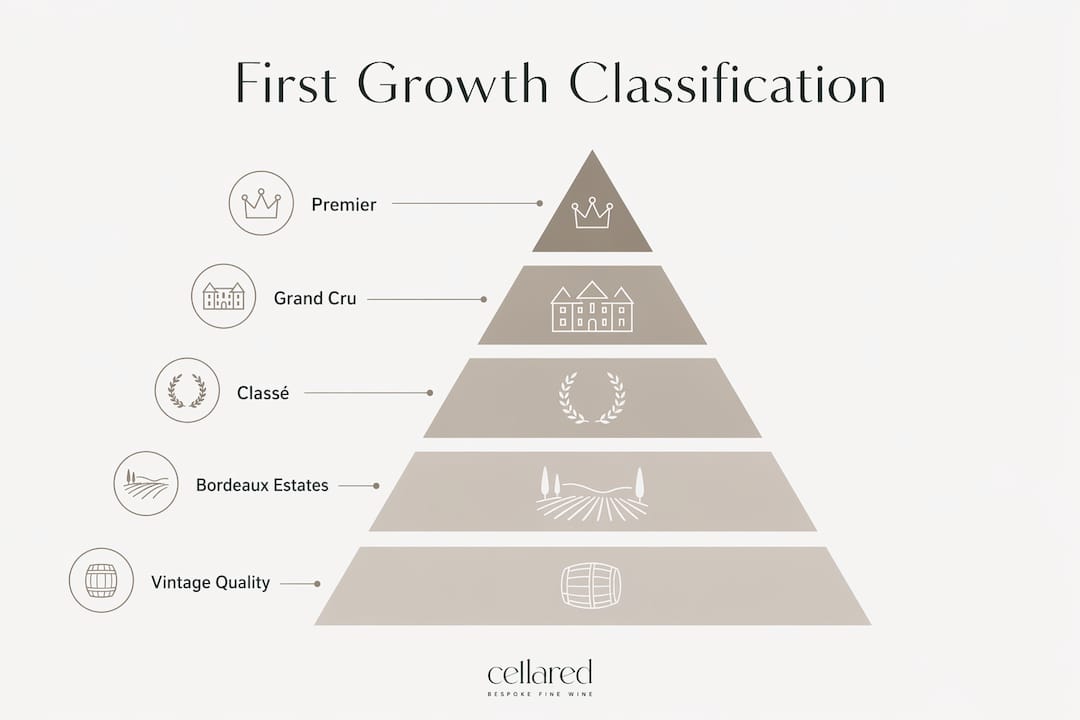
Why are first growth wines significant for collectors and investors?
First growth wines occupy a unique position in the fine wine investment world. Their classification has remained essentially unchanged for 171 years, which means the prestige signal they carry is as close to permanent as any asset in the luxury market. That stability is the foundation of their investment case.
The investment logic for Premier Cru Classé wines rests on four interconnected factors:
- Classification permanence: The 1855 hierarchy rarely changes, preserving the prestige and market recognition of first growth status across generations of collectors.
- Ageing capacity: First growth Bordeaux wines are renowned for their longevity, with the finest vintages improving for decades. That ageing trajectory means a well-stored bottle appreciates in sensory and financial value simultaneously.
- Global collector demand: Auction houses in London, Hong Kong, and New York consistently record strong results for first growth lots, reflecting deep and geographically diverse demand.
- Vintage selectivity: Experts advise paying close attention to specific château vintage performance rather than generalising by year. Certain recent vintages offer exceptional value when score quality and market price are weighed together.
Proper storage is non-negotiable for preserving both the sensory and financial value of these wines. Storage methods range from professional bonded warehouses to temperature-controlled private cellars, but the principles are consistent: stable temperature around 12–14°C, high humidity, minimal vibration, and darkness. A first growth stored poorly is a first growth that will disappoint at auction and at the table.
The 1855 classification's enduring prestige heavily influences wine investment, yet experienced collectors know to consider modern viticulture improvements alongside historic rankings. An estate that has invested in precision viticulture and cellar technology over the past two decades may outperform its historic reputation in recent vintages. Building a fine wine portfolio around first growths requires both historical knowledge and current market intelligence.
How to identify and select first growth wines for your collection
Identifying a genuine first growth wine begins with the label. Each of the five estates prints its full château name prominently, along with the appellation and the vintage year. No legitimate first growth omits these details. The phrase Grand Cru Classé en 1855 or Premier Grand Cru Classé appears on the label of each estate, though the exact wording varies slightly by château.
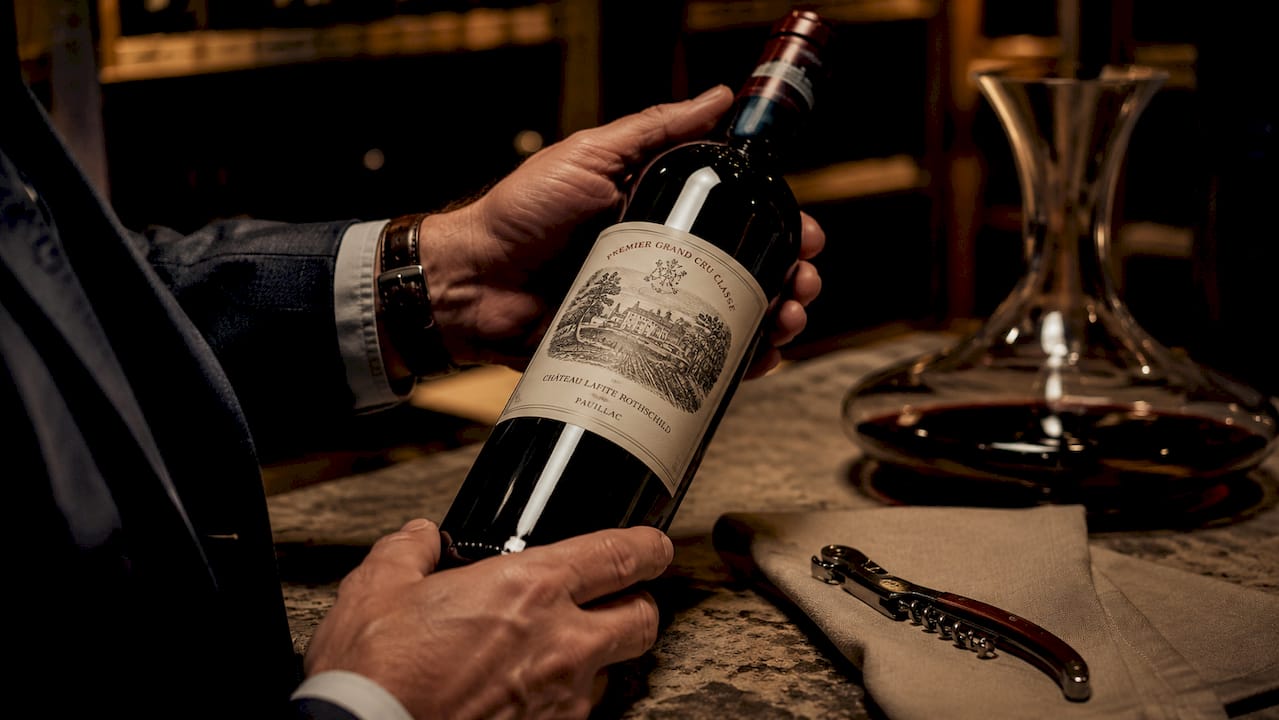
The table below summarises the key identification markers for each of the five estates:
| Château | Appellation | Label identifier |
|---|---|---|
| Château Lafite Rothschild | Pauillac | "Premier Grand Cru Classé" |
| Château Latour | Pauillac | Tower motif, "Premier Grand Cru Classé" |
| Château Margaux | Margaux | Neoclassical building image, "Premier Grand Cru Classé" |
| Château Haut-Brion | Pessac-Léognan | Château illustration, "Premier Grand Cru Classé" |
| Château Mouton Rothschild | Pauillac | Annual artist label, "Premier Grand Cru Classé" |
A common misconception among newer collectors is that any high-quality Bordeaux carries Grand Cru Classé status. The 1855 classification is a historical snapshot and does not cover all excellent wines. Outstanding estates that were overlooked in 1855, or that emerged after that date, sit outside the classification entirely. Classification is a tool of prestige, not a comprehensive modern quality guide.
Provenance verification is the other critical step for collectors. A bottle with an unbroken chain of custody, ideally stored in a bonded warehouse under professional conditions, commands a significant premium over one with an uncertain history. Always request storage records and, where possible, purchase through reputable specialist channels. For guidance on selecting wines for future value, the vintage year and provenance documentation are the two factors that matter most.
Pro Tip: When assessing a first growth for purchase, request the original wooden case if available. Estates release their wines in branded timber cases, and an intact original case adds both authenticity and resale value.
If you are exploring Bordeaux wine in Australia, the secondary market offers access to a wide range of vintages, though provenance diligence becomes even more critical when bottles have changed hands across international markets.
Pairing a first growth Bordeaux at the table is its own art. The structured tannins and savoury depth of these wines suit rich proteins beautifully. A seafood pairing guide can help you think through lighter accompaniments for younger, more mineral-driven vintages.
Key takeaways
First growth wines are defined by the 1855 Bordeaux Classification, and their value rests on classification permanence, exceptional terroir, limited production, and decades-long ageing capacity.
| Point | Details |
|---|---|
| Classification origin | The 1855 Bordeaux Classification created first growth status, commissioned by Napoleon III for the Paris Universal Exhibition. |
| Five estates only | Château Lafite Rothschild, Château Latour, Château Margaux, Château Haut-Brion, and Château Mouton Rothschild hold this status. |
| Estate-centric status | Classification attaches to the estate name, not specific vineyard plots, so landholdings can change without affecting status. |
| Investment fundamentals | Longevity, rarity, and classification permanence drive strong auction results and collector demand globally. |
| Provenance is critical | Storage history and chain of custody directly affect both the sensory quality and resale value of first growth bottles. |
A collector's perspective on first growth wines
I have spent years working with collectors who approach first growth wines with reverence, and what strikes me most is how often that reverence obscures clear thinking. The name on the label carries enormous weight, and rightly so. But the most rewarding collections I have seen are built by people who understand why these wines command their status, not just that they do.
The estate-centric nature of the classification is the detail that surprises collectors most. When a first growth estate acquires new vineyard parcels, those vines carry the Premier Cru name immediately. That is a remarkable commercial and legal privilege. It also means that terroir arguments about first growth wines are more nuanced than they first appear.
My practical advice is this: do not buy first growth wines purely as financial instruments. The collectors who enjoy these wines most, and who make the best long-term decisions, are the ones who open bottles, taste across vintages, and develop genuine sensory knowledge. A wine as a luxury asset is most rewarding when the investor also understands what is in the glass.
The market for first growth Bordeaux has matured considerably. Demand from Asian collectors, particularly in Hong Kong and Singapore, has reshaped price dynamics over the past two decades. Collectors who understand these shifts, and who buy with both passion and discipline, are the ones who build collections that endure.
— David
First growth wine services from Cellared Fine Wine
Collectors who take first growth wines seriously need more than enthusiasm. They need accurate valuations, trusted sourcing, and professional cellar management.
Cellared Fine Wine offers bespoke wine buying for collectors seeking specific first growth vintages, including rare and hard-to-find bottles with verified provenance. The team provides professional wine appraisals that are court-ready and market-led, covering insurance, probate, and private advisory purposes. For collectors building or maintaining a first growth portfolio, private cellar management services protect and grow the value of every bottle in your care. Cellared combines deep market knowledge with a highly personal approach, so your collection receives the attention it deserves.
FAQ
What does "first growth" mean in wine?
First growth, or Premier Cru Classé, is the highest tier of the 1855 Bordeaux Classification. It designates five estates recognised for exceptional quality, prestige, and market value.
How many first growth wines are there?
There are five first growth estates: Château Lafite Rothschild, Château Latour, Château Margaux, Château Haut-Brion, and Château Mouton Rothschild. This list has not changed since Mouton Rothschild was promoted in 1973.
Are first growth wines a good investment?
First growth Bordeaux wines are widely regarded as strong long-term investments due to their classification permanence, limited production, and global collector demand. Proper storage and provenance documentation are critical to realising their full financial value.
How do I identify a first growth wine on the label?
Each first growth estate prints its full château name and the phrase Premier Grand Cru Classé on the label, along with the appellation and vintage year. Mouton Rothschild is also identifiable by its annual commissioned artist label.
Does first growth status guarantee the best wine in any given year?
No. Classification reflects historic prestige, not annual performance. Experts advise assessing each château's vintage-specific track record rather than assuming first growth status guarantees superiority in every year.