
A vertical wine collection is defined as the same wine from a single producer assembled across multiple consecutive vintages, with time as the sole variable. This approach, known formally as a vertical tasting collection, gives collectors and investors a rare lens through which to observe how a wine evolves across years and decades. A minimum of three consecutive vintages defines a functional vertical, though serious collections often span ten or more. Understanding this structure is the foundation of any considered approach to fine wine collecting.
What is a vertical wine collection and how does it differ from horizontal?
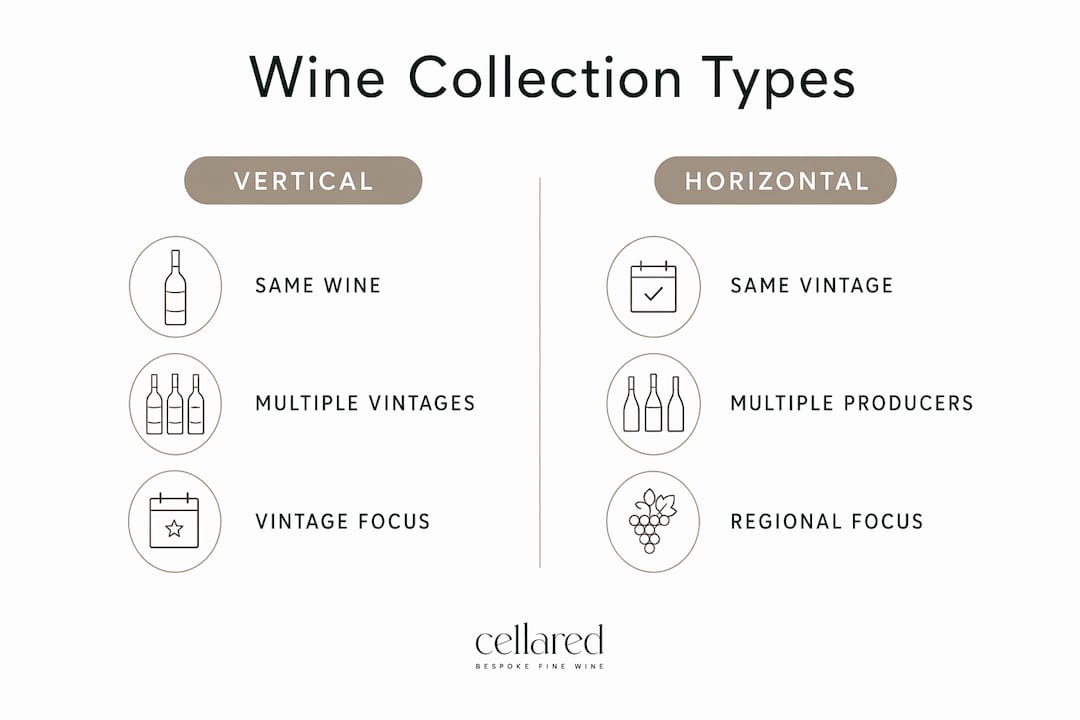
A vertical wine collection isolates time. Every bottle in the collection is the same label from the same producer, with the only difference being the vintage year. Vertical tastings isolate vintage as the sole variable, making them the fastest way to understand how a wine ages and how a winemaker's style has shifted over time.

A horizontal collection works on the opposite principle. It gathers the same vintage from multiple producers or regions, isolating terroir and winemaking philosophy rather than time. Tasting a 2015 Barolo from five different producers is a horizontal exercise. Tasting the same Barolo from a single estate across 2010, 2012, 2015, and 2018 is a vertical one.
The table below captures the core distinction:
| Feature | Vertical collection | Horizontal collection |
|---|---|---|
| Variable isolated | Vintage year and time | Producer, terroir, winemaking |
| Primary question answered | How does this wine age? | How do producers differ? |
| Best for | Ageing study, investment tracking | Regional comparison, education |
| Minimum bottles | 3 vintages, same label | 3 producers, same vintage |
Both approaches have genuine educational merit. Verticals, however, carry a particular advantage for investors. They allow you to track the ageing trajectory of a specific wine and make informed decisions about when to sell, hold, or open. A horizontal collection teaches breadth. A vertical collection teaches depth.
Pro Tip: Taste a single bottle from a producer before committing to a full vertical. This confirms the style suits your palate and avoids filling cellar space with wines you will not enjoy.
How to build and organise a strategic vertical wine collection
Building a vertical collection requires intention from the outset. Defining your collection goals early, whether for personal enjoyment, a historical library, or investment, shapes every acquisition decision that follows.
The practical starting point is selecting a wine with genuine ageing potential and then acquiring multiple vintages. A starter vertical of 10–20 bottles in the $50–$150 per bottle range is a sound entry point for age-worthy wines. This budget allows access to structured wines from recognised appellations without overcommitting capital before you understand the producer's style.
A well-balanced vertical follows a structured composition:
- Acquire at least three consecutive vintages. Consecutive years reveal the impact of annual weather variation most clearly. Gaps in the sequence introduce uncertainty about what changed and why.
- Balance maturity across the collection. A cellar built around 30% age-worthy bottles, 40% intermediate, and 30% ready-to-drink selections keeps the collection alive and drinkable rather than static.
- Purchase multiples of each vintage. Buying two or three bottles of each year lets you open one at intervals to monitor evolution without depleting the vertical prematurely.
- Track drink windows from the start. Record the expected peak drinking window for each vintage at the time of purchase. This prevents the most common collector error: missing the optimal moment.
- Review your inventory monthly. Successful collectors develop a review habit, scanning their cellar regularly to identify bottles approaching their peak and those ready to open now.
Understanding wine maturity is central to this process. A wine that peaks at 15 years needs a different management approach than one that is best at 8.
Pro Tip: Use a dedicated cellar management spreadsheet or app to log each bottle's vintage, purchase date, expected drink window, and tasting notes. This turns a passive collection into an active, living record.
Which wines and regions suit vertical collections best?
Not every wine rewards vertical collecting. The wines that benefit most share a common profile: high acidity, firm tannins, and structural complexity that allows them to evolve meaningfully over years and decades. 80–90% of wines suited to long ageing in verticals possess these characteristics, with Bordeaux and Barolo as the clearest examples.
The regions and varietals that consistently produce exceptional vertical candidates include:
- Bordeaux (France). The great châteaux of the Médoc and Pomerol produce wines built for decades of cellaring. Vintage variation in Bordeaux is pronounced, making verticals particularly revealing.
- Barolo and Barbaresco (Piedmont, Italy). Nebbiolo's tannic backbone and high acidity give these wines extraordinary longevity. A vertical of Barolo from a single estate across ten vintages tells the story of both the winemaker and the land with remarkable clarity.
- Napa Valley Cabernet Sauvignon (California). The best Napa Cabernets age gracefully over 15–25 years. Vintage variation, while less dramatic than in Europe, still produces meaningful differences across years.
- White Burgundy (France). Premier and Grand Cru Chardonnay from Burgundy ages with a complexity that few white wines match. Verticals here reveal the interplay between oak, acidity, and terroir over time.
- German Riesling. Particularly from the Mosel and Rheingau, Riesling's acidity preserves it for decades. A vertical of Spätlese or Auslese from a single producer is one of the most educational experiences in fine wine.
Wines less suited to vertical collecting include light, early-drinking styles such as Pinot Grigio, commercial Chardonnay, and most rosés. These wines are made for immediate consumption. Their character does not deepen with age; it fades. Committing cellar space to a vertical of such wines produces diminishing returns with each passing year.
The fine wine regions that produce the most compelling vertical candidates share one quality: vintage weather variation that leaves a distinct fingerprint on each year's wine.
How should vertical collections be stored and displayed?
Storage is not a secondary concern for vertical collectors. It is the foundation upon which the entire collection's value rests. Poorly stored bottles can invalidate tastings entirely, rendering years of careful acquisition meaningless. Consistent climate control, typically at 12–14 degrees Celsius with 60–70% humidity, is the non-negotiable standard.
Label-forward racks and dedicated feature niches with appropriate lighting transform a vertical collection into a visual narrative. When bottles are arranged chronologically by vintage, the collection tells its own story at a glance. This matters both aesthetically and practically. Visitors understand the collection's depth immediately, and you can locate specific vintages without disturbing others.
Key storage principles for vertical collections:
- Maintain provenance documentation. Keep purchase receipts, storage records, and any certificates of authenticity. Provenance directly affects resale value and the credibility of any future valuation.
- Avoid vibration and light exposure. Both accelerate ageing unpredictably. A dedicated cellar or professional storage facility eliminates these risks.
- Separate drinking stock from investment stock. If you hold multiples of each vintage, designate specific bottles for periodic tasting and keep the remainder undisturbed.
- Conduct periodic tastings. Opening one bottle from a vintage every few years tracks the wine's ageing trajectory. This is how you know whether to hold, sell, or drink the remaining bottles.
Private cellar management practices that combine physical organisation with digital inventory tracking produce the most reliable results. A collection that exists only in memory is a collection at risk.
Key takeaways
A vertical wine collection is the most focused tool available to collectors for understanding how a single wine evolves across time, and managing it well determines whether that investment pays off.
| Point | Details |
|---|---|
| Definition of a vertical | Same wine, same producer, multiple vintages, with time as the only variable. |
| Minimum viable vertical | Acquire at least three consecutive vintages to identify meaningful patterns. |
| Best wines for verticals | High-acid, high-tannin wines from Bordeaux, Barolo, Napa, and German Riesling age best. |
| Storage is non-negotiable | Climate control and provenance documentation protect both quality and resale value. |
| Active management required | Monthly inventory reviews and periodic tastings prevent missed drinking windows. |
Why verticals are the most honest form of collecting
I have worked with collectors across a wide range of approaches, from broad regional libraries to tightly focused single-producer verticals. The verticals always teach more. There is something almost scientific about the exercise. You hold the producer constant, you hold the wine constant, and you let time do its work. What you taste across a decade of vintages is not just wine. It is weather, decision-making, and the slow chemistry of a great cellar.
The discipline required is real. Holding bottles when every instinct says to open them is harder than it sounds. But the collector who opens a 2010 Barolo alongside a 2015 and a 2018 from the same estate gains an understanding of that wine that no tasting note or critic score can replicate. The differences between those vintages, the tannin structure, the fruit weight, the length, reveal the estate's character more honestly than any single bottle ever could.
My honest view is that too many collectors build verticals passively. They acquire bottles opportunistically and call it a vertical. A genuine vertical is built with intent. You choose the producer because you believe in their longevity. You organise your cellar for value from the first bottle, not as an afterthought. And you taste at intervals, not just when the mood strikes.
The investment case for verticals is real, but it is secondary to the experiential one. A well-managed vertical is a record of time. That is worth more than any spreadsheet can capture.
— David
Professional support for vertical wine collectors
Building a vertical collection with genuine depth requires access to rare vintages, accurate valuations, and a management system that keeps pace with your collection's evolution.
Com offers bespoke wine buying and cellar management tailored specifically for collectors building structured verticals. From sourcing back vintages of Bordeaux and Barolo to providing court-ready wine appraisals and valuations for insurance or estate purposes, Com brings deep market knowledge to every stage of the process. For collectors who want their vertical managed with the same care that went into building it, Com's cellar management service tracks drink windows, monitors ageing trajectories, and ensures no bottle is missed.
FAQ
What is a vertical wine collection in simple terms?
A vertical wine collection is the same wine from one producer collected across multiple vintages. It lets you compare how the wine changes from year to year.
How many vintages do you need for a vertical collection?
At least three consecutive vintages are needed to form a meaningful vertical. Professional collections often span ten or more years.
What is the difference between a vertical and horizontal wine collection?
A vertical collection holds the same wine across different years. A horizontal collection holds the same vintage from different producers or regions, isolating terroir rather than time.
Which wines are best suited to vertical collections?
Wines with high acidity and firm tannins age best in verticals. Bordeaux, Barolo, Barbaresco, Napa Cabernet Sauvignon, white Burgundy, and German Riesling are the strongest candidates.
How should I store a vertical wine collection?
Consistent climate control and provenance documentation are the two non-negotiable requirements. Store at 12–14 degrees Celsius with stable humidity and keep all purchase records intact.