
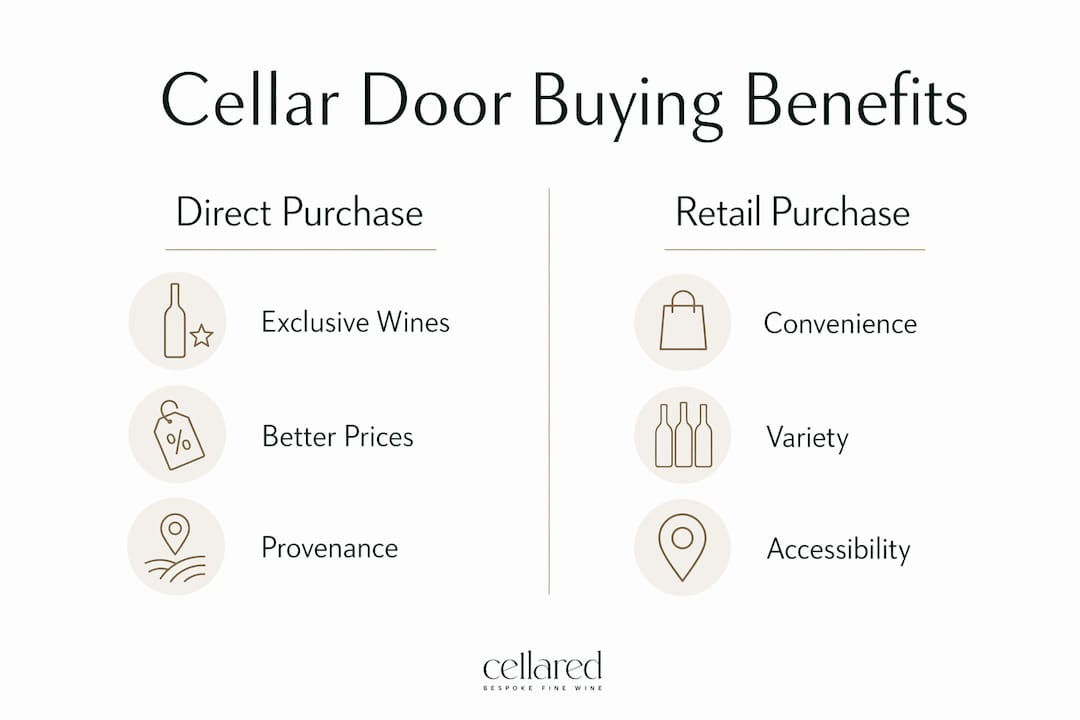
Cellar door buying is the direct purchase of wine from a winery's on-site sales point, bypassing retailers, importers, and distributors entirely. For wine enthusiasts who want access to exclusive releases, authentic provenance, and genuine price savings, it represents one of the most rewarding ways to build a collection. The practice is deeply woven into Australian wine culture, from the Barossa Valley to Margaret River, and has evolved far beyond a simple farmgate transaction into a sophisticated, education-driven experience. Understanding what is cellar door buying means understanding a direct relationship between producer and buyer that retail simply cannot replicate.
What are the key benefits of cellar door buying compared to retail?
Cellar door buying delivers advantages that retail shelves cannot match, and price is only the beginning. Retail markups from importers and distributors typically add 30–50% to a bottle's cost. Buying direct can translate to savings of roughly 20–40% per bottle, depending on the wine's tier.
The savings are most dramatic at the premium end. On modest bottles, the difference might be a few dollars. On fine wines, the gap between cellar door and retail pricing can be substantial, making direct purchase the obvious choice for serious collectors.
Beyond price, the advantages of cellar door shopping include:
- Exclusive and library wines. Experienced collectors know the true cellar door advantage is access to library stock and exclusive bottlings that never reach retail markets. These are wines made in small quantities, held back for loyal visitors and club members.
- Authentic provenance. Buying direct provides full transparency on origin, vinification, and storage conditions. You receive the wine exactly as the winemaker intended, with no question about how it was handled in transit or on a retail shelf.
- Personalised education. A professional host at a cellar door does far more than pour samples. Their role includes narrating the producer's philosophy and terroir, transforming a purchase into an educative experience that adds genuine value to every bottle you take home.
- Wine club membership benefits. Wine club memberships commonly form a recurring revenue stream for wineries, and joining can waive tasting fees while providing VIP access to new releases and events.
Pro Tip: If you visit a winery you genuinely love, ask about their wine club before you leave. Membership often waives tasting fees on future visits and secures allocations of wines that sell out before they ever reach retail.
How does cellar door buying work in practice?
The cellar door experience follows a recognisable structure, though it varies between small family producers and large estate operations. Knowing what to expect makes the visit far more productive.
- Book ahead. Popular wineries increasingly require appointments to manage visitor flow and deliver personalised service. Arriving without a booking at a sought-after producer risks disappointment, particularly during peak seasons like harvest in autumn.
- Pay the tasting fee. Tasting fees typically range from $20 to $60 per person. Most wineries offset this fee against any purchase you make on the day, so it functions more as a deposit than a cost.
- Taste with purpose. The tasting is not merely a social ritual. It is your opportunity to assess the current vintage, ask about ageing potential, and identify which wines suit your cellar. Staff are trained as wine educators, not salespeople, and will answer detailed questions about terroir, winemaking technique, and food pairing.
- Choose your purchase. Most cellar doors offer a range from entry-level to reserve tiers. Volume discounts are common for purchases of six or twelve bottles. Ask specifically about any wines not on the standard tasting list, as library and single-vineyard releases are often available only on request.
- Arrange delivery or carry. Decide at the point of purchase whether you will carry the wine or have it shipped. This decision has meaningful cost implications, which the next section addresses in detail.
Pro Tip: Ask the host which wine they personally find most underrated in the current range. This question almost always surfaces a bottle that is exceptional value and rarely discussed in standard tasting notes.
What logistics and cost considerations should buyers be aware of?
The financial case for cellar door wine purchases depends heavily on how you get the wine home. Savings at the point of purchase can erode quickly once freight enters the equation.

Shipping costs frequently surpass the price saved on wine unless purchased in bulk. International freight involves documentation, customs duties, and courier fees that make small shipments uneconomical. Even domestic freight within Australia adds up when you are moving only a few bottles.
| Purchase scenario | Typical cost consideration | Verdict |
|---|---|---|
| Carry 3–6 bottles as checked luggage | Extra baggage fee of roughly $30–50 | Cost-effective for small quantities |
| Domestic freight from winery | Freight charge per case, varies by region | Worthwhile for 6+ bottles |
| International freight from overseas winery | Customs, documentation, courier fees | Only viable for bulk or high-value purchases |
| Join wine club for ongoing shipments | Periodic shipments, often subsidised freight | Best long-term value for regular buyers |
Carrying wine as luggage is the most cost-effective option for small quantities acquired during travel. Savvy buyers use travel to carry small quantities and plan bulk shipments through the winery's own freight arrangements, which are typically negotiated at better rates than retail couriers.
Planning your purchases before you travel also matters. Knowing which wineries you intend to visit, and roughly how much you plan to spend, lets you allocate luggage space and budget without making impulsive decisions on the day.
How does cellar door buying shape wine culture and producer relationships?
The cellar door model has transformed the relationship between wine producers and their buyers in ways that extend well beyond a single transaction. Modern cellar doors evolved from rustic farmgate sales into sophisticated brand-building experiences, with trained staff focused on converting visitors into loyal, long-term club members rather than completing a quick sale.
This shift matters for buyers as much as it does for producers. When you visit a cellar door, you are not simply buying wine. You are entering a relationship with a place, a philosophy, and the people who made the wine. That connection carries genuine weight when you open a bottle years later and recall the vineyard, the vintage conditions, and the conversation you had with the winemaker.
"Cellar door visits create emotional connections with the land and winemakers, justifying premium prices and building the kind of loyalty that retail simply cannot manufacture." — The Shout, National Liquor News
Retailers have taken notice. The cellar door model is reshaping retail as wine shops adopt experience-driven formats to build consumer trust and remove the guesswork from purchasing decisions. The influence flows both ways: cellar doors have professionalised their retail offer, and retailers are borrowing the intimacy of the cellar door to compete.
For collectors, this cultural shift means the wine provenance frameworks that underpin serious collecting now begin at the cellar door. Knowing where a wine came from, how it was stored, and who made it is not a luxury consideration. It is the foundation of a well-managed collection.
Key takeaways
Cellar door buying is the most direct route to authentic provenance, exclusive wines, and genuine price savings, provided buyers plan logistics carefully.
| Point | Details |
|---|---|
| Definition of cellar door buying | Direct purchase from a winery, bypassing all retail and distribution markups. |
| Price advantage | Retail markups of 30–50% are eliminated, with savings most significant on premium wines. |
| Exclusive access | Library stock and single-vineyard releases are often available only at the cellar door. |
| Logistics planning | Carrying wine as luggage beats shipping for small quantities; bulk orders suit freight arrangements. |
| Long-term value | Wine club membership secures ongoing allocations, waives tasting fees, and builds producer relationships. |
Why cellar door buying rewards the patient and the prepared
The most common mistake I see from enthusiasts new to cellar door visits is treating them as casual drop-ins. They arrive without an appointment, taste without intention, and leave with whatever caught their eye in the moment. That approach wastes the single greatest advantage the cellar door offers: direct access to the person who made the wine.
When I visit a producer, I research the current releases beforehand. I know which vintages I want to taste against each other, and I have a clear sense of what I am looking for in terms of ageing potential and style. That preparation transforms the conversation with the host from a standard tasting script into a genuine exchange. Producers respond to informed buyers with generosity, often opening bottles that are not on the standard list.
The other misconception worth addressing is that cellar door buying is primarily about saving money. Price is a benefit, but it is rarely the defining one. The rare and exclusive wines available only at the cellar door, the assurance of proper storage and sourcing, and the provenance story that travels with every bottle are what make cellar door buying irreplaceable for serious collectors. Treat it as an investment in knowledge and relationship, and the financial savings become a welcome bonus rather than the primary motivation.
— David
How Cellared Fine Wine supports your cellar door buying
Cellar door buying opens remarkable doors, but managing what comes through them requires expertise. Knowing you have purchased well is only the first step. Knowing what those bottles are worth, how to store them correctly, and when to act on them is where the real work begins.
Cellared Fine Wine offers bespoke fine wine buying services that complement the cellar door experience, helping collectors source rare and hard-to-find bottles with the same directness and rigour. For buyers building a serious collection, Cellared also provides professional wine valuations for insurance, probate, and private advisory purposes, as well as expert cellar management to protect and maximise every acquisition. If you are ready to buy with greater clarity and confidence, Cellared is the specialist partner to have alongside you.
FAQ
What is the definition of cellar door buying?
Cellar door buying is the direct purchase of wine from a winery's on-site sales point, eliminating retail, importer, and distributor markups. It gives buyers access to exclusive wines, authentic provenance, and personalised service not available through standard retail channels.
How much can you save buying wine at a cellar door?
Retail markups typically add 30–50% to a bottle's cost, and buying direct can save roughly 20–40% depending on the wine's tier. Savings are most significant on premium and fine wines.
Do you need to book an appointment at a cellar door?
Popular wineries increasingly require appointments to manage visitor flow and deliver personalised service. Booking ahead is strongly recommended, particularly during peak seasons such as harvest.
Are tasting fees worth paying at a cellar door?
Tasting fees range from $20 to $60 per person and are typically offset against any purchase made on the day. Joining a wine club often waives these fees entirely on future visits.
Is it cheaper to carry wine home or have it shipped from a cellar door?
Carrying 3–6 bottles as checked luggage, at a cost of roughly $30–50 in extra baggage fees, is generally more cost-effective than freight for small quantities. Shipping becomes worthwhile only for bulk purchases or high-value wines where the winery offers negotiated freight rates.