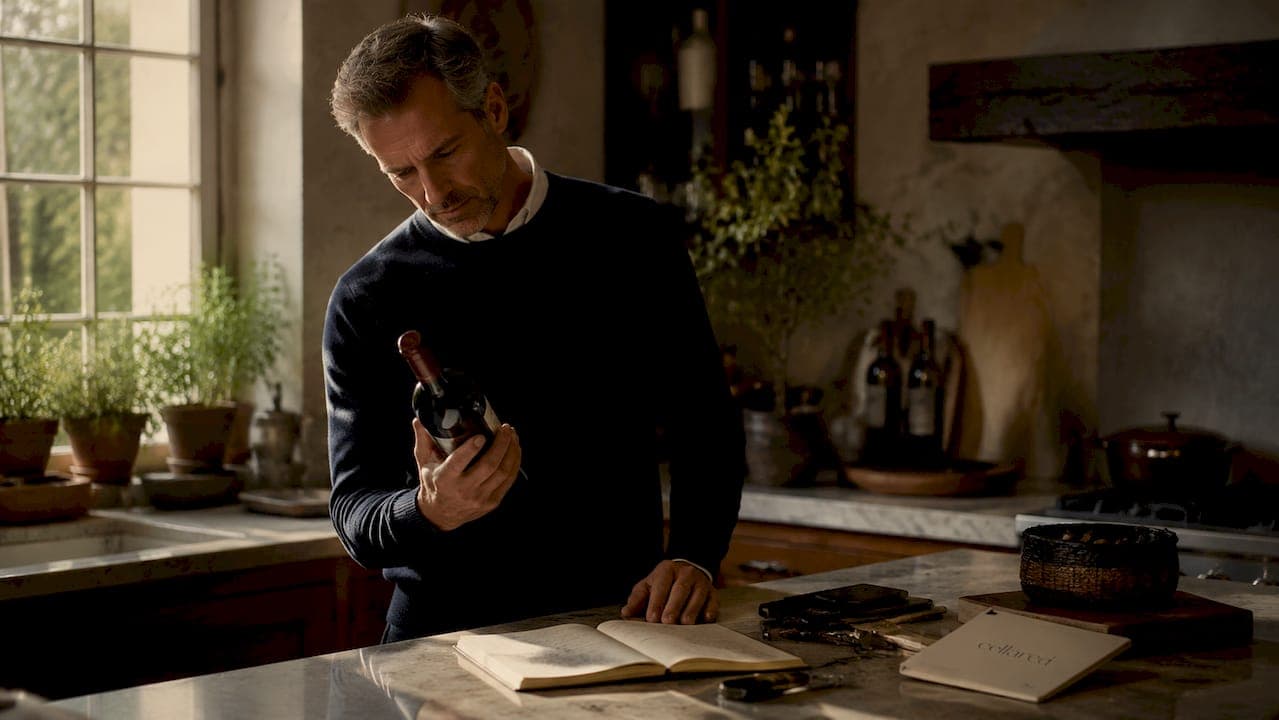
Fine wine due diligence is the systematic verification of a bottle's authenticity, provenance, condition, and market value before acquisition, designed to safeguard both the taste and economic worth of your investment. For individual collectors and family offices alike, this process is the difference between a portfolio that appreciates with quiet confidence and one that haemorrhages value through fraud, poor storage, or mispriced purchases. Only a small fraction of the world's 1.5 million wine producers create bottles with consistent secondary market appreciation. That reality makes rigorous assessment not a luxury, but a prerequisite. The industry term for this process is investment-grade wine assessment, though fine wine due diligence explained in practical terms covers provenance verification, physical inspection, storage evaluation, and market benchmarking against indices like Liv-ex.
What are the key components of fine wine due diligence?
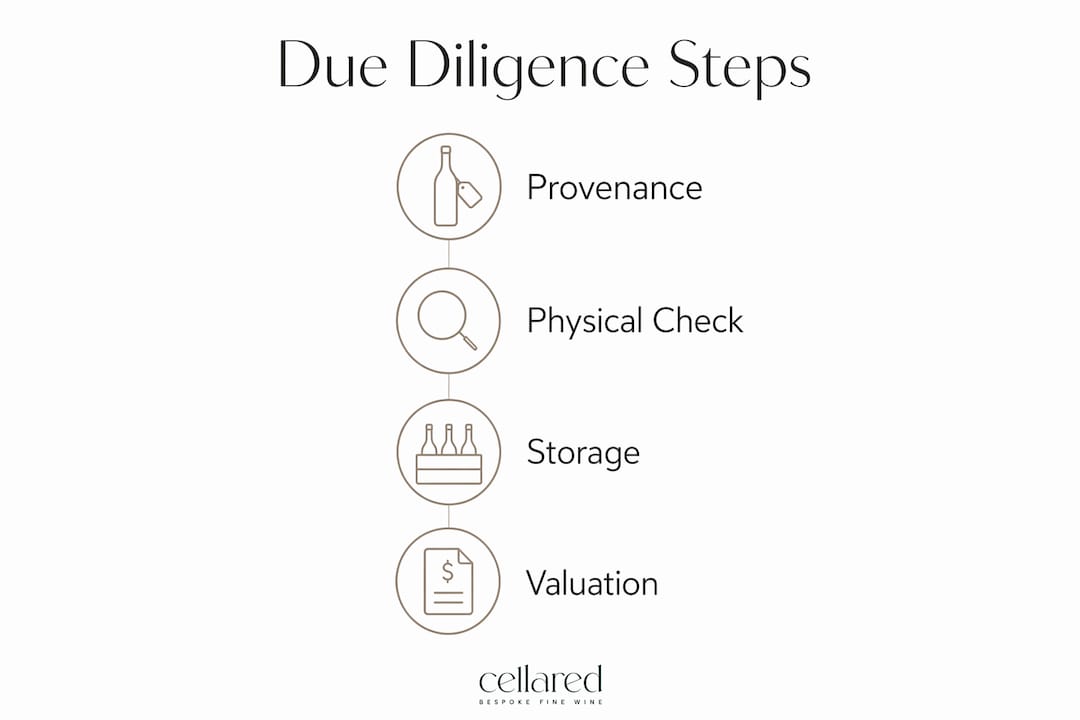
Fine wine due diligence is a holistic verification process with four distinct pillars: provenance, physical condition, storage history, and market valuation. Each pillar is interdependent. A bottle with impeccable provenance but compromised storage is worth a fraction of its potential. Understanding each component in sequence gives you a structured framework for every acquisition.
Provenance verification
Provenance is the documented chain of custody from winery to current owner. Verified provenance requires original purchase receipts, authenticity certificates, and confirmed storage logs at every stage of ownership. Ex-château provenance, where a bottle has never left the winery's own cellar until release, carries the highest confidence and commands a measurable price premium. Any gap in the ownership record is a red flag, not a minor inconvenience.
Physical inspection criteria
Physical inspection goes beyond simply checking that the label is intact. Authentic bottles feature heavy glass, textured or embossed labels, and correct ullage levels. Cork uplift is a reliable indicator of heat damage. A sunken or weeping cork suggests the wine has been exposed to temperature extremes that compromise both flavour and resale value. Inspect the capsule for corrosion and the glass seam for consistency with the stated vintage.
Storage conditions and bonded warehousing
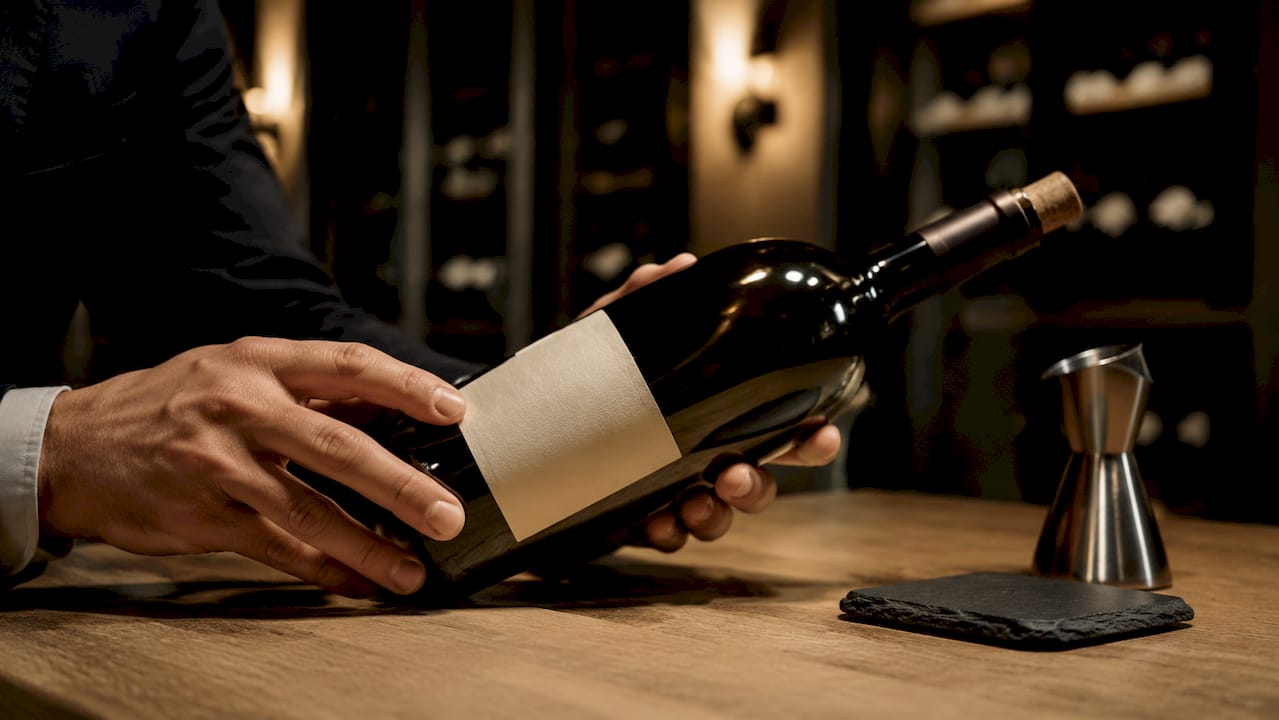
Storage history is where many investors underestimate risk. Fine wine is, at its core, a biological organism. Strict temperature control at 12–14°C and humidity maintained between 60–70% are non-negotiable for preserving both taste and economic value. Bonded warehousing defers Duty and GST, improving cash flow and protecting the asset under professionally managed conditions. Building a private cellar costs AUD 300–600 per square foot, making bonded storage the more practical and tax-efficient choice for most investors.
Market valuation and benchmarking
Valuation requires objective data, not intuition. Auction records from Christie's and Sotheby's, combined with the Liv-ex Fine Wine 1000 index, provide transparent price discovery across the most actively traded wines. Never rely on a seller's own pricing without cross-referencing at least two independent market sources.
Pro Tip: Request a full storage log from the current owner before any significant acquisition. A seller who cannot produce one is telling you something important about the bottle's history.
How does provenance impact fine wine valuation and risk?
Provenance is the single most powerful determinant of a fine wine's investment value. A bottle with a clear, unbroken chain of custody from a prestigious estate commands buyer confidence that translates directly into price. One with contested or incomplete records invites doubt, and doubt destroys premiums.
The hierarchy of provenance confidence works as follows:
- Ex-château provenance. The bottle has remained in the winery's own cellar from production to release. This is the gold standard, carrying the highest price premium and the lowest authentication risk.
- Single-owner provenance. One documented owner from point of purchase, with receipts and storage records intact. Highly regarded by auction houses and private buyers.
- Multi-owner provenance with full documentation. Each transfer is supported by receipts, certificates, and storage logs. Acceptable for investment-grade purchases when documentation is thorough.
- Partial or undocumented provenance. Gaps in the record introduce fraud risk and typically result in a discount at auction or outright rejection by serious buyers.
Modern technology is beginning to address provenance fraud at scale. Blockchain-based provenance tracking and digital twin solutions, where a physical bottle is paired with an immutable digital record, are gaining traction among leading négociants and auction houses. These tools do not replace physical inspection, but they add a layer of verification that paper records alone cannot provide.
"The value of a great bottle is inseparable from the certainty of its history. Without provenance, you are not buying wine. You are buying a story."
For a deeper understanding of the frameworks underpinning authentication, the provenance types guide from Cellared Fine Wine is worth consulting before any significant acquisition.
What are the best storage practices for protecting your investment?
Storage is where fine wine investments are won or lost in silence. The wine in your portfolio is ageing every day, and the conditions governing that ageing determine whether it arrives at peak value or at a fraction of it.
| Factor | Private cellar | Bonded warehouse |
|---|---|---|
| Temperature control | Variable, owner-managed | Professionally maintained at 12–14°C |
| Humidity control | Requires active management | Controlled at 60–70% |
| Tax treatment | Duty and GST paid on entry | Duty and GST deferred until sale |
| Cost | AUD 300–600 per sq ft to build | Ongoing storage fee, typically lower upfront |
| Insurance | Owner's responsibility | Often included or readily available |
| Resale credibility | Dependent on owner's records | Recognised by auction houses and buyers |
Bonded warehousing wins on nearly every measure for investment-grade holdings. The tax deferment alone is a meaningful financial advantage, particularly for family offices managing large portfolios across multiple vintages. The storage records generated by a reputable bonded facility also carry weight with auction houses, reinforcing provenance at the point of sale.
Light and vibration are underappreciated threats. Ultraviolet exposure accelerates oxidation, and consistent vibration disturbs sediment and disrupts the slow chemical reactions that define a wine's development. A well-managed bonded facility controls for both. A domestic cellar rarely does so with the same consistency.
Pro Tip: When selecting a storage provider, ask specifically whether their facility is HMRC-approved (or the Australian equivalent) and whether they issue individual lot reports. These details matter enormously when you come to sell.
For detailed guidance on managing a private collection, the cellar management tips from Cellared Fine Wine cover both the practical and the aesthetic dimensions of long-term storage.
How can investors assess market value and liquidity?
Fine wine is not a liquid asset in the conventional sense. Experts recommend holding fine wine investments for 8–15 years, with a minimum of 4–7 years to capture optimal lifecycle appreciation. That holding horizon demands that you understand the exit landscape before you commit capital.
Auction houses remain the primary arbiters of fine wine value. Christie's and Sotheby's provide the most transparent price discovery, with hammer prices publicly recorded and searchable. The Liv-ex Fine Wine 1000 index tracks the most actively traded wines across the secondary market, offering a reliable benchmark for portfolio valuation between auction cycles.
Key considerations for assessing liquidity and exit value:
- Selling channel selection. Selling outside auctions typically yields 10–15% less than the hammer price. Private sales offer speed but sacrifice price discovery.
- Auction house commissions. Buyer's premiums and seller's commissions reduce net returns. Factor these into your acquisition price modelling from day one.
- Vintage and producer concentration. Portfolios concentrated in a single region or producer carry higher liquidity risk. Diversification across Bordeaux, Burgundy, and Rhône improves exit flexibility.
- Pre-registration at auction houses. Registering with Christie's or Sotheby's before purchase, rather than after, accelerates the consignment process and signals market readiness.
- Minimum entry thresholds. Private portfolios typically start at AUD 25,000 to achieve meaningful diversification. Below that level, concentration risk limits both appreciation and exit options.
The wine auctions guide from Cellared Fine Wine provides a thorough breakdown of how to navigate the auction process, from consignment to settlement.
Key takeaways
Fine wine due diligence requires verified provenance, meticulous storage management, and objective market benchmarking to protect both the taste and economic value of every acquisition.
| Point | Details |
|---|---|
| Provenance is the foundation | Require an unbroken chain of custody with receipts, certificates, and storage logs before purchasing. |
| Physical inspection is non-negotiable | Check ullage, cork condition, label integrity, and glass weight to detect heat damage or fraud. |
| Bonded storage outperforms private cellars | Tax deferment, professional conditions, and auction-recognised records make bonded warehousing the preferred choice. |
| Plan your exit before you buy | Register with auction houses early and model commissions into your acquisition price from the outset. |
| Liquidity requires patience | Fine wine rewards investors who hold for 8–15 years; premature selling risks significant discounts on realised value. |
Why due diligence is the craft behind the collection
I have seen investors approach fine wine with the same instinct they bring to equities: buy on reputation, hold loosely, sell when the number looks right. That approach works occasionally, but it misses the deeper discipline that separates a performing collection from an expensive hobby.
The most common mistake I encounter is treating provenance as a formality rather than a foundation. A bottle of 2005 Pétrus with a gap in its storage record is not a bargain. It is a liability dressed in a prestigious label. The wine fraud risks in the secondary market are real and sophisticated, and they disproportionately affect buyers who skip the documentation step.
Storage costs are the other hidden erosion. Investors calculate acquisition price and projected appreciation, but they rarely model the cumulative cost of logistics, insurance, and storage across a 10-year hold. Those costs are not trivial. A bonded warehouse fee of AUD 15–20 per case per year across a 50-case portfolio adds up to a meaningful line item. Factor it in from the beginning.
The wines that reward patience most generously are those acquired with the greatest rigour. Due diligence is not a bureaucratic hurdle. It is the craft behind the collection, the quiet work that makes the eventual pleasure, and the eventual profit, possible.
— David
Expert wine appraisals and cellar management from Cellared Fine Wine
For collectors and family offices who want certainty behind every acquisition, professional appraisal and cellar management are not optional extras. They are the infrastructure of a well-run collection.
Cellared Fine Wine provides court-ready wine valuations for insurance, probate, family law, and private advisory purposes, grounded in current market data and delivered with the independence that serious investors require. The team also offers bespoke cellar management to maintain optimal storage conditions, preserve asset value, and generate the documentation that auction houses and buyers expect. Whether you are building a new portfolio or reviewing an existing collection, Cellared brings the depth of knowledge and the personal attention that high-value acquisitions demand.
FAQ
What is fine wine due diligence?
Fine wine due diligence is the structured process of verifying a wine's provenance, physical condition, storage history, and market value before purchase. It protects investors from fraud, degradation risk, and overpayment.
Why does provenance matter so much in wine investment?
Provenance establishes an unbroken chain of custody from winery to buyer, confirming authenticity and storage integrity. Ex-château provenance carries the highest confidence and typically commands a price premium at auction.
How long should I hold a fine wine investment?
Experts recommend a holding period of 8–15 years, with a minimum of 4–7 years to capture the optimal appreciation window and avoid selling into an illiquid market at a discount.
What is the best storage option for investment-grade wine?
Bonded warehousing is the preferred choice for investment-grade holdings. It maintains professional temperature and humidity controls, defers Duty and GST, and generates the storage records that auction houses and buyers require.
How do I assess the market value of fine wine?
Use auction records from Christie's and Sotheby's alongside the Liv-ex Fine Wine 1000 index for objective benchmarking. Never rely on a single source or a seller's own valuation without independent cross-referencing.