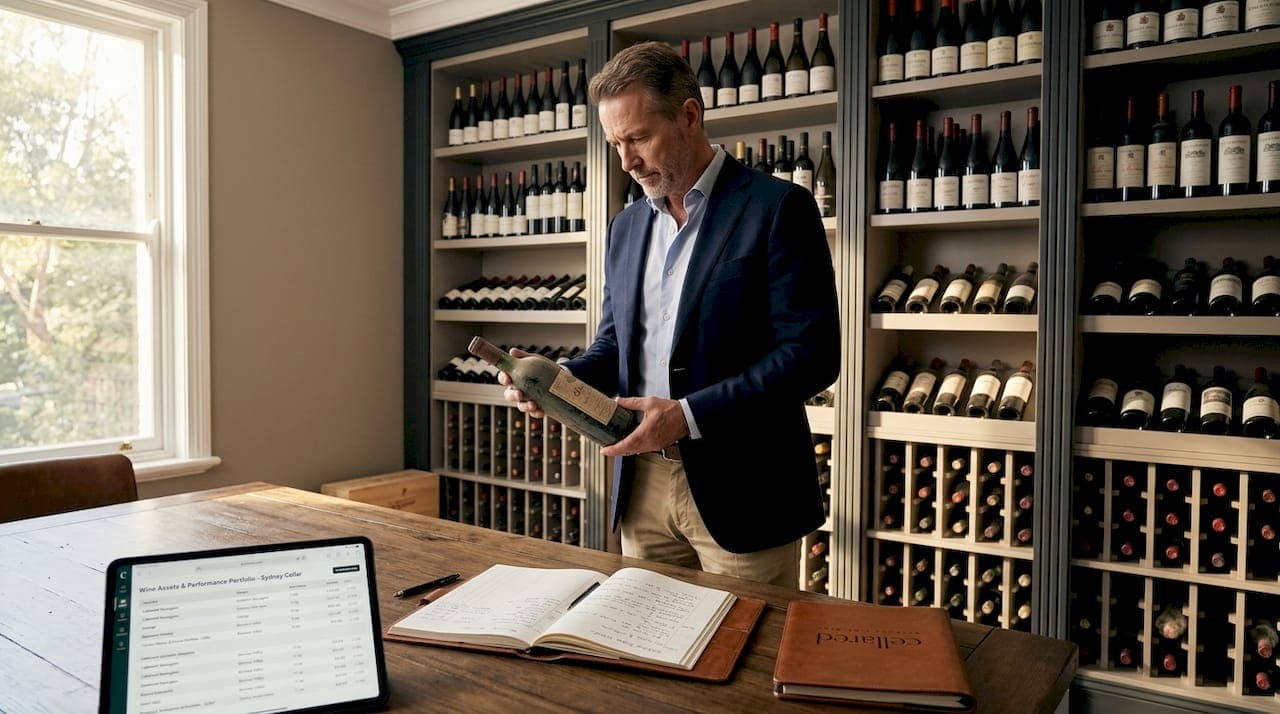
Fine wine occupies a singular position among alternative assets, simultaneously embodying cultural prestige, sensory pleasure, and measurable financial merit. For high net worth investors in Australia and across the APAC region, wine investment involves acquiring fine and rare bottles expected to appreciate through scarcity, quality, historical significance, and sustained collector demand. Unlike equities or property, wine's value is shaped by a confluence of terroir, vintage character, winemaker reputation, and global appetite, making it one of the few asset classes where passion and portfolio strategy genuinely converge.
Table of Contents
- What is wine investment?
- How wine investment works: buying, storing, selling
- Wine valuation and professional management
- Risks, rewards and nuances of wine investing
- The hard truths and real opportunities in wine investment
- Expert solutions for wine investors
- Frequently asked questions
Key Takeaways
| Point | Details |
|---|---|
| Wine is an alternative asset | Fine wine offers diversification and low correlation compared to traditional investments. |
| Professional management matters | Expert guidance in buying, storing, and valuing wines minimises risks and maximises returns. |
| Risks are real | Imperfect storage, authenticity issues, and illiquidity can undermine investment if not managed properly. |
| Long-term horizon needed | Returns in wine typically require patience, often over 5–15 years for meaningful appreciation. |
| Australian specifics | Local market nuances, including softened demand and storage standards, impact outcomes for investors. |
What is wine investment?
At its most refined, wine investment is the deliberate acquisition of exceptional bottles with the expectation that their value will grow over time. This is not the casual purchase of a case to enjoy on a summer evening; it is a calculated, patient strategy that treats the cellar as a component of a broader wealth portfolio. The scarcity, quality, and historical significance of a wine are the foundational pillars that underpin its appreciation potential, much as a great work of art derives value from the hand that created it and the rarity of its existence.
For high net worth individuals, wine's appeal as an asset class rests on several characteristics that set it apart from more conventional investments:
- Low correlation with equities and bonds: Wine markets do not move in lockstep with the ASX or global equity indices, which means a well-structured wine portfolio can serve as a genuine buffer during periods of financial turbulence.
- Tangible asset with intrinsic enjoyment value: Unlike a share certificate, a great bottle of Burgundy or Penfolds Grange carries an intrinsic, sensory dimension that appeals to the collector instinct.
- Scarcity-driven appreciation: Once a vintage is consumed, it is gone forever. This irreplaceable quality underpins consistent long-term demand among serious collectors.
- Global demand from emerging markets: APAC buyers, particularly in Hong Kong, Singapore, and mainland China, have significantly broadened the collector base for prestigious labels, amplifying demand and price support.
- Hedge against inflation: Tangible assets such as fine wine have historically retained purchasing power during inflationary periods, adding a further layer of portfolio resilience.
"Wine investment involves purchasing fine and rare wines expected to appreciate in value due to scarcity, quality, historical significance, and demand from collectors."
Understanding which bottles qualify as investment grade is the first critical discipline. Exploring rare wines for investment provides essential context on how scarcity, region, and producer reputation interact to create genuine long-term value. Labels such as Domaine de la Romanée-Conti, Château Pétrus, Screaming Eagle, and Penfolds Grange regularly appear on the shortlists of serious investors, not by chance, but because they represent the intersection of critical acclaim, limited production, and enduring demand.
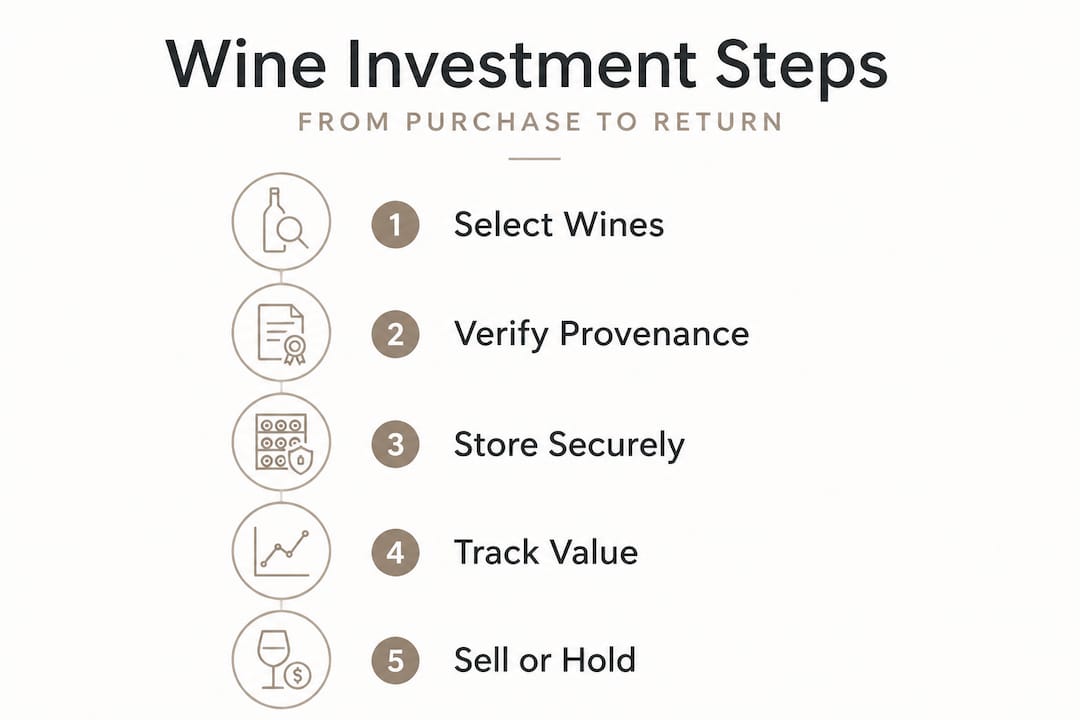
How wine investment works: buying, storing, selling
Having defined wine investment, let us examine the practical steps and processes involved in building and realising value from a fine wine collection.
Acquiring investment-grade wine
The route to acquisition significantly affects both the price paid and the quality of provenance documentation, which is critical for future sales. Reputable auction houses such as Langtons and Christie's, direct releases from producers at release prices, and specialist services all represent legitimate channels, each with distinct advantages.
- Auction houses: Platforms like Langtons (Australia) and Christie's provide access to a wide range of back vintages with documented provenance. Auction is often the best source for older bottles but requires expertise in condition assessment and pricing.
- Direct producer releases: En primeur (futures) buying in Bordeaux, or mailing list allocation for sought-after Australian producers, allows investors to acquire bottles at release prices before secondary market premiums apply.
- Specialist brokers and advisory services: Professional services curate selections, negotiate access to allocated bottles, and provide the kind of market intelligence that transforms good intentions into sound acquisitions.
Understanding the nuances of identifying investment-grade wine is non-negotiable before committing capital. An experienced adviser will scrutinise critic scores, production volumes, ageing trajectories, and secondary market liquidity before recommending a purchase.
Storage: the silent variable
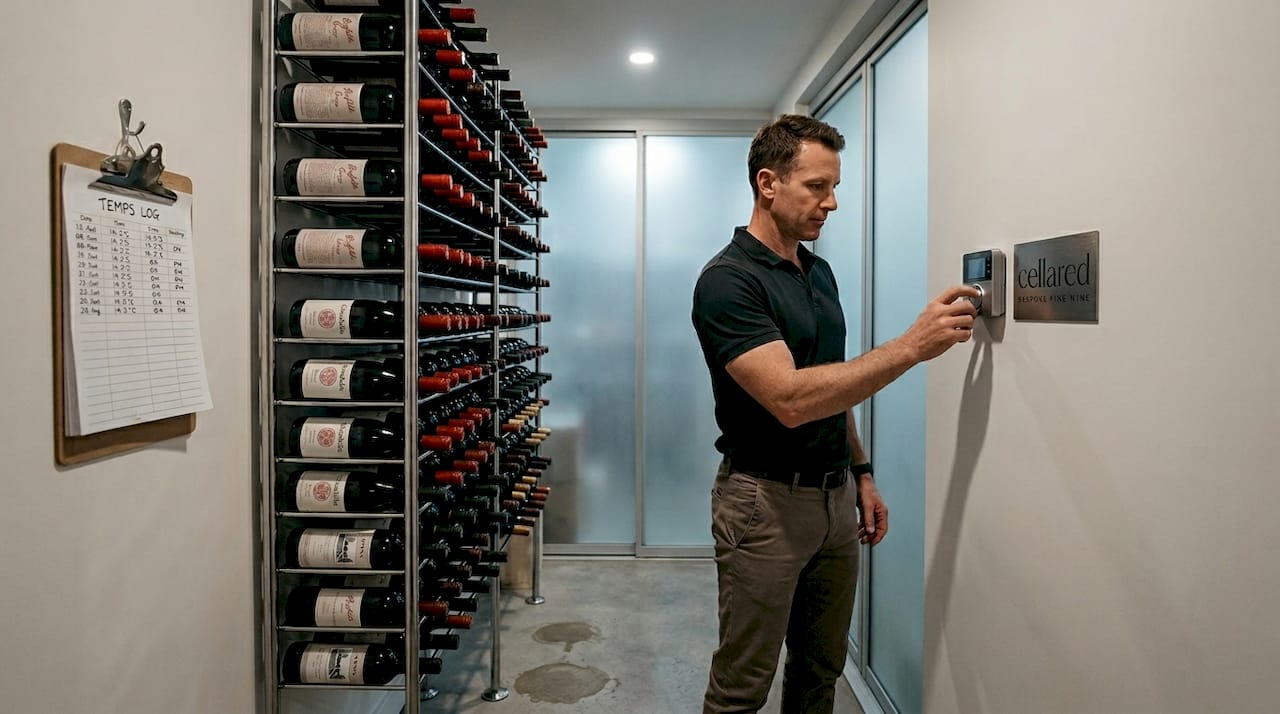
Storage is not merely logistics; it is the single most consequential factor in preserving and enhancing wine's investment value. Temperature fluctuations, humidity imbalances, light exposure, and vibration can irreversibly compromise even the finest bottle. Professional bonded warehouses, which are temperature-controlled and fully insured, are the standard for serious investors.
Comparison: storage options for investment wine
| Storage type | Temperature control | Insurance | Provenance documentation | Suitability for investment |
|---|---|---|---|---|
| Home cellar | Variable | Often limited | Informal | Low |
| Private vault | Good | Often available | Moderate | Moderate |
| Bonded warehouse | Precise | Comprehensive | Full records | High |
| Managed cellar service | Precise | Comprehensive | Professional | Highest |
Pro Tip: When building a wine portfolio, treat storage costs as an integral part of your investment calculus. Cutting corners on storage is the fastest way to destroy value that took years to accumulate. A professional fine wine buying guide will always factor storage into the total cost of ownership.
Selling and the holding period
The mechanics of realising gains are straightforward in principle but require patience and market timing. Most serious investors target holding periods of five to fifteen or more years, allowing scarcity and collector demand to do their quiet work. Selling avenues include auction, private sale through specialist brokers, and in some cases, direct negotiation with other collectors or institutions.
Building a wine portfolio with a deliberate exit strategy in mind, rather than accumulating bottles without a plan, is what separates disciplined investors from enthusiastic amateurs. Provenance documentation, including original purchase receipts, storage records, and any independent valuations, is essential to achieving premium prices at the point of sale.
Wine valuation and professional management
Once wine is acquired, managing and valuing a collection is essential for maximising returns. The question of what a collection is actually worth, at any given moment and for any given purpose, is more nuanced than many investors initially appreciate.
How valuations are conducted
Wine valuations draw on multiple reference points to arrive at defensible, market-led figures. The Liv-ex indices, which track the prices of fine wines traded on the London-based exchange, are the industry benchmark for assessing market movements and relative value. Auction history provides a real-world data set of what buyers have actually paid, under competitive conditions, for specific bottles and vintages. Independent appraisers apply both sources of data alongside their own market expertise to produce valuations suitable for insurance, probate, family law, and private advisory purposes.
Key valuation considerations include:
- Liv-ex index tracking: Provides transparent, market-based pricing for hundreds of investment-grade labels, updated regularly.
- Auction realisation records: Historical hammer prices at Langtons, Christie's, and Sotheby's establish a clear pricing narrative for major labels.
- Independent appraiser assessment: A qualified appraiser evaluates condition, label integrity, fill levels, and provenance documentation to arrive at a court-ready, defensible figure.
- Portfolio-level analysis: A holistic view of the entire collection, considering diversification across regions, vintages, and styles, informs both insurance and liquidity decisions.
A wine valuation checklist is an invaluable starting point for any investor seeking to understand the full scope of what their collection represents. For those requiring formal documentation, understanding wine valuation standards is equally important, particularly when collections are involved in estate planning or legal proceedings.
Professional management and wine-backed finance
Professional management services, offered by firms specialising in wine curation, storage, and sales, handle the operational complexity of maintaining a high-performing collection. Wine funds pool investor capital to acquire curated portfolios under expert guidance, offering exposure to the asset class without the demands of direct management.
An often-overlooked dimension of wine as a wealth instrument is its capacity to generate liquidity without requiring a sale. Wine-backed loans, typically offered at 50 to 60% of the appraised value of blue-chip collections, allow investors to access capital against their portfolio while the underlying assets continue to age and appreciate. This structure is particularly attractive for investors who recognise the long-term appreciation potential but require short-term liquidity for other opportunities.
Risks, rewards and nuances of wine investing
Before committing capital, it is vital to recognise the risks and nuances specific to wine investing. The asset class rewards patience and expertise in equal measure, but it is not without genuine hazards.
Key risks every investor must understand
- Illiquidity: Wine is not a liquid asset. Converting bottles to cash takes time, market access, and the right buyer at the right moment. Short-term volatility can trap investors who have not planned for adequate holding periods.
- Provenance and authenticity: The fine wine market, like the art market, is not immune to fraud. Counterfeit bottles and misrepresented provenance documents are real concerns, particularly for rare and high-value labels.
- Storage risk: Wines stored improperly, whether due to temperature variation, poor humidity management, or physical disturbance, can spoil entirely, rendering an investment worthless.
- Market concentration risk: Overexposure to a single region, producer, or style concentrates risk. A shift in collector sentiment toward or away from Bordeaux, for instance, can significantly affect returns.
- Speculative cult wine risk: Speculation on cult wines or closing wineries carries elevated risk. Even an icon like Penfolds Grange is not a guaranteed return; many vintages perform flatly or decline in value, and the wine typically requires ten to fifteen years before meaningful appreciation materialises.
The importance of proper wine cellar management cannot be overstated. A collection that lacks professional oversight is a collection quietly losing value, regardless of the quality of the bottles it contains. Thoughtful private cellar management tips address everything from inventory control to storage environment monitoring, ensuring that every bottle reaches its potential.
Pro Tip: Never treat wine investment as a set-and-forget strategy. Regular professional reviews of your collection's condition, provenance records, and market positioning are what transform a cellar full of fine wine into a genuinely performing asset. Understanding what a private wine cellar truly involves, from both a physical and financial perspective, is the foundation of informed investment.
The APAC dimension adds particular nuance to the Australian market. Asian collector demand, especially from mainland China and Hong Kong, elevated prices for prestigious labels through the 2010s, creating significant tailwinds for Australian and Bordeaux producers. Shifts in that demand, whether due to tariff regimes, currency fluctuations, or changing tastes, have a measurable effect on secondary market pricing. Investors who understand these regional dynamics position themselves to act opportunistically rather than reactively.
The hard truths and real opportunities in wine investment
Here is what most introductory guides to wine investment leave unsaid: the gap between enthusiasm and expertise is where most capital is quietly eroded. New investors frequently overestimate the near-term performance of fashionable labels, underestimate the operational demands of proper storage and documentation, and fail to account for the true holding period required to realise meaningful gains.
The Australian wine investment market has softened in recent years, partly as a consequence of reduced Chinese demand following trade disruptions. That softening is not a reason for alarm; it is a reason for sophistication. The investors who entered the market with genuine expertise, diversified collections, and professional management in place have weathered the cycle with composure. Those who chased headlines and cult wine speculation have not always fared as well.
The real opportunity lies in approaching wine investment with the same rigour applied to any serious alternative asset. That means managed and fund-based exposure for those without deep market expertise, professional valuations at regular intervals, meticulous storage and provenance management, and a long-term investment horizon that respects the fundamental nature of the asset. Exploring private client wine services designed specifically for serious collectors and investors reveals how much value a professional partner can add across every stage of the investment lifecycle.
Wine, at its finest, is a patient investment. The great wines of the world do not reveal their full complexity in a hurry, and neither do the returns they can generate for those who approach them with appropriate knowledge, care, and strategic intent.
Expert solutions for wine investors
For readers persuaded by wine's investment potential, taking the next step with professional support transforms aspiration into action.
At Cellared Fine Wine, we specialise in supporting high net worth investors, collectors, and private clients across Australia and the APAC region with every dimension of fine wine investment. Our wine appraisal services deliver independent, court-ready valuations for insurance, probate, family law, and private advisory purposes, grounded in current market data and deep expertise. Our professional wine valuations ensure you always know precisely what your collection is worth. For those building and maintaining portfolios, our cellar management solutions provide meticulous oversight, from storage monitoring to inventory management, so every bottle reaches its full potential. We invite you to speak with our team about how we can help you buy well, value accurately, and manage confidently.
Frequently asked questions
What makes a wine suitable for investment?
Investment-grade wines have proven demand, rarity, strong provenance, high critic scores, and a track record of appreciating in value. The scarcity, quality, and historical significance of a bottle are the foundational attributes that separate investment-worthy labels from ordinary cellaring candidates.
How long should I hold wine investments to see returns?
Most wine investments require 5 to 15 or more years to realise meaningful gains, as value builds over time with scarcity and collector demand. As industry guidance confirms, the expectation is to sell at auction or via brokers after a patient holding period.
What are the main risks in wine investing?
Wine investments are vulnerable to improper storage, authenticity issues, illiquidity, and market volatility, especially for speculated cult wines. Speculation on cult labels, including icons like Penfolds Grange, carries no guaranteed return, and many vintages require a decade or more before any appreciation is visible.
Can I access liquidity without selling my wine collection?
Wine-backed loans allow you to utilise up to 50 to 60% of your collection's value for liquidity without selling the assets. These wine-backed loan structures are particularly well-suited to blue-chip collections with robust, professionally documented valuations.
Does the Australian market differ from the global wine investment landscape?
Australia's market is resilient but has softened recently, due in part to declining Chinese demand, though long-term prospects remain strong for well-managed collections. The Australian market's trajectory reflects broader APAC demand shifts, underscoring the value of professional guidance and diversified portfolio construction.